Hard water can make a good routine feel like it suddenly stopped working. Your face may feel tight after cleansing, your body skin may look dry or ashy right after showering, and your hair may feel coated even after wash day. In a Black household where skincare, textured hair care, protective styles, body care, and family wash routines all overlap, hard water can quietly affect more than one person at a time.
First, let us be clear: hard water does not mean your home is dirty, and dry skin after a shower does not mean your skin is “bad.” Hard water simply means the water contains higher levels of minerals, often calcium and magnesium. Those minerals can leave residue on skin, hair, faucets, shower doors, and towels. For richly melanated skin, the irritation that comes from dryness, rubbing, and over-cleansing can also make uneven tone or dark marks feel more stubborn.
This guide is for Black women, families, and textured-hair households that want practical hard water skincare tips without panic or product overload. If you need the larger routine framework, start with BBB’s skincare routine design guide, then use this article to troubleshoot the water piece. We will cover how hard water shows up, what not to overdo, what to try instead, and how to support both skin and hair without turning your bathroom into a science project.
How Hard Water Shows Up on Skin and Textured Hair
Hard water is not always obvious at first. You may notice the signs before you know the cause: cleanser does not foam the way it used to, body wash feels like it rinses but your skin still feels dry, lotion seems to disappear fast, or your hair feels coated even after shampoo. In textured hair, that coated feeling can be especially frustrating because curls, coils, locs, braids, and protective styles already require thoughtful moisture management.
On the skin, hard water can contribute to a stripped or filmy feeling. Some people feel dry immediately after showering. Others feel like they have residue sitting on the surface. That can lead to rubbing harder with towels, cleansing twice, using stronger soaps, or exfoliating more often. Those reactions are understandable, but they can make the barrier more stressed.
For melanin-rich skin, barrier stress matters because irritation often has an afterlife. A rough patch, rashy area, shaving bump, or scratched dry spot can leave discoloration that lingers after the skin itself feels calm. This is why BBB talks so much about preventing irritation, not just treating marks after they appear. If hard water is making your skin drier or itchier, the answer is not to punish the skin harder. The answer is to reduce friction, support moisture, and simplify the routine enough to see what is actually helping.
Hair and scalp can give clues too. If shampoo feels harder to rinse, curls feel less springy, or the scalp feels tight after wash day, hard water may be part of the picture. It is not the only possible cause. Product buildup, weather, styling habits, and shampoo choice matter too. But in a household where multiple people complain about dry skin, coated hair, or soap residue, water quality deserves attention.
You may also notice hard water evidence around the bathroom: white mineral spots on faucets, cloudy shower doors, residue around drains, or towels that feel stiff. Those clues do not diagnose your skin, but they help you connect the dots. If the water leaves residue on surfaces, it may also change how products feel on your body and hair.
The goal is not fear. You do not need to move, buy everything at once, or assume every skin concern is hard water. The goal is a calm troubleshooting plan: identify the pattern, reduce unnecessary irritation, and make small changes that support the skin barrier and hair moisture.
What to Stop Doing When Hard Water Is Suspected
The most common hard water mistake is responding to residue with aggression. When skin feels coated or hair feels weighed down, it is natural to want a stronger cleanse. But stronger is not always better, especially for Black skin and textured hair that may already be dealing with dryness, friction, or lingering marks.
Stop scrubbing skin until it feels “clean enough”
If your skin feels filmy after showering, scrubbing harder can seem logical. But heavy scrubbing can create micro-irritation, worsen dryness, and leave the skin more reactive. A washcloth or exfoliating mitt used too aggressively may give a temporary smooth feeling while setting up more tightness later. Clean skin should not feel raw.
Stop using harsh soap as the first solution
Many traditional soaps can feel powerful because they remove oil quickly. In hard water, some soaps may also leave a residue or make skin feel squeaky and tight. If your skin is already dry after bathing, switching to a harsher soap can make the barrier problem worse. Look for comfort after rinsing, not just strong lather.
Stop exfoliating every time skin looks ashy
Ashiness after a shower may be dryness, residue, or lack of moisture support. It is not always dead skin that needs removal. Over-exfoliating melanin-rich skin can trigger irritation, and irritation can become uneven tone. If ashiness returns quickly after exfoliating, the skin may need better moisture and gentler washing, not more friction.
Stop treating hair buildup and skin dryness as separate mysteries
In textured-hair households, one person may complain about dry legs while another complains about coated curls or a tight scalp. These concerns may have different causes, but hard water can be a shared pressure point. Looking at the household pattern can save money and confusion.
Stop changing five products at once
If you suspect hard water, do not replace cleanser, body wash, shampoo, moisturizer, and sunscreen in the same week. You will not know which change helped. Pick one or two high-impact adjustments first and watch for comfort: gentler cleansing, better moisture, or a shower filter if that is realistic for your home.
Stop blaming your skin for needing more support
There is no shame in needing a richer moisturizer, a gentler cleanser, or a wash-day adjustment. Skin and hair respond to environment. Hard water is an environmental factor. Your routine is allowed to respond too.
The Gentle Hard Water Plan for Skin, Body, and Hair
A smart hard water routine has three goals: reduce residue, protect the barrier, and make wash routines easier to repeat. You do not have to solve every household issue in one day. Start with the area causing the most discomfort.
Step 1: Make cleansing gentler before making it stronger
If your face feels tight after washing, review your cleanser first. A gentle cleanser should remove oil, sunscreen, and daily buildup without leaving your face stiff. If you are unsure whether your cleanser is too much, compare your symptoms with BBB’s guide to signs your cleanser is too harsh for dark skin. Tightness, burning, or roughness after cleansing is information.
For body care, avoid treating every shower like a deep-clean reset. Use lukewarm water when possible. Cleanse the areas that need it most, and avoid repeatedly washing already-dry areas with strong lather. After showering, pat skin instead of rubbing hard with a towel.
Step 2: Moisturize while the skin still has a little dampness
Hard water can make skin feel dry quickly, so timing matters. Apply moisturizer soon after showering while the skin is slightly damp. This helps reduce the tight, ashy look that can appear when water evaporates and leaves the surface feeling uncomfortable.
For richly melanated skin, this is not only about “glow.” It is about barrier comfort. Comfortable skin is less likely to itch, crack, or get irritated from friction. That reduces the chance of new marks from scratching or inflammation.
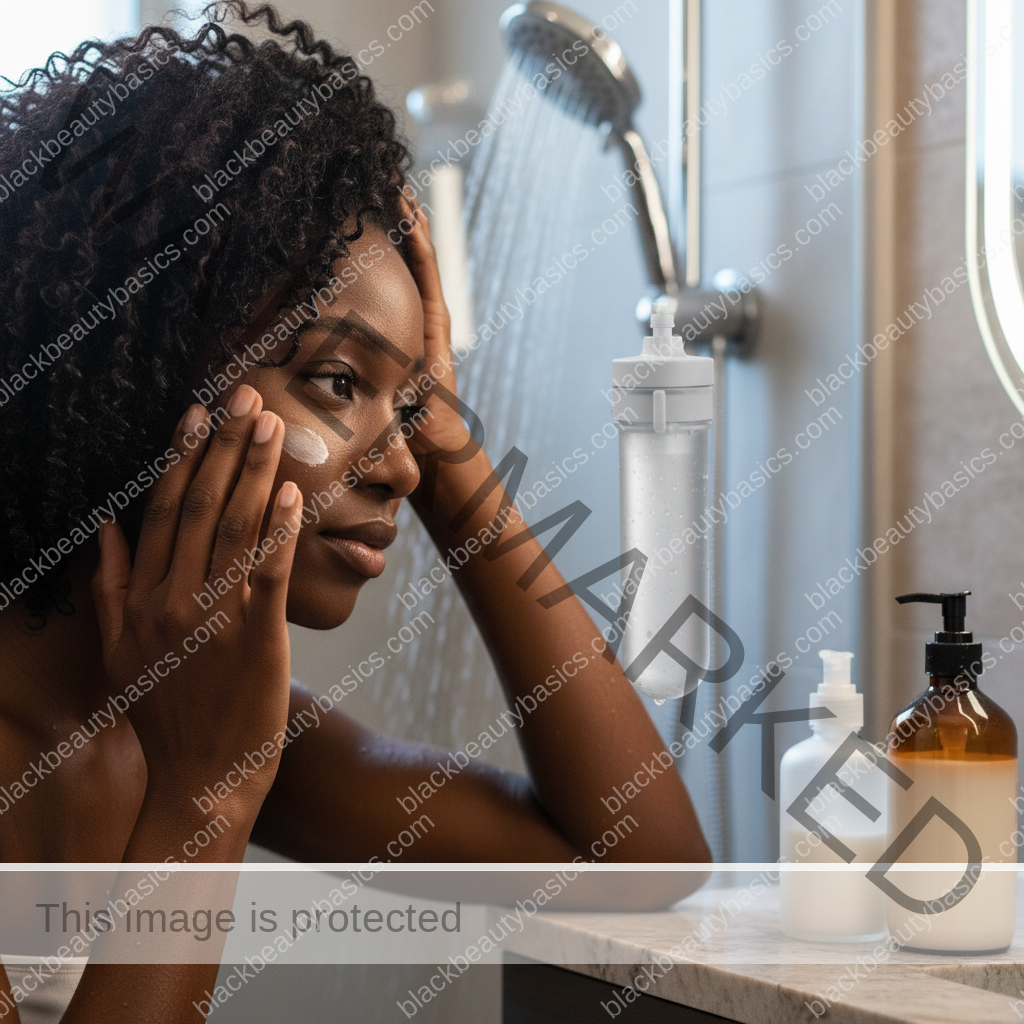
Step 3: Consider a shower filter if the pattern is household-wide
A shower filter is not a medical treatment and it will not fix every skin or hair concern. But if your home has visible mineral residue and multiple people notice dryness or coated hair, it may be worth testing. Start with one shower if the budget is tight. Give the change a few weeks before deciding whether it helps.
If you rent, a shower filter may be more realistic than whole-home water softening. If you own your home, a larger water-softening system may be an option, but that is a household decision with cost and maintenance involved. BBB’s lane here is practical beauty care, so the key is this: test the smallest reasonable intervention first.
Step 4: Adjust textured-hair wash days thoughtfully
Textured hair can feel the effects of mineral buildup because product, sebum, sweat, and water residue all interact. If hair feels coated, consider whether your shampoo is cleansing enough for your routine. Some households may need an occasional clarifying wash, but clarifying should be balanced with moisture and not used so often that hair becomes dry or brittle.
Protective styles also matter. If you wear braids, twists, wigs, locs, or sew-ins, pay attention to scalp comfort and residue around the hairline. Hard water plus styling product buildup can make the scalp feel tight or itchy. Keep cleansing gentle and avoid scratching, especially around the edges where irritation can become tender.
Step 5: Keep face products simple while you troubleshoot
When hard water is irritating the skin, active-heavy routines can be harder to tolerate. This is a good time to focus on a steady baseline: gentle cleanse, moisturizer, sunscreen when exposed to daylight, and one treatment only if your skin already handles it well. If your routine has become chaotic, use BBB’s routine reset guide after too many products to simplify without feeling like you are starting over.
Step 6: Choose product categories by function
Product examples should help you compare options, not make you feel pressured. Keep the affiliate links relevant and practical:
- shower filter for hard water if your household pattern suggests water residue may be affecting skin and hair comfort.
- fragrance-free body moisturizer to support dry, tight, or ashy body skin after showering.
Do not treat either category as a miracle fix. The real win is matching the product to the problem: less residue where possible, more barrier support where needed, and less friction overall.
Step 7: Build a household routine that people will actually follow
Household routines fail when they are too complicated. If you share a bathroom, make the basics easy: a gentle body wash, a reliable moisturizer, a labeled hair-cleansing plan, and a reminder not to scrub dry skin raw. If there are children or teens in the home, keep the language neutral. No one needs to hear that their skin is “dirty” because it looks ashy after a shower. Ashiness is often dryness and light reflection, not a hygiene failure.
If budget is a concern, prioritize the highest-impact changes first. You may not need a full new routine. You may need a gentler cleanser, better post-shower moisture, and less aggressive exfoliation. For more budget support, pair this with BBB’s simple skincare routine on a budget.
Troubleshooting: When the Water Might Not Be the Whole Story
Hard water can contribute to dryness and residue, but it is rarely the only factor. Good troubleshooting keeps you from blaming one thing for everything.
If your skin is oily and ashy at the same time
This can happen when skin is dehydrated or irritated but still producing oil. Hard water may be one part of the dryness, but cleanser choice and moisturizer texture matter too. BBB’s oily-and-ashy skin routine can help you balance both concerns without stripping the skin.
If only one person in the home is struggling
Look at individual products and habits. One person may use a stronger cleanser, hotter showers, more exfoliation, more hair products near the face, or a medication that affects dryness. A household pattern points toward water. An individual pattern may point toward routine fit.
If your scalp is itchy or flaky
Mineral residue may be part of the picture, but scalp concerns can have many causes, including product buildup, dandruff, seborrheic dermatitis, sensitivity, or styling tension. If itching is intense, painful, or persistent, get professional guidance. Do not keep scratching or applying random oils hoping it will resolve.
If body skin keeps getting darker in rubbed areas
Friction, inflammation, shaving, tight clothing, and scratching can all contribute to darker areas over time. Hard water dryness may increase itching or rubbing, but the response should still be gentle: reduce friction, moisturize consistently, avoid harsh scrubs, and seek care if irritation is ongoing.
If a shower filter does not change anything
That is useful information. It may mean hard water is not the main issue, or that the filter does not address your specific water mineral profile. Return to routine basics and look at cleanser strength, moisturizer timing, laundry products, fragrance exposure, and hair product transfer.
If your routine feels expensive
Simplify. You do not need a separate product for every body part. A gentle cleanser and dependable moisturizer can cover a lot of ground. Spend where the product touches the most skin most often.
When to seek professional support
If skin is cracked, painful, inflamed, infected-looking, spreading, or not improving with gentle care, see a dermatologist or qualified clinician. If scalp symptoms are severe or persistent, professional care is wise. Home routines are helpful, but they are not a substitute for diagnosis when something is wrong.
Frequently Asked Questions
1) How do I know if hard water is affecting my skin?
Look for patterns: tight skin after showering, residue on fixtures, soap that does not rinse cleanly, stiff towels, coated-feeling hair, and multiple people in the home noticing dryness. None of these prove hard water is the only cause, but together they make it worth troubleshooting. Start with gentler cleansing and better post-shower moisture before making expensive changes.
2) Can hard water cause dark spots on Black skin?
Hard water itself is not usually the direct cause of dark spots. The concern is indirect: dryness, itching, rubbing, harsh cleansing, or irritation can lead to inflammation. On melanin-rich skin, inflammation can leave post-inflammatory hyperpigmentation. So the goal is to reduce irritation and scratching, not to panic about the water.
3) Do I need a shower filter?
Maybe, but not automatically. A shower filter may be worth trying if your home has visible mineral residue and several people notice dry skin or coated hair. It is a practical test, not a guaranteed cure. If the budget is tight, try one shower first and monitor skin and hair comfort over a few weeks.
4) What kind of moisturizer helps after hard water showers?
Look for a moisturizer that is comfortable, fragrance-free if you are sensitive, and substantial enough to reduce tightness. Apply it while skin is still slightly damp. The exact texture depends on your skin and climate: lotion may work for some, cream may work better for others. Comfort and consistency matter most.
5) Is hard water bad for textured hair?
Hard water can make textured hair feel coated, dry, or harder to rinse clean, especially when layered with styling products. It does not mean your hair is unhealthy. It means your wash routine may need adjustment, such as a better cleansing rhythm, occasional clarifying if tolerated, and consistent moisture support afterward.
6) Should I exfoliate more if my skin feels rough from hard water?
Not right away. Roughness can come from dryness and barrier stress, not just buildup. Increase moisture and gentleness first. If you exfoliate, keep it mild and infrequent. Over-exfoliation can worsen irritation and increase the risk of lingering discoloration on melanin-rich skin.
7) What should I do first if I cannot afford a full water softener?
Start small: use a gentler cleanser, moisturize immediately after showering, reduce hot water and harsh scrubbing, and consider an affordable shower filter only if the household pattern supports it. You can improve comfort without solving the entire plumbing system in one move.
What to Do Next
For the next two weeks, treat hard water like a troubleshooting project, not a personal failure. Notice when skin feels tight, which areas get ashy fastest, whether hair feels coated after wash day, and whether multiple people in the home notice similar issues. Then change one or two things: gentler cleansing, faster moisturizing after bathing, or a shower filter test if it makes sense.
If your face routine has become confused because of dryness, return to the routine design pillar and rebuild your baseline. If cleanser discomfort is the main problem, read the cleanser guide next. If your skin feels oily and ashy at the same time, use that routine to avoid stripping. You do not need to solve everything tonight. You need a calmer system that respects your skin, your hair, your budget, and the household you actually live in.
Your skin and hair are allowed to ask for environmental support. That is not high maintenance. That is informed care.
Related next steps
Related posts:
 Unlock Radiant Skin: A Deep Dive into BeautyStat Universal C Skin Refiner SPF50 – Benefits, Ingredients, and Application Tips
 From Cakey to Flawless: How to Apply Foundation on Textured Skin (For African American Women)
 Medicated Shampoos and Topicals for Common Scalp Conditions: A Guide for Textured Hair
 Postpartum Shedding on Textured and Protective-Styled Hair
 Wash-Day Rituals for Textured Hair & Emotional Reset
 Black-Owned Haircare Ecosystems for Textured Hair: Cultivating Cohesion and Confidence