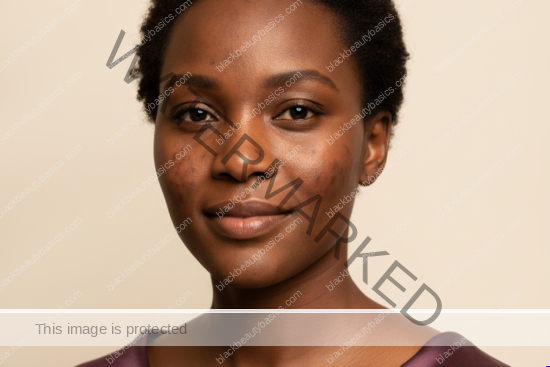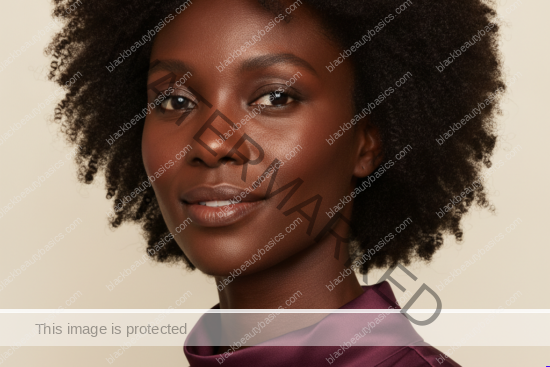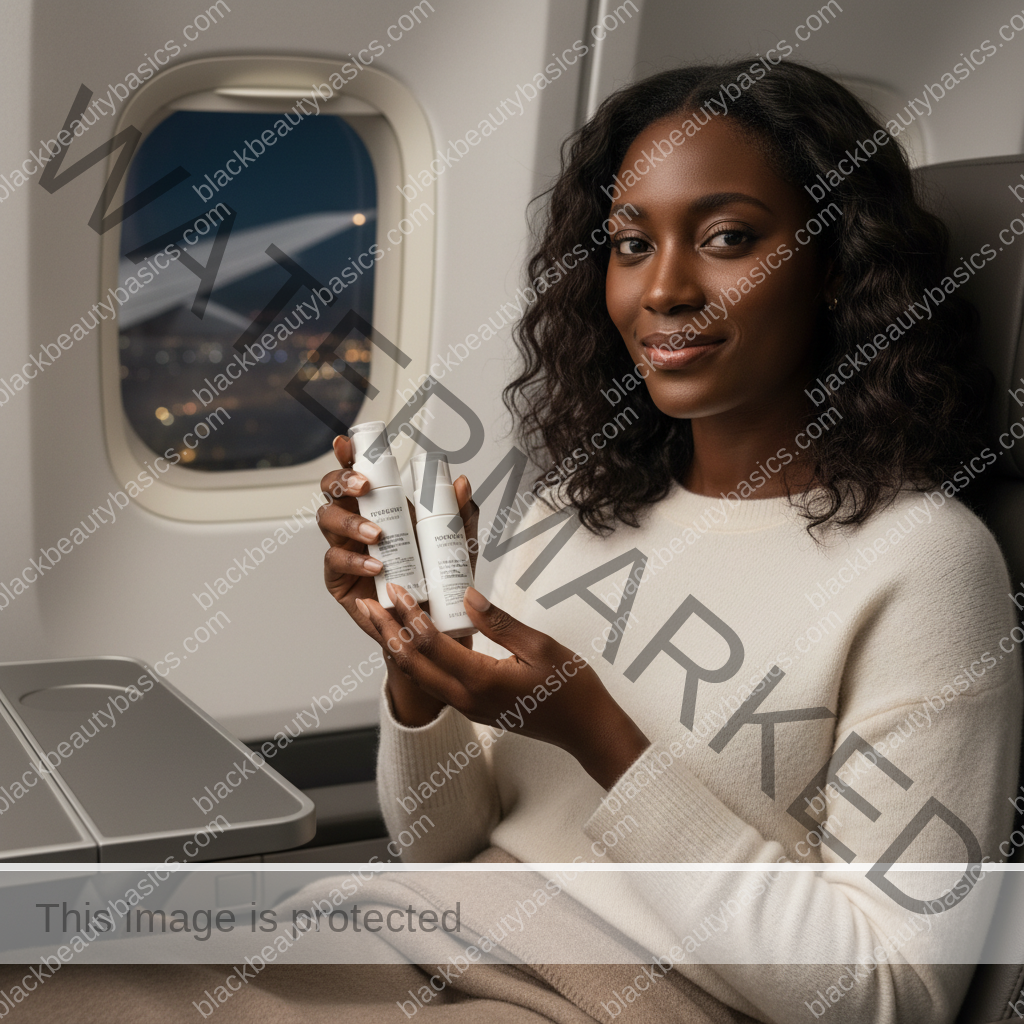
Plane skin is real. You board with your face feeling fine, then a few hours later your skin looks flat, tight, shiny in odd places, or dull in a way that makeup cannot quite rescue. For Black women and people with richly melanated skin, that post-flight dullness can feel even more frustrating when dryness, texture, or irritation makes dark marks look more noticeable.
Let us take the shame out of it first: your skin is not being dramatic. Airplane cabins are dry, travel days disrupt your timing, and hotel-sink routines often make you rush through steps you normally do with more care. If you are managing hyperpigmentation, sensitive skin, or a barrier that gets irritated quickly, a trip can expose every weak spot in your routine.
This guide is not about packing your entire bathroom or turning your flight into a spa performance. It is about building a compact travel skincare routine that keeps melanin-rich skin comfortable, hydrated, and protected without product chaos. If you need the bigger routine framework, start with BBB’s skincare routine design guide, then use this travel guide as the focused plan for flights, hotel stays, early mornings, and dry cabin air.
We will walk through why travel makes skin look dull, what to stop doing, what to pack, how to use products before, during, and after a flight, and how to troubleshoot without overbuying. The goal is skin that feels cared for, not punished.
Why Melanin-Rich Skin Can Look Dull After Flying
Airplane cabins are low-humidity environments. That means the air around you can pull water from the surface of the skin faster than your usual home or work environment. When the skin loses water, it may look less plump and more textured. Fine lines can look more visible, makeup can catch on dry patches, and the overall glow can feel muted.
For melanin-rich skin, dullness is not only about dryness. It can also be about how light reflects off the skin. When the surface is uneven, dehydrated, or irritated, deeper skin tones may look ashy, gray, or flat even when the skin is not actually dirty or unhealthy. That visual change can be emotionally irritating because it often happens right when you are arriving somewhere and want to feel polished.
Travel timing adds another layer. Early flights, late flights, and long layovers disrupt when you cleanse, moisturize, eat, hydrate, and rest. You may skip your usual evening routine because you are packing. You may wake up too early to cleanse properly. You may apply makeup over tired skin. Then, by the time you land, your face has been through dry air, stress, friction, and possibly a full day of product wear.
There is also the issue of travel-size compromises. Many people decant products into little bottles without labeling them clearly, grab samples they have never tested, or buy mini versions of trendy products because they feel convenient. But unfamiliar products on a travel day can be risky. If something stings, pills, clogs, or irritates you away from home, you may not have your normal reset products nearby.
Hair and makeup choices matter too. Protective styles, wigs, scarves, bonnets, edge control, airport sweat, and mask friction can all affect the skin around the hairline, temples, jaw, and cheeks. None of that is wrong. It is real life. The routine simply needs to account for where product transfer and friction happen.
The biggest mistake is treating travel dullness like a flaw that needs harsh correction. Most travel skin needs hydration, barrier support, and consistency. It does not need aggressive scrubs, random acids, or a suitcase full of treatments. Your skin is asking for steadiness.
What to Stop Doing Before and During Travel
A better travel routine begins with removing the habits that make skin more reactive. When you are away from home, simple choices matter more because you have fewer recovery tools and less time to troubleshoot.
Stop trying a brand-new routine right before a trip
The week before travel is not the time to test a new exfoliant, retinoid, peel, mask, or brightening product. If your skin reacts, you may be dealing with sensitivity, flaking, or breakouts during the trip. For melanin-rich skin, that irritation can also create or deepen post-inflammatory hyperpigmentation. If you want to test something new, do it weeks before travel or wait until you return.
Stop over-exfoliating to look extra smooth
It is tempting to do a strong exfoliation session before a vacation, event, or work trip because you want makeup to sit perfectly. But over-exfoliated skin often looks worse on planes. It can sting, dry out faster, and become more sensitive under sunscreen or foundation. A gentle routine that protects the barrier will usually photograph better than a harsh routine that leaves the skin stressed.
Stop skipping moisturizer because you are worried about looking oily
Travel dullness and travel shine can happen at the same time. Skin can look shiny on the surface while still feeling dehydrated underneath. Skipping moisturizer often makes the problem worse because the skin has less support in dry cabin air. The better move is choosing the right texture: enough comfort to last, not so much heaviness that everything slides.
Stop relying on face wipes as your whole cleanse
Face wipes can be useful in a pinch, but they are not a complete routine for many people. They can leave residue, require rubbing, and sometimes irritate the skin. If you use them during travel, follow with a gentle cleanse when possible and moisturize afterward. Your face should not feel raw after cleaning.
Stop packing every active you own
A travel routine should not be a product audition. Choose the essentials first: gentle cleanse, moisturizer, sunscreen, and one optional treatment only if your skin already knows it. Multiple actives plus dry air plus inconsistent sleep is a common recipe for irritation.
Stop treating hotel sinks like a reason to abandon care
Hotel routines can feel awkward. The lighting is strange, the sink is small, towels may feel rough, and you may be exhausted. Still, your skin benefits from a short, repeatable reset. Even a two-minute routine can prevent the next morning from feeling harder.
Stop judging your skin by airport bathroom lighting
Airport and airplane lighting is not kind. It can make everyone look tired, flat, or gray. Do not use harsh lighting as evidence that your face is failing. Use how your skin feels as your first checkpoint: tight, comfortable, itchy, calm, greasy, or irritated. Feelings give better routine information than bad lighting.
The Travel Skincare Routine That Keeps Skin Calm
The strongest travel routine is compact, familiar, and flexible. It should cover three moments: before the flight, during the flight if needed, and after arrival. You do not need many products. You need products with clear jobs.
Before the flight: build a hydrated, low-friction base
Start with a gentle cleanse before leaving for the airport. If your flight is very early, keep this step simple. You are not trying to do a full facial. You are removing sweat, residue, and overnight buildup so the next layers sit evenly.
After cleansing, apply a moisturizer that supports your barrier. If your skin is dry, choose a richer texture. If your skin is oily or combination, choose a lighter moisturizer that still leaves the skin comfortable. The goal is not a greasy layer. The goal is a flexible cushion that helps skin tolerate dry air.
If you will be exposed to daylight during travel, apply sunscreen. This includes driving to the airport in the morning, sitting near windows, walking outside during layovers, or arriving during the day. For dark marks and uneven tone, steady protection matters. A sunscreen that blends well on deeper skin is worth prioritizing because you will actually use it.
If you wear makeup, keep skin prep thin and even. Too many layers can pill under foundation, especially when you add sunscreen. If pilling is a recurring issue, read BBB’s guide to layering serum, moisturizer, and SPF without pilling before your next trip.
During the flight: do less, but do it well
You do not need to perform a full skincare routine in your seat. In fact, applying many products on a plane can be messy and irritating, especially if your hands are not freshly washed. Focus on comfort. If your skin feels tight, use clean hands to apply a small amount of moisturizer or hydrating mist followed by moisturizer if that is already part of your routine.
Be careful with facial mists alone. A mist can feel refreshing, but if you spray and do not seal with moisture, the effect may not last. Think of hydration and moisture as partners. Water without support can disappear quickly in dry air.
Also avoid touching your face repeatedly. Travel days include shared surfaces, luggage handles, phones, and snack wrappers. If your skin is breakout-prone, less touching is a real skincare step.
After arrival: reset without punishing your skin
Once you arrive, cleanse gently if your skin has been under sunscreen, makeup, sweat, or long-wear layers. If you are exhausted, do the minimum: cleanse and moisturize. You can do more tomorrow. The first goal is removing buildup without stripping the skin.
If your face looks dull, resist the urge to scrub. Dullness after flying is often dehydration and surface stress. Give your skin moisture, rest, and a normal routine. If you exfoliate, keep it gentle and wait until the skin feels stable, not tight or reactive.
For hotel stays, set up your essentials immediately where you can see them. A visible cleanser, moisturizer, and sunscreen are more likely to be used than products buried in a bag. Small environmental design helps when you are tired.
The compact travel kit
Your travel kit should be boring in the best way. Choose familiar products that have already proven themselves on your skin.
- A gentle cleanser that does not leave your skin tight.
- A moisturizer that can handle dry air without feeling heavy.
- A sunscreen that blends on your skin tone and wears well.
- One optional treatment only if your skin already tolerates it.
- A soft cloth or cleansing option if makeup removal is part of your routine.
That is enough for most trips. You can still enjoy beauty while traveling, but your core skincare should stay calm.
Example product categories for travel
Use product examples as search categories, not promises. The right choice is the one your skin tolerates and your routine can repeat.
- travel size gentle cleanser for a low-stripping wash that fits your bag.
- travel size face moisturizer for barrier comfort in dry cabin and hotel air.
- travel sunscreen for face with a finish you can wear consistently on deep skin.
Do not buy everything just because it is mini. Travel sizes are convenient, but irritation is still irritation. Choose fewer products with clearer jobs.
How to adjust for different trips
For a short domestic flight, your routine may be as simple as cleanse, moisturize, sunscreen, and a gentle cleanse after arrival. For a long-haul flight, you may want a moisturizer accessible in your personal item, especially if your skin gets tight. For beach or outdoor trips, sunscreen planning becomes more important. For cold-weather travel, richer moisture may matter more.
If you are traveling to a dry climate, pair this guide with BBB’s morning skincare routine for dry climates. If your trip includes overnight travel or strange sleep windows, the night-shift skincare routine can help you think beyond a standard morning/night schedule.
Troubleshooting Travel Skin Without Overreacting
Even with a good routine, travel can still change how your skin behaves. The key is to respond calmly and specifically. Do not throw your whole routine away because one flight made your face look tired.
If your skin looks dull after landing
Start with hydration and rest. Cleanse gently, moisturize well, and give your skin time to recover. If you have a familiar hydrating serum, you can use it under moisturizer, but do not add a new active just because your skin looks flat. Dullness after flying is often temporary.
If your makeup separates during travel
Look at your layering. Too much moisturizer, sunscreen that has not set, or heavy primer can cause slipping. Too little moisture can make makeup catch and crack. Use thin layers and let each one settle. If the issue keeps happening, simplify your pre-flight base.
If your skin feels tight in the hotel
Hotel air, different water, and travel stress can all contribute. Use a gentler cleanse and a more supportive moisturizer. Avoid exfoliating until tightness improves. Tight skin is asking for comfort, not intensity.
If you break out around the hairline or cheeks
Think about transfer and friction. Did edge control migrate? Did your scarf, bonnet, mask, or travel pillow rub one area repeatedly? Did makeup stay on longer than usual? Cleanse those zones gently and avoid picking. If marks appear after bumps, patience and protection matter.
If your sunscreen looks gray in travel photos
This is a product fit issue, not a skin issue. You may need a different formula or finish. Test sunscreen in natural light before travel when possible. A product that looks fine in bathroom lighting may behave differently outdoors or in flash photography.
If you forgot products at home
Buy the simplest replacements possible. Look for gentle cleanser, plain moisturizer, and sunscreen. Avoid impulse-buying strong treatments or unfamiliar exfoliants. Your travel replacement routine should stabilize, not impress.
If your skin is irritated after the trip
Return to baseline for several days: gentle cleanse, moisturizer, sunscreen when exposed to daylight. Pause actives until comfort returns. If irritation is painful, persistent, or spreading, seek professional care. A dermatologist familiar with skin of color can help if discoloration, acne, or sensitivity becomes difficult to manage.
Frequently Asked Questions
1) Why does my skin look dull every time I fly?
Cabin air is dry, and travel often disrupts sleep, hydration, and routine timing. That combination can make the skin surface look less smooth and reflective. On melanin-rich skin, dryness can show up as ashiness, grayness, or flatness. It does not mean your skin is dirty or failing. Usually, the answer is a calmer pre-flight routine, supportive moisture, and a gentle reset after landing.
2) Should I exfoliate before a flight so my skin looks smoother?
Only if exfoliation is already part of your routine and your skin tolerates it well. Do not use a strong exfoliant for the first time before travel. Over-exfoliated skin can feel tight, sting under products, and become more reactive in dry cabin air. If you want smoothness, focus first on hydration, barrier support, and makeup-compatible layering.
3) Do I need sunscreen on travel days?
If you will be exposed to daylight, yes. That may include the drive to the airport, walking outside, sitting near windows, or arriving during the day. Sunscreen is especially helpful if you are managing dark marks or uneven tone. Choose a formula that blends well and feels wearable on your skin tone so consistency is realistic.
4) Can I use a sheet mask on the plane?
You can, but it is not necessary, and it may not be the most practical choice. Airplane hygiene, hand cleanliness, and product dripping can make it awkward. A familiar moisturizer applied with clean hands is often easier and less irritating. If you enjoy masks, save them for the hotel after cleansing.
5) What should I do if hotel water makes my skin feel tight?
Use a gentler cleanse, avoid hot water, and moisturize while skin is still slightly damp. Do not respond with harsh exfoliation. If tightness continues, simplify your routine and focus on barrier comfort. Once you return home, keep the routine calm for a few days before restarting optional treatments.
6) How do I travel with skincare if I only want a carry-on?
Decant familiar products into clean, labeled travel containers or buy travel sizes of products you already know your skin likes. Keep the kit small: cleanser, moisturizer, sunscreen, and one optional treatment. A carry-on routine should be predictable. This is not the moment for five new samples.
7) What if my dark marks look worse after travel?
They may look more noticeable because the skin is dry, tired, or dull, not because the marks truly changed overnight. Rehydrate, moisturize, protect from daylight, and avoid picking or harsh correction. If discoloration keeps worsening, becomes inflamed, or worries you, a dermatologist can help you choose a safer plan.
What to Do Next
Before your next trip, build a three-product core: gentle cleanser, moisturizer, and sunscreen. Test them together before travel so you know how they feel, how they layer, and whether they work under makeup. Keep one optional treatment only if your skin already trusts it.
If plane air is your biggest issue, make moisture the priority. If product pilling is your biggest issue, revisit the layering guide. If travel overlaps with overnight schedules, use the night-shift routine to plan around your actual sleep window. The point is not to have a perfect travel shelf. The point is to arrive with skin that feels calm enough for you to enjoy where you are.
Your skin is allowed to need extra care during travel. That is not high maintenance. That is wise maintenance. Build the routine before the stress begins, keep it simple while you are moving, and let your face recover without shame when you land.
Related next steps
Related posts:
 Night Skincare Routine for Melanin-Rich Skin When You Are Too Tired for a Full Routine
 Travel Skincare for Melanin-Rich Skin: Flights, Climate, & Routines
 Who Gets to Be the “Luxury” Beauty Customer?
 Glow-Focused Routine for Melanin-Rich Skin
 Skin Type vs. Skin Condition on Melanin-Rich Skin: Unlocking Your Skin’s True Needs
 Travel Skincare Routines for Flights and Hotel Stays