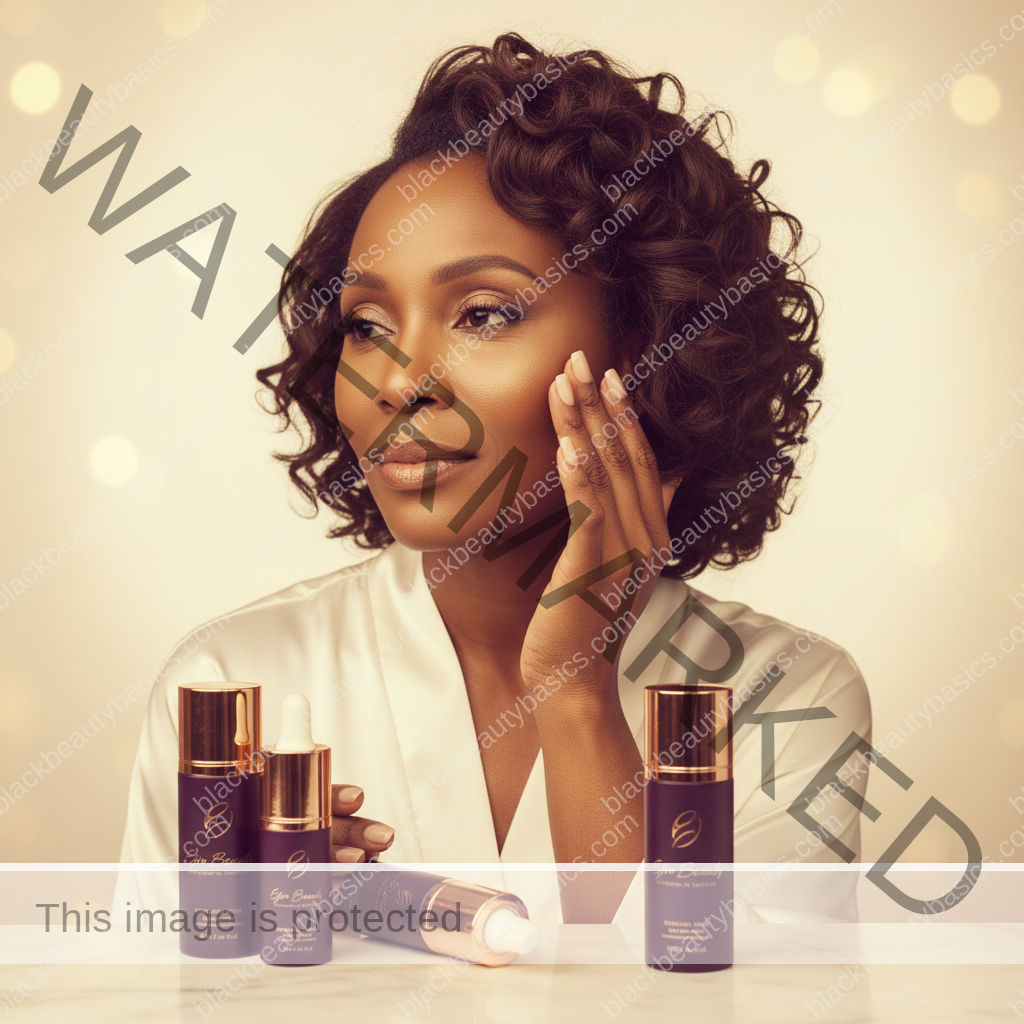
Your 40s do not mean your skin suddenly becomes a problem to solve. They may mean your skin asks for more patience, more moisture, better treatment pacing, and fewer products that rely on irritation to feel “active.” Maybe your skin feels drier than it used to. Maybe texture is more noticeable. Maybe the same dark marks that faded faster before now take their time. Maybe your skin still looks beautiful, but it no longer tolerates chaos the way it once did.
For Black women and people with richly melanated skin, the skincare conversation in your 40s should be grounded in respect, not fear. This is not the decade for panic language. It is the decade for discernment. You can care about texture, tone, firmness, hydration, and comfort without treating age like a threat.
This guide is a practical skincare routine for Black women in their 40s, with attention to dryness, tone maintenance, treatment tolerance, barrier support, and realistic product choices. If you need the larger framework first, start with BBB’s skincare routine design guide. Here, we are focusing on how your routine can support skin that has lived, adapted, protected you, and still deserves softness.
What Often Changes in Your 40s
Your 40s can bring shifts in hydration, texture, elasticity, and product tolerance. Hormonal changes, stress, sleep quality, perimenopause for some, medication changes, caregiving, work pressure, climate, and years of accumulated sun exposure can all influence the skin. These changes do not happen the same way for everyone, and they are not flaws. They are information.
Many Black women notice dryness first. Skin may feel less cushioned after cleansing, or moisturizer may not last as long. Makeup may catch around areas that used to stay smooth. Sunscreen may pill more easily if the skin underneath is dehydrated or if the routine has too many layers.
Tone maintenance can also become a priority. Melanin-rich skin may still develop post-inflammatory hyperpigmentation after acne, irritation, shaving bumps, eczema flares, or product reactions. Dark marks can feel slower to fade, especially if the skin is repeatedly inflamed. That is why barrier care matters so much. The goal is not only to treat old marks; it is to reduce the irritation cycles that create new ones.
Treatment tolerance may shift too. A retinoid, exfoliant, or brightening product that seemed fine before may suddenly feel drying or irritating. That does not mean you can never use active ingredients. It means pacing, frequency, and moisture support become more important.
This is also a decade where skincare can become emotionally loaded. Beauty culture may imply that you need to “fight” aging. BBB rejects that. You are not fighting your face. You are caring for skin that is changing because you are alive. The routine should support your confidence, not make you feel like you are racing a clock.
What to Stop Doing in Your 40s
Healthy 40s skincare often starts by removing the habits that create unnecessary stress.
Stop treating stronger as automatically better
Strong products can have a place, but stronger is not always smarter. If a retinol, exfoliant, or brightening product makes your skin peel, sting, or feel raw, the routine may be too aggressive. For melanin-rich skin, inflammation can leave discoloration. Gentler consistency often beats dramatic irritation.
Stop using the same drying routine from your 20s
If your routine was built around oil control and acne, it may need adjustment now. Harsh cleansers, frequent exfoliation, or skipping moisturizer can leave skin tight and reactive. Your skin is allowed to need more support than it used to.
Stop skipping sunscreen because you do not burn easily
Sunburn is not the only concern. Daylight exposure can influence dark marks, uneven tone, and long-term skin health. Choose a sunscreen that blends on deeper skin and feels wearable enough to use consistently.
Stop chasing every “anti-aging” claim
Anti-aging language can make you feel like every normal change is an emergency. You do not need every peptide, acid, retinoid, device, and mask. You need a routine built around your concerns, tolerance, and lifestyle.
Stop ignoring the neck, chest, and hairline
Your face is not the only area affected by dryness, sunscreen habits, friction, and product transfer. Bring gentle care and sunscreen to exposed areas like the neck and chest. Around the hairline, be mindful of edge products, wigs, scarves, and friction that can contribute to bumps or marks.
Stop expecting tone to change without reducing irritation
If dark marks are your main concern, brightening products alone are not enough. You also need fewer new triggers: less picking, less harsh exfoliation, better sunscreen consistency, and more barrier support.
The Core Routine for Black Women in Their 40s
A strong routine in your 40s should be protective, moisturizing, treatment-aware, and easy enough to repeat. Think of it as steady care with intentional upgrades.
Morning step 1: Cleanse gently, or rinse if that is enough
If your skin wakes up dry or calm, you may not need a full cleanser every morning. A rinse may be enough. If you wake up oily, sweaty, or with residue from overnight products, use a gentle cleanser. The skin should feel fresh afterward, not tight.
If tightness after cleansing is common, review your cleanser before adding more treatments. A harsh cleanse can make every step afterward feel harder.
Morning step 2: Add targeted support only if tolerated
A morning serum can be useful if it has a clear purpose: antioxidant support, tone support, hydration, or barrier support. But the formula should feel comfortable and layer well under moisturizer and sunscreen. If it pills or stings, it may not belong in the morning.
For tone maintenance or antioxidant support, a gentle vitamin C or similar serum may fit. But do not treat it as mandatory. Your routine can still be strong without a morning serum if your skin does better with fewer layers.
Morning step 3: Choose moisturizer for lasting comfort
Moisturizer becomes central in this decade. Look for a texture that supports your barrier without feeling heavy or clogging. Ceramides, glycerin, squalane, and other barrier-supportive ingredients may help, depending on your skin.
Example category: a ceramide face moisturizer can help you compare options designed around barrier support and daily comfort.
Morning step 4: Wear sunscreen consistently
Sunscreen is still the daily anchor. Broad-spectrum SPF 30 or higher is a strong baseline. Choose a formula that does not leave you gray, greasy, or frustrated. If sunscreen keeps pilling over your moisturizer or treatment serum, use BBB’s serum, moisturizer, and SPF layering guide.
Evening step 1: Cleanse thoroughly but gently
At night, remove sunscreen, makeup, sweat, and pollutants without scrubbing. If you wear long-wear makeup, use a gentle first cleanse followed by a mild cleanser if needed. Cleansing should prepare the skin for recovery, not leave it stripped.
Evening step 2: Use retinoids or treatments with respect
Retinoids can be useful for texture, acne, and signs of aging, but they are not a contest. Start slowly. Use a low frequency. Moisturize well. If your skin becomes irritated, pause and repair. Treatment is only helpful if your skin can tolerate it.
Example category: a gentle retinol serum can be a comparison category if you are exploring over-the-counter retinol options, but go slowly and consider professional guidance if you are unsure.
Evening step 3: Repair with moisture
Night is when moisturizer can do more comfort work. If your skin is dry, use a richer layer. If acne-prone, use a lighter but still supportive moisturizer. If treatments are in rotation, moisturizer helps keep the routine sustainable.
How to Adjust for Common 40s Concerns
Your routine should respond to what is actually happening, not what marketing says should be happening.
If dryness is the biggest change
Reduce stripping first. Use a gentler cleanser, moisturize while skin is slightly damp, and consider richer night moisture. If dryness started after adding a treatment, reduce frequency before abandoning the whole routine.
If texture feels more noticeable
Texture can come from dryness, sun exposure, acne, irritation, or natural skin changes. Consider gentle exfoliation or retinoid support only after the barrier feels stable. If your skin is reactive, use BBB’s barrier healing guide before pushing actives.
If dark marks are slow to fade
Focus on fewer new marks. Keep sunscreen steady, stop picking, manage acne gently, and avoid harsh exfoliation. Brightening treatments may help, but they work best when the skin is not inflamed every week.
If treatments keep irritating you
Lower frequency, reduce product strength, buffer with moisturizer, and avoid stacking actives. You may not need a product every night to benefit from it. Consistency can mean sustainable use, not daily intensity.
If makeup is sitting differently
Review moisture and texture before changing every complexion product. Dryness can make foundation catch. Heavy moisturizer can make makeup slip. Give skincare time to settle before makeup and adjust product weight by climate.
If your budget is changing
Spend first on the steps you use every day: cleanser, moisturizer, sunscreen. Treatments are where you can be more selective. Prestige is optional. Product fit is not.
How This Decade Connects to the Bigger Routine Map
If you are moving from your 30s routine, the shift is usually toward more moisture, more treatment pacing, and more barrier awareness. If you are looking ahead, BBB’s routine for Black women in their 50s and beyond continues the conversation around comfort, elasticity, dryness, and skin changes without fear.
Your 40s routine also connects closely to sunscreen layering, barrier healing, and product tolerance. These are not side topics. They are what make a routine sustainable. You do not need to keep adding products if the foundation is not comfortable.
Frequently Asked Questions
1) What should skincare look like for Black women in their 40s?
It should start with gentle cleansing, moisturizer, and daily sunscreen during daylight exposure. From there, add targeted treatments for texture, acne, tone, or dryness based on your skin’s tolerance. The routine should feel supportive and repeatable, not fear-based or overloaded.
2) Do I need retinol in my 40s?
You do not need it, but it can be useful for some people. Retinol may support texture and signs of aging, but it can also irritate if introduced too quickly. Start slowly, moisturize well, and stop if your skin becomes persistently irritated. A dermatologist can help if you want a more personalized plan.
3) Why is my skin drier in my 40s?
Dryness can come from hormonal changes, climate, cleanser choice, treatment use, medication, stress, or natural shifts in the skin barrier. Start by checking your cleanser and moisturizer. Add support before assuming you need stronger treatments.
4) How do I care for dark marks in my 40s?
Reduce new inflammation first. Wear sunscreen, avoid picking, treat acne gently, and do not over-exfoliate. Once the barrier is stable, targeted tone-supporting products may help. If marks are persistent or distressing, consider a dermatologist experienced with skin of color.
5) Should I exfoliate more for texture?
Not automatically. Texture can come from dryness or barrier stress, not just buildup. If your skin is irritated, exfoliating more may make things worse. Use gentle exfoliation only when the skin is comfortable and do not stack it with too many other actives.
6) Are luxury products better for skin in your 40s?
Not necessarily. Luxury products may have beautiful textures, but they are not automatically more effective or better tolerated. Choose based on ingredients, texture, comfort, and consistency. A product that fits your skin and budget is better than one that causes stress.
7) When should I see a dermatologist?
See a dermatologist if acne, discoloration, dryness, irritation, or sensitivity is persistent, painful, or affecting your quality of life. Professional guidance can help you use treatments safely and avoid worsening hyperpigmentation through trial and error.
What to Do Next
Start by reviewing your baseline. Does your cleanser leave you comfortable? Does your moisturizer last? Is your sunscreen wearable enough to use every day? If those three steps are not working, fix them before adding more treatments.
Then choose one priority: dryness, texture, tone, acne, or treatment tolerance. Let that priority guide your next step. If you are irritated, read the barrier healing guide. If sunscreen is pilling, use the SPF layering guide. If you are preparing for the next decade, move to the 50s and beyond routine.
Your 40s are not a problem. They are a season of refinement. Your skin deserves care that is steady, elegant, practical, and free from panic.
Related next steps
Related posts:
 Skincare Routine for Black Women in Their 20s
 Skincare Routine for Black Women in Their 30s
 Skincare Routine for Black Women in Their 50s and Beyond
 Night Skincare Routine for Melanin-Rich Skin When You Are Too Tired for a Full Routine
 Best Minimalist Skincare Routine for Black Women Who Hate Complicated Routines
 Skincare Routine for Black Women Who Work Overnight Shifts