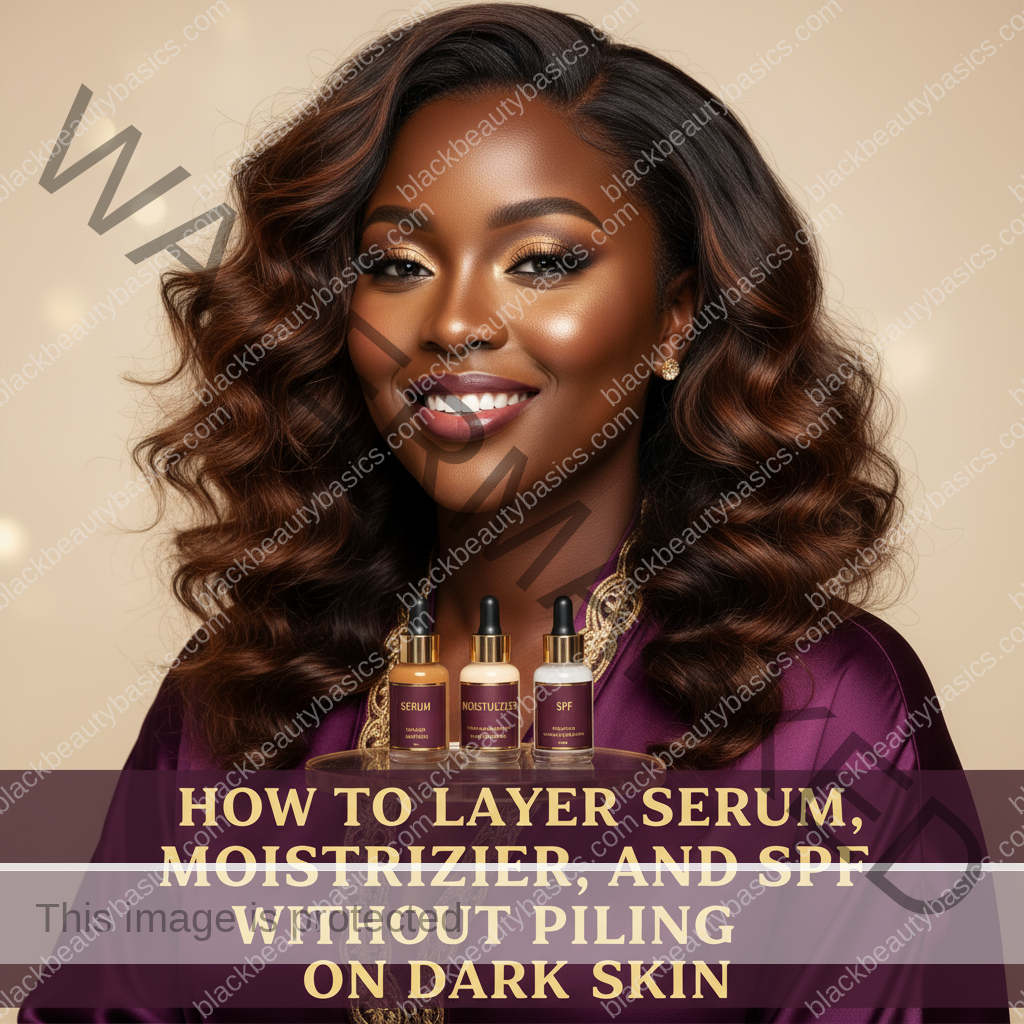
Pilling is one of those skincare problems that can make a good routine feel messy fast. You apply serum, then moisturizer, then sunscreen, and suddenly little rolls of product start forming on your face. On deeper skin tones, pilling can be even more frustrating because it may leave gray streaks, patchy sunscreen, uneven makeup, or a cast that makes the skin look dull instead of protected.
If this keeps happening, it does not mean you are bad at skincare. It usually means the textures, amounts, timing, or formulas are not working together. For Black women and people with richly melanated skin, this matters because sunscreen is often already a complicated step. If it pills, looks gray, or disturbs makeup, you are more likely to use less of it or avoid it altogether, and that can make dark marks harder to manage over time.
This guide will help you layer serum, moisturizer, and SPF without pilling on dark skin, while keeping the routine practical and barrier-safe. If you need the full routine map, start with BBB’s skincare routine design guide. Here, we are focusing on the details that make your morning layers sit smoothly, wear comfortably, and protect your skin without turning into little product crumbs.
Why Skincare Pills in the First Place
Pilling happens when products roll up instead of blending into a smooth film. Sometimes it looks like tiny white beads. Sometimes it feels like the product is lifting off your face. Sometimes it only happens once you add sunscreen or foundation. The cause is usually a layering mismatch, not one single “bad” product.
One common cause is using too much product. Serums, moisturizers, and sunscreens all leave some kind of film. If each layer is applied heavily, the skin surface becomes overloaded. When you rub the next layer on top, the earlier products lift and roll. This is especially common with gel textures, silicone-heavy formulas, certain sunscreens, and moisturizers that sit on top rather than sinking in.
Another cause is not waiting long enough between steps. If a serum is still wet and tacky, moisturizer may smear it around instead of settling over it. If moisturizer has not had a moment to absorb, sunscreen may drag it into streaks. Rushing is real life, especially on work mornings, but pilling is often the skin’s way of saying, “Too much, too fast.”
Formula compatibility matters too. Water-based serums, oil-rich moisturizers, silicone primers, mineral sunscreens, chemical sunscreens, and makeup bases do not all behave the same. Some combinations sit beautifully. Others fight. This does not mean you need to become a cosmetic chemist. It means you should pay attention to texture families and how they feel together.
On melanin-rich skin, pilling can be especially visible when the product that rolls is sunscreen. A mineral SPF with a cast may collect in patches around the hairline, brows, nose, or jaw. A sunscreen that pills under makeup can make foundation look gray, separated, or textured. This can create frustration that has nothing to do with your skin and everything to do with product behavior.
The good news: pilling is usually fixable. You may not need new everything. You may need less product, better dry-down time, fewer layers, or one strategic texture change.
What to Stop Doing When Products Keep Pilling
Before you buy more, remove the habits that make pilling more likely. These small changes often solve the issue faster than replacing the whole routine.
Stop rubbing each layer aggressively
Rubbing can lift product that has already started forming a film. Use gentle spreading, then press where needed. Sunscreen still needs enough coverage, but you do not need to grind it into the skin. Aggressive rubbing can also irritate the skin, especially if you are acne-prone or managing dark marks.
Stop applying full-size amounts of every product
Layering does not mean every step gets a generous glob. Serum can often be a thin layer. Moisturizer can be adjusted by skin type and climate. Sunscreen needs adequate application, so reduce the non-SPF layers first before you reduce protection.
Stop adding extra products to fix a texture problem
If serum + moisturizer + SPF already pills, adding primer, oil, mist, or more moisturizer may make the surface even less stable. Simplify first. Find the combination that works, then decide whether extras are needed.
Stop blaming your skin tone for sunscreen problems
Gray cast and pilling are product-fit issues, not skin-tone failures. Deeper skin deserves sunscreen formulas that blend, set, and protect without making the face look chalky. If one product behaves badly, the product is not the final word on your options.
Stop layering actives on irritated skin
If your skin is stinging, flaking, or tight, pilling may be worse because the surface is uneven and dehydrated. Before troubleshooting cosmetic elegance, check barrier comfort. BBB’s skin barrier healing guide can help you decide whether your skin needs recovery before a more advanced routine.
The Smooth Layering Method: Serum, Moisturizer, SPF
The best layering method is simple: light to rich, thin to protective, patient enough to let each layer settle. You are not trying to create a thick stack. You are creating a stable base.
Step 1: Start with skin that is not too wet and not too dry
After cleansing, gently pat the skin so it is slightly damp or fully dry depending on your serum. Some hydrating serums like a bit of dampness. Some active serums perform better on dry skin. Read the product directions when available, but also pay attention to how your face responds. If everything slides around, your skin may be too wet. If products drag, your skin may be too dry.
Step 2: Apply serum in a thin, even layer
Serum should not leave your face soaked. Use enough to cover the skin lightly. If the serum feels sticky, give it more time before moisturizer. If it pills even before moisturizer, you may be using too much or the formula may not suit your routine.
Example category: a lightweight hydrating serum may be easier to layer than a heavy, tacky formula if your goal is smoother SPF application. Compare texture and finish, not hype.
Step 3: Choose moisturizer by what the sunscreen needs
Your moisturizer does not work alone. It has to cooperate with sunscreen. If your sunscreen is rich and moisturizing, you may need only a light moisturizer underneath. If your sunscreen is matte or drying, you may need more cushion. The key is balance.
For oily skin, use a light gel-cream or skip separate moisturizer only if your sunscreen gives enough comfort. For dry or dehydrated skin, use a moisturizer that softens tightness without leaving a greasy film. If your skin is acne-prone, choose a texture that supports the barrier without feeling heavy.
Example category: a lightweight gel moisturizer for face can be useful when cream textures make sunscreen roll or makeup separate.
Step 4: Give moisturizer a short settling window
You do not need to wait twenty minutes. But thirty seconds to a few minutes can help, especially if your moisturizer is still shiny or wet. Use that time to brush your teeth, do edges, get dressed, or choose earrings. Let the layer become less slippery before SPF.
Step 5: Apply sunscreen in sections
Instead of dumping sunscreen into your palm and rubbing hard all over, apply it in sections: forehead, cheeks, nose, chin, jaw, neck if exposed. Spread gently and press lightly. If the sunscreen starts rolling, stop rubbing. Give it a moment, then press the edges into place.
Example category: a non-pilling sunscreen for face can help you compare formulas marketed for smoother layering, but the real test is how it behaves over your serum and moisturizer.
Step 6: Let SPF set before makeup
If you wear makeup, sunscreen needs a settling window too. Foundation applied over wet sunscreen is more likely to streak, separate, or pill. If you are rushing, use fewer skincare layers rather than rushing every layer. A simple base often wears better than a crowded one.
How to Match Textures So They Do Not Fight
Texture matching is the skill that makes layering easier. You do not need perfect ingredient knowledge, but you do need to notice how products feel.
If your serum is sticky
Use less, wait longer, or switch to a thinner formula. Sticky serums can work, but they are more likely to grab moisturizer or sunscreen if applied heavily. If the serum has a treatment purpose you love, try using it at night instead.
If your moisturizer is rich
Use a smaller amount in the morning or save the richer cream for night. Rich creams can be beautiful for barrier repair, but they may interfere with sunscreen during the day, especially in humid climates. For humid-weather adjustments, see BBB’s morning routine for humid climates.
If your sunscreen is matte
Matte sunscreens may need more hydration underneath, but not heavy greasiness. A light moisturizer can reduce drag. If matte SPF makes your skin look ashy, the finish may not be right for your tone or skin type.
If your sunscreen is dewy
Dewy SPF may need fewer layers underneath. If you use a rich moisturizer first, the sunscreen may slide or pill. Let the sunscreen do some of the moisturizing work if it is comfortable enough.
If your makeup keeps separating
Review the skincare before blaming foundation. Too much serum, moisturizer that has not settled, or sunscreen that is not compatible can disturb makeup. Simplify your base, then test makeup again.
Troubleshooting Common Pilling Problems
Use the symptom to find the likely fix.
Pilling starts after serum
You may be using too much serum, applying it to skin that is too wet, or using a formula that forms a film quickly. Try a smaller amount and wait longer before moisturizer.
Pilling starts after moisturizer
The moisturizer may be too heavy, too silicone-rich, or layered over a serum that has not settled. Reduce serum amount, change moisturizer amount, or test moisturizer without serum to isolate the issue.
Pilling starts only after sunscreen
The sunscreen may not be compatible with the layers underneath. Simplify to cleanser + moisturizer + SPF and test again. If it still pills, the sunscreen may not be the right formula for you.
Gray cast collects in patches
This often happens with mineral sunscreens, heavy application over uneven layers, or product collecting around hairline and brows. Apply in sections, blend gently, and consider a sunscreen with a better finish for deeper skin.
Pilling happens only in humid weather
Your routine may be too heavy for the climate. Use lighter layers and allow more dry-down time. If humidity is a recurring issue, the humid-climate routine can help you adjust the whole morning flow.
Pilling happens when your skin is flaky
The issue may be barrier stress. Do not rush to exfoliate immediately. Moisturize, simplify, and let irritation calm. If the barrier is still reactive, pilling may improve once the surface is less rough.
Pilling happens around the hairline
Hair products, edge control, sunscreen buildup, and friction may be involved. Apply skincare carefully around edges, avoid mixing too much product at the hairline, and cleanse gently at night.
Frequently Asked Questions
1) What order should I use: serum, moisturizer, or SPF?
Most morning routines work best with serum first, moisturizer second, and SPF last. Serum treats or hydrates, moisturizer supports comfort, and sunscreen protects from daylight exposure. If your sunscreen is moisturizing enough, you may use less moisturizer underneath, but SPF should still be the final skincare step before makeup.
2) How long should I wait between layers?
You usually do not need a long wait. Start with thirty seconds to a few minutes between moisturizer and sunscreen, especially if products feel wet or slippery. If your routine pills often, adding small settling windows can make a big difference without making the routine unrealistic.
3) Does pilling mean the product is bad?
Not always. It may mean the product is incompatible with another layer, you used too much, or you did not allow enough dry-down time. Test products separately before deciding. If a sunscreen pills over everything, though, it may simply not be the right formula for your routine.
4) Should I skip moisturizer if sunscreen keeps pilling?
Maybe, but only if your sunscreen gives enough comfort on its own. Try reducing the moisturizer amount first or switching to a lighter texture. If your skin feels tight without moisturizer, skipping it may create another problem. The goal is smooth layering and barrier comfort.
5) Why does sunscreen look gray when it pills?
When sunscreen rolls or gathers unevenly, filters and pigments can collect in patches. On deeper skin, that may look gray or chalky. This is often a formula and application issue, not a problem with your skin tone. Apply in sections and look for formulas that blend better on melanin-rich skin.
6) Can I wear makeup over SPF without pilling?
Yes. Let sunscreen set first, then apply makeup gently. Avoid rubbing foundation aggressively over SPF. If makeup still pills, simplify the skincare underneath and test whether your primer, foundation, or sunscreen is the incompatible layer.
7) When should I change products instead of changing technique?
If you have reduced amounts, added settling time, simplified layers, and the product still pills or looks gray, it may be time to change the formula. Start with the product that seems to trigger the issue most often, usually sunscreen or moisturizer. Replace one product at a time.
What to Do Next
Tomorrow morning, test the simplest version: cleanse, apply a thin serum layer if needed, use a light moisturizer, wait briefly, then apply sunscreen in sections. Do not add primer or makeup until you know the skincare layers are behaving. Once the base is smooth, add makeup back carefully.
If pilling is tied to climate, read the humid or dry climate routines next. If your barrier is flaky or irritated, pause and check the barrier healing guide. If your whole routine feels too complicated, move toward the minimalist routine. Smooth layering is not about perfection. It is about giving each product enough room to do its job.
Your sunscreen should not make you feel defeated before the day starts. With the right texture, amount, and timing, your morning routine can protect dark skin without leaving rolls, streaks, or gray patches behind.
Related next steps
Related posts:
 How to Layer Actives on Dark Skin (Vitamin C, Niacinamide, Retinoids, Acids)
 How to Layer Actives Safely on Melanin-Rich Skin
 How to Treat Acne on Dark Skin Without Causing Dark Spots
 The Sculpted Glow: How to Use HYDRONOVA Total Rewind Sculpting Serum for Radiant, Even-Toned Skin
 Good Molecules Daily Brightening Serum Review
 How to Choose an Effective Vitamin C Serum That Won't Oxidize or Stain