Acne marks can make your routine feel more complicated than the breakout itself. The pimple may be gone, but the brown mark stays, and suddenly every serum, acid, sunscreen, and moisturizer sounds urgent. For Black skin and other richly melanated complexions, routine order matters because the wrong sequence can turn a helpful product into an irritating one, and irritation can invite more post-inflammatory hyperpigmentation.
This guide gives you a practical order for fading acne marks on Black skin without turning your face into a product experiment. We will keep it grounded: prevent new breakouts, protect the barrier, use treatment products in a thoughtful order, and make sunscreen a daily support step. If you need the wider foundation first, BBB’s facial hyperpigmentation guide explains where acne marks fit inside the bigger dark-spot conversation.
Why Routine Order Matters for Acne Marks
Most acne marks on deep skin are post-inflammatory hyperpigmentation, often called PIH. That means the skin produced extra pigment after inflammation. The original acne lesion was the trigger. The dark mark is the after-effect. Because inflammation caused the mark, your routine cannot only focus on fading. It also has to reduce the chances of new irritation, new acne trauma, and new marks.
Routine order matters because each step changes how the next step behaves. A harsh cleanser can leave the barrier vulnerable before a treatment ever touches your skin. A treatment applied too often can make the skin sting, peel, or roughen. A moisturizer used at the right moment can make a routine more tolerable. Sunscreen in the morning helps keep marks from looking darker while fading happens slowly. The order is not about being fancy. It is about making the routine usable.
On melanin-rich skin, the margin for irritation can feel smaller because visible pigment may appear after even small inflammation. That does not mean Black skin is fragile. It means pigment-prone skin deserves respect. You do not need a twelve-step routine to prove you are serious. You need a repeatable system that treats the cause, supports the barrier, and protects the progress.

Another reason order matters is that acne and hyperpigmentation sometimes pull you in opposite directions. Acne routines may include exfoliating acids, benzoyl peroxide, retinoids, or other actives. Dark-spot routines may include vitamin C, niacinamide, azelaic acid, tranexamic acid, retinoids, or exfoliating acids. If you stack too many at once, you may irritate the barrier and worsen both concerns. The best order helps you decide what earns a place and what needs to wait.
What to Stop Doing Before You Add More Products
Stop treating every mark like it needs a stronger product. Acne marks fade slowly, especially on deep skin. If you keep switching products every week, your skin never gets a stable routine long enough to show you what is helping. A product may need several weeks or longer to reveal its effect, while irritation can show up quickly. Give your skin fewer variables so you can read it more clearly.
Stop scrubbing the marks. A physical scrub may make your face feel smoother for an hour, but it does not lift deep pigment by force. If the scrub creates micro-irritation, the skin may respond with more discoloration. The same goes for rough cleansing brushes, aggressive towels, and rubbing at old marks as if they are stains on fabric. Your face is not laundry.
Stop applying actives to angry skin. If your skin is burning, peeling, cracking, or stinging when you apply moisturizer, that is not the moment to add another dark-spot serum. That is the moment to simplify. A damaged barrier makes products harder to tolerate and can keep the pigment cycle active. BBB’s guide to fading dark spots without damaging your barrier is especially important if your routine already feels spicy.
Stop skipping acne prevention. If new pimples keep forming, new marks will keep appearing. A fading routine can only do so much if the source of inflammation is active every week. That may mean improving cleansing habits, reducing pore-clogging products, adjusting hair products that migrate onto the face, using acne-supportive ingredients carefully, or seeing a dermatologist if acne is painful, cystic, persistent, or leaving scars.
Stop treating sunscreen as optional. Sunscreen does not erase acne marks, but it helps protect them from UV exposure that can make them look darker or last longer. If you hate sunscreen because of white cast, pilling, or eye sting, the answer is a better formula and better layering, not abandoning the step entirely. Deep skin deserves sunscreen that respects its tone and texture.
The Morning Order: Protect the Day
Morning routines should prepare your skin for the day without overloading it. A good basic order is cleanser, treatment if appropriate, moisturizer if needed, and sunscreen. Not everyone needs a full cleanse in the morning. If your skin is dry or sensitive, a gentle rinse may be enough. If you are oily, acne-prone, or using heavier nighttime products, a mild cleanser can help. The point is to start clean without stripping.
After cleansing, use one morning treatment if your skin tolerates it. This might be a vitamin C serum, niacinamide serum, azelaic acid product, or another pigment-supportive product. You do not need all of them in the same morning. If you are new to treatment steps, choose one direction and keep it steady. If a product stings every time, pills under sunscreen, or leaves your skin tight, it may not be the right morning option.
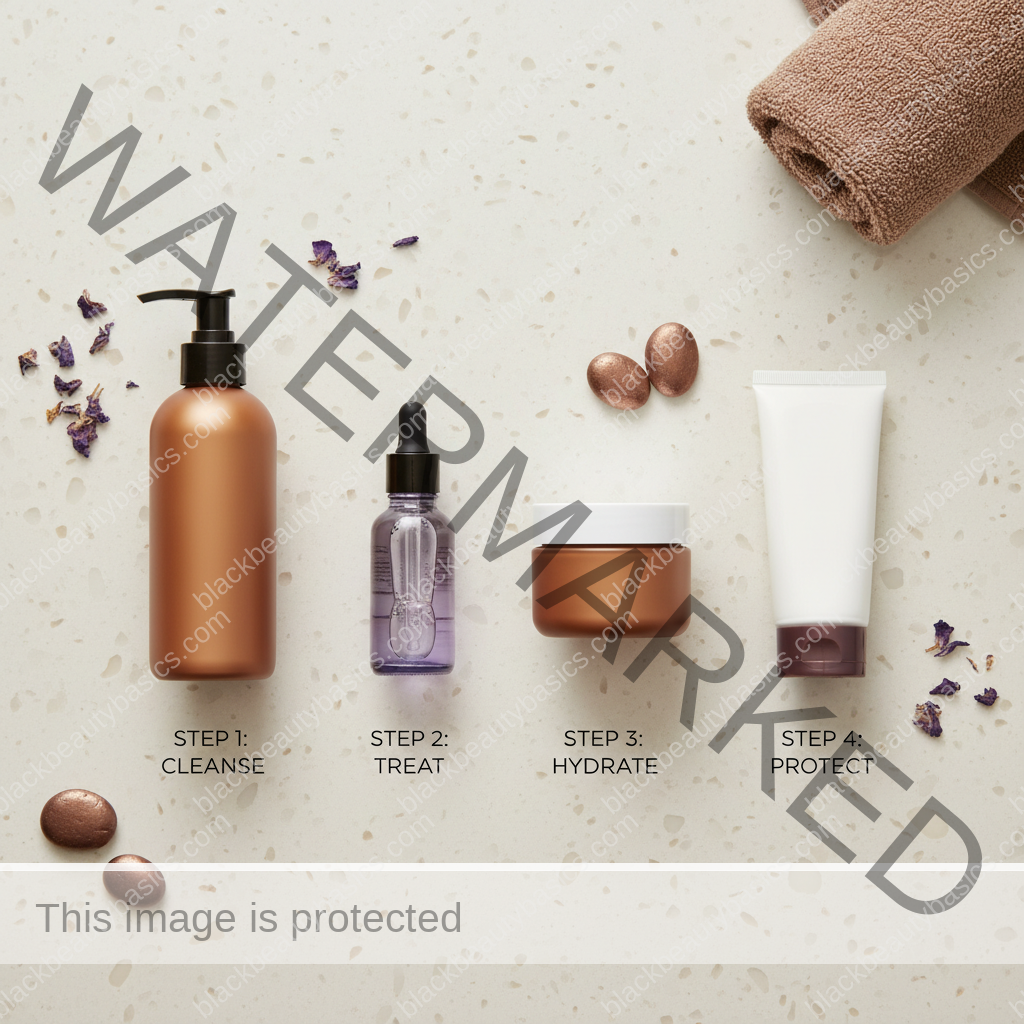
Moisturizer comes next if your skin needs it. Some sunscreens are moisturizing enough for oily skin, while drier skin may need a separate moisturizer first. Do not skip moisturizer just because you have acne-prone skin. Dehydrated, irritated skin can overreact to treatments, and a comfortable barrier helps you stay consistent. Choose a texture that suits you: gel-cream, lotion, or cream. Comfort matters.
Sunscreen is the final morning step. Use a broad-spectrum SPF 30 or higher when possible, and choose a finish you will actually wear. For dark spots, consistent sunscreen is a protection step. It helps keep UV exposure from deepening the marks you are trying to fade. If you are still looking for a good fit, you can explore examples through a search like sunscreen for dark skin with no white cast, but use your own skin feel and finish as the deciding factor.
If makeup is part of your day, let sunscreen set before applying base products. Rushing layers can cause pilling, which makes you less likely to use sunscreen consistently. Give each step a little space. A calmer morning routine is easier to repeat than one that feels like a race.
The Evening Order: Treat and Repair
Evening is where many people place stronger treatment steps because there is no sunscreen layer to manage afterward. The basic order is cleanse, treatment, moisturizer. If you wear makeup or water-resistant sunscreen, you may prefer a first cleanse to loosen product and a second gentle cleanse to clean the skin. The goal is clean, not stripped. If your face feels squeaky, tight, or hot after cleansing, the cleanser may be too much.
Your evening treatment should match your main concern and tolerance. If acne is still active, an acne-focused treatment may matter more than a brightening serum. Retinoids, benzoyl peroxide, salicylic acid, or prescription options may be part of acne care for some people, but they need to be used carefully. If dark marks are the main issue and breakouts are controlled, ingredients like azelaic acid, tranexamic acid, niacinamide, retinoids, or gentle exfoliating acids may be considered depending on your skin.
Do not use every active every night. A simple schedule might place a retinoid on certain nights, a pigment serum on alternate nights, and recovery nights with only moisturizer. If you are new or sensitive, recovery nights are not laziness. They are how you keep the barrier in the routine. If your skin is confused, start with fewer nights and build slowly.

Moisturizer should finish the evening routine. If a treatment is drying, moisturizer may help your skin tolerate it. Some people use the sandwich method with moisturizer before and after a retinoid to reduce irritation. This can be helpful for sensitive skin, though it may change how a product feels. The goal is not to maximize intensity; the goal is to build a routine your skin can live with.
If you need a gentle baseline cleanser or moisturizer, choose by criteria first: non-stripping, fragrance-free if you are reactive, comfortable after rinsing, and compatible with acne-prone skin if clogged pores are an issue. Search-based examples like gentle fragrance-free face cleanser for acne-prone skin or barrier repair moisturizer for acne-prone skin can help you compare product types, but the right product is the one your skin tolerates consistently.
Where Dark-Spot Ingredients Fit
Dark-spot ingredients need a place, not a pileup. Vitamin C is often used in the morning under sunscreen, but some forms can irritate sensitive skin. Niacinamide can support uneven tone and barrier comfort for many people, but stronger percentages are not automatically better. Azelaic acid can be helpful for acne-prone and pigment-prone skin, though tolerance varies. Tranexamic acid is often discussed for discoloration and may fit in a serum step. Retinoids can help acne and texture over time, but they can irritate if rushed.
The best place for an ingredient depends on the formula and your skin. Follow product directions, introduce one new active at a time, and avoid layering multiple strong treatments unless you know your skin can handle them. If a product is prescription, follow your clinician’s instructions rather than a general article. If your skin is easily irritated, BBB’s vitamin C guide for dark skin and azelaic acid routine guide can help you think more carefully about ingredient placement.
Exfoliating acids should be treated with respect. They can help some routines, but daily exfoliation is not required for most people. If you use an acid, do not also scrub, use another acid, and apply a retinoid on top just because your marks feel urgent. That urgency is understandable. It is also how many people end up with a damaged barrier and darker marks.
Troubleshooting Your Routine Order
If your products pill, simplify the morning. Use thinner layers, let each layer settle, and check whether moisturizer and sunscreen are compatible. Too many serums under sunscreen can create a rolling texture that makes you skip SPF. If sunscreen is the step that protects your progress, build the morning around making it wearable.
If your skin burns after treatment, reduce frequency or pause. Return to cleanser, moisturizer, and sunscreen until the skin feels calm. Then reintroduce one treatment slowly. Burning is not the price of progress. On deep skin, repeated irritation can become the reason marks linger.
If new acne keeps appearing, the routine may need acne support, not just dark-spot support. Consider whether hair products, makeup, masks, pillowcases, stress, hormones, or product heaviness are contributing. If acne is cystic, painful, scarring, or persistent, professional care can save time and reduce marks.
If old marks are fading but new ones keep forming, celebrate the useful information. Your fading plan may be helping, but prevention needs attention. Fewer new breakouts means fewer new marks for your routine to chase.
Frequently Asked Questions
1. Should acne treatment or dark-spot treatment come first?
If acne is still active, acne control usually comes first because every new inflamed bump can leave another mark. That does not mean you ignore dark spots. It means the routine should prevent new triggers while slowly fading old marks. Once breakouts are calmer, you can give more attention to pigment-focused treatments.
2. Can I use vitamin C and a retinoid in the same routine?
Some people can, but many do better separating them. Vitamin C is often used in the morning, while retinoids are often used at night. If your skin is sensitive, do not introduce both at the same time. Start with one, learn your tolerance, and keep moisturizer and sunscreen steady.
3. Do I need exfoliation to fade acne marks?
Not always. Gentle exfoliation can help some routines, but it is not the foundation. Preventing new inflammation, wearing sunscreen, supporting the barrier, and using a tolerated treatment consistently matter more than forcing the skin to shed. If exfoliation irritates you, it can make the problem worse.
4. How long should I try a routine before changing it?
Give a gentle routine enough time to show a pattern, often several weeks or more, unless irritation appears. If your skin is burning, peeling, or worsening, do not push through. If the routine is comfortable but marks are slow, that may be normal. Dark spots often fade over months, not days.
5. Should moisturizer go before or after treatment?
Usually treatment goes before moisturizer, but sensitive skin may benefit from moisturizer before certain treatments, especially retinoids. This buffering can reduce irritation. Follow product directions and your clinician’s advice if you use prescriptions. The best order is the one that lets your skin tolerate the routine safely.
6. Can sunscreen really help marks from acne?
Yes. Sunscreen helps protect acne marks from UV exposure that can make them look darker or slow visible fading. It does not replace treatment, but it supports treatment. The key is finding a formula that works on deep skin without a cast or uncomfortable finish.
7. When should I see a dermatologist for acne marks?
See a dermatologist if acne is painful, cystic, scarring, persistent, or emotionally overwhelming. Also seek help if marks are not improving after consistent gentle care, if discoloration is spreading, or if you are unsure whether you are dealing with PIH, melasma, or something else. Professional help is not failure. It is less guessing.

What to Do Next
If your acne marks feel overwhelming, start with order. Morning: cleanse gently, use one treatment if appropriate, moisturize if needed, and finish with sunscreen. Evening: cleanse well, treat deliberately, and moisturize. That simple sequence can do more for your skin than a crowded shelf full of half-used promises.
Choose one problem to solve first. If sunscreen is inconsistent, fix that. If your cleanser strips, change that. If acne is still active, prioritize prevention. If your barrier is irritated, pause the brightening race and rebuild comfort. Your skin does not need punishment to improve. It needs fewer new injuries and a routine you can repeat.
For deeper support, read why dark spots last longer on deep skin, compare patterns in PIH vs melasma on dark skin, and protect your progress with barrier-safe dark spot care. The goal is not a perfect routine. It is a routine that your real skin can trust.
Related next steps
Related posts:
 Morning Routine Order: Where Face Sunscreen Fits on Melanin-Rich Skin
 Facial Hyperpigmentation on Melanin-Rich Skin: Acne Marks, Melasma & Uneven Tone
 Acne Marks and Post-Inflammatory Hyperpigmentation on Dark Facial Skin
 Routine Frameworks That Support Fading Dark Spots Over Time
 The Right Order to Apply Your Skincare Products (AM/PM Cheat Sheets)
 Daily Routines That Support Fading Facial Dark Spots