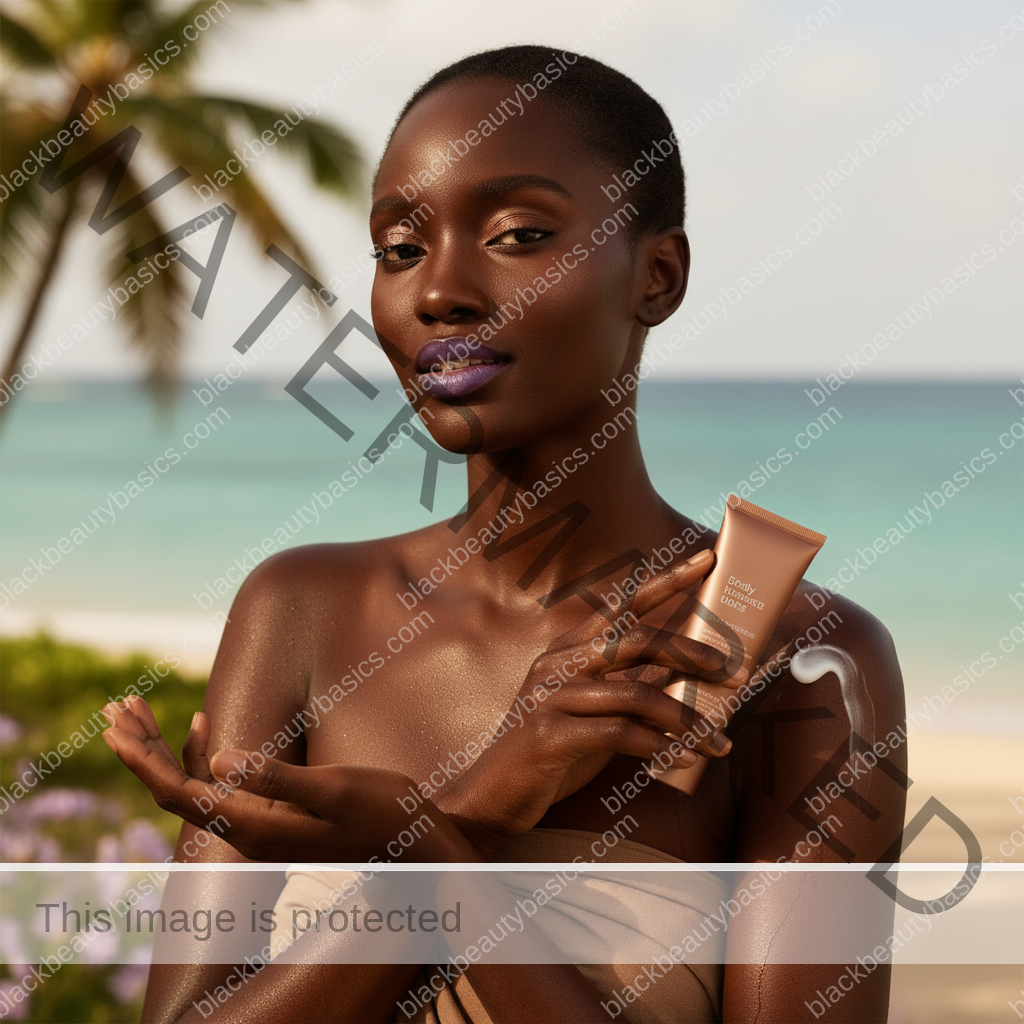
For too long, the narrative around sun protection for melanin-rich skin has been fraught with misconceptions, often leading to a dismissive approach to a vital aspect of skincare. But the truth, beautiful sistahs, is that our glorious skin, while blessed with natural resilience, is not impervious to the sun’s powerful embrace. We deserve to bask in the sun’s warmth, to move through our days with confidence and grace, without the dreaded, uncomfortable sensation of sticky, greasy sunscreen clinging to our bodies.
At Black Beauty Basics, we believe in celebrating and protecting every inch of your magnificent canvas. This isn’t just about preventing sunburn; it’s about preserving your skin’s youthful radiance, maintaining an even tone, and safeguarding its long-term health from the silent, insidious damage of UV exposure. We understand the unique challenges and preferences of Black women, and today, we’re dismantling the myth that effective sun protection must come at the cost of comfort. Get ready to discover a body sunscreen routine that feels as luxurious and effortless as it is essential, leaving your skin feeling soft, supple, and utterly non-sticky.
The Unsung Hero: Why Sunscreen is Non-Negotiable for Melanin-Rich Skin
Let’s dispel a persistent myth: Black skin does not need sunscreen. This harmful misconception has left countless Black women vulnerable to UV damage, often leading to hyperpigmentation, premature aging, and, in severe cases, skin cancer. While melanin does offer a natural SPF of approximately 13-15, it’s simply not enough to provide comprehensive protection against the full spectrum of UVA and UVB rays.
Our skin, a testament to our ancestral strength and beauty, is indeed resilient. However, it is also prone to certain concerns that UV exposure can exacerbate. Hyperpigmentation, whether post-inflammatory (PIH) from acne or melasma, is a common concern for Black women, and sun exposure is its primary trigger and aggravator. Protecting your skin with sunscreen is the single most effective way to prevent new dark spots and ensure that existing ones fade more efficiently.
Beyond hyperpigmentation, UV rays contribute to collagen breakdown, leading to fine lines, wrinkles, and loss of firmness over time. They can also cause uneven skin tone and texture, diminishing the vibrant luminosity we cherish. Skin cancer, though less common in Black individuals, tends to be diagnosed at later, more aggressive stages, making prevention through consistent sunscreen use even more critical. Consider sunscreen not as a burden, but as a daily act of self-love, an investment in the enduring health and beauty of your skin.
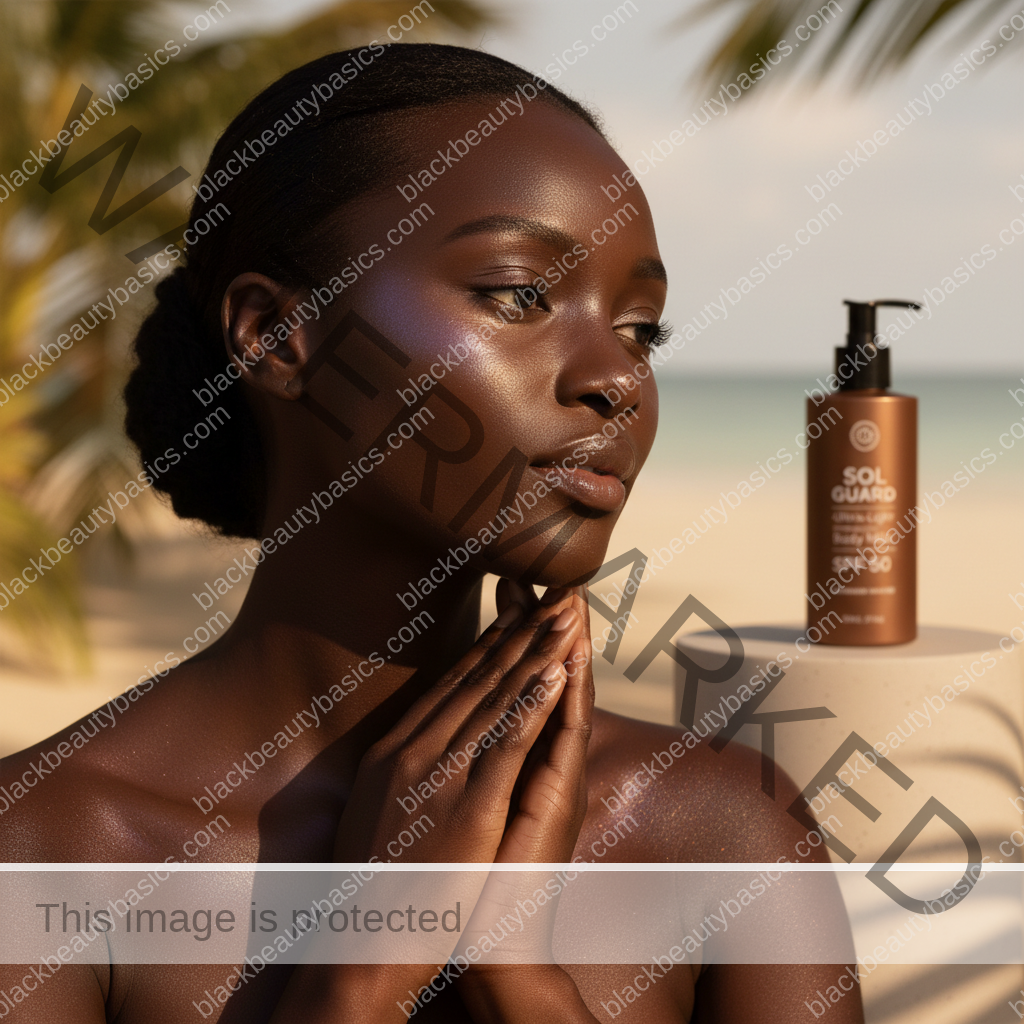
Understanding the Enemy: UVA vs. UVB Rays
To truly appreciate the power of sunscreen, it’s important to understand what it’s protecting you from:
- UVA Rays (Aging Rays): These longer wavelengths penetrate deeper into the skin, contributing to premature aging (wrinkles, fine lines, sagging), sunspots, and hyperpigmentation. They can pass through clouds and glass, meaning you’re exposed even on cloudy days or indoors near windows.
- UVB Rays (Burning Rays): These shorter wavelengths are primarily responsible for sunburn and play a significant role in the development of skin cancer. Their intensity varies by season, time of day, and altitude.
A good sunscreen, often labeled “broad-spectrum,” protects against both UVA and UVB rays. This dual protection is paramount for comprehensive skin health, especially for melanin-rich skin where hyperpigmentation is a primary concern.
The Quest for Comfort: What Makes a Sunscreen “Non-Sticky”?
The number one complaint we hear about body sunscreens, especially from women of color, is the sticky, greasy, or heavy feeling they leave behind. This discomfort often leads to inconsistent use, undermining all the good intentions. So, what exactly makes a sunscreen feel non-sticky, and what ingredients should you look for (or avoid)?
Key Characteristics of a Non-Sticky Sunscreen:
- Lightweight Texture: It should feel almost imperceptible on the skin, absorbing quickly without a heavy residue.
- Fast Absorption: No lingering tackiness or need for excessive rubbing.
- Non-Comedogenic: Won’t clog pores, which is crucial for body acne prevention.
- Sheer Finish: Especially important for darker skin tones, avoiding any white cast.
- Hydrating, Not Greasy: Should leave skin feeling moisturized, not oily.
Ingredients to Embrace for a Non-Sticky Feel:
- Chemical Filters: Avobenzone, Octinoxate, Octisalate, Homosalate. These absorb UV rays and convert them into heat, often formulated into lighter, more elegant textures. Modern formulations have come a long way in stability and skin feel.
- New-Generation Organic Filters (European/Asian): Tinosorb S, Tinosorb M, Uvinul A Plus, Uvinul T 150. These offer superior broad-spectrum protection with excellent photostability and often come in incredibly lightweight, non-greasy formulations. While not all are FDA-approved for sale in the US, many brands incorporate them for global markets.
- Silicones (e.g., Dimethicone, Cyclopentasiloxane): These create a silky, smooth feel, help with spreadability, and often contribute to a matte or semi-matte finish.
- Starches (e.g., Tapioca Starch, Corn Starch): Can help absorb excess oil and reduce shine, contributing to a drier finish.
- Humectants (e.g., Hyaluronic Acid, Glycerin) in balanced amounts: Provide hydration without stickiness when formulated correctly.
Ingredients to Approach with Caution (if stickiness is your nemesis):
- Heavy Oils/Butters: While nourishing, high concentrations of ingredients like shea butter, cocoa butter, or mineral oil can contribute to a heavier, potentially greasy feel in some sunscreen formulations.
- Certain Emollients: Some emollients, while moisturizing, can leave a waxy or tacky residue if not balanced with other ingredients.
- High Concentrations of Zinc Oxide/Titanium Dioxide (Mineral Filters): While excellent for sensitive skin, these can sometimes be harder to formulate without a white cast or a slightly thicker, less elegant feel, though micronized and tinted versions have vastly improved.
Crafting Your Luxurious Body Sunscreen Routine: The Non-Sticky Edit
A truly effective body sunscreen routine isn’t just about slapping on a product; it’s about integration, layering, and mindful application. Here’s how to elevate your sun protection into a ritual of self-care, ensuring maximum efficacy and a delightful, non-sticky feel.
Step 1: The Foundation – Hydration & Preparation
Healthy, hydrated skin is the best canvas for any product. Applying sunscreen to dry, parched skin can sometimes make it feel heavier or less comfortable. Instead, start with a lightweight, fast-absorbing moisturizer or body oil.
Product Spotlight: Lightweight Body Moisturizers
Look for lotions or serums with ingredients like hyaluronic acid, glycerin, ceramides, or squalane. These provide essential hydration without a heavy or greasy feel. Apply sparingly, allowing it to fully absorb for a few minutes before moving to sunscreen.
Step 2: The Main Event – Non-Sticky Body Sunscreen Application
This is where the magic happens. The key is choosing the right formula and applying it correctly.
Choosing Your Champion: Non-Sticky Sunscreen Formulations
For a truly non-sticky experience, explore these categories:
- Lightweight Lotions/Creams: Many chemical sunscreens come in incredibly elegant, fast-absorbing lotion textures. Look for terms like “dry-touch,” “invisible,” “water-light,” or “sheer.”
- Gel-Based Sunscreens: Gels are inherently lighter and often absorb instantly, leaving a refreshing feel. These are excellent for humid climates or those who truly despise any residue.
- Sprays (Non-Aerosol/Continuous Mist): While convenient, ensure you’re applying enough. Spray generously and then gently rub in for even coverage. Look for non-aerosol pumps for better control and less inhalation risk.
- Serum-Like Textures: Some newer formulations mimic the feel of a skincare serum, offering high protection with a barely-there sensation.
Application Techniques for a Seamless Finish:
- Apply in Sections: Don’t try to cover your entire body at once. Work in smaller sections (e.g., one arm, then the other, then a leg, etc.). This ensures even coverage and allows the product to absorb better.
- Use the Right Amount: The “two-finger rule” for the face can be scaled up for the body. For each limb or major body section, use a generous amount – about a shot glass full for your entire body. Err on the side of more, not less.
- Rub In Thoroughly, But Gently: Spread the sunscreen evenly until it disappears into your skin. Avoid vigorous rubbing, which can disrupt the film.
- Allow Absorption Time: Give your sunscreen 15-20 minutes to fully absorb and form its protective barrier before dressing or going outside. This is crucial for preventing transfer to clothes and ensuring efficacy.
- Layering (if necessary): If you’re using a mineral sunscreen that feels a bit thicker, apply a thin layer, allow it to set, then apply another thin layer. This can help with absorption and reduce any potential white cast.
Recommended Product Types:
- Shop Non-Sticky Body Sunscreen Lotion on Amazon
- Shop Gel Body Sunscreen on Amazon
- Shop Sheer Body Sunscreen Spray on Amazon
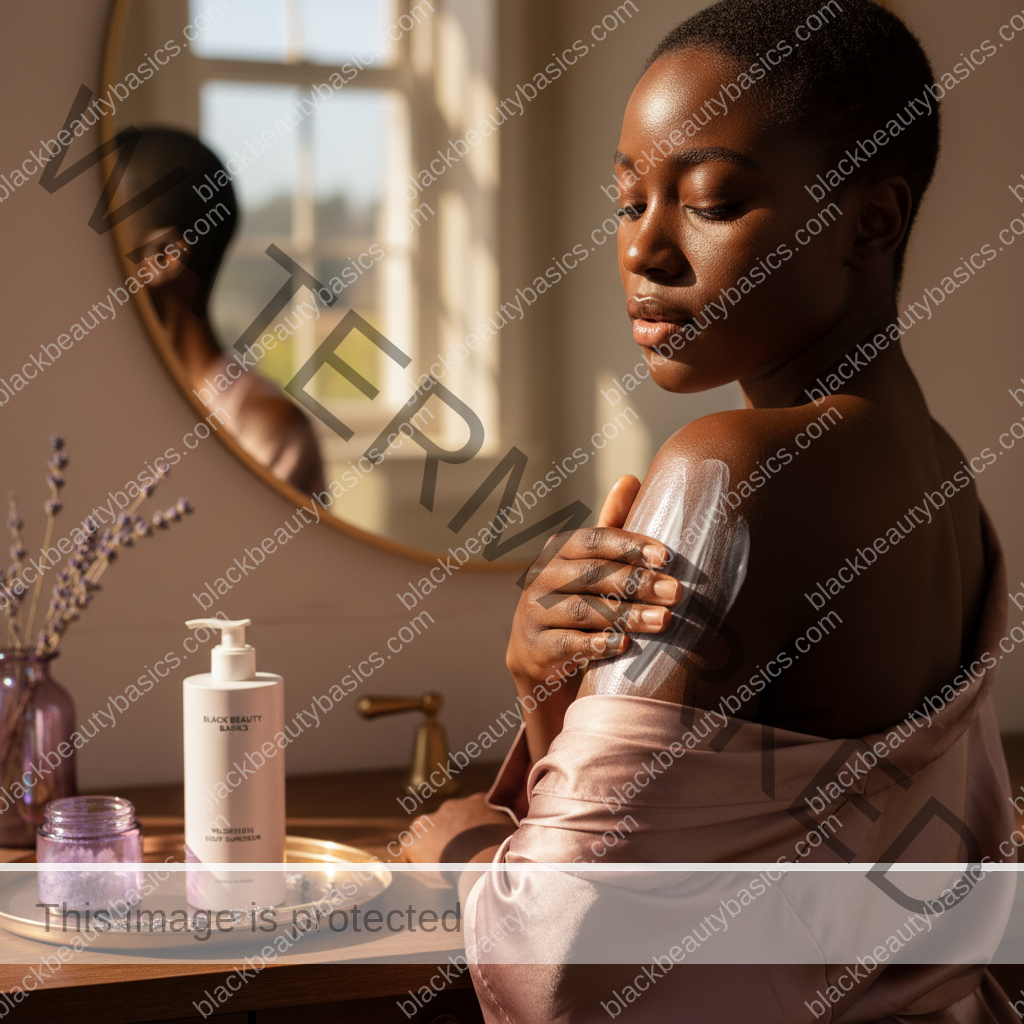
Step 3: The Finishing Touch – Setting & Enhancing
For those who want an extra layer of confidence or a truly matte finish, consider these optional steps.
Powder Sunscreens (Body):
While more common for the face, some brands offer brush-on mineral powder sunscreens for the body. These can be excellent for setting liquid sunscreen, reducing shine, and offering a quick reapplication option, especially for areas like the décolletage or hands. They absorb any residual tackiness beautifully.
- Shop Body Sunscreen Powder on Amazon
Body Mists (Non-SPF, for Refreshment):
A light, refreshing body mist (without SPF) can be used later in the day to rehydrate and refresh your skin without disturbing your sun protection. Look for mists with soothing ingredients like aloe vera or rose water.
- Shop Hydrating Body Mist on Amazon
Step 4: Reapplication – The Golden Rule
No sunscreen, no matter how high the SPF, lasts all day. Reapplication is paramount, especially if you’re spending extended time outdoors, swimming, or sweating.
- Every Two Hours: This is the general rule for active outdoor exposure.
- After Swimming/Sweating: Even “water-resistant” sunscreens need to be reapplied after 40 or 80 minutes of swimming or heavy sweating.
- Convenient Formats: Keep a non-sticky spray or stick sunscreen in your bag for easy reapplication throughout the day.
Recommended Product Types for Reapplication:
- Shop Non-Sticky Sunscreen Stick on Amazon
- Shop Sheer Body Sunscreen Mist on Amazon
Decoding the Labels: What to Look for in a Non-Sticky Body Sunscreen
Navigating the myriad of sunscreen options can be overwhelming. Here’s a quick guide to help you select the best non-sticky formulations for your beautiful skin.
Essential Sunscreen Terminology:
- Broad-Spectrum: Protects against both UVA and UVB rays. Non-negotiable.
- SPF 30 or Higher: SPF 30 blocks about 97% of UVB rays; SPF 50 blocks about 98%. Higher SPFs offer marginally more protection but are not exponentially better. Consistency and reapplication are more important than chasing extremely high SPF numbers.
- Water-Resistant (40 or 80 minutes): Indicates how long the sunscreen remains effective after swimming or sweating. Remember to reapply after this time.
- Non-Comedogenic: Formulated not to clog pores, reducing the risk of body acne.
- Hypoallergenic: Less likely to cause allergic reactions, good for sensitive skin.
- Fragrance-Free: Reduces the risk of irritation, especially for sensitive skin.
- “Dry-Touch,” “Invisible,” “Sheer,” “Water-Light”: These descriptors often indicate a non-sticky, fast-absorbing formula.
Comparison Table: Chemical vs. Mineral Sunscreens for a Non-Sticky Feel
Both types of sunscreens have their merits. For a truly non-sticky feel, chemical sunscreens often excel, but mineral formulations have made significant strides.
| Feature | Chemical Sunscreens | Mineral Sunscreens |
|---|---|---|
| Mechanism | Absorb UV rays and convert them into heat. | Sit on top of skin, reflecting UV rays. |
| Active Ingredients | Avobenzone, Octinoxate, Octisalate, Homosalate, Oxybenzone, etc. | Zinc Oxide, Titanium Dioxide. |
| Typical Feel | Often lighter, more elegant, faster absorbing. | Can be thicker, but micronized/tinted versions are much improved. |
| White Cast | Rarely, if ever, leaves a white cast on darker skin. | Can leave a white cast, especially with higher concentrations, but tinted versions exist. |
| Sensitivity | Some individuals may experience irritation. | Generally well-tolerated, good for sensitive skin. |
| Best For Non-Sticky | Often the easiest to find in truly non-sticky, sheer formulations. | Look for “sheer,” “tinted,” “micronized,” or “invisible zinc” labels. |
Tips for Finding Your Perfect Non-Sticky Sunscreen:
- Read Reviews (from diverse skin tones): Pay attention to reviews from other Black women or those with similar skin tones regarding white cast and feel.
- Look for Specific Descriptors: “Dry-touch,” “invisible,” “sheer,” “water-light,” “gel-cream,” or “fluid” are good indicators.
- Patch Test: Before committing to a full bottle, try a small amount on your inner arm to check for feel and any potential irritation.
- Consider Foreign Formulations: European and Asian sunscreens often utilize newer, more elegant filters that provide superior protection with incredibly lightweight textures.
- Don’t Be Afraid to Mix & Match: You might prefer a chemical sunscreen for your body and a tinted mineral one for your face.
Beyond the Bottle: Holistic Sun Protection for Your Body
While sunscreen is your primary shield, a truly comprehensive sun protection strategy incorporates other smart habits. Think of it as a multi-layered approach to safeguarding your skin’s health and beauty.
Protective Clothing: Your Stylish Shield
One of the most effective ways to prevent sun damage is to cover up. This doesn’t mean sacrificing style. In fact, many brands now offer chic, lightweight clothing with built-in UPF (Ultraviolet Protection Factor) ratings.
- UPF Clothing: Look for garments with a UPF of 30 or higher. These fabrics are specifically designed to block UV rays.
- Long Sleeves & Pants: Even regular clothing provides some protection. Opt for tightly woven fabrics and darker colors, which tend to offer better UV blockage than light, loosely woven materials.
- Wide-Brimmed Hats: Essential for protecting your face, neck, and ears. Choose hats with a brim of at least 3 inches all around.
- Shop UPF Clothing for Women on Amazon
- Shop Wide-Brim Sun Hat for Women on Amazon
Seek Shade: Your Natural Oasis
Whenever possible, make shade your friend. This is especially important during peak sun hours (typically 10 AM to 4 PM), when UV radiation is strongest.
- Umbrellas & Awnings: Utilize natural shade from trees or bring your own shade with a beach umbrella.
- Indoor Activities: Plan outdoor activities for earlier mornings or later afternoons when the sun’s intensity is lower.
Antioxidants: Internal & Topical Boosters
While not a replacement for sunscreen, antioxidants can provide an additional layer of defense by neutralizing free radicals generated by UV exposure, which contribute to skin damage and aging.
- Topical Antioxidant Serums: Apply a vitamin C serum to your body (especially exposed areas like the décolletage) before sunscreen. Vitamin C not only fights free radicals but also helps brighten skin and boost collagen production.
- Dietary Antioxidants: Incorporate a diet rich in colorful fruits and vegetables (berries, leafy greens, sweet potatoes) which are packed with antioxidants.
- Shop Body Vitamin C Serum on Amazon
Post-Sun Care: Soothe & Repair
Even with the best protection, some sun exposure is inevitable. A good post-sun routine can help soothe and repair your skin.
- Cool Showers: Rinse off sunscreen and cool your skin.
- Aloe Vera: A classic for soothing sun-exposed skin. Look for pure aloe vera gel.
- Hydrating Lotions with Ceramides: Help to restore the skin’s barrier.
- Shop Pure Aloe Vera Gel for Skin on Amazon
- Shop Ceramide-Rich Body Lotion on Amazon
Your Non-Sticky Sunscreen Toolkit: A Curated List of Product Types
To help you on your journey, here’s a list of product types that consistently receive high marks for their non-sticky, elegant textures, perfect for melanin-rich skin. Remember to always check individual product reviews and ingredients to ensure they meet your specific needs.
Top Product Types for a Non-Sticky Feel:
| Product Type | Why It’s Non-Sticky Friendly | Key Features to Look For |
|---|---|---|
| Chemical Sunscreen Lotions (Fluid/Gel-Cream) | Often formulated with modern chemical filters that absorb quickly and leave a dry-touch finish. No white cast. | “Dry-touch,” “invisible,” “sheer,” “water-light,” broad-spectrum SPF 30+. |
| Gel Sunscreens | Inherently lightweight, refreshing, and absorb almost instantly without residue. | Clear or translucent gel, broad-spectrum SPF 30+, often alcohol-based (check for sensitivity). |
| Non-Aerosol Continuous Sprays | Convenient for quick application and reapplication, often formulated to be sheer and fast-drying. | Fine mist, “quick-dry,” “sport,” broad-spectrum SPF 30+, water-resistant. |
| Tinted Mineral Sunscreens | The tint helps counteract the white cast of zinc/titanium, and newer formulations are much lighter. | “Sheer tint,” “universal tint,” “non-nano zinc oxide,” broad-spectrum SPF 30+. |
| Sunscreen Sticks | Great for targeted application, travel, and reapplication on the go without getting hands messy. Many are formulated to glide on smoothly. | “Invisible,” “clear stick,” broad-spectrum SPF 50+, easy to blend. |
| Body Oils with SPF | Modern SPF oils are often dry-touch, providing a beautiful sheen without stickiness. | “Dry oil,” “sheer finish,” broad-spectrum SPF 30+, non-greasy. |
General Product Type Links:
- Shop Chemical Body Sunscreen Lotion on Amazon
- Shop Gel Sunscreen for Body on Amazon
- Shop Non-Aerosol Body Sunscreen Spray on Amazon
- Shop Tinted Mineral Body Sunscreen on Amazon
- Shop Body Sunscreen Stick Clear on Amazon
- Shop Dry Oil Body Sunscreen SPF on Amazon
Make Body SPF Less Annoying
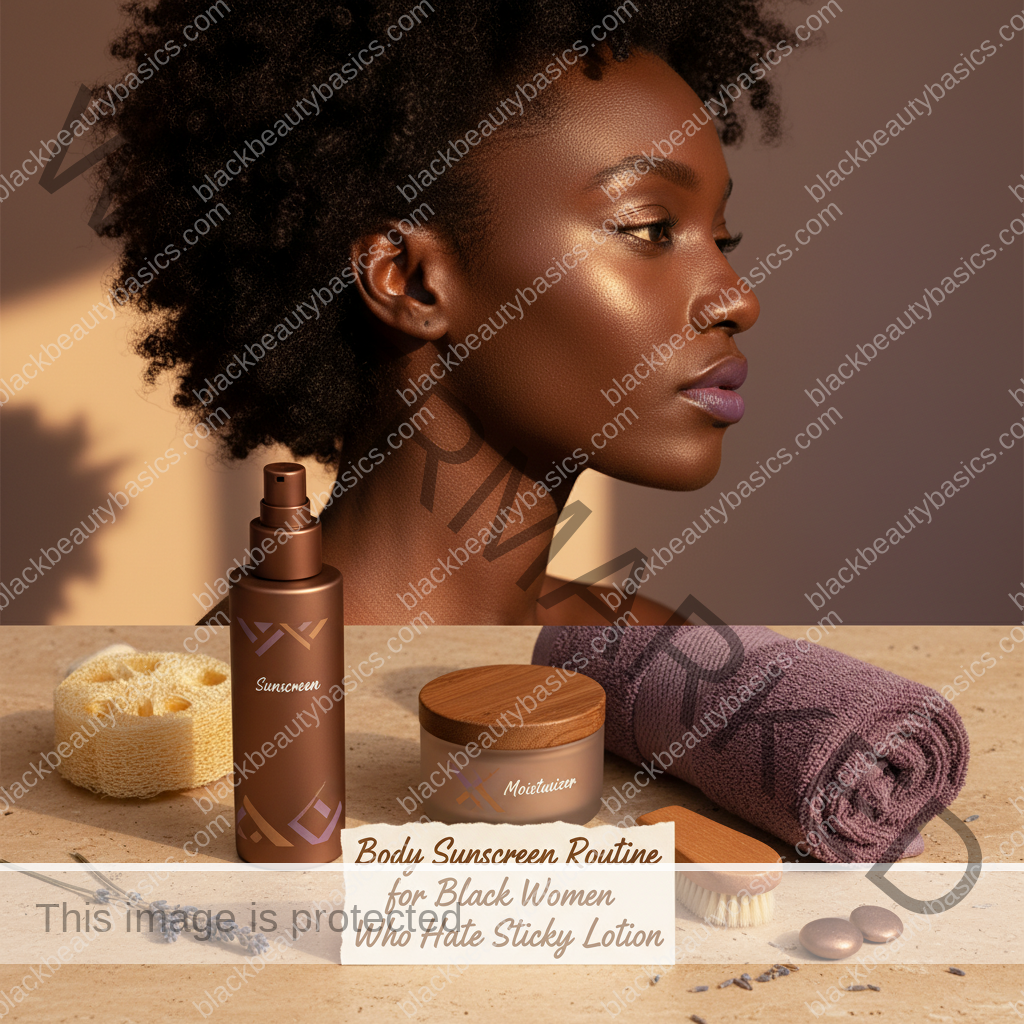
A lot of people skip body sunscreen because they imagine thick, sticky lotion that transfers onto clothes and makes heat feel worse. That experience is real, but it is not the only option. Modern body sunscreens come in lotions, gels, sprays, sticks, oils, and lightweight milks. For Black women who hate sticky lotion, the goal is to find a format that fits the body area and the day.
Arms, shoulders, chest, hands, and legs often get more incidental sun than we realize. If you are treating body hyperpigmentation, bug-bite marks, ingrown-hair marks, or uneven tone, exposed areas need protection. You do not have to obsess. You just need a routine that makes SPF easy enough to repeat.
Body SPF placement tips
- Apply before dressing: it is easier to cover shoulders, chest, and thighs evenly.
- Let it dry: give sunscreen a few minutes before putting on tight clothes.
- Use sticks for touch-ups: hands, shoulders, and tattoos are easy to miss.
- Match the day: daily errands, workouts, and beach days need different levels of reapplication.
What to do next
Keep this SPF step connected to the rest of the Sunscreen for Dark Skin series. The goal is not a perfect routine that only works on quiet days. The goal is a sunscreen habit that still works with makeup, sweat, body care, texture preferences, and real Black women’s lives.
Frequently Asked Questions About Non-Sticky Body Sunscreen for Black Women
Q1: Do Black women really need sunscreen every day, even if we don’t burn easily?
Absolutely, yes. While melanin provides some natural protection, it’s insufficient to block all harmful UV rays. Daily sunscreen use (SPF 30+ broad-spectrum) is crucial for preventing hyperpigmentation (dark spots), premature aging (fine lines, wrinkles, loss of firmness), and reducing the risk of skin cancer. Sunscreen is your best defense against photoaging and maintaining an even, radiant skin tone.
Q2: What’s the best type of sunscreen for Black skin to avoid a white cast and stickiness?
For a truly invisible and non-sticky finish, chemical sunscreens are often the easiest choice. Look for formulations labeled “sheer,” “dry-touch,” “invisible,” or “water-light” in lotions, gels, or non-aerosol sprays. If you prefer mineral sunscreens, opt for tinted versions or those with micronized zinc oxide and titanium dioxide, as these are formulated to blend more seamlessly into darker skin tones.
Q3: How much body sunscreen should I apply, and how often should I reapply it?
For your entire body, aim for about a shot glass full (approximately 1 ounce or 30 ml) of sunscreen. For individual limbs or sections, use a generous amount that allows for even coverage. Reapply every two hours when outdoors, or immediately after swimming, sweating heavily, or towel drying, regardless of the “water-resistant” claim. Consistent reapplication is more important than a very high SPF number.
Q4: Can I use my facial sunscreen on my body to avoid stickiness?
While you certainly can, facial sunscreens are often formulated with more expensive ingredients and come in smaller sizes, making them less cost-effective for full-body application. Many brands now offer excellent body sunscreens with similar elegant, non-sticky textures as their facial counterparts, but in larger, more economical packaging. Look for body-specific formulas that boast “dry-touch” or “invisible” finishes.
Q5: I have body acne. Will sunscreen make it worse or feel sticky?
Not necessarily! Many non-sticky body sunscreens are also non-comedogenic, meaning they are formulated not to clog pores. Look for labels that explicitly state “non-comedogenic” or “oil-free.” Gel-based or fluid chemical sunscreens are often excellent choices for acne-prone body skin as they absorb quickly without leaving a heavy residue that could exacerbate breakouts. Regular cleansing of your body is also key.
Q6: Are “water-resistant” sunscreens truly non-sticky after swimming?
“Water-resistant” means the sunscreen maintains its SPF for a specified duration (40 or 80 minutes) during swimming or sweating. It doesn’t mean it will remain completely non-sticky, nor does it mean you don’t need to reapply. After water exposure, you should always reapply sunscreen, and some formulas may feel less sticky than others post-swim. Sprays or sticks can be convenient for reapplication in these situations.
Q7: Can I layer a body oil or shimmer over my non-sticky sunscreen?
Yes, but with a caveat. Apply your non-sticky sunscreen first and allow it to fully absorb and set for at least 15-20 minutes. Once it feels dry to the touch, you can lightly layer a dry body oil or shimmer product. Be mindful not to rub too vigorously, as this could disrupt the sunscreen’s protective film. For best results, choose dry oils or lightweight shimmers that won’t interfere with the sunscreen’s integrity.
SPF (Sun Protection Factor) measures a sunscreen’s ability to block UVB rays on your skin. UPF (Ultraviolet Protection Factor) measures how much UV radiation (both UVA and UVB) a fabric blocks. Both are important for body protection. Use broad-spectrum sunscreen with SPF 30+ on exposed skin, and wear UPF-rated clothing (30+) for areas you want to keep covered, especially during peak sun hours. They work synergistically for comprehensive protection.
My dearest sistahs, embracing sun protection is not about fear; it’s about empowerment, about cherishing the skin you’re in, and ensuring its health and luminosity for years to come. No longer must you compromise comfort for care. With the right knowledge and the exquisite products available today, you can confidently step into the sun, knowing your magnificent skin is beautifully protected, feeling as smooth and soft as silk, never sticky. Let this be your season of radiant, protected skin, a testament to your commitment to self-love and enduring elegance. Your skin deserves nothing less.
Related next steps
Related posts:
 Best Minimalist Skincare Routine for Black Women Who Hate Complicated Routines
 Your Go-To Lip Glosses for a Non-Sticky, High-Shine Finish
 Face & Body Moisturizing Sunscreen Lotion SPF 30 Review
 Daily Sunscreen Routine for Black Women Who Wear Makeup
 Sunscreen Routine for Black Women at the Beach
 Where Body SPF Fits Into Your Routine on Melanin-Rich Skin