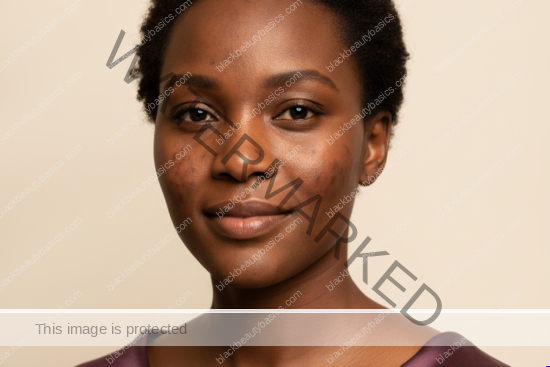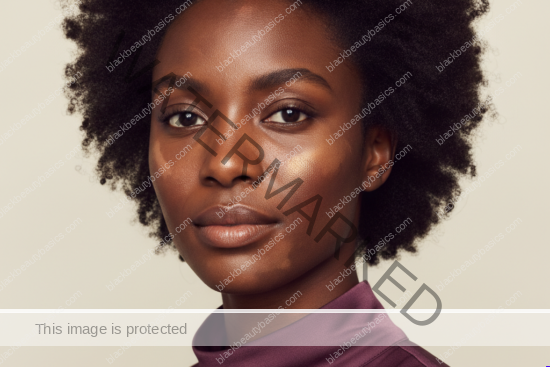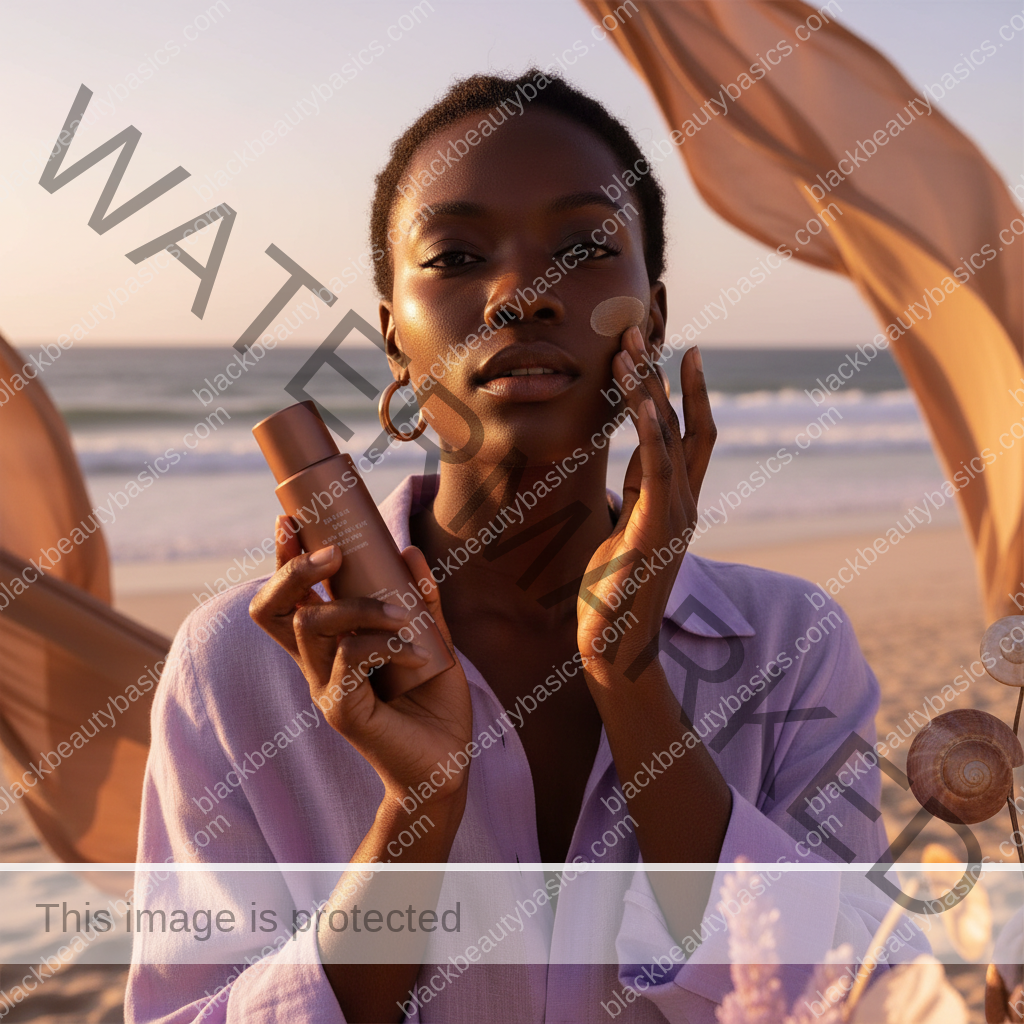
As the sun kisses our melanin-rich skin, there’s an undeniable allure to the beach – the rhythmic waves, the warm sand, and the vibrant energy that calls to our souls. Yet, amidst this beautiful embrace, a vital truth often gets overlooked: our exquisite skin, while blessed with natural protection, is not impervious to the sun’s powerful rays. Embracing a diligent sunscreen routine isn’t just about preventing sunburn; it’s a profound act of self-care, preserving our skin’s radiant health, preventing hyperpigmentation, and ensuring our glow remains timeless.

The Melanin Myth Debunked: Why Sunscreen is Non-Negotiable for Black Skin
For too long, a pervasive myth has circulated, suggesting that melanin provides complete immunity from sun damage. While our skin does possess a higher concentration of melanin, offering an inherent SPF of approximately 13, this natural shield is simply not enough to fully protect against the full spectrum of UV radiation. Understanding the science behind sun exposure and its impact on Black skin is the first step toward truly embracing sun protection.
Understanding UV Radiation and Its Impact
The sun emits two primary types of ultraviolet (UV) radiation that affect our skin: UVA and UVB rays. Both contribute to skin damage, albeit in different ways.
- UVA Rays: These rays penetrate deep into the skin, contributing to premature aging, fine lines, wrinkles, and the breakdown of collagen and elastin. They also play a significant role in hyperpigmentation and can contribute to skin cancer. UVA rays are present year-round, even on cloudy days, and can penetrate glass.
- UVB Rays: These are the primary cause of sunburn and are directly linked to DNA damage in skin cells, increasing the risk of skin cancer. UVB intensity varies by season, time of day, and geographical location.
For Black skin, the consequences of unprotected sun exposure extend beyond the visible burn. While we may not burn as easily as lighter skin tones, we are highly susceptible to other forms of sun damage.
The Unique Concerns for Melanin-Rich Skin
Our skin’s beauty is undeniable, but it also comes with specific considerations when it comes to sun protection:
- Hyperpigmentation: This is arguably the most common and frustrating concern for Black women. Sun exposure triggers melanocytes (the cells that produce melanin) to go into overdrive, leading to dark spots, uneven skin tone, and the worsening of existing conditions like post-inflammatory hyperpigmentation (PIH) from acne or eczema, and melasma. A day at the beach without proper protection can undo months of diligent skincare efforts.
- Premature Aging: While our skin often shows signs of aging later, UVA rays still contribute to the breakdown of collagen and elastin, leading to sagging, fine lines, and wrinkles over time. Sun exposure can also exacerbate textural irregularities.
- Skin Cancer: This is a critical, often overlooked risk. While skin cancer rates are lower among Black individuals, diagnoses often occur at later, more advanced stages, making treatment more challenging and outcomes less favorable. This delay is often due to the misconception that Black skin is immune, leading to less frequent screenings and a lower index of suspicion from healthcare providers. Sunscreen is a crucial preventive measure for everyone, regardless of skin tone.
- Compromised Skin Barrier: Excessive sun exposure can weaken the skin’s natural barrier, leading to dryness, sensitivity, and increased vulnerability to environmental aggressors.
Understanding these unique concerns underscores the importance of a robust, consistent sunscreen routine, especially when enjoying the beach.
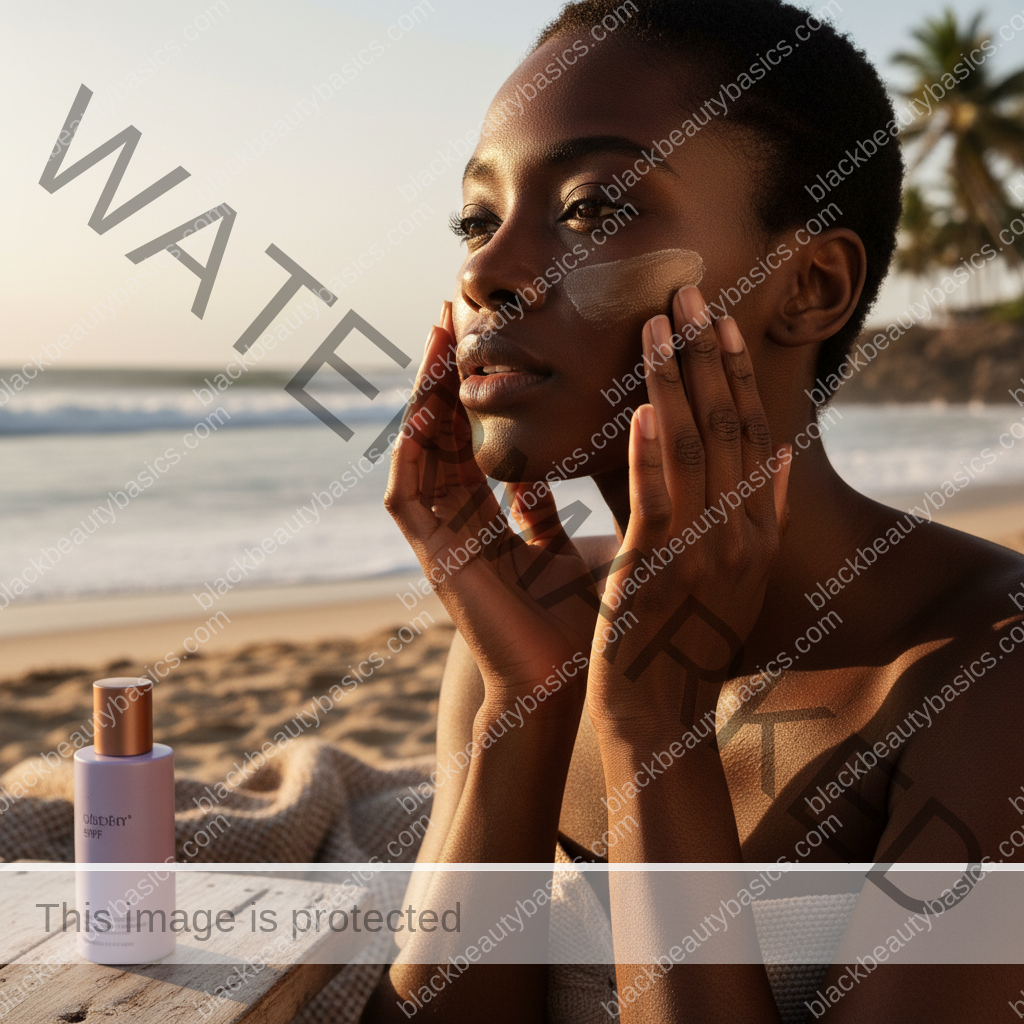
Crafting Your Ultimate Beach Sunscreen Arsenal
Preparing for a beach day requires more than just grabbing any sunscreen. It demands a curated selection of products designed to offer maximum protection, comfort, and efficacy for melanin-rich skin. Our goal is to create an invisible shield that feels as good as it looks.
Choosing the Right Sunscreen: Mineral vs. Chemical
The debate between mineral and chemical sunscreens is ongoing, and both have their merits. For Black skin, the primary concern is often avoiding the dreaded white cast.
- Mineral Sunscreens (Physical Sunscreens): These use zinc oxide and/or titanium dioxide to create a physical barrier on the skin’s surface, reflecting UV rays.
- Pros: Generally gentler for sensitive skin, immediate protection upon application, excellent for post-procedure or acne-prone skin. Newer formulations are often tinted or micronized to minimize white cast.
- Cons: Can sometimes leave a white or ashy cast, especially on deeper skin tones, if not formulated well. May feel thicker.
- Chemical Sunscreens: These use organic compounds (like oxybenzone, avobenzone, octinoxate, octisalate) that absorb UV rays and convert them into heat, which is then released from the skin.
- Pros: Typically sheer, lightweight, and blend seamlessly into all skin tones without a white cast. Often preferred for active lifestyles due to their texture.
- Cons: Some individuals may experience sensitivity or irritation. Certain ingredients have raised environmental concerns (e.g., coral reef safety), though many brands are now formulating reef-safe options.
Our Recommendation: For the beach, a hybrid formula or a well-formulated tinted mineral sunscreen can offer the best of both worlds. Look for “broad-spectrum” protection with an SPF of 30 or higher. For chemical sunscreens, opt for reef-safe formulations. Consider a Tinted Mineral Sunscreen for Dark Skin on Amazon or a Sheer Chemical Sunscreen for Face on Amazon.
Key Sunscreen Features for Beach Days
Beyond mineral vs. chemical, several features are non-negotiable for beach-bound protection:
- Broad-Spectrum Protection: Ensures protection against both UVA and UVB rays. Look for this label explicitly.
- SPF 30 or Higher: While SPF 15 blocks 93% of UVB rays, SPF 30 blocks 97%, and SPF 50 blocks 98%. The difference between 30 and 50 is minimal, but anything below 30 is insufficient for prolonged beach exposure.
- Water-Resistant: Crucial for swimming, sweating, and humid beach environments. Look for labels indicating “water-resistant” for 40 or 80 minutes. Remember, water-resistant does not mean waterproof; reapplication is key.
- Non-Comedogenic: Especially important for those prone to breakouts. This ensures the sunscreen won’t clog pores.
- Antioxidant-Rich: Some sunscreens are fortified with antioxidants (like Vitamin C, E, ferulic acid) which provide an extra layer of defense against free radical damage caused by UV exposure.
Beyond the Bottle: Essential Sun Protection Accessories
Sunscreen is your first line of defense, but it’s not your only one. A holistic approach to sun protection involves strategic accessories.
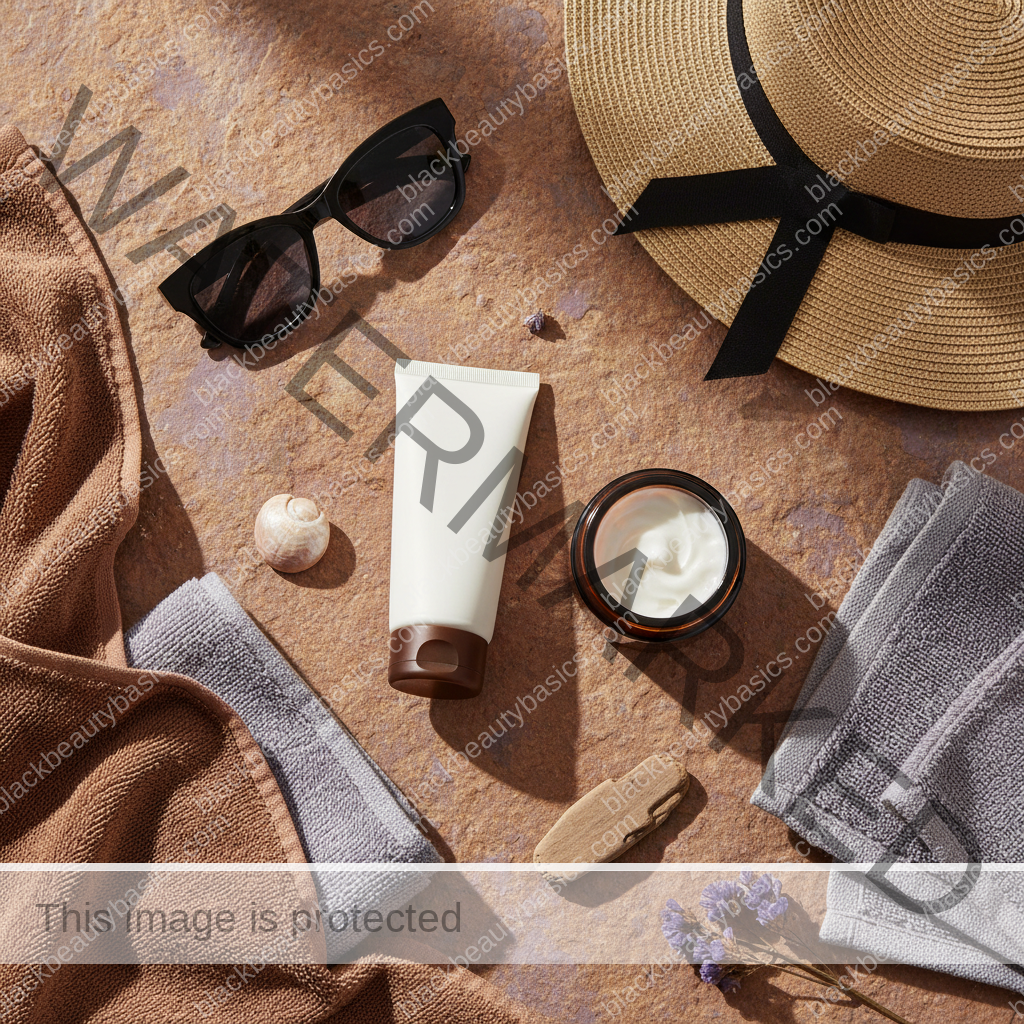
- Wide-Brimmed Hat: A stylish, wide-brimmed hat protects your face, scalp, ears, and neck – areas often missed or inadequately covered by sunscreen. Look for UPF-rated options for enhanced protection. Shop Wide-Brimmed UPF Hats on Amazon.
- UV-Protective Sunglasses: Protect the delicate skin around your eyes and prevent sun-induced damage to your eyes themselves (e.g., cataracts, macular degeneration). Look for sunglasses that block 99-100% of UVA and UVB rays. Shop UV-Protective Sunglasses on Amazon.
- UPF Clothing: For extended periods in the sun, especially if you’re sensitive to heat or prone to hyperpigmentation, UPF (Ultraviolet Protection Factor) swimwear and cover-ups offer excellent protection. A white cotton t-shirt only offers about SPF 5-7. Shop UPF Swimwear on Amazon.
- Beach Umbrella or Tent: Seek shade whenever possible, especially during peak sun hours (10 AM – 4 PM). A personal umbrella or tent provides a welcome respite. Shop Beach Umbrellas on Amazon.
Your Step-by-Step Beach Sunscreen Routine for Radiant Skin
A flawless beach day starts with a meticulous skincare ritual. This routine is designed to provide comprehensive protection, ensuring your skin remains luminous and healthy, even under the most intense sun.
Step 1: Pre-Beach Prep (The Night Before & Morning Of)
Preparation is key to maximizing your sun protection.
- Exfoliate (Night Before): Gently exfoliate your body the night before to create a smooth canvas for sunscreen application. This helps prevent streaking and ensures even coverage. Opt for a gentle physical exfoliant or a mild chemical exfoliant. Shop Gentle Body Exfoliants on Amazon.
- Hydrate (Night Before & Morning Of): Well-hydrated skin is healthy skin. Apply a rich body moisturizer the night before and a lighter one in the morning. For your face, follow your regular hydrating serum and moisturizer routine. Shop Hydrating Body Moisturizers on Amazon.
- Antioxidant Serum (Morning Of): Before your facial sunscreen, apply a vitamin C serum. Vitamin C is a powerful antioxidant that helps neutralize free radicals generated by UV exposure, enhancing your sunscreen’s efficacy and brightening your complexion. Shop Vitamin C Serums on Amazon.
Step 2: Initial Sunscreen Application (30 Minutes Before Sun Exposure)
This is the most crucial step. Apply sunscreen generously and evenly before you even step foot onto the sand.
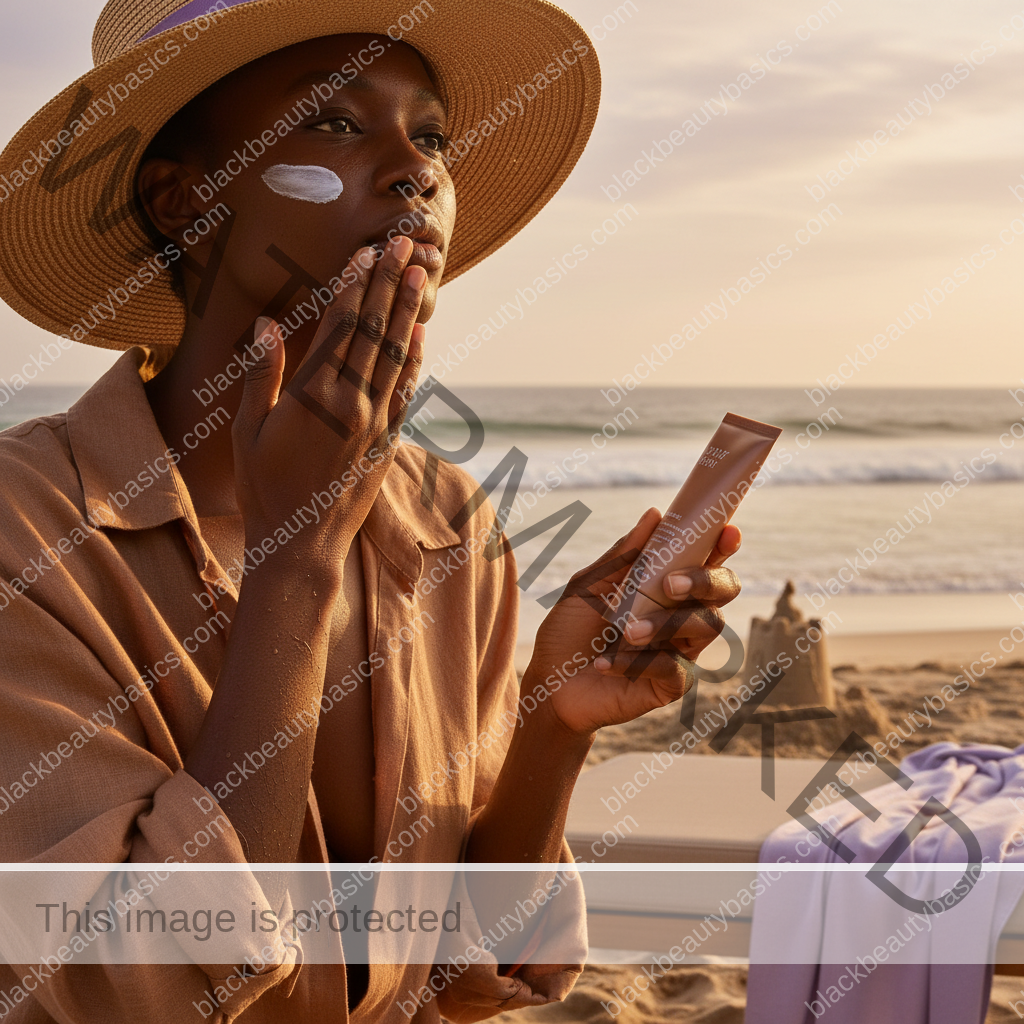
- Face and Neck: Use the “two-finger rule” – squeeze a line of sunscreen onto your index and middle fingers. This is generally enough for your face and neck. Dot it across your face and neck, then gently massage until fully absorbed, ensuring no white cast remains. Don’t forget your ears and hairline! Shop Facial Sunscreens for Dark Skin on Amazon.
- Body: For your body, a general guideline is about one ounce (a shot glass full) for your entire body. Apply in sections, ensuring every exposed area is covered – arms, legs, chest, back, shoulders, feet, and even between your toes. Rub in thoroughly until it disappears. For hard-to-reach areas, consider a spray sunscreen or ask for assistance. Shop Broad-Spectrum Body Sunscreens on Amazon.
- Lips: Your lips are also susceptible to sun damage and hyperpigmentation. Use a lip balm with SPF 30 or higher. Shop SPF Lip Balms on Amazon.
Step 3: Reapplication Throughout the Day
This is where many people fall short, undermining their initial application. Reapplication is paramount for continuous protection.
- Every Two Hours: This is the golden rule for sunscreen reapplication, regardless of the product’s water resistance.
- After Swimming or Sweating: If you’ve been in the water, towel-dried, or sweated profusely, reapply immediately, even if it’s been less than two hours.
- After Towel Drying: Towels can rub off sunscreen, so always reapply after drying off.
- For Face Touch-Ups: If you’re wearing makeup, a SPF Setting Spray on Amazon or a Powder Sunscreen on Amazon can be a convenient way to reapply without disturbing your look. However, for full protection, a liquid reapplication is always best.
Step 4: Post-Beach Skincare Ritual
After a day in the sun, your skin needs soothing and replenishment.
- Gentle Cleansing: Wash off sunscreen, salt, and sand with a gentle, hydrating cleanser. Avoid harsh scrubbing. Shop Hydrating Facial Cleansers on Amazon.
- Soothing & Hydrating: Apply an after-sun lotion or a rich body cream containing ingredients like aloe vera, hyaluronic acid, or ceramides to replenish moisture and calm any potential irritation. For your face, a hydrating mask or a soothing serum can be beneficial. Shop After-Sun Lotions on Amazon.
- Targeted Treatment (If Needed): If you notice any new dark spots or existing hyperpigmentation seems exacerbated, incorporate a targeted treatment serum (e.g., niacinamide, alpha arbutin, tranexamic acid) into your evening routine. Shop Niacinamide Serums on Amazon.
Expert Tips for a Flawless Beach Day Glow
Sunscreen Application Dos and Don’ts for Dark Skin
| DOs | DON’Ts |
|---|---|
| DO choose broad-spectrum SPF 30+ water-resistant sunscreens. | DON’T rely solely on makeup with SPF; it’s rarely enough. |
| DO apply generously – use the “two-finger rule” for face/neck, and a shot glass for the body. | DON’T forget often-missed spots like ears, hairline, scalp, hands, and feet. |
| DO apply 30 minutes before sun exposure to allow it to set. | DON’T assume darker skin means you’re immune to sun damage or skin cancer. |
| DO reapply every 2 hours, or immediately after swimming/sweating. | DON’T use expired sunscreen; its efficacy is compromised. |
| DO seek shade during peak sun hours (10 AM – 4 PM). | DON’T forget lip balm with SPF. |
| DO wear protective clothing, wide-brimmed hats, and UV-blocking sunglasses. | DON’T skimp on quantity; more is better for protection. |
| DO look for tinted mineral sunscreens or sheer chemical formulas to avoid white cast. | DON’T forget post-sun care to soothe and hydrate your skin. |
Navigating Common Sunscreen Challenges for Black Women
While the market has improved, finding the perfect sunscreen can still present unique challenges for Black women. Here’s how to navigate them:
- The White Cast Conundrum: This is the most common complaint.
- Solution: Opt for chemical sunscreens (which are inherently sheer) or look for mineral sunscreens specifically formulated for darker skin tones. These often contain micronized zinc oxide/titanium dioxide or are lightly tinted to blend seamlessly. Test a small amount on your jawline before committing.
- Greasy Feel and Breakouts: Some sunscreens can feel heavy or trigger acne.
- Solution: Look for “non-comedogenic” and “oil-free” formulas. Gel or fluid textures are often lighter than creams. For body, a dry-touch or quick-absorbing formula can prevent stickiness.
- Layering with Makeup: How to apply and reapply without disrupting your flawless face.
- Solution: Choose a facial sunscreen that doubles as a primer or has a matte finish. For reapplication over makeup, consider a powder sunscreen brush or an SPF setting spray. For full protection, gently pat a liquid sunscreen over your makeup.
- Protecting the Scalp and Hairline: Areas often overlooked.
- Solution: A wide-brimmed hat is your best friend. For exposed scalp areas (like parts or thinning areas), a Scalp Sunscreen Spray on Amazon or a powder sunscreen can be effective. For the hairline, gently rub in your facial sunscreen.
Product Spotlight: Sunscreens That Love Melanin
The beauty industry has made strides in creating sunscreens that cater to deeper skin tones. Here are types of products to look for:
- Sheer Chemical Formulas: Many brands now offer elegant, lightweight chemical sunscreens that disappear into the skin without a trace. Look for newer generation filters like Tinosorb S and M, which offer excellent broad-spectrum protection and are often well-tolerated.
- Tinted Mineral Sunscreens: These are a game-changer for mineral lovers. The tint helps to counteract the white cast, blending seamlessly into various skin tones. Some even offer light coverage.
- Hybrid Sunscreens: Combining both mineral and chemical filters, these often offer the best of both worlds: broad-spectrum protection, a lighter feel, and less chance of a white cast.
- Sunscreen Sticks: Excellent for targeted application, touch-ups, and travel. They are often less messy and can be great for the face, ears, and neck. Shop Sunscreen Sticks on Amazon.
- Body Sunscreen Lotions/Gels: For the body, look for formulas that absorb quickly and are water-resistant. Many brands now offer hydrating body sunscreens that feel comfortable on the skin.
FAQ: Your Most Pressing Sunscreen Questions Answered
Q1: Does Black skin really need sunscreen?
A: Absolutely, unequivocally yes. While melanin provides some natural protection (equivalent to about SPF 13), it is insufficient to fully protect against the sun’s harmful UVA and UVB rays. Black skin is highly susceptible to sun-induced hyperpigmentation (dark spots), premature aging, and, critically, skin cancer. Sunscreen is essential for maintaining healthy, even-toned, and protected skin.
Q2: What SPF is best for Black women at the beach?
A: For beach days and prolonged sun exposure, an SPF of 30 or higher is recommended. SPF 30 blocks about 97% of UVB rays, while SPF 50 blocks about 98%. The difference is minimal, but anything below SPF 30 is generally not considered adequate for intense sun exposure. Always choose a “broad-spectrum” formula to protect against both UVA and UVB rays.
Q3: How much sunscreen should I apply to my face and body?
A: For your face and neck, use the “two-finger rule” – squeeze a line of sunscreen along your index and middle fingers. For your body, a general guideline is about one ounce, which is roughly the size of a shot glass. It’s crucial to apply generously to ensure you’re getting the stated SPF protection. Most people apply far less than needed.
Q4: How often should I reapply sunscreen when I’m at the beach?
A: Reapplication is just as important as the initial application. You should reapply sunscreen at least every two hours. If you’ve been swimming, sweating heavily, or towel-drying, reapply immediately, even if it’s been less than two hours. Water-resistant doesn’t mean waterproof; it simply means it maintains its SPF for a certain duration (40 or 80 minutes) in water.
Q5: What about sunscreen and makeup? How do I reapply?
A: Apply your primary liquid or cream sunscreen as the last step in your skincare routine before makeup. For reapplication over makeup, you have a few options: a powder sunscreen brush (convenient but may not offer full coverage), an SPF setting spray (good for a light refresh, but again, may not be full coverage), or gently patting a sheer liquid sunscreen over your makeup. For optimal protection, a full reapplication of liquid sunscreen is always best, even if it means a slight touch-up to your makeup afterward.
Q6: Can sunscreen cause hyperpigmentation or make it worse?
A: No, sunscreen prevents hyperpigmentation and helps existing dark spots from worsening. Sun exposure is a primary trigger for hyperpigmentation in Black skin. By blocking UV rays, sunscreen prevents the overproduction of melanin that leads to dark spots. If you experience new dark spots, it’s likely due to inadequate sunscreen application, insufficient SPF, or not reapplying frequently enough, rather than the sunscreen itself.
Q7: Are there specific ingredients I should look for or avoid in sunscreens for Black skin?
A: Look for “broad-spectrum” sunscreens with SPF 30+. For mineral sunscreens, seek out “micronized” or “tinted” zinc oxide and titanium dioxide to avoid a white cast. For chemical sunscreens, newer filters like Tinosorb S and M are often elegant and effective. Avoid sunscreens with a heavy, greasy feel if you’re prone to breakouts. If you have sensitive skin, mineral sunscreens might be a better choice. Always prioritize water-resistant formulas for beach days.
As you prepare for your next sun-drenched escape, remember that protecting your skin is an act of profound love and respect for your natural beauty. With this comprehensive guide and your carefully curated arsenal, you’re not just guarding against damage; you’re preserving the luminous, even-toned canvas that tells your unique story. Embrace the sun responsibly, radiate confidently, and let your melanin shine brilliantly, knowing you’ve given it the exquisite care it deserves. Here’s to endless beach days, glowing skin, and memories made under a perfectly protected sky.
Beach SPF needs a plan before the towel hits the sand
A beach day asks more from sunscreen than a regular errand day. Water, sweat, sand, towels, and long exposure all break down the neat little routine that works at home. For Black women and femmes, there is often an added layer: wanting protection without a gray cast, sticky limbs, or a product that makes the whole day feel coated. The answer is not skipping SPF. It is choosing the right textures and making reapplication part of the plan.
Apply before you arrive when possible. Sunscreen is easier to spread evenly at home than in wind, sand, and bright heat. Cover the face, neck, ears, chest, shoulders, arms, legs, tops of feet, and any part of the scalp or hairline that is exposed. If you wear braids, a part, a low cut, or a pulled-back style, do not forget the skin that sunlight can reach.
Water-resistant does not mean waterproof. It means the formula is tested to hold up for a period during water or sweat, but it still needs reapplication. Toweling off, swimming, sweating, and sitting in direct sun all make reapplication non-negotiable. A beach routine works best when the sunscreen is already in the bag, easy to reach, and not treated like an interruption.
Beach bag SPF essentials
- Use a water-resistant broad-spectrum SPF 30 or higher.
- Bring enough product for face and body reapplication.
- Reapply after swimming, heavy sweating, or towel drying.
- Use shade, hats, sunglasses, and cover-ups as support, not replacements.
What to do next

Keep this guide connected to the rest of the Sunscreen for Dark Skin series. The goal is not to treat SPF like a one-size-fits-all rule. The goal is to build sun protection that works with deep skin, real schedules, makeup, body care, outdoor plans, and hyperpigmentation goals.
- body sunscreen routine for Black women
- outdoor workout sunscreen routine
- how to reapply sunscreen over makeup
A realistic SPF habit is allowed to be simple
A beach sunscreen routine should protect your joy, not make the day feel clinical. Think preparation, reapplication, and comfort. The best sunscreen routine is the one that protects your skin without turning your morning into a test of discipline. For Black women and people with richly melanated skin, that also means the formula has to look right, feel comfortable, and fit the life you actually live. If the routine only works on quiet days, it is not finished yet.
Give yourself permission to adjust by season, setting, and skin mood. A beach day, a winter commute, a teen’s school morning, a beard-care routine, and a makeup day do not need the exact same texture or reapplication plan. The through-line is steady protection, less shame, and choices that respect your skin barrier.
Related next steps
Related posts:
 Beach and Pool Sunscreen on Dark Skin: Water Resistance, Reapplication, and Sand
 Body SPF Reapplication for Beach, Sports, and Outdoor Work: Real-World Protection for Melanin-Rich Skin
 Daily Sunscreen Routine for Black Women Who Wear Makeup
 Sunscreen Routine for Runners and Outdoor Workouts on Dark Skin
 Body Sunscreen Routine for Black Women Who Hate Sticky Lotion
 Morning Routine Order: Where Face Sunscreen Fits on Melanin-Rich Skin