The journey to radiant skin is often paved with unique challenges, and for many Black women, navigating the complexities of oily yet dehydrated skin, especially when acne-prone, can feel like a labyrinth. You deserve a regimen that understands the nuances of your melanin-rich complexion, one that celebrates its resilience while addressing its specific needs with grace and efficacy. This isn’t just about managing breakouts; it’s about nurturing your skin back to its inherent glow, empowering you with knowledge and a routine tailored for your unparalleled beauty.
Unveiling the Paradox: Oily, Dehydrated, and Acne-Prone Dark Skin
For far too long, skincare advice has been a one-size-fits-all endeavor, often overlooking the distinct characteristics of Black skin. When your skin presents as oily, yet feels tight, flaky, or dull, you’re experiencing the paradox of dehydration. This isn’t just a cosmetic concern; it’s a signal from your skin that its delicate barrier is compromised, leading to a cascade of issues, including increased acne.
Understanding the “Oily but Dehydrated” Conundrum in Melanin-Rich Skin
Melanin-rich skin often has larger sebaceous glands, leading to more oil production. While this natural oil (sebum) is a protective asset, excessive production can contribute to clogged pores and acne. Simultaneously, external factors like harsh cleansers, environmental stressors, or even internal factors can strip the skin of its vital water content, leading to dehydration. The skin then overcompensates by producing even more oil, creating a vicious cycle that exacerbates acne.
Why Dark Skin Reacts Differently to Acne and Dehydration
Beyond oil production, Black skin has unique physiological differences. It’s more prone to post-inflammatory hyperpigmentation (PIH) – those stubborn dark spots that linger long after a breakout has healed. Dehydration can worsen PIH by impairing the skin’s natural healing process and making it more susceptible to inflammation. Furthermore, some ingredients commonly found in acne treatments can be too harsh, leading to irritation, further dehydration, and consequently, more PIH on darker skin tones.
The Pillars of a Balanced Routine for Your Skin
Crafting an effective routine requires a delicate balance: controlling oil without stripping, hydrating without clogging, and treating acne without irritating. This holistic approach respects your skin’s natural architecture while guiding it towards clarity and vitality.
Pillar 1: Gentle Cleansing – The Foundation of Clarity
The first step in any skincare routine is crucial, but for oily, dehydrated, and acne-prone skin, it’s paramount. Aggressive cleansing can strip the skin, worsening dehydration and triggering more oil production. Opt for gentle, sulfate-free cleansers that remove impurities without compromising the skin barrier.
Morning Cleanse: Refresh and Prepare
- Product Type: A mild, hydrating gel or cream cleanser.
- Key Ingredients to Look For: Glycerin, ceramides, hyaluronic acid, niacinamide.
- What to Avoid: Harsh sulfates (SLS/SLES), strong fragrances, physical exfoliants with jagged particles.
- Technique: Use lukewarm water, gently massage for 60 seconds, and pat dry with a clean, soft cloth.
Shop Hydrating Gel Cleansers on Amazon
Evening Cleanse: Double Cleansing for Deeper Purity
For evening, especially if you wear makeup or SPF, double cleansing is a game-changer. The first cleanse dissolves oil-based impurities, and the second truly cleanses the skin.
- Step 1 (Oil-Based): Use an oil cleanser or balm. This effectively breaks down makeup, SPF, and excess sebum without stripping.
- Step 2 (Water-Based): Follow with your gentle gel or cream cleanser from the morning.
Shop Oil Cleansers on Amazon
Shop Gentle Cream Cleansers on Amazon
Pillar 2: Targeted Treatment – Addressing Acne and Dehydration
This is where you introduce active ingredients to combat acne and replenish hydration. The key is strategic layering and choosing formulations that are effective yet non-irritating for darker skin.
Hydrating Toners & Essences: The First Layer of Moisture
Forget astringent toners of the past. Modern toners and essences are designed to hydrate, balance pH, and prep the skin for subsequent treatments.
- Key Ingredients: Hyaluronic acid, glycerin, polyglutamic acid, rose water, centella asiatica (Cica).
- Application: Gently pat onto damp skin after cleansing.
Shop Hydrating Toners on Amazon
Acne-Fighting Serums: Strategic & Gentle
When selecting acne treatments, prioritize ingredients that are effective but mindful of PIH on dark skin.
- Salicylic Acid (BHA): A lipid-soluble exfoliant that penetrates oil to unclog pores. Start with lower concentrations (0.5-2%) and use 2-3 times a week.
- Benzoyl Peroxide: Kills acne-causing bacteria. Use sparingly and in lower concentrations (2.5-5%) to avoid excessive dryness or irritation, which can lead to PIH. Spot treat only if necessary.
- Azelaic Acid: A multi-tasker that reduces inflammation, kills bacteria, and helps fade PIH. It’s often well-tolerated by darker skin tones.
- Niacinamide (Vitamin B3): Reduces inflammation, minimizes pore appearance, and strengthens the skin barrier. Excellent for both acne and hydration.
- Retinoids (Retinol, Adapalene): Accelerate cell turnover, preventing clogged pores and improving skin texture. Start slowly (1-2 times a week) and always use at night. Adapalene is often a gentler prescription-strength option.
Shop Salicylic Acid Serums on Amazon
Shop Azelaic Acid Serums on Amazon
Shop Niacinamide Serums on Amazon
Shop Adapalene Gels on Amazon
Hydrating Serums: Replenish and Protect
Layer a hydrating serum before or after your acne treatment (depending on product instructions) to infuse moisture.
- Key Ingredients: Hyaluronic acid (multi-molecular weight for deeper penetration), Squalane, Ceramides, Peptides.
Shop Hyaluronic Acid Serums on Amazon
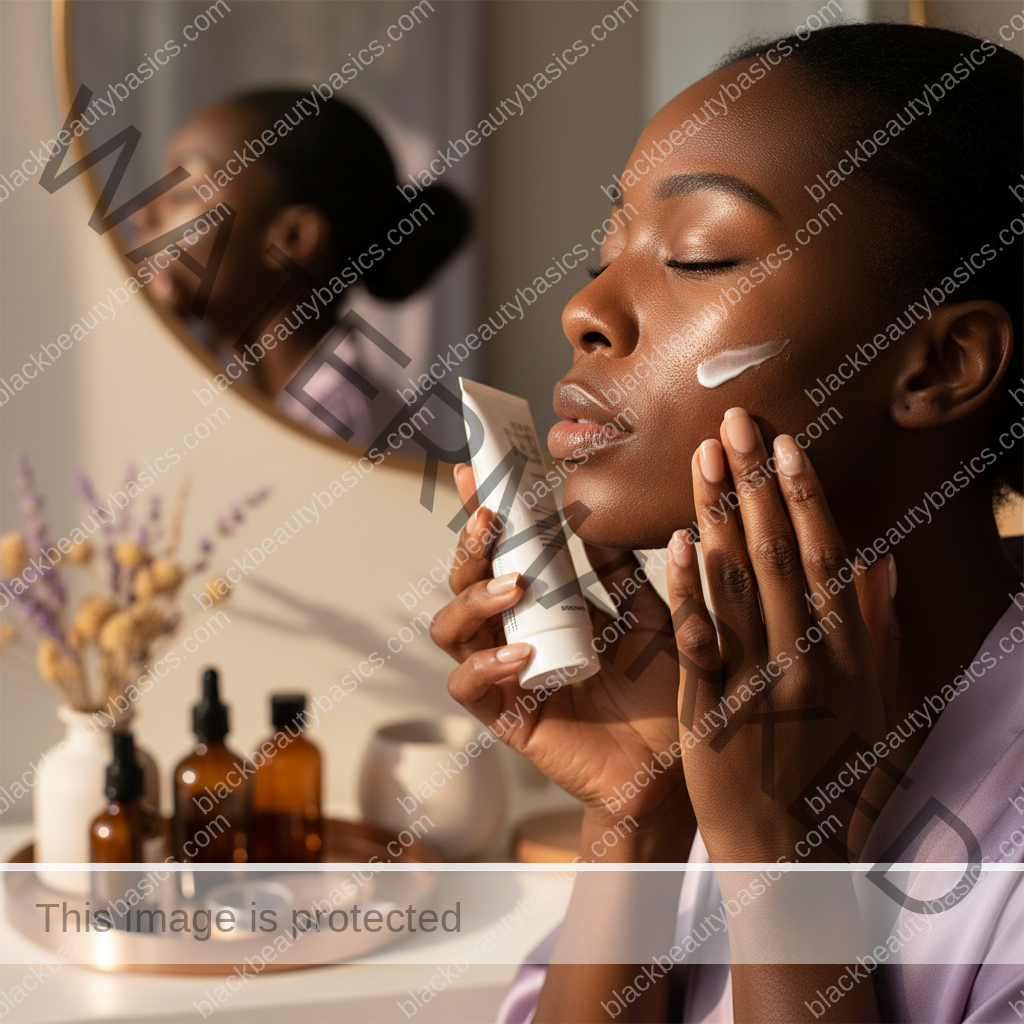
Pillar 3: Moisturize & Protect – Sealing in Goodness
Even oily skin needs moisturizer, especially when dehydrated. The right moisturizer will lock in hydration without feeling heavy or greasy, and SPF is non-negotiable for preventing PIH.
The Right Moisturizer: Hydrate, Don’t Suffocate
Look for lightweight, non-comedogenic formulas that provide lasting hydration.
- Key Ingredients: Glycerin, hyaluronic acid, ceramides, niacinamide, squalane, urea.
- Texture: Gel-creams or lightweight lotions are often ideal.
- Application: Apply while skin is still slightly damp from your serums to seal in moisture.
Shop Lightweight Moisturizers on Amazon
Sun Protection: Your Ultimate PIH Defense
SPF is the single most important step for preventing and minimizing PIH. UV radiation darkens existing spots and triggers new ones.
- Product Type: Broad-spectrum SPF 30 or higher.
- Key Considerations for Dark Skin: Look for formulas that don’t leave a white cast. Chemical sunscreens (avobenzone, octinoxate) or micronized mineral sunscreens (zinc oxide, titanium dioxide) often blend seamlessly. Tinted mineral sunscreens are also an excellent option.
- Application: Apply generously as the last step of your morning routine, every single day, rain or shine. Reapply every two hours if outdoors.
Shop Broad-Spectrum SPF for Dark Skin on Amazon
Weekly Rituals: Elevating Your Skincare Journey
Beyond the daily routine, incorporating weekly treatments can significantly enhance your skin’s health and appearance, addressing both acne and dehydration.
Gentle Exfoliation: Unclogging Without Irritation
While daily retinoids or BHAs provide continuous exfoliation, a weekly targeted treatment can be beneficial. Avoid harsh physical scrubs.
- Product Type: A gentle AHA (lactic acid, mandelic acid) or a very mild enzyme mask.
- Frequency: 1-2 times a week, always at night.
- Benefit: Removes dead skin cells, improves texture, and helps fade PIH. Mandelic acid is particularly revered for darker skin due to its larger molecular size, making it less irritating.
Shop Mandelic Acid Exfoliants on Amazon
Hydrating & Calming Masks: A Spa Moment for Your Skin
These are essential for replenishing moisture and soothing inflammation.
- Key Ingredients: Hyaluronic acid, ceramides, aloe vera, centella asiatica, colloidal oatmeal.
- Frequency: 1-2 times a week.
- Benefit: Deeply hydrates, calms redness, and strengthens the skin barrier.
Shop Hydrating Calming Masks on Amazon
Comparison Table: Acne Treatments for Dark Skin
Choosing the right active ingredient is crucial. Here’s a comparison to guide your selection:
| Active Ingredient | Primary Action | Benefits for Dark Skin | Potential Drawbacks | Usage Tips |
|---|---|---|---|---|
| Salicylic Acid (BHA) | Exfoliates inside pores, reduces oil | Effective for blackheads/whiteheads, less irritating than some AHAs for dark skin. | Can be drying if overused. | Start 2-3x/week, low concentration. |
| Azelaic Acid | Reduces inflammation, kills bacteria, fades PIH | Excellent for PIH, well-tolerated, gentle. | Mild tingling initially, takes time for results. | Can be used daily, morning/night. |
| Niacinamide | Anti-inflammatory, barrier support, oil regulation | Reduces redness, minimizes pore appearance, strengthens barrier, helps PIH. | Rare flushing (if high concentration). | Can be used daily, morning/night. |
| Adapalene (Retinoid) | Increases cell turnover, prevents clogs, reduces inflammation | Effective for all acne types, can improve PIH over time. | Initial purging, dryness, sun sensitivity. | Start 1-2x/week at night, pea-sized amount. Always use SPF. |
| Benzoyl Peroxide | Kills acne bacteria | Effective for inflammatory acne. | Can be very drying, bleaching fabrics, higher risk of PIH if irritated. | Spot treat only, low concentration (2.5-5%), use sparingly. |
Tips for Nurturing Your Skin Beyond Products
A holistic approach extends beyond the bottles and jars. Your lifestyle choices significantly impact your skin’s health.
Holistic Skincare Tips for Oily, Dehydrated, Acne-Prone Dark Skin
- Hydrate from Within: Drink plenty of water throughout the day. Dehydration shows on your skin first.
- Mindful Diet: While not a direct cause, some find that reducing high glycemic index foods and dairy can help manage acne. Focus on anti-inflammatory foods, fruits, and vegetables.
- Manage Stress: Stress hormones can trigger oil production and inflammation. Incorporate stress-reducing practices like meditation, yoga, or deep breathing.
- Change Pillowcases Regularly: Dirt, oil, and bacteria accumulate on pillowcases, contributing to breakouts. Change them 2-3 times a week.
- Avoid Picking: Popping pimples can spread bacteria, worsen inflammation, and significantly increase the risk of PIH. Let your treatments do the work.
- Clean Your Phone Screen: Your phone is a hotbed of bacteria. Clean it regularly to prevent breakouts on your cheeks and jawline.
- Be Patient & Consistent: Skincare is a marathon, not a sprint. Give new products at least 4-6 weeks to show results, and stick to your routine diligently.
- Consult a Dermatologist: If your acne is persistent or severe, a board-certified dermatologist (especially one experienced with skin of color) can provide personalized advice and prescription treatments.
FAQ: Your Most Pressing Questions Answered
Q1: Can oily skin truly be dehydrated? How can I tell the difference?
A1: Absolutely. Oily skin refers to excess sebum production, while dehydration refers to a lack of water in the skin. You can have both. Oily-dehydrated skin often feels tight, looks dull, and might even have fine lines that disappear when moisturized, despite appearing shiny or breaking out. Truly oily skin without dehydration usually feels supple and balanced, just with excess shine.
Q2: Will using a moisturizer make my oily skin worse or cause more breakouts?
A2: No, quite the opposite! Skipping moisturizer can actually worsen oil production. When your skin is dehydrated, it tries to compensate by producing more oil to protect itself. Using a lightweight, non-comedogenic moisturizer will help balance your skin’s hydration levels, potentially leading to less oil production and fewer breakouts.
Q3: How do I prevent or fade post-inflammatory hyperpigmentation (PIH) on my dark skin?
A3: Prevention is key: avoid picking at breakouts and use daily broad-spectrum SPF 30+. To fade existing PIH, incorporate ingredients like azelaic acid, niacinamide, vitamin C, alpha arbutin, and retinoids (like adapalene) into your routine. Consistency and patience are crucial, as fading PIH can take months.
Q4: Are natural oils good for oily, dehydrated, acne-prone skin?
A4: Some natural oils can be beneficial! Non-comedogenic oils like jojoba oil (mimics natural sebum), rosehip oil (rich in fatty acids and vitamin A, good for PIH), or squalane oil can provide hydration and support the skin barrier without clogging pores. Always patch test and introduce new oils slowly.
Q5: How often should I exfoliate if I have oily, dehydrated, and acne-prone dark skin?
A5: Gentle exfoliation is key. If you’re using a daily retinoid or BHA serum, a separate exfoliant might not be necessary. If not, start with a mild chemical exfoliant (like a low-concentration AHA such as mandelic or lactic acid) once or twice a week. Listen to your skin; if you experience redness, irritation, or increased dryness, reduce frequency.
Q6: Can diet impact my acne and dehydration?
A6: While diet isn’t the sole cause of acne, some individuals find that certain foods can exacerbate it. High glycemic index foods (sugary snacks, refined carbs) and dairy are often cited culprits for some. Focusing on a diet rich in antioxidants, omega-3 fatty acids, and plenty of water can support overall skin health and hydration.
Q7: What’s the difference between a serum and an essence, and do I need both?
A7: Essences are typically lighter in texture, often used after cleansing and toning, to provide an initial layer of hydration and prep the skin for subsequent products. Serums are more concentrated treatments, targeting specific concerns like acne, hyperpigmentation, or fine lines. You might not need both if your serum is hydrating enough, but layering an essence can boost hydration for dehydrated skin.
A8: It’s advisable to see a dermatologist if your over-the-counter routine isn’t providing satisfactory results after 2-3 months, if your acne is severe (cystic or nodular), painful, or if you’re experiencing significant PIH. A dermatologist can offer prescription-strength treatments and personalized advice tailored to your skin’s unique needs.
Embrace this journey with confidence, knowing that your skin’s unique story is one of beauty and resilience. With this tailored routine, you’re not just treating symptoms; you’re cultivating a deeper connection with your skin, allowing its inherent radiance to shine through. May your complexion be a testament to the power of informed care, reflecting the luminous woman you are, inside and out.
Oily and dehydrated can happen at the same time
Oily but dehydrated skin can feel confusing: shiny by lunch, tight after cleansing, flaky around breakouts, and still prone to clogged pores. The skin may have oil on the surface while lacking water and barrier comfort. If the routine responds with harsh cleansers and drying treatments, the cycle can get worse.
On deep skin, dehydration can make texture look more obvious and acne marks look duller. The goal is not to dry the face out. The goal is to reduce congestion while restoring enough comfort that the skin barrier can tolerate treatment.
A balanced routine often uses a gentle cleanser, lightweight hydrating layers, a non-heavy moisturizer, sunscreen that does not feel greasy, and one acne active used carefully. Blotting oil is fine. Punishing oil with constant stripping is not.
Oily-dehydrated routine checks
- Choose non-stripping cleansing over aggressive oil removal.
- Add lightweight hydration before judging moisturizer.
- Use acne actives slowly to avoid barrier stress.
- Manage shine without trying to erase all natural sheen.
What to do next

Keep this guide connected to the rest of the Acne & Sensitive Skin in Black Women series. Acne care on deep skin works best when the routine considers triggers, active ingredients, sensitive skin, and the dark marks that can follow inflammation.
A gentle acne routine has to protect the skin after the breakout
Shine does not mean your skin needs punishment. Tightness is information too. On melanin-rich skin, the breakout itself is often only one part of the story. Irritation, picking, harsh scrubbing, skipped moisture, and too many active ingredients can leave dark marks that linger long after the bump is gone. That is why BBB acne guidance always treats comfort, barrier support, and post-inflammatory hyperpigmentation as part of the same conversation.
The most useful routine is not the most aggressive one. It is the one you can repeat without making your skin sting, peel, or panic. If a product causes burning, swelling, rash-like irritation, or worsening tenderness, pause and simplify. If acne is painful, cystic, spreading quickly, or scarring, professional care is a strength move, not a failure. Your skin deserves strategy, not punishment.
Build the routine around balance, not oil fear
Oily but dehydrated skin is often pushed into routines that are too harsh. A strong cleanser, a drying toner, a matte sunscreen, and a spot treatment may seem logical when the face gets shiny. But if the skin also feels tight, flaky, rough, or easily irritated, that routine can keep the barrier uncomfortable. The skin may respond with more visible texture, more sensitivity, and breakouts that seem harder to calm.
A better routine separates oil control from hydration. Oil control might mean a gel cleanser, a lightweight moisturizer, strategic blotting, or a sunscreen that dries satin instead of greasy. Hydration might mean humectants, a barrier-friendly moisturizer, and avoiding the urge to wash repeatedly. You can do both. You do not have to choose between a slick face and a stripped face.
Pay attention to when your skin feels tight. If it happens immediately after cleansing, the cleanser may be too strong or the water too hot. If it happens after acne treatment, the active may need lower frequency. If it happens under sunscreen, the moisturizer underneath may not be enough, or the sunscreen itself may be too drying. These details help you adjust without abandoning the whole plan.
For Black women treating acne and dark marks, consistency matters more than a dramatic routine. A calm morning routine with gentle cleansing, light moisture, sunscreen, and makeup if desired can coexist with a slow night treatment plan. The goal is fewer inflamed breakouts and fewer new marks, not a face that feels dry enough to prove the product is working.
Signs your oily skin may also be dehydrated
- Your face looks shiny but feels tight or uncomfortable.
- Makeup clings to flakes while oil still breaks through.
- Acne treatments sting more than they used to.
- Your skin feels better with light hydration, not heavier scrubbing.
How to layer treatment without drying yourself out
The order of products matters when oily but dehydrated skin is also breakout-prone. Start with the least irritating foundation: a gentle cleanser, a light hydrating step if your skin likes one, a moisturizer that does not feel heavy, and sunscreen in the morning. Treatment should fit into that base instead of replacing it. If you skip moisture because your face is shiny, the treatment may feel stronger, makeup may cling more, and the skin may look both oily and dull by midday.
At night, keep the active ingredient schedule simple enough to remember. If you are using benzoyl peroxide, adapalene, salicylic acid, or another acne treatment, give it its own lane. You do not need every active every night. Many people with melanin-rich skin do better with a slower weekly rhythm: treatment nights, recovery nights, and a routine that does not change every time a new bump appears.
Recovery nights are not wasted nights. They are the nights that help your skin tolerate the acne plan. A recovery night might be cleanser, moisturizer, and nothing else. It might include a gentle hydrating serum if you already know your skin likes it. It should not include scrubbing, picking, or trying to make up for every missed treatment. Consistency is built by keeping the routine livable.
When you evaluate progress, look beyond shine. Are breakouts less inflamed? Are new dark marks slowing down? Does your skin feel less tight after cleansing? Can you wear sunscreen without pilling or discomfort? Those are real signs that the routine is becoming more balanced, even if your face still has natural oil by the afternoon.
If you are choosing products, look for language that supports balance: gentle, non-stripping, lightweight, hydrating, fragrance-free if you are reactive, and compatible with sunscreen. Avoid routines that make your skin feel squeaky, hot, or tight just to prove they are working. For oily but dehydrated dark skin, comfort is not optional. It is part of keeping acne care consistent enough to help.
Finally, give the routine enough time to show you something useful. Oily but dehydrated skin can improve in layers: first less tightness, then better tolerance, then fewer inflamed breakouts, then slower dark-mark buildup. Those changes may not arrive on the same week. Track comfort, new breakouts, and new marks together so you are not judging the routine only by shine.
That steadier lens keeps the routine practical, especially when your skin is changing slowly but still moving in the right direction.
Small improvements still matter when the routine is finally sustainable.
Related next steps
Related posts:
 Moisture Balance for Oily but Dehydrated Dark Skin
 How to Choose a Moisturizer When Your Skin Is Acne-Prone but Dehydrated
 Building Routines for Oily, Dry, and Combination Dark Skin
 Acne-Safe Gym Routine for Dark Skin
 When Body Acne Needs a Different Routine Than Facial Acne
 How to Build a Skincare Routine When Your Skin Is Oily and Ashy at the Same Time