The journey to radiant skin, especially when navigating the nuances of acne-prone complexions, is a testament to resilience and self-care. For the discerning Black woman, professional life demands not only excellence in her craft but also a confident presentation that truly reflects her inner glow. This guide is crafted for you, celebrating your unique beauty while empowering you to embrace an acne-safe makeup routine that seamlessly integrates into your workday, ensuring your skin thrives even as you conquer your professional aspirations.

Embracing Your Canvas: Understanding Acne-Prone Melanin-Rich Skin
Our melanin-rich skin is a marvel, offering natural protection and a luminous depth that is unparalleled. However, it also presents unique considerations when it comes to acne. Post-inflammatory hyperpigmentation (PIH) is often a primary concern, as breakouts can leave behind stubborn dark spots that linger long after the blemish has healed. Furthermore, our skin can be prone to increased oil production and sensitivity, making the choice of makeup not just a cosmetic decision, but a crucial step in maintaining skin health.
An acne-safe makeup routine isn’t about masking imperfections; it’s about intelligent choices that allow your skin to breathe, heal, and flourish. It’s about selecting products that are non-comedogenic, gentle, and formulated to support your skin barrier, all while providing the sophisticated finish you desire for your professional environment. Let’s delve into building a routine that honors your skin and elevates your confidence.
The Foundation of Flawless: Prepping Your Skin for Success
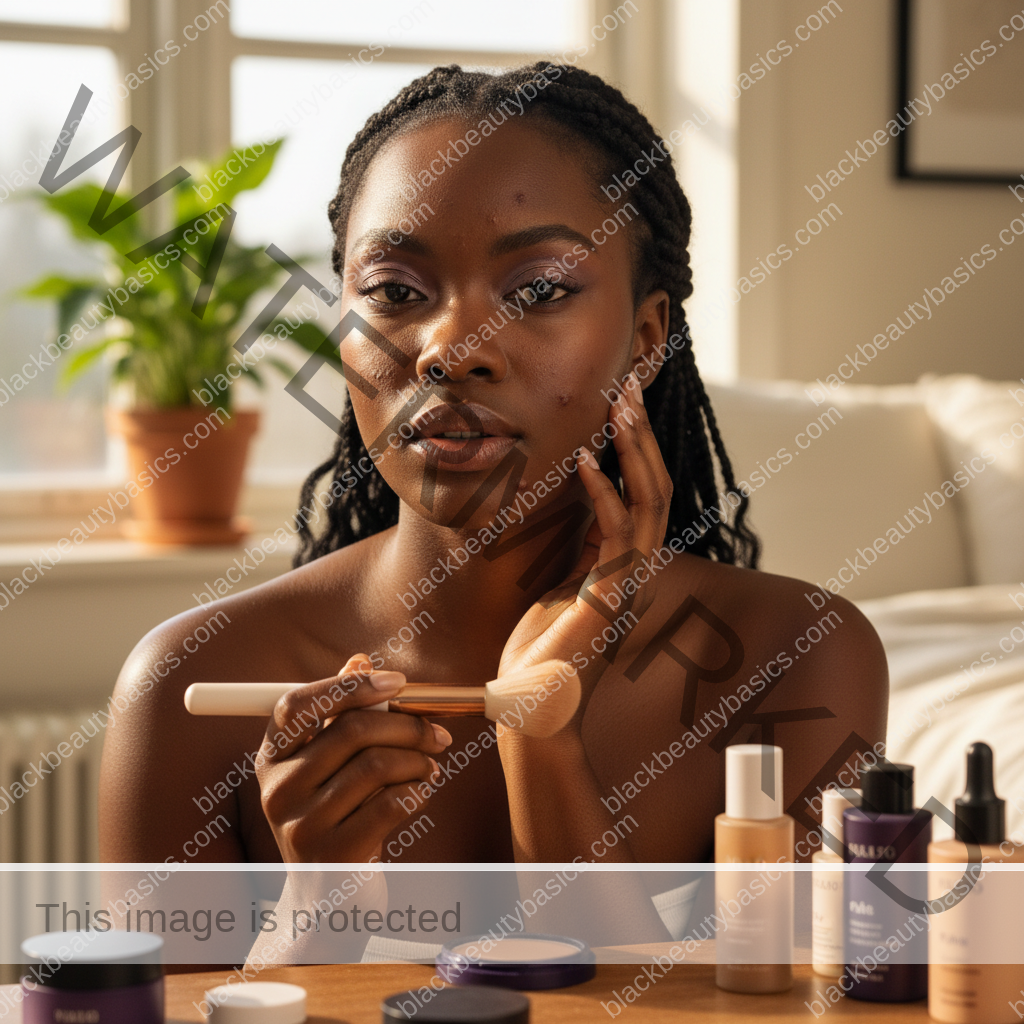
Before any makeup touches your face, a meticulous skincare prep is paramount. Think of it as laying the perfect groundwork for a masterpiece. This step is non-negotiable for acne-prone skin, as it cleanses, balances, and protects, creating an optimal canvas.
Step 1: Gentle Cleansing – The First Act of Care
Start your day with a gentle, sulfate-free cleanser. Harsh cleansers can strip your skin of its natural oils, triggering your sebaceous glands to produce even more oil, which can exacerbate breakouts. Look for ingredients like salicylic acid (at a low percentage) or benzoyl peroxide if recommended by your dermatologist, but always prioritize gentleness.
- Product Recommendation: A mild foaming or cream cleanser.
- Shop Gentle Acne Cleansers on Amazon
Step 2: Toning – Balancing and Refining
A hydrating and balancing toner can help restore your skin’s pH balance after cleansing. Opt for alcohol-free formulas that contain ingredients like witch hazel (alcohol-free version), niacinamide, or rose water. These help to refine pores and prepare your skin for subsequent treatments without causing irritation.
- Product Recommendation: Hydrating, alcohol-free toner.
- Shop Alcohol-Free Hydrating Toners on Amazon
Step 3: Targeted Treatments – Addressing Specific Concerns
This is where you apply any prescribed acne treatments or serums. If you use topical retinoids, benzoyl peroxide, or salicylic acid serums, apply them now. Allow each product to fully absorb before moving on to the next step. For PIH, a vitamin C serum can be transformative, brightening dark spots over time.
- Product Recommendation: Dermatologist-recommended acne treatment or Vitamin C serum.
- Shop Acne Treatment Serums on Amazon
Step 4: Moisturizing – Hydration is Key
Even oily, acne-prone skin needs moisture. Dehydrated skin can produce more oil to compensate, leading to more breakouts. Choose a lightweight, non-comedogenic, oil-free moisturizer. Look for ingredients like hyaluronic acid or ceramides to support your skin barrier without clogging pores.
- Product Recommendation: Lightweight, oil-free, non-comedogenic moisturizer.
- Shop Lightweight Oil-Free Moisturizers on Amazon
Step 5: Sun Protection – Your Daily Shield
This step is non-negotiable, especially for melanin-rich skin prone to PIH. Sun exposure can darken existing dark spots and hinder the healing process. Select a broad-spectrum SPF 30 or higher that is non-comedogenic and leaves no white cast. Mineral sunscreens with zinc oxide and titanium dioxide are often well-tolerated by sensitive, acne-prone skin.
- Product Recommendation: Broad-spectrum SPF 30+ mineral sunscreen, no white cast.
- Shop Mineral Sunscreens for Melanin-Rich Skin on Amazon
The Art of Application: Your Acne-Safe Makeup Routine
Now that your skin is prepped, it’s time for makeup. The goal is to enhance your features and provide a polished look for work, all while being mindful of your skin’s needs. Less is often more, and strategic product choice is everything.
Step 1: Primer – The Invisible Layer of Protection
A good primer can create a smooth canvas, extend the wear of your makeup, and sometimes even offer additional skincare benefits. For acne-prone skin, look for primers that are oil-free, silicone-based (if tolerated), and non-comedogenic. Some primers also contain salicylic acid or mattifying properties to control oil throughout the day.
- Product Recommendation: Oil-free, non-comedogenic, mattifying primer.
- Shop Oil-Free Mattifying Primers on Amazon
Step 2: Foundation/Tinted Moisturizer – The Breathable Base
This is where many go wrong. Heavy, full-coverage foundations can suffocate your skin and exacerbate breakouts. For workdays, opt for lightweight, breathable formulas. Tinted moisturizers, BB creams, CC creams, or sheer-to-medium coverage foundations are ideal. Look for “non-comedogenic,” “oil-free,” and “non-acnegenic” on the label. Mineral foundations can also be an excellent choice.
- Product Recommendation: Lightweight, non-comedogenic liquid foundation, BB/CC cream, or mineral powder foundation.
- Shop Non-Comedogenic Foundations on Amazon
Choosing Your Base: Liquid vs. Mineral Foundation
| Feature | Lightweight Liquid Foundation/BB/CC Cream | Mineral Powder Foundation |
|---|---|---|
| Coverage | Sheer to medium, buildable. Natural finish. | Light to full, buildable. Often a matte or semi-matte finish. |
| Skin Feel | Hydrating, often feels like a second skin. | Lightweight, allows skin to breathe. Can be drying for some. |
| Key Ingredients | Often contains hydrators (hyaluronic acid), antioxidants. | Zinc oxide, titanium dioxide (anti-inflammatory, SPF). |
| Acne Benefits | Less likely to clog pores if non-comedogenic. | Anti-inflammatory properties, can help calm skin. |
| Best For | Normal to oily, slightly dry acne-prone skin. | Oily, very sensitive, or inflamed acne-prone skin. |
| Application | Fingers, beauty blender, brush. | Kabuki brush for buffing. |
Step 3: Concealer – Targeted Perfection
For blemishes or dark spots, a targeted concealer is your ally. Choose a non-comedogenic, full-coverage concealer that matches your skin tone or is slightly warmer to neutralize hyperpigmentation. Apply sparingly only where needed, using a clean finger or a small brush, and gently tap to blend. Avoid caking it on, as this can draw more attention to the area.
- Product Recommendation: Non-comedogenic, full-coverage concealer for dark spots.
- Shop Non-Comedogenic Concealers on Amazon
Step 4: Setting Powder – Longevity and Oil Control
A light dusting of translucent or color-matched setting powder can lock your makeup in place and control shine throughout the workday. Look for finely milled, non-comedogenic powders, preferably mineral-based. Focus on your T-zone and any areas prone to oiliness. Avoid heavy baking, which can emphasize texture.
- Product Recommendation: Translucent or color-matched, finely milled setting powder.
- Shop Non-Comedogenic Setting Powders on Amazon
Step 5: Blush and Bronzer – Adding Dimension (Optional)
To bring warmth and life to your complexion, a touch of blush and bronzer can be transformative. Opt for powder formulas over creams, as powders are generally less likely to clog pores. Choose shades that complement your melanin-rich skin – rich plums, terracotta, or deep berries for blush, and warm, non-orange bronzers. Apply with a light hand.
- Product Recommendation: Powder blush and bronzer, non-comedogenic.
- Shop Non-Comedogenic Powder Blushes on Amazon
- Shop Non-Comedogenic Powder Bronzers on Amazon
Step 6: Eye Makeup – Defining Your Gaze
Eye makeup is generally less likely to cause facial acne, but it’s still wise to choose non-comedogenic formulas, especially for eyeliner and mascara, as they can sometimes migrate. For eyeshadows, powder formulas are usually preferred. Define your brows for a polished, professional look.
- Product Recommendation: Non-comedogenic mascara, eyeliner, and powder eyeshadows.
- Shop Non-Comedogenic Mascaras on Amazon
- Shop Non-Comedogenic Eyeliners on Amazon
Step 7: Lip Color – The Finishing Touch
Lip products rarely contribute to facial acne, so this is an area where you can express your personal style freely. For a professional setting, consider elegant nudes, rich browns, or sophisticated berry tones that enhance your natural lip color. Hydrating formulas are always a plus.
- Product Recommendation: Hydrating lipstick or gloss in a professional shade.
- Shop Hydrating Lipsticks on Amazon
Maintaining Your Glow: Midday Refresh and Evening Rituals
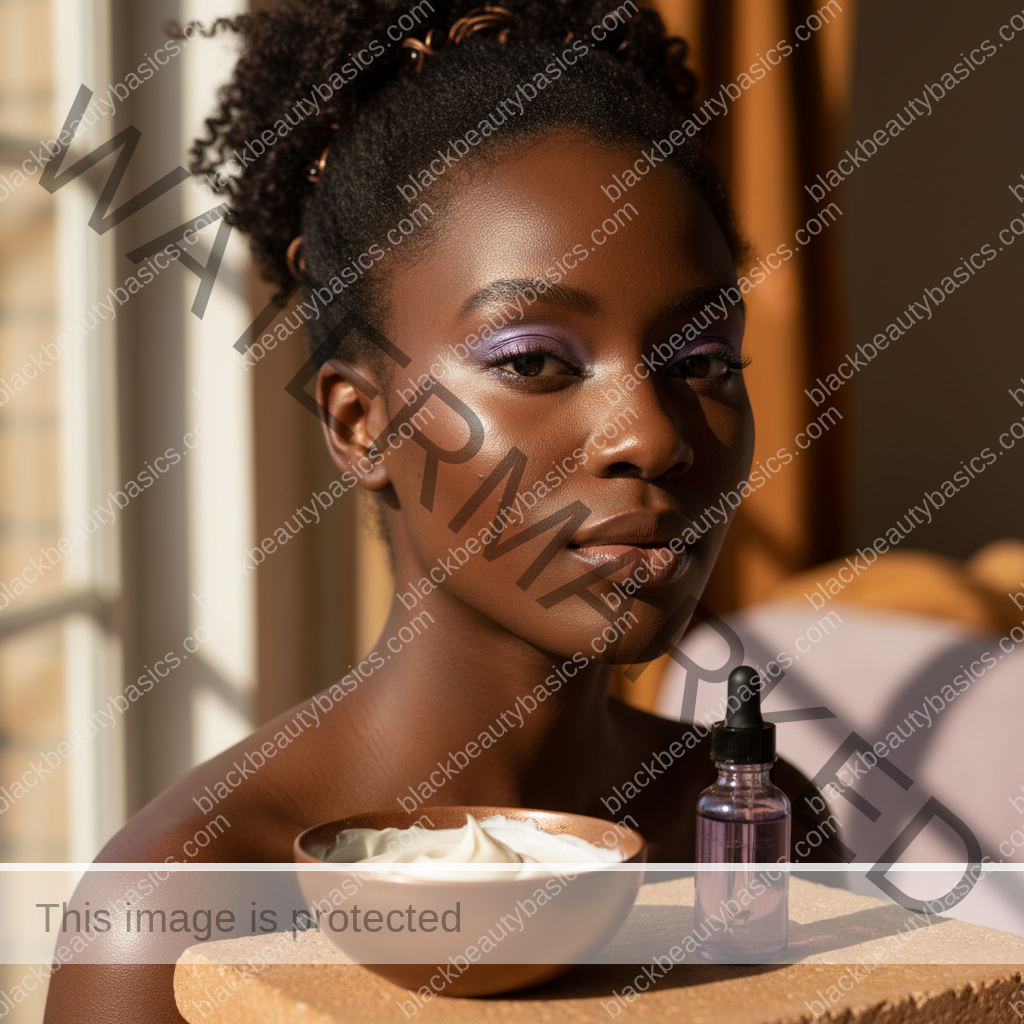
Your workday doesn’t end at noon, and neither does the need for skin mindfulness. A few strategic touches can keep your complexion looking fresh, and your evening routine is crucial for skin recovery.
Midday Refresh: Battling Shine, Not Your Skin
Instead of piling on more powder, use blotting papers to absorb excess oil without disturbing your makeup. If you need a quick refresh, a spritz of a hydrating setting spray can re-awaken your complexion and melt powders into your skin for a more natural finish.
- Product Recommendation: Oil-blotting papers, hydrating setting spray.
- Shop Oil Blotting Papers on Amazon
- Shop Hydrating Setting Sprays on Amazon
Evening Ritual: The Unveiling and Healing
The most critical step for acne-prone skin is thoroughly removing your makeup at the end of the day. Never, under any circumstances, sleep with makeup on. A double cleanse is highly recommended:
- Oil Cleanser/Micellar Water: Use an oil-based cleanser or micellar water to break down makeup, sunscreen, and impurities without stripping your skin.
- Gentle Water-Based Cleanser: Follow with your regular gentle cleanser to ensure all residue is removed, leaving your skin truly clean.
After cleansing, proceed with your evening skincare routine, which might include treatments, serums, and a richer moisturizer to support skin repair overnight.
- Product Recommendation: Oil cleanser or micellar water.
- Shop Oil Cleansers on Amazon
- Shop Micellar Waters on Amazon
Beyond the Products: Holistic Practices for Clearer Skin
While product selection is vital, a holistic approach to skin health is what truly yields lasting results. Your skin is a reflection of your overall well-being.
Tool Care: The Unsung Hero
Dirty makeup brushes and sponges are breeding grounds for bacteria, which can directly contribute to breakouts. Commit to cleaning your brushes at least once a week, and replace sponges regularly. Use a gentle brush cleanser or mild soap and water, ensuring they dry completely before reuse.
- Product Recommendation: Gentle brush cleanser.
- Shop Makeup Brush Cleansers on Amazon
Diet and Hydration: Fueling Your Radiance from Within
What you consume significantly impacts your skin. A diet rich in antioxidants, omega-3 fatty acids, and plenty of water can help reduce inflammation and support skin health. Limit processed foods, excessive sugar, and dairy if you find they trigger breakouts.
Acne-Safe Makeup Routine: Do’s and Don’ts for Workdays
| DO’S ✅ | DON’TS ❌ |
|---|---|
| Do choose non-comedogenic, oil-free products. | Don’t pick or squeeze blemishes. |
| Do prioritize gentle, consistent skincare. | Don’t sleep with makeup on, ever. |
| Do clean makeup brushes and tools regularly. | Don’t use heavy, pore-clogging foundations. |
| Do wear broad-spectrum SPF daily. | Don’t over-exfoliate or use harsh scrubs. |
| Do patch test new products. | Don’t neglect your evening double cleanse. |
| Do hydrate internally with plenty of water. | Don’t ignore persistent breakouts; consult a dermatologist. |
| Do embrace lightweight, breathable formulas. | Don’t share makeup or applicators. |
| Do use blotting papers for midday oil control. | Don’t use expired makeup products. |
Stress Management: The Silent Culprit
Stress can trigger hormonal fluctuations that lead to breakouts. Incorporate stress-reducing practices into your daily life – meditation, yoga, deep breathing, or simply taking moments for yourself. Your skin, and your mind, will thank you.
Pillowcases and Phone Screens: Hidden Germ Havens
Change your pillowcase frequently (every 2-3 days, especially if you have active breakouts) to avoid transferring oils and bacteria to your skin. Regularly wipe down your phone screen with an antibacterial wipe, as it touches your face throughout the day.
FAQ: Your Most Pressing Questions Answered
Q1: What does “non-comedogenic” truly mean, and why is it important for acne-prone skin?
A1: “Non-comedogenic” means a product has been formulated and tested to not clog pores. For acne-prone skin, this is paramount because clogged pores are the primary cause of blackheads, whiteheads, and inflammatory acne. When choosing makeup and skincare, always look for this label to minimize the risk of breakouts. However, it’s important to remember that individual reactions can vary, so patch testing new products is always a good practice.
Q2: Can mineral makeup actually help improve acne?
A2: Yes, mineral makeup, particularly those containing zinc oxide and titanium dioxide, can be beneficial for acne-prone skin. These ingredients are natural anti-inflammatories and offer broad-spectrum sun protection, which is crucial for preventing post-inflammatory hyperpigmentation (PIH). They are also typically free of common irritants like talc, dyes, and synthetic fragrances, making them a gentler option that allows the skin to breathe.
Q3: How do I prevent my makeup from looking cakey or emphasizing texture on acne-prone skin?
A3: The key is a well-prepped, hydrated base and strategic application. Start with a lightweight, non-comedogenic moisturizer and primer. Use sheer-to-medium coverage foundations, applied sparingly and blended well with a damp beauty blender or soft brush. For blemishes, use a small amount of full-coverage concealer only on the spot, tapping it in. Avoid heavy layers of powder, opting for a light dusting in oily areas. Less product often looks more natural and prevents a cakey finish.
Q4: Is it better to use liquid or powder foundation for oily, acne-prone skin?
A4: Both can work, but it depends on the formulation. For oily, acne-prone skin, powder foundations (especially mineral-based) are often favored for their mattifying properties and ability to absorb excess oil. They also tend to be less occlusive. However, many modern liquid foundations are now formulated to be oil-free, non-comedogenic, and long-wearing with a matte finish, offering excellent options. The best choice is one that feels lightweight, doesn’t clog pores, and controls shine without drying out your skin.
Q5: How can I deal with post-inflammatory hyperpigmentation (PIH) while wearing makeup?
A5: For PIH, color correction is your best friend. After applying your primer, use a peach or orange color corrector (depending on your skin tone and the depth of the dark spot) very sparingly on the hyperpigmented areas. Then, apply your regular non-comedogenic foundation and concealer over it. This neutralizes the dark tones, allowing your foundation to provide even coverage without needing heavy layers. Consistent use of SPF and skincare ingredients like Vitamin C and niacinamide will also help fade PIH over time.
Q6: What’s the best way to clean my makeup brushes to prevent breakouts?
A6: For daily use brushes (like foundation or concealer), aim to clean them at least once a week. For eye brushes, every 1-2 weeks is usually sufficient. Use a dedicated brush cleanser or a mild, anti-bacterial soap. Wet the bristles, apply cleanser, gently swirl on a textured mat or your palm, rinse thoroughly until water runs clear, reshape, and lay flat on a clean towel to air dry completely. Never store brushes wet or upright, as this can lead to moisture seeping into the ferrule and loosening glue.
Q7: Should I avoid certain ingredients in my makeup if I have acne?
A7: Yes, certain ingredients are known to be comedogenic or irritating. Avoid heavy oils (like mineral oil, petrolatum, coconut oil if you’re sensitive), artificial fragrances, and certain synthetic dyes, especially if you have sensitive or reactive skin. Lanolin and isopropyl myristate are also common culprits. Always check ingredient lists for “non-comedogenic” and “fragrance-free” labels. When in doubt, consult a dermatologist for personalized ingredient recommendations.
Q8: How can I make my acne-safe makeup last all day in a professional setting?
A8: Longevity starts with proper prep: a good primer creates a gripping base. Use long-wearing, non-comedogenic formulas for foundation and concealer. Set your makeup with a finely milled powder, focusing on oily areas. A setting spray can further lock everything in place and prevent makeup from settling into fine lines. Keep blotting papers handy for midday oil control instead of adding more powder, which can lead to a cakey appearance.
Dear sister, your skin tells a story of strength and beauty, and an acne-safe makeup routine is simply another chapter in celebrating that narrative. By choosing products with intention and embracing mindful practices, you not only adorn your outer self but also nurture your inner radiance. Step into your workday with the confidence that your glow is authentic, sophisticated, and deeply cared for, a true reflection of the magnificent woman you are. Your journey to empowered beauty continues, radiant and unblemished.
Workday makeup should not make acne care harder
Makeup can be part of a confident routine, not something acne-prone skin has to earn. The goal is to reduce friction, clogging, and irritation while still letting you show up polished. That starts with skin prep, clean tools, lighter layers where possible, and a removal routine that does not punish the skin at night.
For Black women, makeup also has to respect hyperpigmentation. Heavy coverage over dark marks can feel comforting, but repeated rubbing, sleeping in makeup, or harsh removal can keep the skin inflamed. A good workday routine balances coverage with cleanup.
Think in layers: gentle morning skincare, sunscreen, base makeup that works with your skin, strategic coverage, and a calm evening removal process.
Workday makeup checks
- Use clean brushes or sponges and wash them regularly.
- Let skincare and sunscreen settle before makeup.
- Spot-conceal instead of building heavy layers everywhere.
- Remove makeup gently every night.
What to do next
Keep this guide connected to the rest of the Acne & Sensitive Skin in Black Women series. Acne care on deep skin works best when product choices, makeup habits, body routines, stress patterns, and PIH prevention are treated as one connected system.
Keep the routine protective after the breakout
You do not have to choose between makeup and acne care. The routine just needs cleaner edges. For Black women and people with richly melanated skin, acne care is rarely only about making the bump smaller. It is also about lowering inflammation, protecting the skin barrier, and reducing the chance that every flare leaves a new dark mark. That means the routine has to be effective without becoming harsh.
When the skin starts feeling raw, tight, hot, itchy, or unusually tender, treat that as useful feedback. Pause the extras, return to a gentle cleanser and moisturizer, keep sunscreen steady in the morning, and restart actives only when the skin feels calmer. A routine that your skin can tolerate for months will usually serve you better than a dramatic routine that creates a setback in a week.
Makeup tools are part of the acne routine
Workday makeup is not only about the foundation formula. Brushes, sponges, puffs, compact applicators, and the makeup bag itself can affect breakout-prone skin. A sponge that stays damp in a bag, a brush that touches hair products near the forehead, or a powder puff used over sweat and oil every day can keep irritation in the routine even when the products are technically acne-friendly.
Keep the process realistic. You do not need a perfect beauty-lab setup before work. You do need a routine for washing tools, rotating sponges, wiping compact surfaces, and avoiding shared applicators. If your breakouts cluster where makeup is blended most aggressively, lighten your pressure and let the base sit rather than rubbing repeatedly.
Removal matters just as much as application. A gentle first cleanse can break down sunscreen and long-wear makeup before your cleanser touches the skin. That makes it easier to clean thoroughly without scrubbing, which is especially important when acne marks are already present.
If your workday is long, build in one small reset instead of trying to make makeup survive by force. Blot oil gently, avoid piling powder over sweat, and use clean hands or tools if you need to touch up. When you get home, remove the day with patience. Your skin should not have to pay for looking polished.
A calmer removal routine protects both the makeup day and the skin underneath.
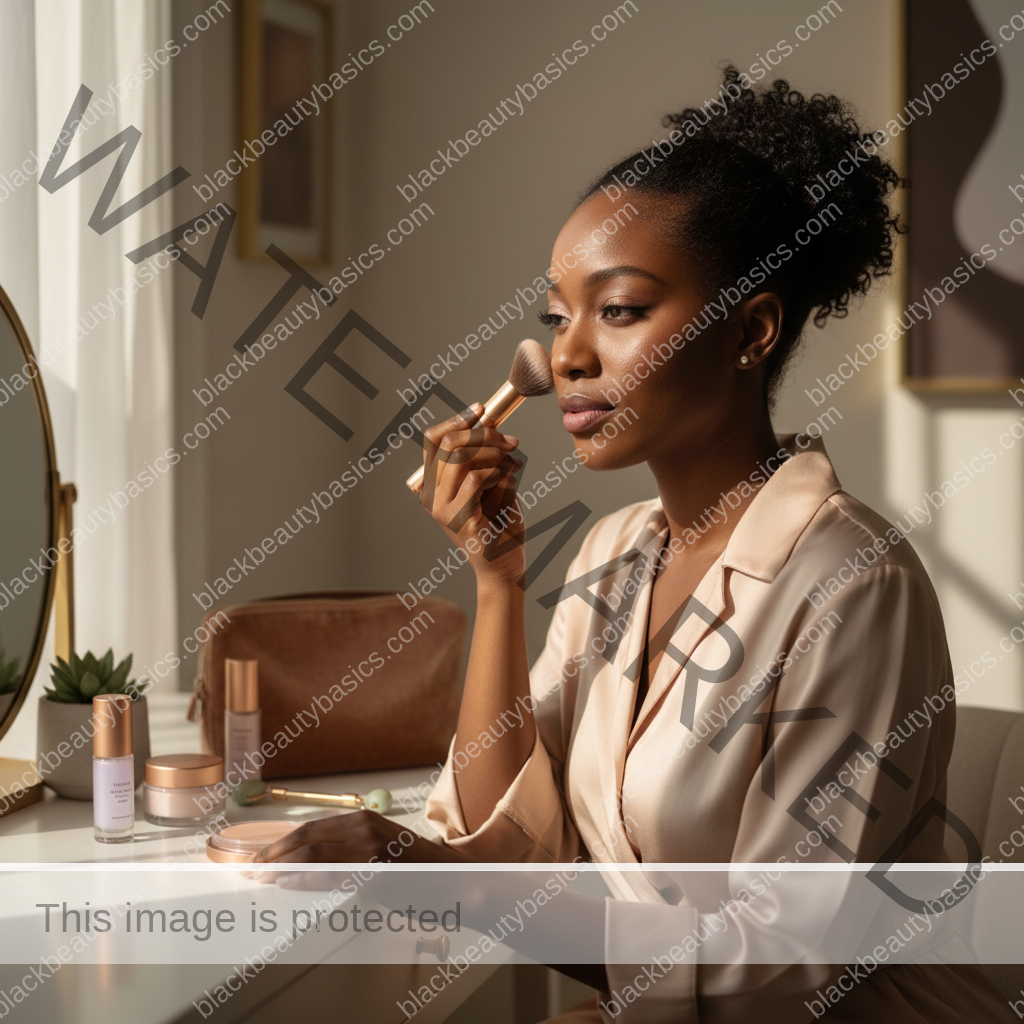
A midday reset does not need to become a full routine. If your makeup still feels comfortable, focus on blotting, softening shine, and leaving irritated areas alone.
Related next steps
Related posts:
 Acne-Safe Gym Routine for Dark Skin
 When Body Acne Needs a Different Routine Than Facial Acne
 Visionary Eye Shadow Stick, Shimmer Cream Eyeshadow Pencil, Long-Lasting Makeup, Safe for Sensitive & Dry Eyes, Ophthalmologist Tested (Love At First Sight)
 Pre-Makeup Skin Prep for Acne-Prone Melanin-Rich Skin
 Adjusting Makeup Habits During Acne Flares and Healing Phases
 Why Your Acne Routine Keeps Causing More Dark Marks