The journey to radiant skin, for many of us, is often punctuated by the persistent challenge of acne. But for Black women, this struggle carries an additional layer of complexity: the lingering shadows of hyperpigmentation and scarring that can feel like a permanent record of every breakout. It’s a testament to our strength and resilience that we continue to seek solutions, and today, we empower you with the knowledge to navigate these waters with confidence and clarity, ensuring your voice is heard and your skin’s unique needs are met.
Navigating the Nuances: Why Acne Scars Differ on Dark Skin
For generations, the beauty industry has often overlooked the distinct characteristics of melanin-rich skin. When it comes to acne and its aftermath, this oversight can lead to frustrating and inadequate treatment. Our skin, rich in melanocytes, is beautifully predisposed to develop post-inflammatory hyperpigmentation (PIH) – those dark spots that linger long after a blemish has healed. This isn’t just a cosmetic concern; it’s a deeply personal one that can impact self-esteem and confidence. Understanding these nuances is the first step toward effective advocacy for your skin’s health.
The Science of Scarring: PIH vs. True Scars
It’s crucial to differentiate between post-inflammatory hyperpigmentation (PIH) and true acne scars. While both are common concerns for Black women, their treatments differ significantly.
Post-Inflammatory Hyperpigmentation (PIH)
PIH manifests as flat, discolored patches – typically brown, black, or grayish-brown – that appear where acne lesions once were. This occurs when inflammation from a breakout triggers an overproduction of melanin. While PIH can be stubborn and take months or even years to fade naturally, it doesn’t involve a change in skin texture. It’s essentially a “stain” on the skin.
True Acne Scars
True acne scars, on the other hand, involve a change in the skin’s texture due to damage to collagen and elastin fibers. These can be:
- Atrophic Scars: Depressed scars that appear as indentations. These include ice pick scars (small, deep holes), boxcar scars (U-shaped with sharp edges), and rolling scars (broad depressions with sloping edges).
- Hypertrophic/Keloid Scars: Raised, firm scars. While hypertrophic scars stay within the boundaries of the original wound, keloids grow beyond them. Black skin is genetically more prone to developing keloids, making early intervention critical.
The key takeaway? PIH is a pigmentation issue, while true scars are a textural issue. Your dermatologist needs to understand this distinction to recommend the most effective treatment plan.
The Melanin Advantage and Disadvantage
Our melanin-rich skin offers incredible protection against sun damage and premature aging, a true gift. However, this very advantage also makes us more susceptible to PIH and keloid scarring. Any inflammation – be it from acne, a cut, or even aggressive exfoliation – can stimulate melanocytes to produce excess pigment. This heightened reactivity means that gentle, consistent care is paramount, and aggressive treatments that might work for lighter skin tones can often exacerbate issues for us.
Understanding this biological reality empowers you to advocate for treatments that are specifically tailored to your skin’s unique needs, ensuring that your dermatologist approaches your concerns with cultural competence and scientific precision.
Essential Questions to Ask Your Dermatologist About Acne & Scarring
Walking into a dermatologist’s office armed with knowledge is your superpower. These questions are designed to open a dialogue, ensure comprehensive assessment, and advocate for a treatment plan that truly understands and respects your melanin-rich skin.
1. Diagnosis & Root Cause: “What type of acne am I experiencing, and what do you believe is causing it?”
Acne isn’t a monolith. It can be hormonal, bacterial, cystic, fungal, or a combination. Understanding the type of acne is foundational to effective treatment. For Black women, hormonal acne is particularly common, often manifesting as deep, painful cysts around the jawline, chin, and neck. Your dermatologist should delve into potential triggers like stress, diet, genetics, and hormonal imbalances (e.g., PCOS).
- Why this question is crucial: A precise diagnosis leads to targeted treatment. If it’s hormonal, topical treatments alone won’t suffice. If it’s bacterial, antibiotics might be necessary.
- What to listen for: A thorough explanation of your acne type, potential contributing factors, and whether further tests (like blood work for hormones) are recommended.
2. Scarring Assessment: “Given my skin type, what is the likelihood of developing PIH or true scars from my current breakouts, and how can we prevent them?”
Prevention is always better than cure, especially when it comes to scarring on dark skin. Your dermatologist should acknowledge your predisposition to PIH and keloids and discuss preventative measures.
- Why this question is crucial: It prompts a discussion about proactive strategies tailored to your skin’s unique response to inflammation.
- What to listen for: Advice on gentle acne treatments, avoiding picking/popping, and early intervention for active lesions. They should also discuss ingredients that help prevent PIH, like niacinamide or azelaic acid.
3. Treatment Plan: “What specific treatments do you recommend for my active acne, and how will these be adjusted to minimize hyperpigmentation and scarring on my skin tone?”
This is where the rubber meets the road. The treatment plan must be customized. Some treatments effective for lighter skin tones can be too aggressive for dark skin, leading to more inflammation and, consequently, more PIH.
Shop Acne Treatments for Dark Skin on Amazon
Considerations for Dark Skin:
- Topical Retinoids: Often a cornerstone of acne treatment, but start with lower concentrations and introduce slowly to avoid irritation. Shop Topical Retinoids on Amazon
- Azelaic Acid: Excellent for both acne and PIH, often well-tolerated. Shop Azelaic Acid on Amazon
- Benzoyl Peroxide: Can be effective but use with caution as it can be drying and potentially irritating, leading to PIH. Consider lower concentrations or short-contact therapy. Shop Benzoyl Peroxide on Amazon
- Oral Medications: For severe or hormonal acne, oral antibiotics, spironolactone, or isotretinoin might be considered.
- In-Office Treatments: Gentle chemical peels (lactic, mandelic acid), superficial microneedling, or specific lasers (e.g., Nd:YAG) can be effective when performed by an experienced professional.
- Why this question is crucial: It ensures your dermatologist is mindful of your skin’s unique needs and avoids treatments that could worsen your condition.
- What to listen for: A detailed plan that includes both active acne treatment and PIH prevention, with an emphasis on gentle, gradual introduction of new products.
4. PIH Management: “Once my active acne is under control, what is the plan for treating existing post-inflammatory hyperpigmentation?”
This is a critical follow-up. Many dermatologists focus solely on active acne, leaving patients to deal with the lingering dark spots on their own. A comprehensive plan includes both.
Shop PIH Treatments for Dark Skin on Amazon
Effective Ingredients & Treatments for PIH on Dark Skin:
- Topical Tyrosinase Inhibitors: Hydroquinone (use under medical supervision), kojic acid, arbutin, licorice root extract, vitamin C. Shop Tyrosinase Inhibitors on Amazon
- Retinoids: Help speed up cell turnover, aiding in pigment shedding.
- Azelaic Acid: As mentioned, excellent for both.
- Chemical Peels: Superficial peels with alpha hydroxy acids (AHAs) like glycolic, lactic, or mandelic acid, or beta hydroxy acids (BHAs) like salicylic acid. Ensure the dermatologist has experience with peels on dark skin to avoid burns or further PIH. Shop Chemical Peels for Dark Skin on Amazon
- Microneedling: Can be effective for PIH and mild textural issues, but again, ensure proper technique and aftercare. Shop Microneedling Devices on Amazon
- Sun Protection: Non-negotiable! Daily use of broad-spectrum SPF 30+ prevents existing PIH from darkening and new PIH from forming. Shop Sunscreen for Dark Skin on Amazon
- Why this question is crucial: It ensures your dermatologist has a holistic view of your skin journey, addressing both active issues and their aftermath.
- What to listen for: A multi-pronged approach combining topical treatments with potential in-office procedures, always emphasizing sun protection.
5. True Scar Treatment: “If I have true acne scars (ice pick, boxcar, rolling, or keloid), what are the most effective and safest treatment options for my skin type?”
Treating true scars requires different modalities than PIH. This is where expertise in treating dark skin is paramount, as some laser treatments can cause hypopigmentation (light spots) or hyperpigmentation if not used correctly.
Shop Acne Scar Treatments for Dark Skin on Amazon
Treatment Options for True Scars on Dark Skin:
- Atrophic Scars (Ice Pick, Boxcar, Rolling):
- Microneedling (with or without PRP): Stimulates collagen production.
- Subcision: Releases tethered scars.
- Dermal Fillers: Can temporarily plump up depressed scars. Shop Dermal Fillers on Amazon
- Fractional Lasers (Non-ablative or specific ablative like CO2 or Erbium with extreme caution): Nd:YAG or picosecond lasers are generally safer for dark skin. Always ensure the practitioner is highly experienced.
- TCA CROSS: For ice pick scars, but requires precision.
- Hypertrophic/Keloid Scars:
- Corticosteroid Injections: To flatten raised scars.
- Silicone Sheets/Gels: Can help flatten and soften scars. Shop Silicone Scar Sheets on Amazon
- Cryotherapy: Freezing the scar.
- Surgical Excision (often combined with other therapies to prevent recurrence).
- Pulsed Dye Laser (PDL): Can reduce redness and flatten scars.
- Why this question is crucial: It ensures you receive appropriate, safe, and effective treatments for textural changes, not just pigment.
- What to listen for: A detailed explanation of options, potential risks for dark skin, and the importance of a skilled practitioner.
6. Skincare Routine: “What daily skincare routine do you recommend, including specific product types, to support my treatment plan and maintain skin health?”
Your daily routine is the bedrock of skin health. It should complement your treatments, not counteract them. A dermatologist should provide guidance on cleansers, moisturizers, and sunscreens that are non-comedogenic and suitable for your skin type.
Shop Skincare Products for Acne-Prone Dark Skin on Amazon
Key Components of a Skincare Routine for Acne-Prone Dark Skin:
- Gentle Cleanser: Avoid harsh, stripping cleansers. Look for hydrating or salicylic acid-based options. Shop Gentle Cleansers for Acne-Prone Skin on Amazon
- Treatment Serum/Cream: As prescribed by your dermatologist (e.g., retinoid, azelaic acid). Shop Treatment Serums for Acne and PIH on Amazon
- Moisturizer: Non-comedogenic and hydrating to support the skin barrier, especially when using active treatments. Shop Non-Comedogenic Moisturizers for Dark Skin on Amazon
- Broad-Spectrum Sunscreen SPF 30+: Daily, non-negotiable, even indoors or on cloudy days, to prevent PIH from darkening and protect overall skin health. Look for mineral sunscreens (zinc oxide, titanium dioxide) if you have sensitive skin, or chemical sunscreens that don’t leave a white cast. Shop Broad-Spectrum Sunscreen with No White Cast on Amazon
- Why this question is crucial: It ensures your at-home care supports your professional treatments and prevents further irritation.
- What to listen for: A simple, effective routine with product recommendations that consider your skin type and sensitivities.
7. Lifestyle & Diet: “Are there any lifestyle or dietary changes you recommend that could impact my acne and skin health?”
While topical and oral treatments are vital, holistic health plays a significant role. Your dermatologist should be open to discussing the mind-body connection to skin health.
- Why this question is crucial: It addresses potential internal triggers for acne and empowers you to make informed lifestyle choices.
- What to listen for: Discussions around stress management, sleep hygiene, hydration, and potential dietary triggers (e.g., high glycemic index foods, dairy for some individuals).
Finding a dermatologist who understands the unique needs of melanin-rich skin is paramount. This isn’t just about medical expertise; it’s about cultural competence and a deep understanding of how treatments might manifest differently on your skin.
Qualities of an Ideal Dermatologist for Dark Skin
- Experience with Skin of Color: This is non-negotiable. Ask directly about their experience treating African American patients and managing PIH and keloids.
- Patient-Centered Approach: They should listen attentively to your concerns, answer all your questions thoroughly, and involve you in decision-making.
- Conservative Treatment Philosophy: For dark skin, a “less is more” approach, especially initially, is often best to avoid irritation and subsequent hyperpigmentation.
- Up-to-Date on Research: They should be knowledgeable about the latest treatments and technologies specifically adapted for skin of color.
- Clear Communication: You should leave the office feeling informed and confident about your treatment plan.
Tips for Vetting Your Dermatologist
- Ask for Referrals: Seek recommendations from friends, family, or online communities of Black women.
- Check Online Reviews: Look for mentions of their experience with diverse skin tones.
- Initial Consultation: Use your first appointment to ask these critical questions and assess their approach. Don’t hesitate to seek a second opinion if you don’t feel heard or confident.
Comparison: At-Home vs. In-Office Treatments for PIH & Scars
Understanding the capabilities and limitations of both at-home and professional treatments is key to developing a comprehensive strategy.
| Treatment Aspect | At-Home Treatments | In-Office Treatments (Dermatologist) |
|---|---|---|
| Target Concerns | Mild active acne, mild PIH, general skin health maintenance, prevention. | Moderate to severe active acne, stubborn PIH, true acne scars (atrophic, keloid), hormonal acne. |
| Key Ingredients/Methods | Gentle cleansers, moisturizers, broad-spectrum SPF, OTC retinoids (adapalene), azelaic acid, niacinamide, vitamin C, kojic acid, salicylic acid, benzoyl peroxide (low concentration). | Prescription retinoids (tretinoin), hydroquinone, oral antibiotics, spironolactone, isotretinoin, chemical peels (higher strength), microneedling, fractional lasers (Nd:YAG, picosecond), subcision, dermal fillers, corticosteroid injections. |
| Effectiveness | Good for maintenance, prevention, and mild issues. Requires consistency and patience. | More potent and faster results for severe issues. Can address textural changes and deep pigmentation. |
| Risks for Dark Skin | Minimal if products are chosen carefully and used gently. Over-exfoliation or harsh products can cause PIH. | Higher risk of PIH, hypopigmentation, or keloid formation if not performed by an experienced professional with knowledge of skin of color. Lasers and deep peels require extreme caution. |
| Cost | Generally lower (cost of OTC products). | Significantly higher (consultation fees, procedure costs, prescription medications). Often not covered by insurance for cosmetic concerns. |
| Time Commitment | Daily routine. | Appointments, recovery time for some procedures, ongoing follow-ups. |
Tips for Managing Acne & Scarring on Dark Skin
Beyond your dermatologist’s advice, incorporating these habits into your daily life can significantly impact your skin’s health and appearance.
- Be Gentle, Always: Your melanin-rich skin is prone to inflammation, which directly leads to PIH. Avoid harsh scrubs, aggressive exfoliation, and picking at blemishes.
- Sunscreen is Your Best Friend: This cannot be stressed enough. Daily broad-spectrum SPF 30+ is essential to prevent PIH from darkening and to protect your skin from UV damage. Look for formulas that don’t leave a white cast. Shop Sunscreen for Melanin-Rich Skin on Amazon
- Consistency Over Intensity: Skincare is a marathon, not a sprint. Stick to your prescribed routine consistently, and remember that results take time.
- Hydrate from Within and Without: Drink plenty of water and use a good non-comedogenic moisturizer to keep your skin barrier healthy and resilient. Shop Hydrating Non-Comedogenic Moisturizers on Amazon
- Patch Test New Products: Always test new products on a small, inconspicuous area of your skin for a few days before applying them all over your face.
- Manage Stress: Stress can trigger hormonal fluctuations that exacerbate acne. Incorporate stress-reducing activities like meditation, yoga, or spending time in nature.
- Clean Your Tools: Regularly clean your makeup brushes, phone screen, and pillowcases to minimize bacterial transfer to your face. Shop Makeup Brush Cleaners on Amazon
- Be Patient and Kind to Yourself: Healing takes time. Celebrate small victories and remember that your skin journey is unique.
Professional care can protect your skin and your time
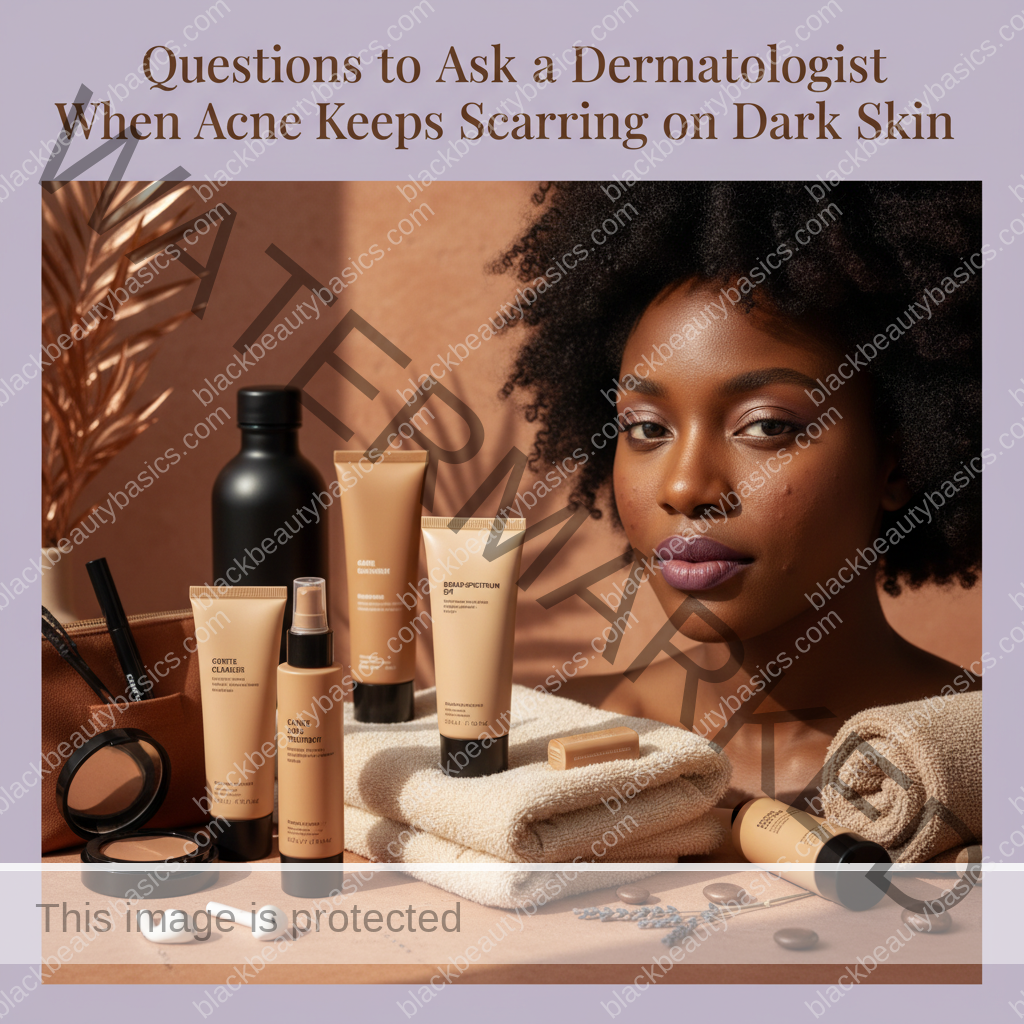
When acne keeps scarring or leaving dark marks, seeing a dermatologist is not overreacting. It can be the most efficient way to protect melanin-rich skin from repeated inflammation. The appointment goes better when you arrive with clear questions and a simple history of what you have tried.
Ask about the type of acne, whether prescription treatment makes sense, how to prevent PIH, what to avoid with your skin tone, and how long to judge progress. If procedures are discussed, ask about experience treating dark skin and the plan for preventing hyperpigmentation.
You deserve care that takes your complexion seriously. If a provider dismisses your marks, pain, or scarring, it is reasonable to seek another opinion.
Appointment questions
- What type of acne pattern do you see?
- How do we prevent new dark marks while treating acne?
- Which ingredients or procedures require extra caution on dark skin?
- When should I follow up if this plan is not working?
What to do next
Keep this guide connected to the rest of the Acne & Sensitive Skin in Black Women series. Acne care on deep skin works best when product choices, makeup habits, body routines, stress patterns, and PIH prevention are treated as one connected system.
Frequently Asked Questions (FAQ)
Q1: How long does it take for PIH to fade on dark skin?
A: The fading process for post-inflammatory hyperpigmentation (PIH) on dark skin can vary significantly. Mild PIH might fade in a few months, but deeper, more stubborn spots can take 6-12 months, or even several years, to fully resolve. Consistent use of sun protection and dermatologist-recommended topical treatments (like retinoids, azelaic acid, or hydroquinone) can significantly speed up this process. Patience and consistency are crucial.
Q2: Can I use retinoids if I have sensitive dark skin?
A: Yes, retinoids can be very effective for acne and PIH on dark skin, but they must be introduced carefully. Start with a low concentration (e.g., 0.025% tretinoin or over-the-counter adapalene) and apply it only 2-3 times a week, gradually increasing frequency as your skin tolerates it. Always apply to dry skin after cleansing and follow with a good moisturizer. Your dermatologist can guide you on the best type and strength for your skin to minimize irritation, which can lead to further PIH.
Q3: Are chemical peels safe for dark skin?
A: Yes, certain chemical peels are safe and highly effective for dark skin when performed by an experienced professional. Superficial peels using alpha hydroxy acids (AHAs) like lactic or mandelic acid, or beta hydroxy acids (BHAs) like salicylic acid, are generally well-tolerated. It’s crucial to avoid deep peels or those with high concentrations of ingredients like glycolic acid unless the practitioner has extensive experience with skin of color. Always ensure proper skin preparation and post-peel care to prevent complications like burns or further hyperpigmentation.
Q4: What’s the difference between a dermatologist and an esthetician for acne treatment?
A: A dermatologist is a medical doctor specializing in skin, hair, and nails. They can diagnose medical conditions, prescribe medications (oral and topical), perform medical procedures, and treat all forms of acne and scarring. An esthetician is a licensed skincare professional who provides cosmetic treatments like facials, extractions, and superficial peels. While estheticians can help manage mild acne and improve skin texture, they cannot diagnose medical conditions or prescribe medication. For persistent acne and scarring on dark skin, a dermatologist is essential for diagnosis and medical treatment, with an esthetician potentially complementing the treatment plan with supportive services.
Q5: Can diet really affect my acne?
A: While diet is not the sole cause of acne, certain dietary patterns can influence it for some individuals. High glycemic index foods (like refined sugars and white bread) and dairy products have been linked to acne flares in some studies, though individual responses vary. It’s beneficial to observe if certain foods trigger your breakouts. A dermatologist might suggest an elimination diet to identify potential triggers, but dietary changes should complement, not replace, medical treatment for severe acne.
Q6: How can I prevent keloid scars from forming after a breakout?
A: Preventing keloids on dark skin requires proactive measures. The most important step is to avoid picking, squeezing, or aggressively manipulating active acne lesions, as this trauma can trigger keloid formation. If you have a history of keloids, inform your dermatologist immediately. They might recommend early intervention for deep or cystic lesions, such as intralesional corticosteroid injections, to reduce inflammation and prevent excessive collagen production. Silicone sheets or gels can also be used on healing wounds to minimize scar elevation.
Q7: Is microneedling safe for dark skin for acne scars?
A: Yes, microneedling is generally considered safe and effective for treating atrophic acne scars and improving skin texture on dark skin, with a lower risk of hyperpigmentation compared to some laser treatments. It works by creating micro-injuries that stimulate collagen production. However, it’s crucial that the procedure is performed by a skilled professional using appropriate needle depths and techniques. Aggressive microneedling or improper aftercare can still lead to PIH, so always choose an experienced practitioner.
Q8: What should I do if my dermatologist doesn’t seem knowledgeable about dark skin?
A: If you feel your dermatologist lacks expertise in treating dark skin, it’s important to advocate for yourself. You have the right to seek a second opinion or find a new dermatologist. Look for practitioners who specifically market their experience with “skin of color” or “ethnic skin.” Organizations like the Skin of Color Society can also be a valuable resource for finding qualified dermatologists in your area. Don’t settle for less than comprehensive and culturally competent care for your unique skin needs.

Your skin tells a story of resilience, beauty, and strength, and it deserves care that understands its unique narrative. Armed with these questions and a discerning spirit, you are now empowered to step into your dermatologist’s office not just as a patient, but as an informed advocate for your radiant, melanin-rich canvas. Embrace this journey with confidence, knowing that Black Beauty Basics is here to illuminate your path to unparalleled skin health.
Related next steps
Related posts:
 Clinic-Based Peels and Procedures on Dark Skin: Questions to Ask for Confident Care
 Melasma-Like Patches on Melanin-Rich Skin: Questions to Ask Your Doctor
 Empowering Questions to Ask Before Committing to Long-Term Hair Removal
 Why Your Acne Routine Keeps Causing More Dark Marks
 How Scarring and PIH Influence When to Seek Help for Acne on Melanin-Rich Skin
 Spotting PIH and Scarring Patterns After Acne on Face, Chest, and Back