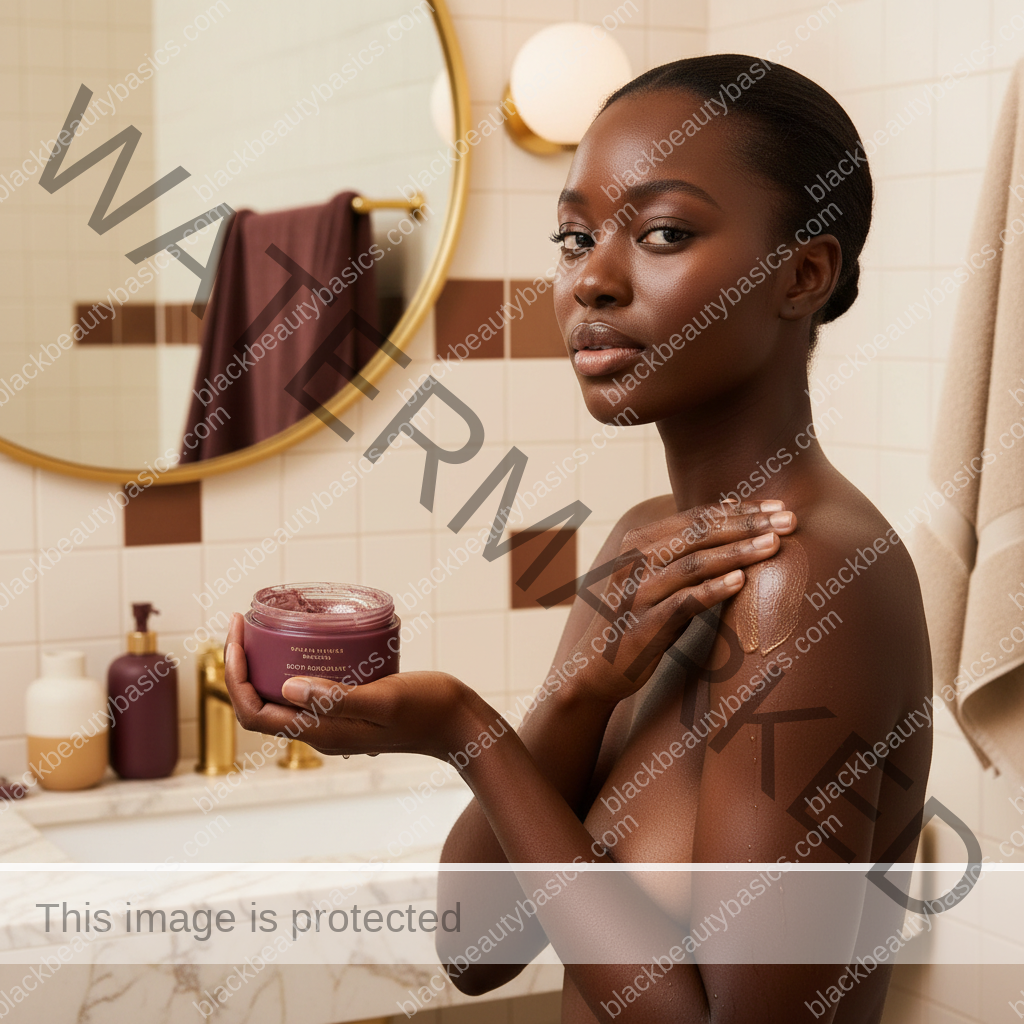
Our melanin-rich skin, a tapestry of resilience and radiance, deserves a regimen that honors its unique beauty. While the quest for a luminous, even-toned complexion often leads us to the transformative power of exfoliation, the delicate balance between revealing fresh skin and preserving our protective barrier is paramount. For the discerning Black woman, mastering the art of body exfoliation means embracing a nuanced approach – one that celebrates our skin’s inherent strength while gently coaxing forth its most vibrant glow, all without ever overdoing it. Start with the related BBB body-care cluster guide if you want the broader map.
Embracing Your Luminous Canvas: The Essence of Body Exfoliation for Deep Skin
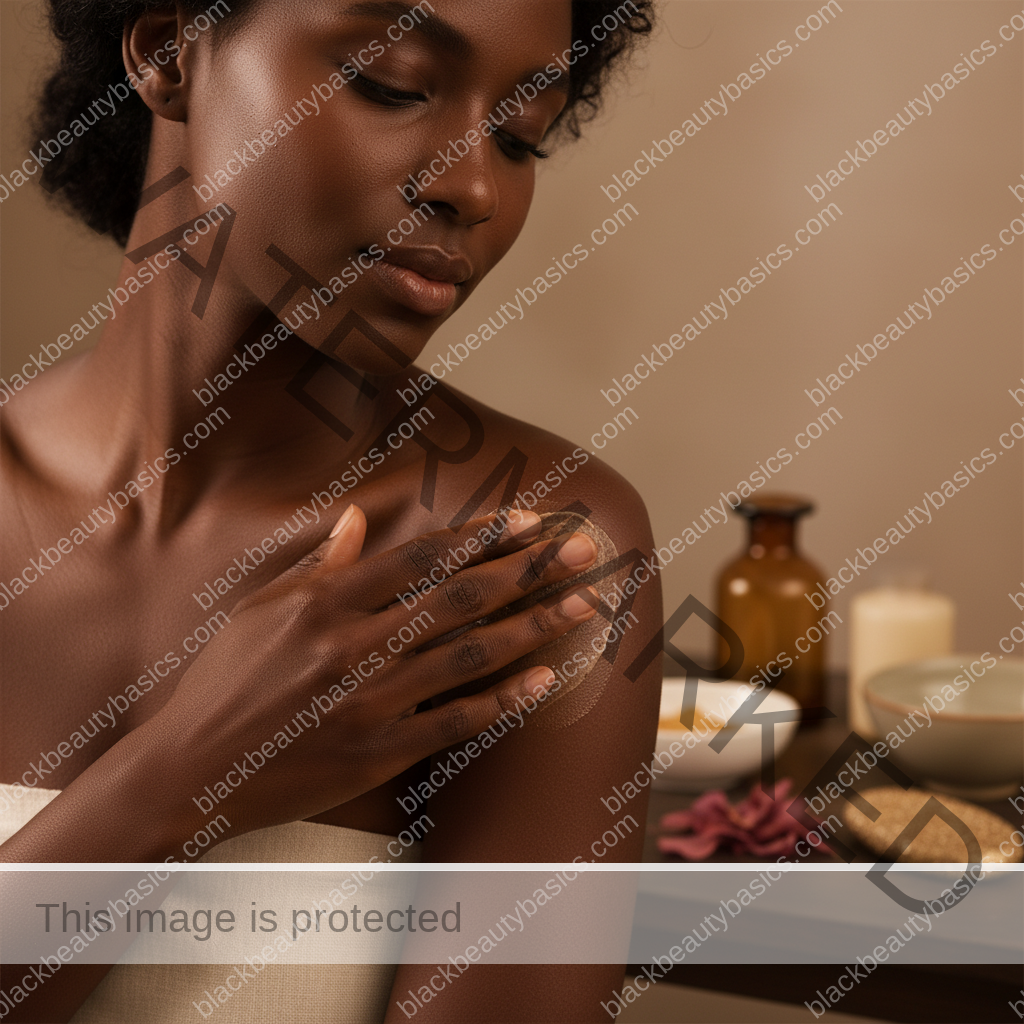
The journey to truly radiant skin extends beyond the face, encompassing the entire body. For Black women, whose skin is often characterized by a rich depth of tone and a tendency towards hyperpigmentation, understanding the nuances of body exfoliation is not just a beauty ritual—it’s a strategic act of self-care. Our skin, while robust, requires a thoughtful approach to exfoliation to prevent irritation, preserve its natural moisture, and reveal its inherent luminosity without compromise.
Why Exfoliation is Key for Melanin-Rich Skin
Melanin-rich skin has unique characteristics that make exfoliation particularly beneficial when done correctly. We often experience:
- Slower Cell Turnover: While not universally true for all individuals, some studies suggest that cell turnover can be slightly slower in darker skin tones, leading to a buildup of dead skin cells that can dull the complexion.
- Increased Risk of Hyperpigmentation: Our skin is more prone to Post-Inflammatory Hyperpigmentation (PIH) from even minor trauma, like ingrown hairs or friction. Gentle exfoliation helps prevent these issues by keeping pores clear and promoting smooth skin.
- Ashiness and Dryness: Dead skin cell buildup can exacerbate dryness and lead to an ashy appearance. Exfoliation helps remove this layer, allowing moisturizers to penetrate more effectively.
- Ingrown Hairs: Particularly common after shaving or waxing, ingrown hairs can be a persistent concern. Regular, gentle exfoliation helps free trapped hairs, reducing bumps and irritation.
The goal is to encourage healthy cell renewal and maintain a smooth, even-toned canvas, all while respecting the skin’s natural protective barrier.

Understanding Your Skin: The Foundation of Mindful Exfoliation
Before diving into specific products or techniques, it’s crucial to understand your skin type and its unique needs. This personalized approach is what truly sets apart effective exfoliation from potentially damaging practices.
Identifying Your Body Skin Type
Just like your face, the skin on your body can vary:
- Normal Skin: Balanced, rarely dry or oily, few sensitivities. You can generally tolerate a wider range of exfoliants.
- Dry Skin: Feels tight, flaky, or itchy, especially after showering. Requires very gentle, hydrating exfoliants.
- Oily Skin: May feel greasy, prone to body acne. Can benefit from more frequent, yet still gentle, exfoliation to manage oil and prevent breakouts.
- Sensitive Skin: Reacts easily to products, prone to redness, itching, or irritation. Needs the mildest forms of exfoliation, often chemical, and less frequently.
- Combination Skin: Different areas of the body have different needs (e.g., oily back, dry shins). Tailor your approach to each area.
Pay attention to how your skin feels and reacts. This feedback is your most valuable guide.
The Dangers of Over-Exfoliation for Deep Skin Tones
For melanin-rich skin, over-exfoliation isn’t just about temporary redness or irritation; it carries a higher risk of Post-Inflammatory Hyperpigmentation (PIH). When the skin barrier is compromised, inflammation can trigger melanocytes (the cells that produce pigment) to overproduce melanin, leading to dark spots that can take months to fade. This is why a “less is more” and “gentle is best” philosophy is paramount.
Signs of over-exfoliation include:
- Increased sensitivity or stinging
- Redness or irritation
- Dryness, flakiness, or tightness
- Breakouts or small bumps
- A “raw” or “stripped” feeling
- New or worsening dark spots
If you notice any of these signs, pause exfoliation immediately and focus on repairing your skin barrier with gentle, hydrating products.
The Two Pillars of Body Exfoliation: Chemical vs. Physical
Both chemical and physical exfoliants have their place in a well-rounded body care routine, but understanding their mechanisms and choosing wisely is key for deep skin tones.
Chemical Exfoliants: Gentle Power for Even Tone
Chemical exfoliants use acids to dissolve the bonds between dead skin cells, allowing them to slough off naturally. They are often preferred for sensitive skin and those prone to hyperpigmentation because they don’t involve harsh scrubbing, which can cause micro-tears and inflammation.
- Alpha Hydroxy Acids (AHAs): Such as Lactic Acid and Glycolic Acid. Lactic acid is generally milder and more hydrating, making it excellent for dry or sensitive skin. Glycolic acid is smaller and penetrates deeper, offering more potent exfoliation but can be more irritating if not used carefully. AHAs work on the skin’s surface, improving texture and tone.
- Beta Hydroxy Acids (BHAs): Salicylic Acid is the most common BHA. It’s oil-soluble, meaning it can penetrate into pores, making it ideal for oily skin, body acne, and preventing ingrown hairs.
- Polyhydroxy Acids (PHAs): Such as Gluconolactone and Lactobionic Acid. PHAs are larger molecules than AHAs, making them even gentler and less irritating. They also offer hydrating and antioxidant benefits, perfect for very sensitive or dry skin.
When selecting chemical exfoliants, look for lotions, serums, or body washes containing these acids. Start with lower concentrations and gradually increase frequency as your skin tolerates it.
Shop AHA Body Lotions on Amazon
Shop BHA Body Washes on Amazon
Shop PHA Body Treatments on Amazon
Physical Exfoliants: The Art of Gentle Buffing
Physical exfoliants involve manually removing dead skin cells through friction. While effective, they must be used with extreme caution on melanin-rich skin to avoid micro-tears and irritation.
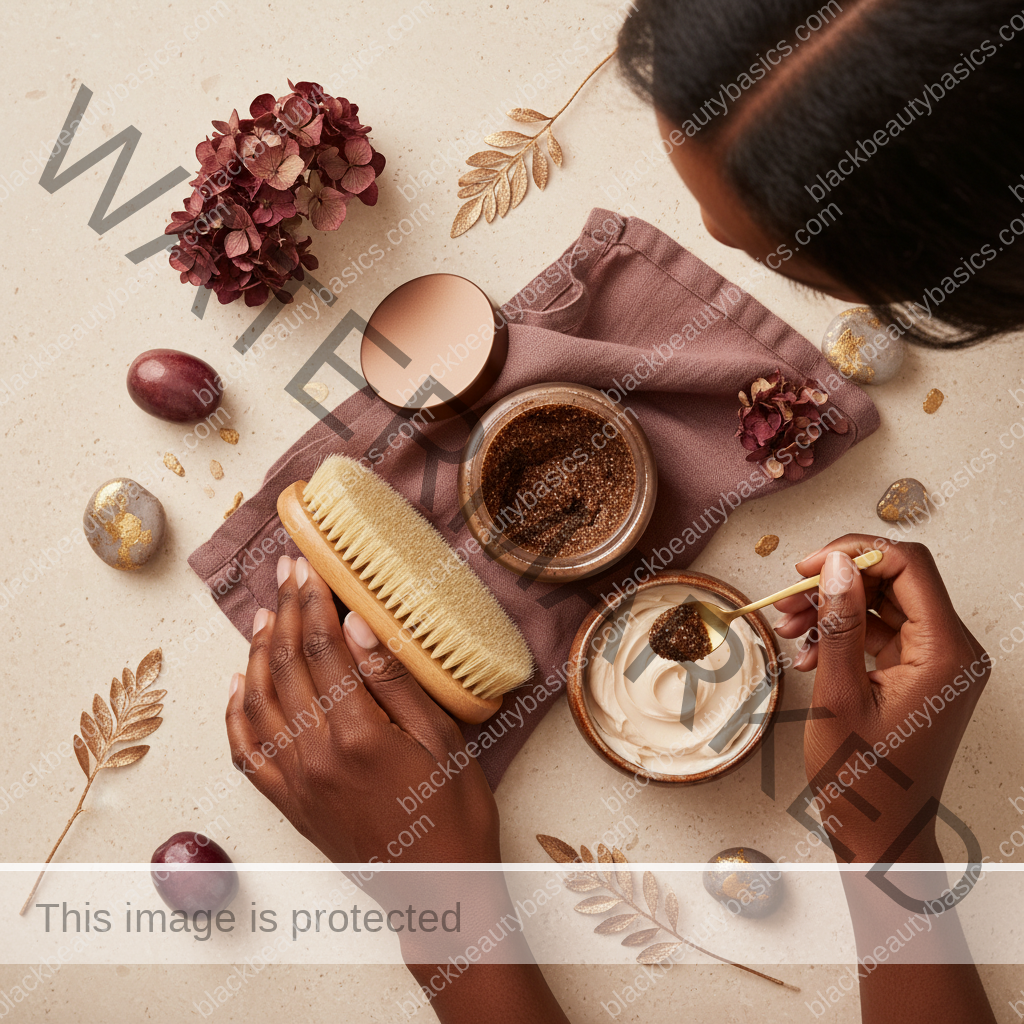
- Sugar Scrubs: Sugar crystals are rounder and dissolve as you scrub, making them generally gentler than salt scrubs. Look for fine-grain sugar suspended in nourishing oils.
- Coffee Scrubs: The caffeine can offer temporary skin-tightening benefits, and the grounds provide effective exfoliation. Ensure the grounds are finely milled.
- Exfoliating Gloves/Mittens: These can be very effective but require a light hand. Use with a gentle body wash, not a harsh scrub.
- Loofahs/Body Brushes: Natural loofahs and body brushes can be too abrasive for daily use. If using, opt for soft bristles and replace frequently to prevent bacterial growth.
- African Net Sponges (Sapo): A traditional and highly effective tool, these stretchy nets provide excellent lather and exfoliation without being overly harsh, reaching all areas of the body. They dry quickly, preventing bacterial buildup.
The key with physical exfoliants is the pressure – use a light touch, let the product do the work, and never scrub aggressively. Avoid products with large, irregular particles like crushed nut shells, which can cause micro-tears.
Shop Sugar Body Scrubs on Amazon
Shop African Net Sponges on Amazon
Shop Exfoliating Gloves on Amazon
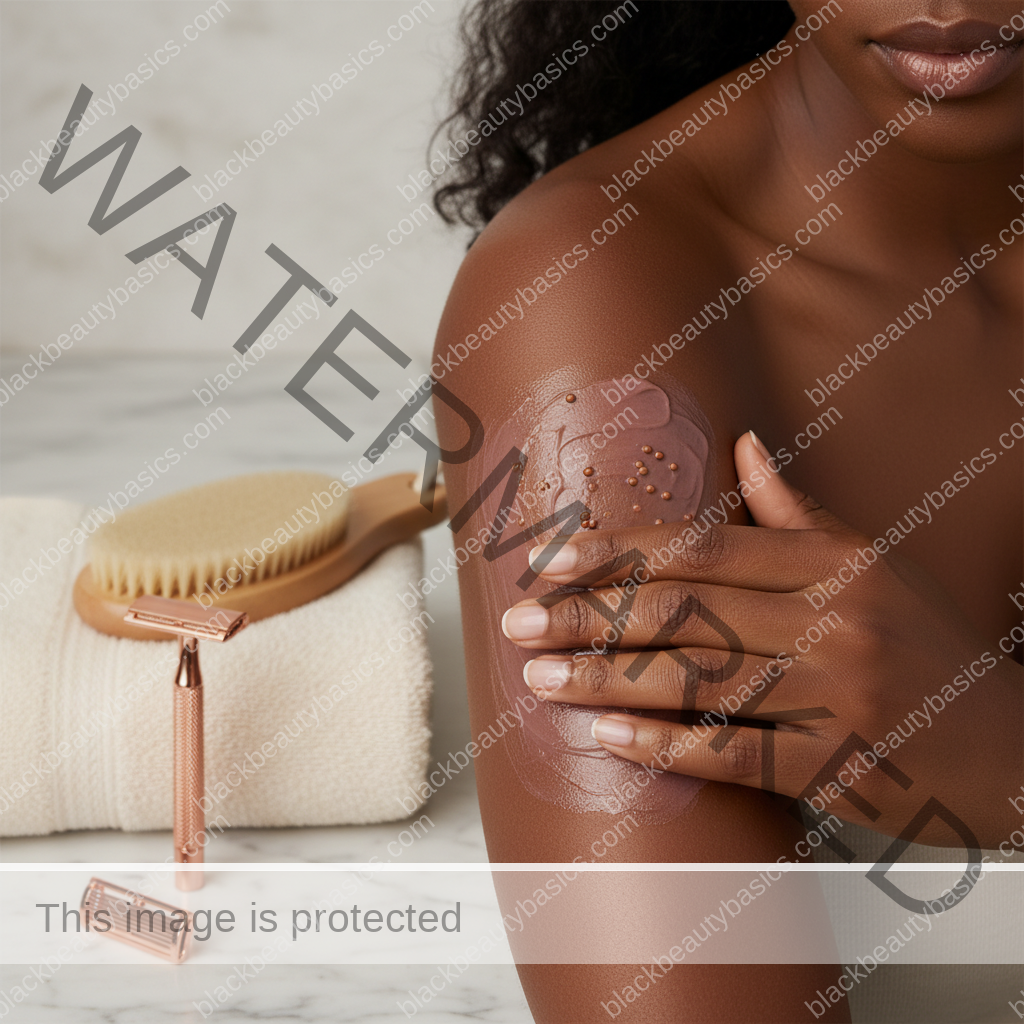
Comparison: Chemical vs. Physical Exfoliation for Deep Skin
Choosing between chemical and physical exfoliants depends on your skin type, concerns, and personal preference. Many women find a combination of both, used strategically, to be most effective.
| Feature | Chemical Exfoliants (AHAs, BHAs, PHAs) | Physical Exfoliants (Scrubs, Gloves, Sapo) |
|---|---|---|
| Mechanism | Dissolves dead skin cells with acids | Manually buffs away dead skin cells |
| Gentleness | Generally gentler, less risk of micro-tears | Can be harsh if not used correctly; depends on particle size/tool |
| Best For | Hyperpigmentation, uneven tone, sensitive skin, body acne (BHA) | Immediate smoothness, preparing for hair removal, general dullness |
| Risk of PIH | Lower, if used correctly and not overdone | Higher, especially with aggressive scrubbing or harsh particles |
| Application | Leave-on lotions, body washes, serums | Rinse-off scrubs, tools used with body wash |
| Frequency | 2-3 times a week, or as tolerated | 1-2 times a week, or as tolerated |
The Art of Not Overdoing It: A Step-by-Step Ritual
The secret to effective body exfoliation for deep skin lies not in intensity, but in consistency and gentleness. Here’s how to incorporate it into your routine without compromising your skin barrier.
Pre-Exfoliation Preparation: Setting the Stage
- Warm Shower/Bath: Always exfoliate on damp, softened skin. A warm (not hot) shower or bath for 5-10 minutes helps to soften dead skin cells, making them easier to remove.
- Cleanse First: If using a physical scrub, cleanse your body first with a gentle, hydrating body wash to remove surface dirt and oils. This allows the exfoliant to work directly on dead skin cells.
- Patch Test: If trying a new product, especially a chemical exfoliant, always patch test on a small, inconspicuous area (like behind the ear or on the inner arm) 24-48 hours beforehand to check for adverse reactions.
Shop Hydrating Body Washes on Amazon
Application Techniques: Precision and Grace
Whether you choose chemical or physical, the application method is crucial.
For Chemical Exfoliants:
- Apply Evenly: After showering and gently patting your skin almost dry, apply your chemical exfoliant (lotion, serum, or treatment) evenly to the desired areas.
- Massage Gently: If it’s a lotion, massage it in until absorbed. For body washes with AHAs/BHAs, leave on for a minute or two before rinsing.
- Start Slow: Begin with 2-3 times a week. If your skin tolerates it well, you can gradually increase frequency, but rarely is daily use necessary for the body.
For Physical Exfoliants:
- Damp Skin is Key: Apply a small amount of scrub to damp skin. If using an exfoliating glove or African net sponge, apply your body wash to the tool.
- Gentle, Circular Motions: Using light pressure, massage the product or tool onto your skin in small, circular motions. Focus on areas prone to dryness or ingrown hairs (knees, elbows, shins, bikini line).
- Rinse Thoroughly: Rinse off completely with lukewarm water, ensuring no residue is left behind.
- Frequency: Limit physical exfoliation to 1-2 times a week, depending on your skin’s sensitivity.
Post-Exfoliation Care: Nurturing Your Renewed Skin
This step is non-negotiable, especially for melanin-rich skin, to lock in moisture and prevent irritation.
- Pat Dry: Gently pat your skin dry with a soft towel, leaving it slightly damp.
- Hydrate Immediately: Within minutes of stepping out of the shower, apply a rich, emollient moisturizer. Look for ingredients like ceramides, hyaluronic acid, shea butter, cocoa butter, and squalane. This helps to replenish the skin barrier and seal in moisture.
- Sun Protection: Exfoliation can make your skin more sensitive to the sun. Always apply a broad-spectrum sunscreen with SPF 30 or higher to any exposed areas, even on cloudy days. This is critical for preventing hyperpigmentation.
Shop Rich Body Moisturizers on Amazon
Shop Broad Spectrum Sunscreen SPF 30+ on Amazon
Advanced Tips and Considerations for Melanin-Rich Skin
Elevate your exfoliation game with these tailored insights.
Targeting Specific Concerns
- Ingrown Hairs: For persistent ingrowns, a BHA (salicylic acid) body wash or lotion is your best friend. Use it consistently on affected areas. Gentle physical exfoliation with an African net sponge can also help release trapped hairs.
- Hyperpigmentation/Dark Spots: Chemical exfoliants (especially AHAs like lactic acid or glycolic acid) are highly effective for improving uneven tone. Consistency is key, paired with diligent sun protection.
- Keratosis Pilaris (KP): Often appearing as small, rough bumps, KP responds well to a combination of AHAs (lactic or glycolic acid) and BHAs (salicylic acid) to smooth the skin, along with rich moisturizers.
- Body Acne: Salicylic acid (BHA) is excellent for clearing pores and reducing body breakouts. Look for it in body washes or sprays.
Seasonal Adjustments
Your skin’s needs change with the seasons. In drier, colder months, you might need to reduce exfoliation frequency and increase hydration. In warmer, more humid months, you might tolerate slightly more frequent exfoliation, especially if you’re prone to body acne.
The Power of Consistency, Not Aggression
Remember, the goal is not to strip your skin but to gently encourage its natural renewal process. Regular, gentle exfoliation yields far better results than infrequent, aggressive scrubbing. Think of it as a marathon, not a sprint.
Exfoliation Frequency Guide for Deep Skin Tones
This is a general guide; always listen to your skin.
| Skin Type | Chemical Exfoliation (e.g., AHA/BHA lotion) | Physical Exfoliation (e.g., Sugar Scrub, Sapo) |
|---|---|---|
| Normal | 2-3 times a week | 1-2 times a week |
| Dry/Sensitive | 1-2 times a week (opt for Lactic Acid or PHAs) | 1 time a week (very gentle, fine-grain scrub or soft Sapo) |
| Oily/Acne-Prone | 3-4 times a week (focus on BHAs) | 2 times a week (gentle scrub or Sapo) |
| Combination | Tailor to specific areas (e.g., BHA on back, AHA on legs) | 1-2 times a week, focusing on rougher areas |
How to build the routine around what your skin is actually telling you
For Black women and people with richly melanated skin, body care is rarely just about feeling smooth for one day. The larger goal is comfort, less irritation, fewer preventable bumps, and fewer marks left behind after friction, shaving, dryness, or inflammation. This guide focuses on using physical or chemical exfoliation carefully so texture feels smoother without irritating melanin-rich skin, while keeping the correct body-care cluster as the home base.
The first step is to stop treating every body concern as a need for stronger products. Dryness may need better moisture timing. Bumps may need less pressure and less friction. Texture may need gentle exfoliation, not daily scrubbing. Dark marks may need the irritation cycle to calm down before any brightening step can make sense. When the routine starts with the real cause, the skin has less to recover from.
This is also where tone matters. A body-care routine should never imply that lighter, perfectly even, poreless skin is the goal. Rich brown skin can have texture, deeper areas, stretch, folds, hair, and changing tone. The goal is not to erase your body. The goal is to care for it in a way that feels steady, respectful, and repeatable.
A practical checkpoint before you add anything new
- Notice whether the issue is dryness, friction, bumps, hair removal, sweat, or product residue.
- Keep the routine simple enough to repeat for several weeks.
- Add only one new treatment step at a time so irritation is easier to trace.
- Use moisture and barrier support as the default, not as an afterthought.
- Pause any step that causes burning, rawness, swelling, or new persistent dark marks.
What usually makes this worse
The biggest mistake is trying to force a fast result. Whether you are dealing with ashiness, bumps, shaving irritation, or dark marks, pushing harder usually creates more inflammation. Melanin-rich skin can respond to that inflammation with marks that last longer than the original problem. That is why slow, boring consistency is often more protective than a dramatic reset.
Another common issue is mixing too many strong steps in the same week. A harsh scrub, an exfoliating acid, shaving, fragrance, tight clothing, and a drying cleanser can all overlap. Each step may seem small by itself, but together they can leave body skin tender and reactive. When that happens, simplify before you intensify.
Finally, do not ignore friction. Waistbands, sports bras, underwear seams, leggings, deodorant, shaving direction, towels, and even how quickly you moisturize after a shower can change how the skin behaves. If friction is part of the pattern, product alone will not carry the whole routine.
What to do next
Keep this article connected to the Body Care & Hair Removal on Dark Skin system. The most useful next read depends on whether your main issue is moisture, exfoliation, shaving, ingrowns, or post-shave dark marks.
- Body Care & Hair Removal on Dark Skin
- The related body-care cluster guide
- daily body care for fast-ashy skin
- body moisturizers by climate
- post-shave dark marks on the bikini line
How to keep the routine realistic for real life
A routine that only works when you have unlimited time is not a routine most people can keep. Build a short version and a slower version. The short version might be cleanse, moisturize, and avoid the habit that causes the most irritation. The slower version can include exfoliation, shaving prep, richer moisture, or more careful aftercare when you have the space for it.
Budget matters too. You do not need the most expensive body product to care for dark skin well. You need textures your skin tolerates, ingredients that make sense for the job, and a rhythm you can repeat. If the product is lovely but you use it once a month because it feels too precious, it may not be the best daily tool.
Watch the skin over several weeks instead of judging every morning. Is there less tightness, less itching, fewer bumps, fewer angry patches, or less picking? Those are meaningful signs. Progress on body skin can be quiet before it becomes visible. Give your body room to respond without turning every mark into a crisis.
If irritation becomes painful, spreads, blisters, bleeds, scars, or keeps returning despite a careful routine, bring in a dermatologist or qualified clinician. Home care can support the skin, but it should not replace professional care when the pattern is persistent, severe, or confusing.
Frequently Asked Questions About Body Exfoliation for Deep Skin
Q1: Can I exfoliate every day?
A: For melanin-rich skin, daily body exfoliation is generally not recommended, especially with physical exfoliants. Over-exfoliation can lead to irritation, dryness, and a higher risk of post-inflammatory hyperpigmentation. Most skin types benefit from exfoliating 1-3 times a week, depending on the method and product strength. Listen to your skin and reduce frequency if you notice any signs of irritation.
Q2: Is it true that exfoliating makes dark spots worse?
A: No, when done correctly, exfoliation can actually help improve dark spots (post-inflammatory hyperpigmentation) by encouraging faster cell turnover and shedding pigmented skin cells. However, *over-exfoliating* or using harsh methods that cause irritation can trigger new inflammation, which in turn can lead to new or worsened dark spots. The key is gentle, consistent exfoliation paired with diligent sun protection.
Q3: What’s the best way to exfoliate for ingrown hairs?
A: For ingrown hairs, a combination of chemical and gentle physical exfoliation is often most effective. Beta Hydroxy Acids (BHAs) like salicylic acid are excellent because they are oil-soluble and can penetrate into the pore to clear blockages. Use a BHA body wash or lotion 2-3 times a week. Additionally, using an African net sponge or soft exfoliating glove with light pressure 1-2 times a week can help release trapped hairs without causing irritation.
Q4: Should I exfoliate before or after shaving/waxing?
A: It’s best to gently exfoliate 12-24 hours *before* shaving or waxing. This helps to lift hairs, remove dead skin cells, and create a smoother surface for hair removal, reducing the risk of nicks, irritation, and ingrown hairs. Avoid exfoliating immediately after hair removal, as your skin will be more sensitive. Wait a few days before resuming exfoliation in those areas.
Q5: How do I choose between a chemical exfoliant and a physical scrub?
A: Consider your skin type and concerns. If you have sensitive skin, are prone to hyperpigmentation, or deal with body acne, chemical exfoliants (like AHAs, BHAs, or PHAs) are often a safer and more effective choice as they work without harsh scrubbing. If you prefer the immediate smoothness a scrub provides and don’t have overly sensitive skin, a fine-grain sugar scrub or an African net sponge used with a very light hand can be beneficial. Many find a balance of both, used on different days or for different concerns, to be ideal.
Q6: Can I use a facial exfoliant on my body?
A: While you technically *can* use a facial exfoliant on your body, it’s often not the most cost-effective or practical solution. Facial exfoliants are typically more concentrated and come in smaller sizes, designed for the delicate skin of the face. Body exfoliants are formulated for larger areas and are often more affordable per ounce. If you have a facial exfoliant with ingredients you love and want to use it on a small, targeted body area, that’s fine, but for full-body exfoliation, dedicated body products are usually better.
Q7: What ingredients should I look for in a body moisturizer after exfoliating?
A: After exfoliating, your skin is primed to absorb moisture. Look for rich, emollient moisturizers containing ingredients that support the skin barrier and provide deep hydration. Key ingredients include ceramides, hyaluronic acid, shea butter, cocoa butter, squalane, glycerin, and colloidal oatmeal. These help to replenish lost moisture, soothe the skin, and prevent transepidermal water loss.
Focus on repairing your skin barrier by pausing exfoliation and using hydrating, barrier-supporting products until your skin recovers.

The journey to exquisitely smooth, radiant skin is a testament to mindful care. By understanding the unique needs of our melanin-rich canvas and approaching body exfoliation with intention and grace, we unlock a deeper luminosity. Embrace this ritual not as a chore, but as an elegant act of self-love, revealing the vibrant, even-toned skin that is inherently yours, always with precision, never with excess. Your skin, a masterpiece of nature, deserves nothing less than this thoughtful devotion.
Related next steps
Related posts:
 Gentle Full-Body Exfoliation on Dark Skin: Unveiling Your Natural Radiance
 Swimsuit-Season Body Care for Black Women Without Over-Stripping Skin
 Dark Knees and Elbows: Exfoliation vs Moisturization Priorities
 Strawberry Legs on Dark Skin: Exfoliation and Treatment Plan
 Post-Exfoliation Care for Dark Skin: Nurturing Melanin-Rich Complexions
 Resetting Your Routine After Irritation or Over-Exfoliation on Melanin-Rich Skin