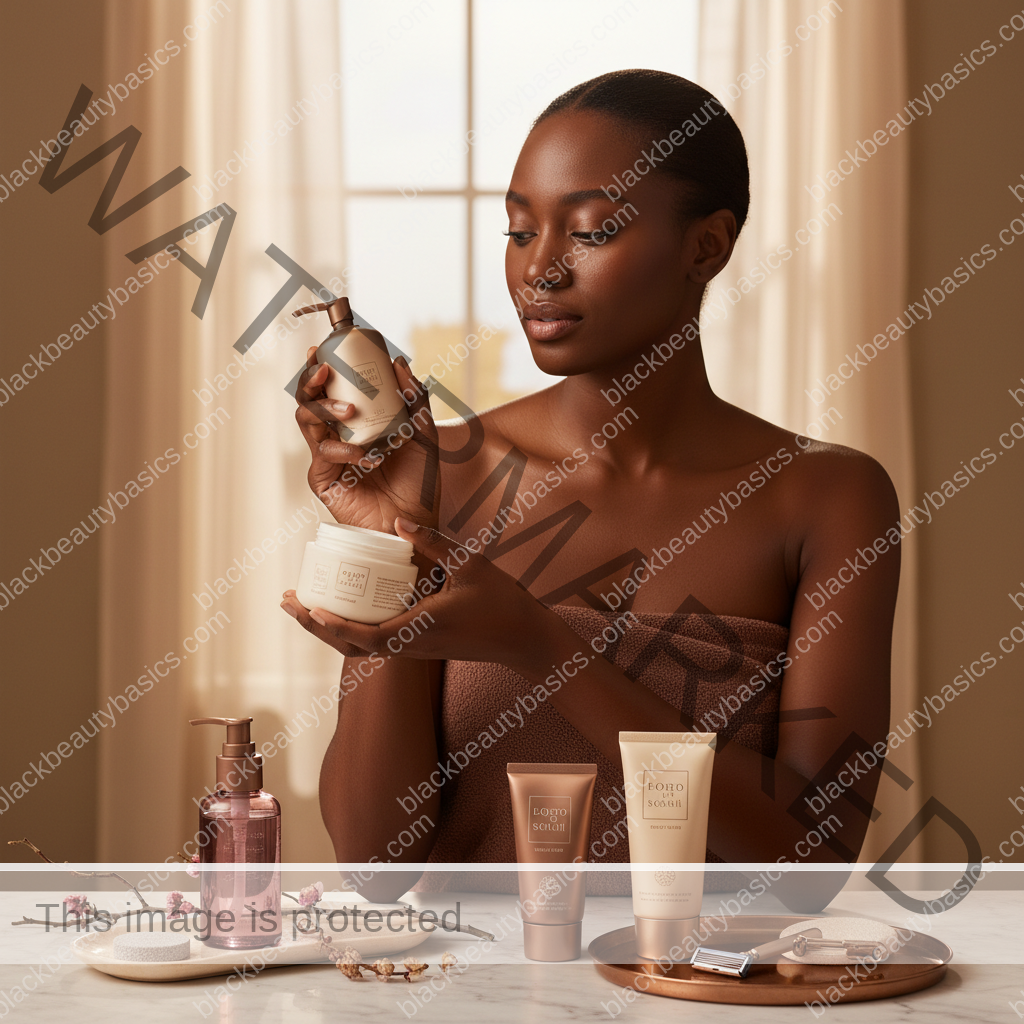
As the sun kisses our melanin-rich skin, beckoning us towards shimmering waters and sun-drenched shores, a unique kind of radiance emerges. Swimsuit season isn’t just about the destination; it’s about the journey of self-care, ensuring our beautiful bodies are nourished, protected, and celebrated without compromise. This year, let’s embrace the warmth with a body care routine that honors our skin’s natural brilliance, leaving it supple, luminous, and never over-stripped. Start with the related BBB body-care cluster guide if you want the broader map.
Embracing Your Melanin: Why Gentle Care is Paramount
Our skin, a magnificent tapestry of melanin, offers inherent protection and a captivating glow. However, it also requires a nuanced approach, especially when preparing for swimsuit season. Aggressive exfoliation or harsh cleansers can disrupt our skin’s delicate barrier, leading to dryness, irritation, and even post-inflammatory hyperpigmentation (PIH) – a concern many Black women navigate. The goal is to reveal, not ravage, the skin beneath, ensuring it remains hydrated, even-toned, and resilient against environmental stressors.
Understanding Your Skin’s Unique Needs
Black skin often has a more compact stratum corneum and can be prone to transepidermal water loss (TEWL) if not properly moisturized. This means that while we might have a natural defense against some sun damage, maintaining hydration and barrier integrity is crucial. Swimsuit season introduces new challenges: chlorine, saltwater, increased sun exposure, and frequent showering. Our body care routine must adapt to these factors, focusing on gentle cleansing, effective exfoliation, deep hydration, and robust protection.
The Foundation: Gentle Cleansing & Smart Exfoliation
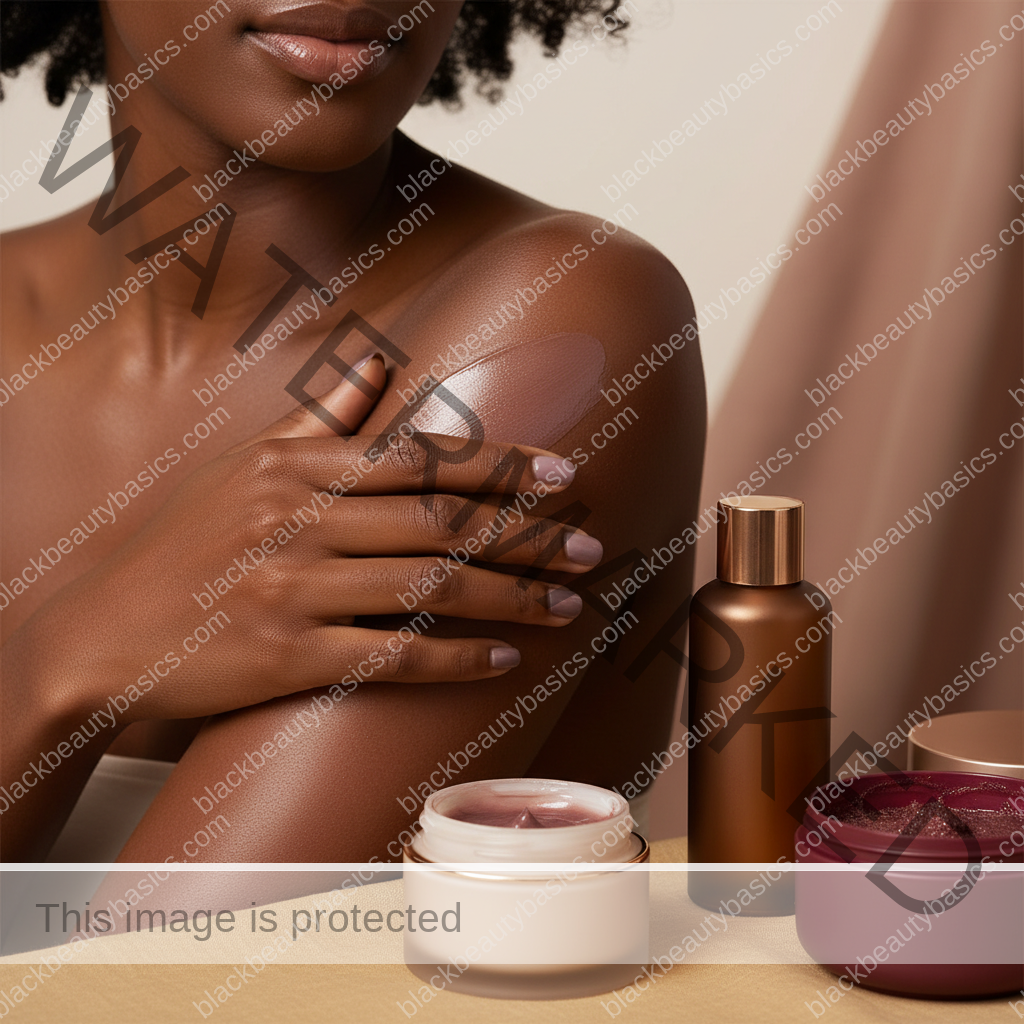
The first step in any effective body care routine is cleansing. For swimsuit season, this means removing impurities, sunscreen, and environmental pollutants without stripping away essential oils. Exfoliation follows, clearing dead skin cells to reveal smoother, more radiant skin, but it must be done with precision and care to avoid irritation.
Choosing Your Cleanser: The Art of the Hydrating Wash
Forget harsh, sudsy soaps that leave your skin feeling “squeaky clean” – that’s a sign of over-stripping. Instead, opt for creamy, hydrating body washes or oil-based cleansers that cleanse effectively while depositing moisture back into the skin. Look for ingredients like ceramides, hyaluronic acid, glycerin, and natural oils.
- Creamy Body Washes: These are ideal for daily use, providing a gentle cleanse without disrupting the skin barrier. They often contain emollients and humectants.
- Oil-Based Cleansers: Excellent for dissolving sunscreen, sweat, and impurities, these leave a nourishing film on the skin, preventing dryness.
- Sulfate-Free Formulas: Sulfates can be overly drying. Opt for sulfate-free options to maintain skin hydration.
Shop Hydrating Body Washes on Amazon
Exfoliation: The Gentle Glow-Up
Exfoliation is key to smooth, even-toned skin, but for Black skin, it’s a delicate balance. Over-exfoliation can trigger inflammation and hyperpigmentation. The goal is to remove dead skin cells that can dull the complexion and lead to ingrown hairs, without causing micro-tears or irritation.
Physical Exfoliation: The Soft Touch
When choosing physical exfoliants, think soft and fine, not rough and abrasive. Avoid harsh scrubs with large, irregular particles like crushed nut shells. Instead, opt for:
- Fine-Grain Scrubs: Look for scrubs with sugar, jojoba beads, or finely milled powders that gently buff the skin. Use 1-2 times a week.
- Exfoliating Mitts or Cloths: A soft exfoliating mitt or a salux cloth can be used with your hydrating body wash for a gentle daily or every-other-day exfoliation.
Shop Gentle Body Scrubs on Amazon
Chemical Exfoliation: The Refined Approach
Chemical exfoliants, often misunderstood, can be incredibly effective and gentle when chosen correctly. They work by dissolving the bonds between dead skin cells, promoting cell turnover without physical scrubbing. For body care, look for:
- AHAs (Alpha Hydroxy Acids): Lactic acid and glycolic acid are excellent for improving skin texture and tone. Lactic acid is generally gentler and more hydrating. Use in body lotions or serums 2-3 times a week.
- BHAs (Beta Hydroxy Acids): Salicylic acid is oil-soluble, making it ideal for addressing body acne, clogged pores, and ingrown hairs. Use in washes or lotions, especially on areas prone to breakouts.
Pro Tip: Always introduce chemical exfoliants slowly and patch test first. Reduce frequency if any irritation occurs. Always follow with sunscreen during the day, as AHAs can increase sun sensitivity.
Shop AHA/BHA Body Lotions on Amazon
Comparison Table: Physical vs. Chemical Exfoliation for Black Skin
| Feature | Physical Exfoliation (Gentle Scrubs/Mitts) | Chemical Exfoliation (AHAs/BHAs) |
|---|---|---|
| Mechanism | Manually buffs away dead skin cells. | Dissolves bonds between dead skin cells. |
| Best For | Immediate smoothness, light texture improvement. | Even skin tone, reducing hyperpigmentation, treating body acne/ingrowns. |
| Risk for PIH | Higher if too harsh or abrasive. | Lower if used correctly; can help fade existing PIH. |
| Frequency | 1-3 times a week (scrubs), daily (mitts). | 2-3 times a week (lotions/serums). |
| Key Ingredients | Fine sugar, jojoba beads, finely milled powders, soft mitts. | Lactic acid, glycolic acid, salicylic acid. |
| Aftercare | Hydrate immediately. | Hydrate and apply sunscreen diligently. |
Hair Removal: Smoothness Without the Struggle
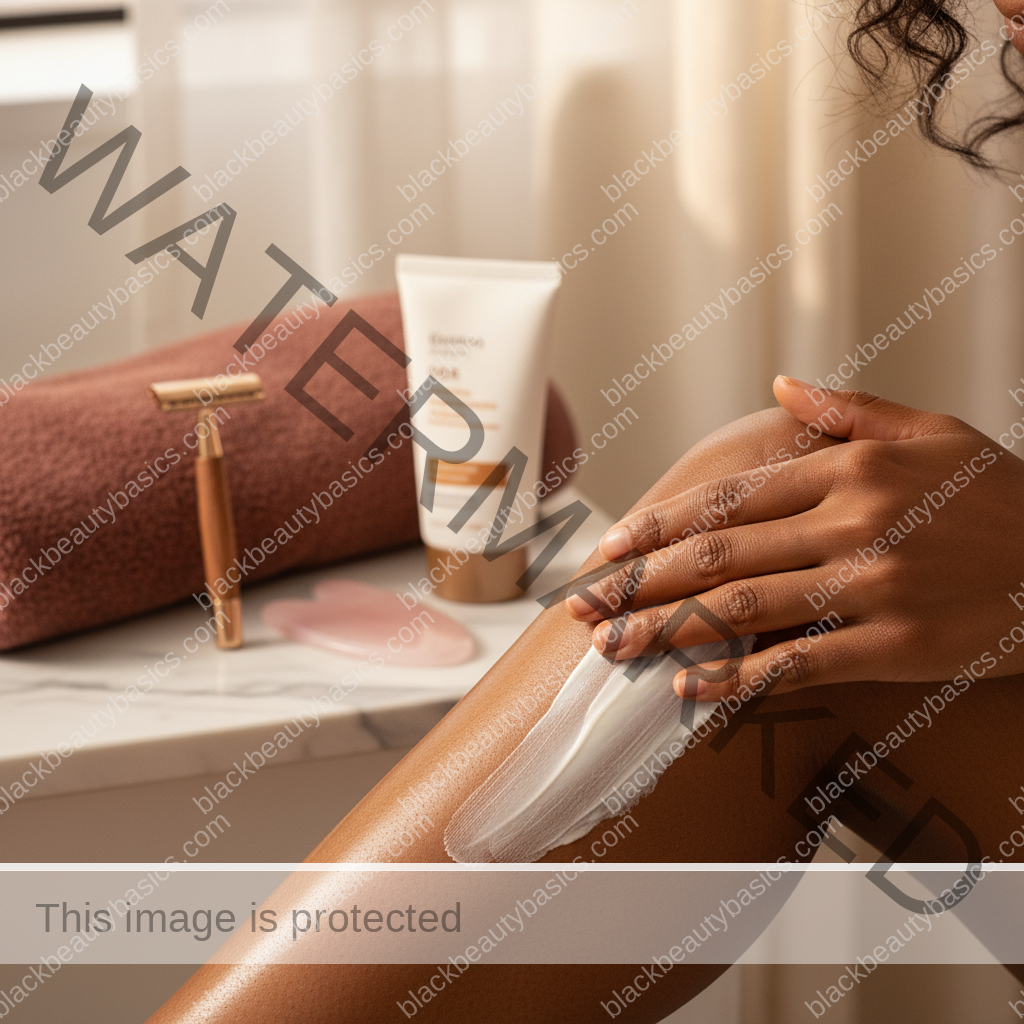
Achieving silky-smooth skin is often a priority for swimsuit season, but traditional hair removal methods can be a minefield for Black skin, leading to razor bumps (pseudofolliculitis barbae), ingrown hairs, and hyperpigmentation. The key is to choose methods that minimize irritation and follow a meticulous pre- and post-care routine.
Navigating Hair Removal Options
Shaving: The Art of the Close, Gentle Shave
If shaving is your preferred method, adopt techniques that reduce irritation:
- Prep is Paramount: Always shave after a warm shower or bath when skin and hair are softened.
- Use a Sharp Razor: A dull blade tugs at hair, causing irritation. Opt for a new, sharp, multi-blade razor or a single-blade safety razor.
- Lubricate Generously: Use a rich shaving cream or gel, not just soap, to create a protective barrier. Look for soothing ingredients like aloe vera or shea butter.
- Shave with the Grain: Shaving against the grain gives a closer shave but significantly increases the risk of ingrown hairs and irritation, especially for coarse, curly hair. Shave in the direction of hair growth.
- Rinse and Moisturize: Rinse with cool water to close pores, then immediately apply a soothing, hydrating lotion or balm.
Shop Hydrating Shaving Creams on Amazon
Depilatory Creams: Chemical Precision
Depilatory creams dissolve hair just below the skin’s surface. They can be a good option for those prone to razor bumps, but require careful patch testing due to potential sensitivity.
- Patch Test: Always test on a small, inconspicuous area 24 hours prior to full application.
- Follow Instructions: Adhere strictly to the recommended application time to avoid chemical burns or irritation.
- Soothing Aftercare: Follow with a gentle, fragrance-free moisturizer.
Shop Sensitive Skin Depilatory Creams on Amazon
Waxing: Professional Smoothness
Waxing pulls hair from the root, offering longer-lasting smoothness. While effective, it can be painful and cause irritation if not done correctly. For Black skin, especially in sensitive areas, professional waxing is highly recommended.
- Choose a Reputable Esthetician: Ensure they have experience with darker skin tones and use high-quality wax.
- Pre-Wax Prep: Exfoliate gently a day or two before to help prevent ingrown hairs.
- Post-Wax Care: Apply a soothing, anti-inflammatory serum or lotion immediately after. Avoid tight clothing and excessive heat for 24-48 hours.
Shop Post-Wax Soothing Serums on Amazon
Laser Hair Removal: A Long-Term Solution
For a more permanent reduction in hair growth, laser hair removal can be transformative. However, it’s crucial to seek out clinics with lasers specifically designed and safe for darker skin tones (e.g., Nd:YAG lasers) to prevent burns or hyperpigmentation.
- Consultation is Key: Always have a thorough consultation with an experienced practitioner who specializes in treating Black skin.
- Multiple Sessions: Expect several sessions for optimal results.
- Sun Protection: Strict sun avoidance before and after treatments is non-negotiable.
Shop At-Home Laser Hair Removal Devices for Dark Skin on Amazon
Preventing Ingrown Hairs and Razor Bumps
Regardless of your chosen method, preventing ingrown hairs and razor bumps is paramount. These tips are universal:
- Consistent Gentle Exfoliation: Regularly remove dead skin cells to prevent them from trapping growing hair.
- Hydration: Keep skin supple and moisturized so hair can grow out easily.
- Topical Treatments: Incorporate products with salicylic acid, glycolic acid, or witch hazel into your post-hair removal routine to keep pores clear and reduce inflammation.
- Avoid Tight Clothing: Especially immediately after hair removal, tight clothing can irritate follicles and promote ingrown hairs.
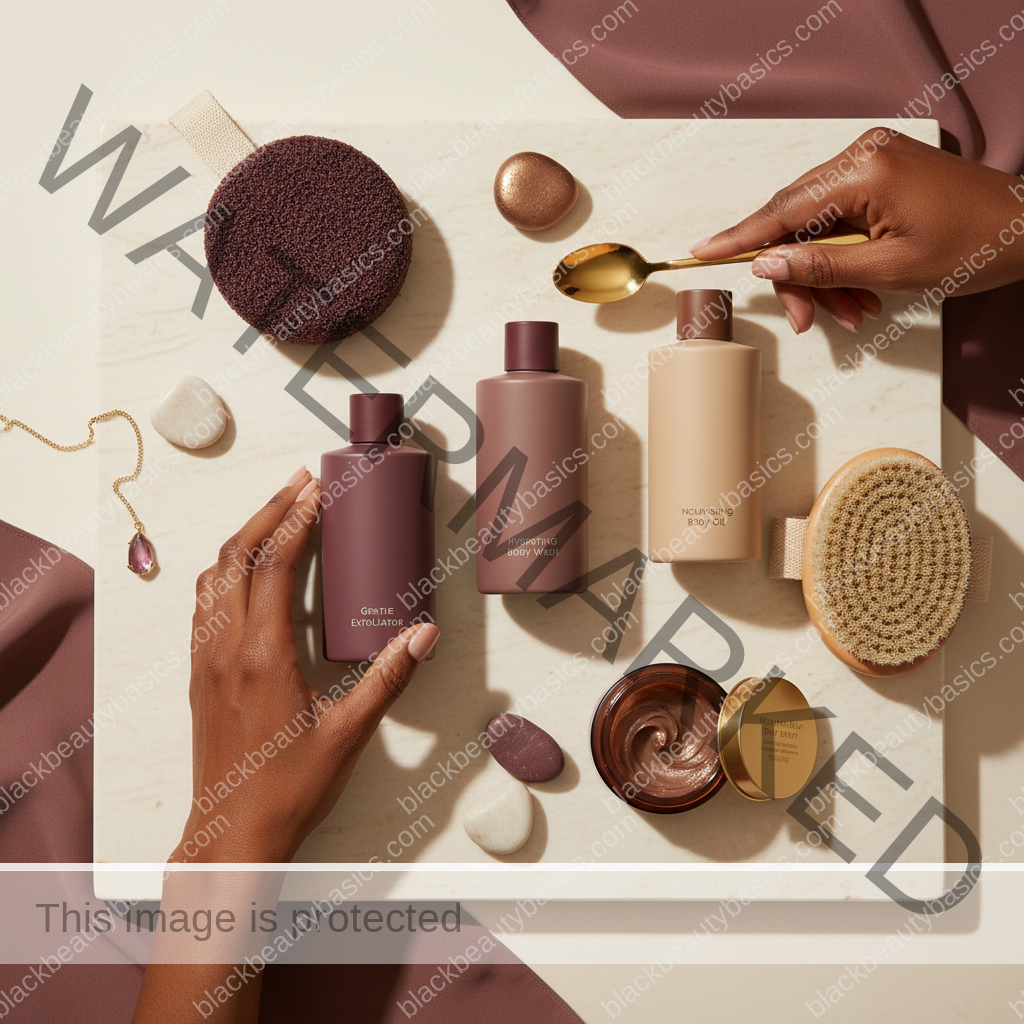
Deep Hydration: The Secret to Luminous Skin
After cleansing and exfoliating, replenishing moisture is non-negotiable. Hydrated skin is resilient skin, less prone to irritation, and radiates a natural, healthy glow. For swimsuit season, where sun, salt, and chlorine can be dehydrating, deep hydration becomes even more critical.
Layering for Lasting Moisture
Think of your hydration routine as layering. Each step builds upon the last to seal in moisture and provide sustained nourishment.
Step 1: Humectant-Rich Body Serums or Essences
Immediately after showering, while skin is still damp, apply a lightweight body serum or essence. These often contain humectants like hyaluronic acid, glycerin, or polyglutamic acid, which draw moisture from the air into your skin.
- Hyaluronic Acid Body Serum: Plumps skin and provides an initial burst of hydration.
- Glycerin-based Essences: Lightweight and deeply moisturizing.
Shop Hyaluronic Acid Body Serums on Amazon
Step 2: Emollient-Rich Body Lotions or Creams
Next, seal in that hydration with a nourishing body lotion or cream. Look for ingredients that provide both emollients (to smooth and soften) and occlusives (to form a protective barrier).
- Ceramides: Essential for barrier repair and maintaining skin integrity.
- Shea Butter, Cocoa Butter, Jojoba Oil: Excellent natural emollients that deeply nourish.
- Squalane: A lightweight, non-comedogenic oil that mimics skin’s natural lipids.
For Dry Skin: Opt for richer creams or body butters.
For Normal to Oily Skin: Lighter lotions will suffice.
Shop Ceramide-Rich Body Lotions on Amazon
Step 3: Body Oils for an Extra Luminous Finish
For an unparalleled glow and an extra layer of protection, finish with a luxurious body oil. Apply it over your lotion or cream to seal everything in. This is particularly beautiful for melanin-rich skin, enhancing its natural luminosity.
- Jojoba Oil: Mimics skin’s natural sebum, non-comedogenic.
- Argan Oil: Rich in antioxidants and essential fatty acids.
- Grapeseed Oil: Lightweight and fast-absorbing.
- Squalane Oil: Non-greasy and deeply moisturizing.
Tip: Apply body oil to slightly damp skin for better absorption and a dewy finish.
Shop Nourishing Body Oils on Amazon
Targeting Specific Concerns: Hyperpigmentation & Uneven Tone
Swimsuit season often means more exposed skin, making concerns like hyperpigmentation (dark spots) and uneven tone more prominent. Incorporate targeted treatments to address these issues gently and effectively.
- Vitamin C Serums: A potent antioxidant that brightens skin, fades dark spots, and protects against environmental damage. Look for stable forms of Vitamin C in body serums.
- Niacinamide (Vitamin B3): Reduces inflammation, improves skin barrier function, and helps to fade hyperpigmentation. Often found in body lotions and serums.
- Alpha Arbutin or Kojic Acid: These ingredients are known for their melanin-inhibiting properties, helping to lighten dark spots and even out skin tone. Use in targeted treatments or lotions.
Consistency is Key: Fading hyperpigmentation takes time and consistent application. Be patient and diligent with your routine.
Shop Vitamin C Body Serums for Dark Spots on Amazon
Sun Protection: Your Non-Negotiable Shield
While melanin offers some natural protection, it is NOT a substitute for sunscreen. Black skin can and does burn, and prolonged unprotected sun exposure accelerates aging, exacerbates hyperpigmentation, and increases the risk of skin cancer. For swimsuit season, broad-spectrum SPF is your ultimate accessory.
Choosing the Right Sunscreen for Melanin-Rich Skin
The main concern for many Black women when it comes to sunscreen is the dreaded white cast. Thankfully, formulations have vastly improved.
- Broad-Spectrum SPF 30+: Always choose broad-spectrum to protect against both UVA (aging) and UVB (burning) rays, with an SPF of 30 or higher.
- Chemical Sunscreens: Often blend seamlessly into darker skin tones without a white cast. Look for ingredients like avobenzone, octinoxate, octisalate, and oxybenzone.
- Mineral Sunscreens (Tinted or Micronized): If you prefer mineral (zinc oxide, titanium dioxide), opt for tinted formulas or those with micronized/nanoparticle versions of the active ingredients, which are less likely to leave a white residue.
- Water-Resistant Formulas: Essential for swimming or sweating. Reapply every two hours, or more frequently if swimming or toweling off.
Shop No-White-Cast Sunscreens for Dark Skin on Amazon
Application and Reapplication: The Golden Rules
- Generous Application: Don’t skimp! Use about a shot glass full for your entire body.
- Daily Use: Sunscreen isn’t just for the beach. Make it a daily habit, especially on exposed areas.
- Reapply Diligently: Every two hours, or immediately after swimming, sweating heavily, or towel drying.
Post-Sun & Swim Care: Soothe and Restore
After a day of sun and swim, your skin needs extra love to recover and rehydrate. This post-exposure routine helps prevent dryness, irritation, and maintains your skin’s healthy barrier.
Rinse, Replenish, Repair
- Rinse Immediately: As soon as possible after swimming, rinse off chlorine or saltwater with fresh, cool water. This prevents drying and irritation.
- Gentle Cleansing: Use your hydrating body wash to thoroughly cleanse, removing any residual chemicals or salt.
- Soothing After-Sun Lotion: Apply a generous layer of after-sun lotion or gel. Look for ingredients like aloe vera, allantoin, cucumber extract, and ceramides to calm and repair the skin.
- Extra Hydration: If skin feels particularly dry, layer a rich body butter or oil over your after-sun product.
Shop Aloe Vera After-Sun Lotions on Amazon
Tip List: Your Swimsuit Season Body Care Checklist
Keep this checklist handy to ensure your skin stays radiant and protected all season long:
- Hydrating Body Wash: Use daily, sulfate-free.
- Gentle Exfoliant: 1-3x/week (physical) or 2-3x/week (chemical).
- Hair Removal Prep: Soften skin, use sharp razor/cream, shave with the grain.
- Post-Hair Removal Soother: Anti-inflammatory serum/lotion.
- Body Serum/Essence: Apply to damp skin after showering.
- Rich Body Lotion/Cream: Apply generously after serum.
- Nourishing Body Oil: Layer for extra glow and moisture lock.
- Targeted Treatment: For hyperpigmentation (Vitamin C, Niacinamide).
- Broad-Spectrum Sunscreen SPF 30+: Apply daily, reapply every 2 hours when exposed.
- After-Sun Care: Rinse, cleanse, soothe with aloe/ceramides.
- Hydrate from Within: Drink plenty of water!
- Wear Protective Clothing: When possible, especially during peak sun hours.
FAQ: Your Swimsuit Season Body Care Questions Answered
Q1: Can I use the same exfoliants on my body as I do on my face?
A1: While some gentle facial exfoliants can be used on the body, body skin is generally thicker and less sensitive than facial skin. You might need a slightly stronger concentration of active ingredients for the body to be effective, but always start slow. Conversely, many body scrubs are too harsh for the delicate skin on your face. It’s often best to use products specifically formulated for each area to ensure optimal results and prevent irritation.
Q2: How often should I exfoliate my body during swimsuit season?
A2: For Black skin, 1-3 times a week is generally sufficient for physical exfoliation, and 2-3 times a week for chemical exfoliants. Listen to your skin. If you experience any redness, dryness, or irritation, reduce the frequency. Over-exfoliation can disrupt the skin barrier and lead to hyperpigmentation, which is the opposite of our goal for radiant skin.
Q3: What’s the best way to prevent ingrown hairs in the bikini area?
A3: Prevention is multi-faceted. Start with gentle exfoliation 2-3 times a week to keep follicles clear. When shaving, always use a sharp, clean razor, shave with the grain, and use a rich shave cream. Immediately after hair removal, apply a soothing, anti-inflammatory product containing ingredients like salicylic acid or witch hazel. Avoid tight clothing and allow the skin to breathe.
Q4: My skin gets really dry after swimming in chlorine. What can I do?
A4: Chlorine is very drying. The most important step is to rinse off immediately after swimming with fresh water. Then, cleanse with a hydrating, sulfate-free body wash. Follow with a generous application of a humectant-rich body serum (like hyaluronic acid) on damp skin, immediately followed by a rich, occlusive body cream or butter to lock in moisture. Consider applying a thin layer of body oil before swimming as a barrier.
Q5: Is it true that Black skin doesn’t need as much sunscreen?
A5: This is a dangerous myth. While melanin provides some natural protection (equivalent to about SPF 13), it is not enough to prevent sun damage. Black skin can still burn, develop sunspots, accelerate aging, and is susceptible to skin cancer. Sunscreen is crucial for everyone, regardless of skin tone. Always use a broad-spectrum SPF 30+ daily, and reapply frequently when exposed to the sun.
Q6: How can I achieve a natural glow without using self-tanners that might look unnatural on my skin tone?
A6: The best glow for melanin-rich skin comes from healthy, hydrated skin. Focus on consistent gentle exfoliation to remove dull surface cells, followed by a robust moisturizing routine that includes layering a body serum, cream, and a nourishing body oil. Ingredients like Vitamin C and Niacinamide in your body care can also enhance natural radiance and even out skin tone. For an immediate, subtle shimmer, consider body oils with finely milled gold or bronze particles, applied sparingly to highlight collarbones, shoulders, and legs.
Q7: I have dark spots from old bug bites and scars. How can I treat them before swimsuit season?
A7: Addressing hyperpigmentation requires patience and a consistent routine. Incorporate body care products containing ingredients known to fade dark spots, such as Vitamin C, Niacinamide, Alpha Arbutin, Kojic Acid, or gentle AHAs (like lactic acid). Apply these consistently to the affected areas. Most importantly, protect these areas with broad-spectrum sunscreen daily, as sun exposure will worsen and prolong hyperpigmentation. Professional treatments like chemical peels or laser treatments (performed by a dermatologist experienced with Black skin) can also offer faster results.
As you step into the sun, let your skin reflect the care and confidence you’ve invested. This swimsuit season, adorn your magnificent melanin with a luminous glow that speaks volumes of self-love and intentional beauty. May your days be filled with warmth, joy, and the undeniable radiance of your beautifully cared-for skin.
How to think through this body-care concern without overcorrecting
For Black women and people with richly melanated skin, body care works best when it starts with the real pattern. This guide focuses on preparing exposed body skin for swimsuits with moisture, exfoliation restraint, shaving aftercare, and body SPF, while keeping the related BBB body-care cluster as the home base. The goal is not a perfectly poreless or one-shade body. The goal is comfort, less irritation, fewer preventable marks, and a routine you can repeat.
The most protective first move is usually to reduce the thing that keeps restarting the problem. That may be friction, pressure, fragrance, shaving too closely, exfoliating too often, skipping moisture, or exposing fresh marks to daylight without protection. Products can help, but they work better when the routine stops creating new irritation every week.
Melanin-rich skin can hold onto evidence of irritation. A bump, nick, rash, or raw patch may fade slowly, especially on areas that rub against clothing or get shaved often. That does not mean your skin is doing something wrong. It means the routine needs to respect inflammation, barrier support, and time.
A gentler decision framework
- Name the main issue before adding a new product.
- Reduce friction and pressure where you can.
- Keep moisture steady, especially after cleansing or hair removal.
- Use exfoliation as a measured tool, not a daily punishment.
- Seek professional care for painful, spreading, infected-looking, or scar-forming concerns.
What usually makes this harder
One common mistake is stacking too many corrective steps. Shaving, scrubbing, acids, fragrance, tight clothing, and sweat can pile up quickly. When the skin starts to sting, burn, peel, or mark more easily, simplify the routine instead of adding another active.
Another mistake is treating darker areas as if they are dirty. Knees, elbows, underarms, thighs, bikini lines, and areas with hair removal can all be deeper in tone. Care can help with comfort and irritation, but the language matters. The goal is not to bleach your body into sameness.
The third issue is judging too fast. Body skin often needs several weeks of less irritation before it looks calmer. Track comfort first: less itching, less tenderness, fewer bumps, and less rawness. Visible tone changes usually follow after the irritation cycle quiets down.
What to do next

Keep this article connected to the Body Care & Hair Removal on Dark Skin system. Choose the next guide based on whether your main issue is bumps, hair removal, friction, texture, body SPF, or post-care.
- Body Care & Hair Removal on Dark Skin
- The related body-care cluster guide
- full-body tone and texture maintenance
- body SPF habits for marks and texture
- non-sticky body sunscreen routine
Related next steps
Related posts:
 Beauty Rituals After Grief, Stress, or a Hard Season
 Body Exfoliation for Deep Skin Without Overdoing It
 Adjusting Sunscreen Texture Preferences by Season or Environment for Melanin-Rich Skin
 Safe Body-Care Routine After Laser Hair Removal on Dark Skin
 Daily Body Care Routine for Melanin-Rich Skin That Gets Ashy Fast
 How to Build a Body Routine for Strawberry Skin on Dark Tones