The quest for the perfect foundation shade is a journey many Black women know intimately—a dance between hope and the often-frustrating reality of mismatched hues. We’ve all been there: the excitement of a new product, only to find it leaves our beautiful complexions looking ashy, orange, or just… off. This isn’t merely a cosmetic inconvenience; it’s a profound misrepresentation of our unique, multifaceted beauty, often stemming from a fundamental misunderstanding of our skin’s intricate undertones. Today, we delve into the heart of this challenge, empowering you with the knowledge to decode your undertones and finally achieve that coveted, seamless glow. Start with the related BBB makeup cluster guide if you want the broader map.
The Unseen Canvas: Understanding Undertones in Melanin-Rich Skin
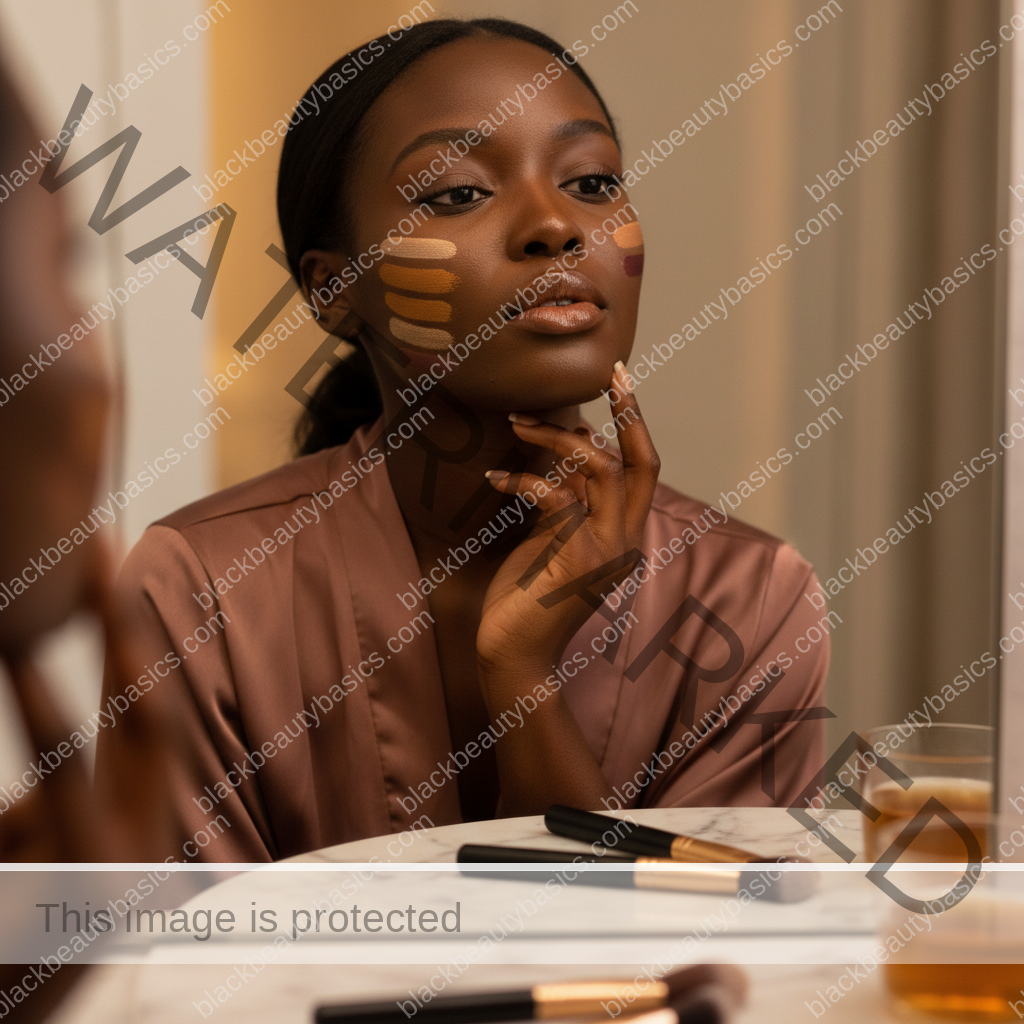
Before we can correct mistakes, we must first understand the canvas itself. Your skin tone, the surface color you see, is only half the story. Beneath that lies your undertone—the subtle hue that influences your overall complexion. For Black women, these undertones are incredibly diverse and often more complex than the standard “cool, warm, neutral” categories typically presented in mainstream beauty. Our melanin-rich skin can carry a spectrum of underlying colors, from rich reds and deep golds to olive and even subtle blues, making accurate identification crucial for a truly harmonious foundation match.
Ignoring your undertone is akin to painting a masterpiece on the wrong colored primer. The final result, no matter how skilled the application, will always feel a little off. This oversight is precisely why so many foundations, despite appearing to match our surface skin tone, end up creating an undesirable cast. It’s time to move beyond the surface and embrace the full spectrum of our beauty, starting with the hidden colors beneath.
Why Undertones Are a Game-Changer for Black Women
For decades, the beauty industry largely overlooked the diverse needs of Black women, leading to a limited range of foundation shades that rarely catered to our complex undertones. This historical oversight has instilled a trial-and-error approach that is both costly and disheartening. Understanding your undertone isn’t just about finding a foundation; it’s about reclaiming agency in your beauty choices, ensuring that every product enhances, rather than detracts from, your natural radiance. It’s about celebrating the unique warmth, depth, and vibrancy that melanin-rich skin inherently possesses.
The Most Common Undertone Mistakes Black Women Make
Let’s illuminate the pitfalls that often lead to foundation frustration. By recognizing these common missteps, we can consciously avoid them and steer our beauty journey toward unparalleled success.
Mistake 1: Assuming All Deep Skin Tones Are “Warm”
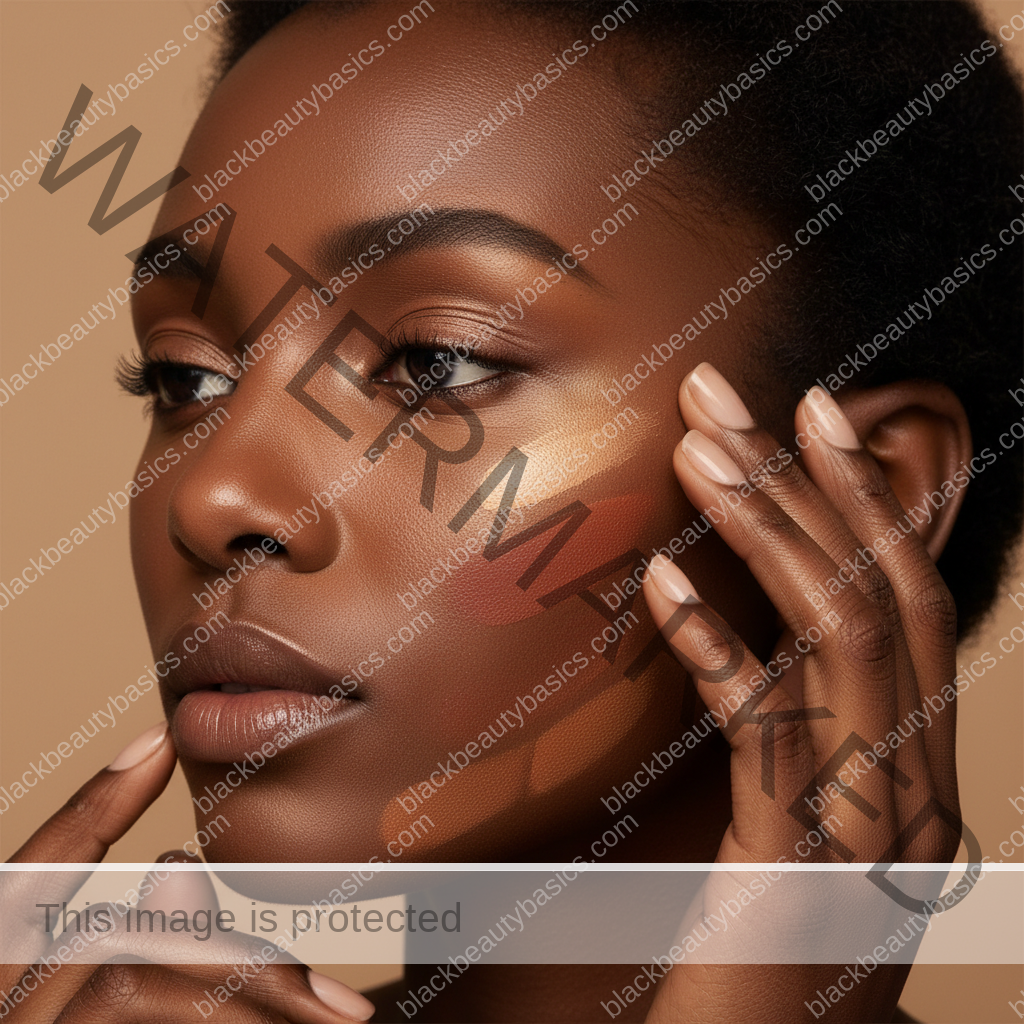
This is perhaps the most pervasive and damaging misconception. The beauty industry often defaults to categorizing deeper skin tones as inherently “warm” or “golden.” While many Black women do have beautiful golden or warm undertones, an equally significant number possess cool, neutral, or even olive undertones. Applying a warm-toned foundation to a cool-toned complexion results in that dreaded orange or overly yellow cast, making the skin appear jaundiced or unnatural. Conversely, a cool-toned foundation on warm skin can look ashy or gray.
Recognizing Your True Undertone: Beyond the Surface
It’s time to put the “warm-only” myth to rest. Your undertone is a constant, unchanging hue that lies beneath the surface of your skin. It doesn’t change with sun exposure or seasonal tanning, unlike your surface skin tone. Identifying it accurately is the first step toward a flawless match.
How to Avoid This Mistake:
- The Vein Test: Look at the veins on your inner wrist in natural light.
- Blue or Purple Veins: You likely have cool undertones.
- Green or Olive Veins: You likely have warm undertones.
- A Mix of Blue/Purple and Green Veins, or Indistinguishable: You likely have neutral undertones.
- The Jewelry Test:
- Silver Jewelry Flatters You More: You likely have cool undertones.
- Gold Jewelry Flatters You More: You likely have warm undertones.
- Both Silver and Gold Look Good: You likely have neutral undertones.
- The White Fabric Test: Drape a pure white towel or cloth around your neck and shoulders.
- Skin Appears Rosy or Blueish: Cool undertones.
- Skin Appears Golden or Yellowish: Warm undertones.
- Skin Appears Balanced, Not Strongly One Way or the Other: Neutral undertones.
Remember, these are guides, not gospel. Sometimes, a combination of these tests provides the clearest picture. And for some, especially those with rich, deep complexions, undertones can be more nuanced, leaning into red or olive hues.
Shop Foundation for Deep Skin Tones on Amazon
Mistake 2: Overlooking Red and Olive Undertones
While cool, warm, and neutral are the primary categories, many Black women possess distinct red or olive undertones that are often miscategorized or entirely ignored by conventional foundation ranges. A rich, mahogany complexion might have a beautiful red undertone, while another deep skin tone could have a subtle, earthy olive cast. Trying to fit these unique undertones into a purely “warm” or “cool” box is a recipe for disaster.
The Nuance of Red and Olive
- Red Undertones: Often seen in deeper complexions, these can manifest as a subtle reddish-brown or mahogany hue. Foundations with a red or “red-neutral” base will enhance this natural richness, preventing an ashy or dull appearance.
- Olive Undertones: These are characterized by a green-grey or greenish-yellow cast. Olive undertones can be present in a wide range of skin depths, from light to very deep. They are notoriously difficult to match because standard warm (yellow) or cool (pink/red) foundations will often look too orange or too pink.
How to Avoid This Mistake:
- Observe Your Natural Flush: When you blush or get a little flushed, what color does your skin turn? If it’s a true rosy red, you might have red undertones.
- Look for Greenish Cast: In natural light, does your skin ever seem to have a faint greenish or grayish hue? This is a strong indicator of olive undertones.
- Seek Specialized Shades: Many brands are now offering foundations specifically formulated for red or olive undertones within their deeper shade ranges. Look for descriptors like “red-based,” “mahogany,” “olive,” or “golden olive.”
- Don’t Be Afraid to Mix: If a perfect single shade is elusive, consider purchasing two foundations—one slightly redder, one slightly more golden or neutral—and mixing them to create your custom shade.
Shop Red Undertone Foundation on Amazon
Mistake 3: Swatching Only on the Hand or Wrist
This is a classic rookie mistake that persists even among seasoned beauty enthusiasts. Your hand and wrist often have a different skin tone and undertone than your face and neck. Swatching foundation here provides an inaccurate representation of how the product will truly look on your complexion.
The Importance of the Jawline Swatch
The most accurate place to swatch foundation is along your jawline, extending slightly down onto your neck. This area allows you to compare the foundation against both your face and your neck, ensuring a seamless transition. The goal is for the foundation to “disappear” into your skin, blending invisibly without leaving a harsh line or noticeable color difference.
How to Avoid This Mistake:
- Always Swatch on the Jawline: Apply 2-3 small stripes of potential shades directly onto your jawline.
- Observe in Natural Light: Step outside or stand near a window to assess the shades. Fluorescent store lighting can be incredibly misleading.
- Wait a Few Minutes: Allow the foundation to oxidize slightly. Some formulas can deepen or change color after a few minutes of exposure to air and your skin’s oils.
- Blend a Small Section: Once you’ve narrowed it down to 1-2 shades, blend a small section of the best match to see how it truly melts into your skin.
Shop Foundation Swatch Tools on Amazon
Mistake 4: Not Considering Seasonal Skin Tone Changes
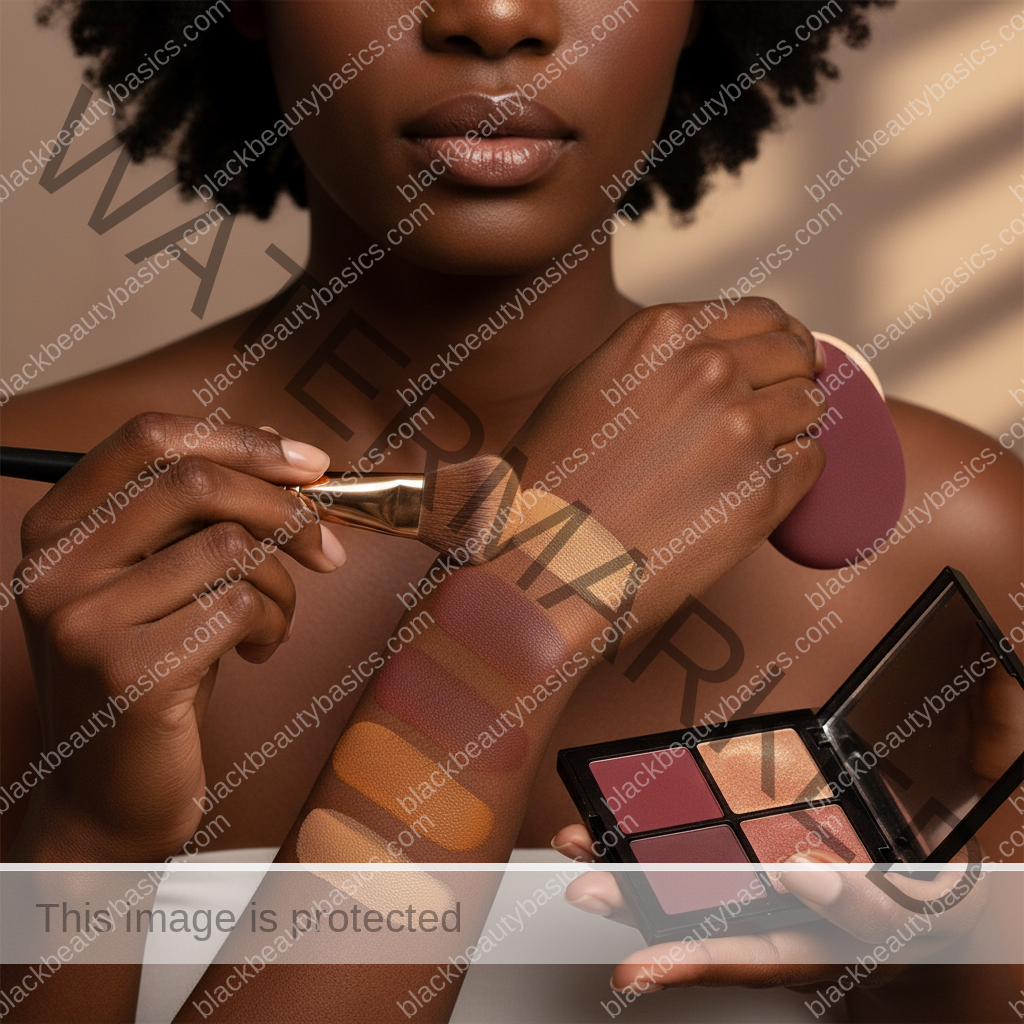
While your undertone remains constant, your surface skin tone can fluctuate throughout the year due to sun exposure. Many Black women experience a deeper, richer complexion in the summer months and a slightly lighter tone in the winter. Using the same foundation shade year-round, without adjusting for these changes, will inevitably lead to a mismatch.
Adapting Your Shade Throughout the Year
This doesn’t necessarily mean buying a completely new foundation every season. Often, a slight adjustment is all that’s needed.
How to Avoid This Mistake:
- Have Two Shades on Hand: Consider having a “summer” shade and a “winter” shade. You can often mix these two to create a custom shade for transitional periods (spring and fall).
- Use Shade Adjusting Drops: These concentrated drops can lighten, darken, or even shift the undertone of your existing foundation. They are a cost-effective way to adapt your current products.
- Shop Foundation Lightening Drops on Amazon
- Shop Foundation Darkening Drops on Amazon
- Re-evaluate Periodically: Don’t assume your perfect match from last year is still perfect. Always re-swatch and reassess your foundation needs as the seasons change.
Mistake 5: Relying Solely on Online Swatches and AI Matchers
The convenience of online shopping is undeniable, but when it comes to foundation, it can be a minefield. Digital swatches are often inaccurate due to screen variations, lighting, and the inherent difficulty of capturing the true depth and nuance of melanin-rich skin. AI matchers, while improving, still struggle with the complexities of undertones in deeper complexions.
The Invaluable Experience of In-Person Testing
While online resources can be a starting point for narrowing down options, there’s no substitute for seeing and testing foundation in person. The texture, finish, and how the color interacts with your unique skin chemistry can only be truly assessed offline.
How to Avoid This Mistake:
- Use Online Tools as a Guide, Not a Guarantee: Use shade finders and online swatches to create a shortlist of 2-3 potential shades.
- Visit a Store for Swatching: Take your shortlist to a physical store (department store, beauty retailer) and swatch them on your jawline in natural light.
- Ask for Samples: Many high-end brands and even some drugstore brands offer samples. Wear the sample for a full day to see how it wears, oxidizes, and looks in different lighting conditions.
- Read Reviews from Women with Similar Complexions: Look for reviews that specifically mention undertones and skin depth similar to yours.
Shop Foundation Samples on Amazon
Mistake 6: Ignoring Your Neck and Chest Undertones
Your face, neck, and chest can sometimes have slightly different undertones or surface tones due to varying sun exposure or natural pigmentation. A common mistake is matching foundation perfectly to the face, only to find a noticeable disparity between the face and the neck/chest area.
Achieving Seamless Harmony
The goal of foundation is to create a harmonious, unified complexion from your décolletage upwards. This means considering the broader canvas, not just the facial area.
How to Avoid This Mistake:
- Match to the Neck/Chest: If there’s a slight difference, it’s often best to match your foundation to your neck or chest. This creates a more natural, less “mask-like” appearance. You can then use bronzer or contour to add warmth and dimension back to the face if needed.
- Blend Thoroughly: Always blend your foundation down your neck and onto your décolletage if exposed, to avoid any harsh lines.
- Consider a Color Corrector: If your face has significant discoloration or a different undertone than your neck, a subtle color corrector applied strategically before foundation can help neutralize the difference.
- Shop Color Corrector for Deep Skin on Amazon
Empowering Your Foundation Journey: Tips and Tools
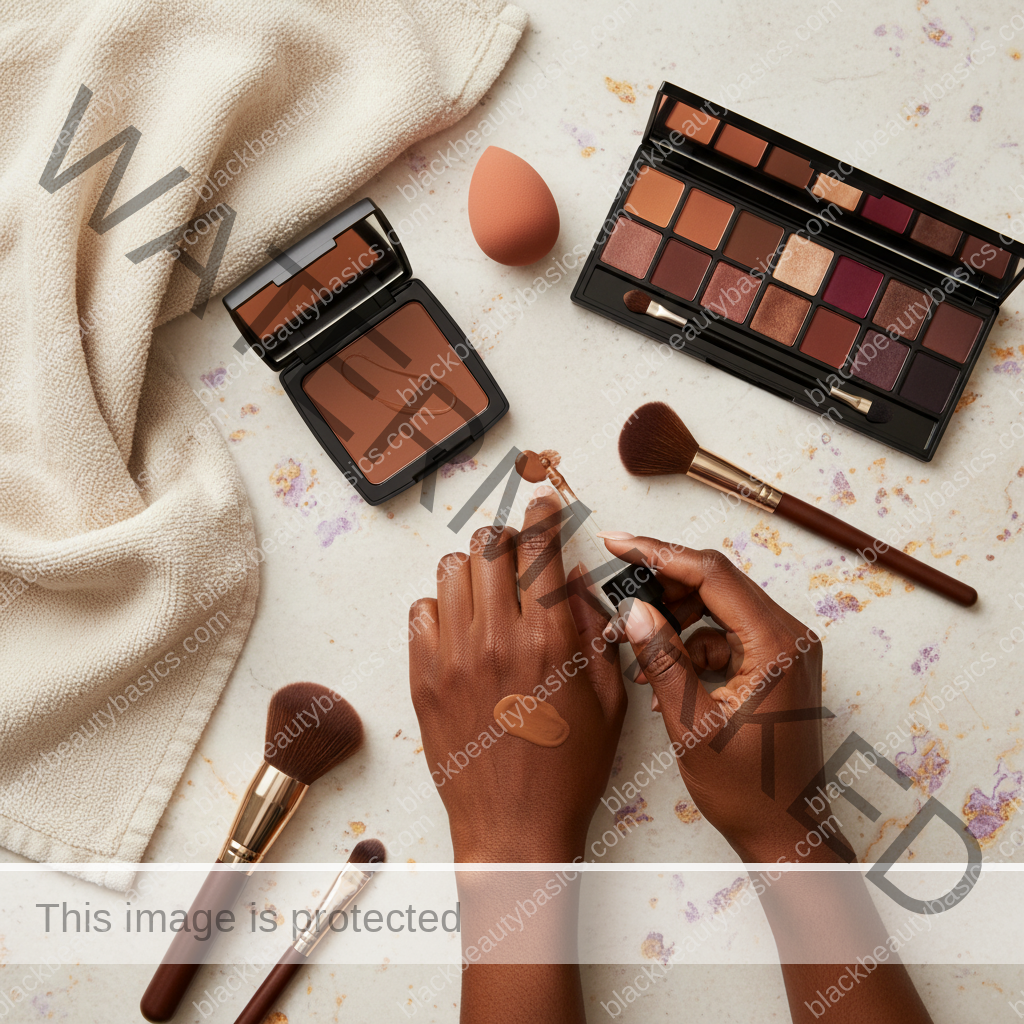
Now that we’ve identified the common pitfalls, let’s equip you with the strategies and resources to confidently navigate the world of foundation shopping.
The Black Beauty Basics Foundation Finder Checklist
Use this checklist every time you’re on the hunt for a new foundation:
- Determine Your Primary Undertone: Cool, Warm, Neutral, Red, or Olive. (Use vein, jewelry, and white fabric tests).
- Identify Your Surface Skin Tone: Light, Medium, Deep, or Rich.
- Consider Your Skin Type: Oily, Dry, Combination, or Normal. (This affects formula choice, e.g., matte vs. dewy).
- Research Brands Known for Diverse Shade Ranges: Prioritize brands that genuinely cater to melanin-rich skin.
- Create a Shortlist: Select 2-3 potential shades based on online research and reviews.
- Swatch In-Person: Apply stripes on your jawline, extending to the neck.
- Observe in Natural Light: Step outside the store to see the true color.
- Wait for Oxidation: Allow 5-10 minutes for the foundation to settle.
- Test for a Full Day (if possible): Ask for a sample to wear at home.
- Assess Neck/Chest Harmony: Ensure the chosen shade blends seamlessly with your broader complexion.
Shop Foundation for Black Women on Amazon
Pro Tips for a Flawless Match
| Tip Category | Pro Tip for Black Women |
|---|---|
| Undertone Identification | Beyond veins, observe how your skin reacts to different colors. Does a bright fuchsia top make your skin glow (cool) or look sallow (warm)? |
| Lighting Matters | Always, always, ALWAYS check your foundation match in multiple lighting conditions – natural daylight, indoor lighting, and even flash photography. |
| Brand Savvy | Prioritize brands that have a proven track record of creating extensive and nuanced shade ranges for deep skin tones, not just adding a few darker shades as an afterthought. |
| Don’t Fear Mixing | Many of us are a blend of undertones. Having two foundations (e.g., one slightly redder, one slightly more golden) allows for a truly custom, seasonal match. |
| Consider Your Concealer | Your concealer should complement your foundation. For brightening, choose one 1-2 shades lighter with a peachy or golden undertone. For spot concealing, match your foundation. |
| Primer & Setting Powder | A good primer can enhance wear, but an incorrectly tinted setting powder can alter your foundation match. Opt for translucent or finely milled powders designed for deeper skin. Shop Translucent Setting Powder on Amazon |
Essential Tools for Foundation Application
The right tools can make all the difference in how your foundation looks and wears, ensuring a seamless, natural finish.
| Tool | Why It’s Essential | Recommendation |
|---|---|---|
| Beauty Sponge | Ideal for a natural, dewy finish. Damp application helps sheer out foundation and press it into the skin for a seamless blend. Great for all skin types. | Shop Beauty Sponges on Amazon |
| Flat-Top Kabuki Brush | Provides medium to full coverage with a buffed, airbrushed finish. Excellent for liquid and cream foundations, ensuring even distribution. | Shop Flat-Top Kabuki Brushes on Amazon |
| Dense Foundation Brush | Similar to a kabuki but often with a slightly tapered head, allowing for precise application and blending, especially around the nose and eyes. | Shop Dense Foundation Brushes on Amazon |
| Setting Spray | Melts all powders into the skin for a natural finish and extends the wear time of your foundation, preventing cakiness or transfer. | Shop Setting Spray on Amazon |
| Magnifying Mirror | Helps you see up close to ensure seamless blending and catch any missed spots or harsh lines, especially around the hairline and jawline. | Shop Magnifying Mirrors on Amazon |
FAQ: Your Most Pressing Foundation Undertone Questions Answered
Q1: What exactly is an undertone, and how is it different from my skin tone?
A: Your skin tone is the surface color of your skin—what you see at first glance (e.g., fair, light, medium, deep). It can change with sun exposure. Your undertone, however, is the subtle hue beneath the surface of your skin that affects its overall color. It’s a permanent characteristic that doesn’t change. Think of it as the base color that influences how your skin tone appears. For Black women, these can range from cool (red, blue, purple), warm (golden, yellow, peach), neutral (a balance of both), to specific red or olive undertones.
Q2: My foundation looks ashy or gray. What undertone mistake am I likely making?
A: An ashy or gray cast typically indicates that your foundation is either too light for your skin tone or, more commonly, that it has the wrong undertone. If you have warm or neutral undertones, and you’re using a foundation with a cool (pink/red) undertone, it can neutralize your natural warmth and appear gray. Conversely, if you have cool undertones and are wearing a foundation that’s too yellow or golden, it can also look off. It’s crucial to identify your true undertone and select a foundation that complements it, rather than clashing with it.
Q3: My foundation looks orange or too yellow. What’s going wrong?
A: An orange or overly yellow appearance usually means your foundation has too much warmth for your complexion. If you have cool or neutral undertones and are using a foundation with a strong warm (golden/yellow) undertone, it will look unnatural and orange. This is a very common mistake, especially since many brands historically categorized all deeper skin tones as “warm.” You likely need a foundation with cooler or more neutral undertones, or possibly a red-based undertone if your complexion is rich and deep.
Q4: Can my undertone change over time?
A: No, your undertone is a permanent characteristic of your skin and does not change over time, regardless of sun exposure, age, or skin conditions. What *does* change is your surface skin tone, which can deepen with tanning or lighten in winter. This is why you might need to adjust your foundation shade seasonally, but your underlying undertone category (cool, warm, neutral, red, olive) will remain the same.
Q5: I have hyperpigmentation. How does that affect my undertone identification and foundation choice?
A: Hyperpigmentation, while a surface concern, can make undertone identification more challenging because it introduces areas of darker pigmentation. When identifying your undertone, try to look at areas of your skin that are less affected by hyperpigmentation, such as your inner wrist, chest, or behind your ear. For foundation, you’ll want to match the foundation to your overall undertone and the clearest part of your complexion (usually the neck/chest). You can then use a color corrector (e.g., an orange or peach corrector for dark spots) *before* foundation application to neutralize the hyperpigmentation, ensuring a seamless, even finish.
Shop Hyperpigmentation Color Corrector on Amazon
Q6: What if I seem to have a mix of undertones, or my undertone isn’t clearly warm or cool?
A: This is very common, especially for Black women! Many complexions are truly neutral, meaning they have a balance of both warm and cool tones. Others might have unique red or olive undertones that don’t fit neatly into the traditional categories. If you’re struggling, you likely have a neutral undertone, or a specific red/olive one. Look for foundations labeled “neutral,” “red-neutral,” or “olive.” Don’t be afraid to mix two shades—one slightly warmer, one slightly cooler—to create your perfect custom blend. This often yields the most natural-looking result for complex undertones.
Q7: Are there specific brands known for excelling in diverse undertones for Black women?
A: Absolutely! The beauty landscape has improved significantly. Brands like Fenty Beauty, NARS, Pat McGrath Labs, Estée Lauder, Dior, and Bobbi Brown are often lauded for their extensive and nuanced shade ranges, paying particular attention to the diverse undertones within deeper complexions. Even some drugstore brands like L’Oréal and Maybelline have expanded their offerings considerably. Always prioritize brands that show a genuine commitment to inclusivity in their shade development.
Shop Fenty Beauty Foundation on Amazon
Shop NARS Foundation on Amazon
Shop Pat McGrath Labs Foundation on Amazon
The journey to finding your perfect foundation shade, one that truly celebrates the depth and dimension of your melanin-rich skin, is an act of self-love and empowerment. By understanding your unique undertones and sidestepping these common mistakes, you unlock the secret to a flawless, radiant complexion that is authentically you. No more ashy casts, no more orange lines—just the beautiful, luminous skin you were always meant to showcase. Embrace this knowledge, and let your true colors shine through, confidently and beautifully.
How to make makeup choices fit your actual undertone and finish
For Black women and people with deep skin tones, makeup shopping can feel emotional because too many shade systems still treat deep complexions as an afterthought. This guide focuses on avoiding undertone mistakes with red, golden, neutral, olive, and muted deep shades when shopping foundation, while keeping the related BBB makeup cluster as the home base. The goal is not to make your skin easier for a brand to understand. The goal is to help you read color, finish, placement, and undertone with more confidence.
Start with what you can actually see. Does the product turn orange, red, gray, ashy, too yellow, too pink, too flat, or too icy? Does it look right in store but strange in daylight? Does it match your jaw but fight your chest? Those details matter more than a shade name that sounds flattering but does not behave well on your skin.
The strongest makeup strategy is usually the one that respects depth and dimension. Deep skin often needs warmth, balance, and enough pigment, but not every product needs to be dramatic. Sometimes the better choice is a more accurate undertone, a softer placement, a different powder tone, or a formula that dries down without changing the whole face.
What to notice gently
- Where the color shifts: face, jaw, chest, under-eye, cheek, or high points.
- Whether the undertone reads red, golden, neutral, olive, muted, orange, gray, or pink.
- How the product looks in daylight, indoor lighting, flash, and after dry-down.
- Whether the finish keeps depth and dimension or makes the face look flat.
- Which placements make the makeup feel polished without erasing your complexion.
What usually makes makeup for deep skin harder than it needs to be
The first challenge is shade language that sounds precise but is not precise enough. “Deep warm” might mean red in one brand, golden in another, orange in another, and olive in none. That is why the same person can wear one brand beautifully and look completely off in another.
The second challenge is testing makeup in conditions that hide the problem. Store lighting can soften ashiness, phone cameras can warm a shade, and wet swatches can look better than dry foundation. Deep skin deserves enough time, light, and comparison points to see what is really happening.
The third challenge is using products meant to correct a problem created by the wrong base. Too-light concealer, chalky highlight, orange bronzer, or flat powder can make the whole face feel off. Often the answer is not more product. It is better tone, placement, formula, or restraint.
What to do next
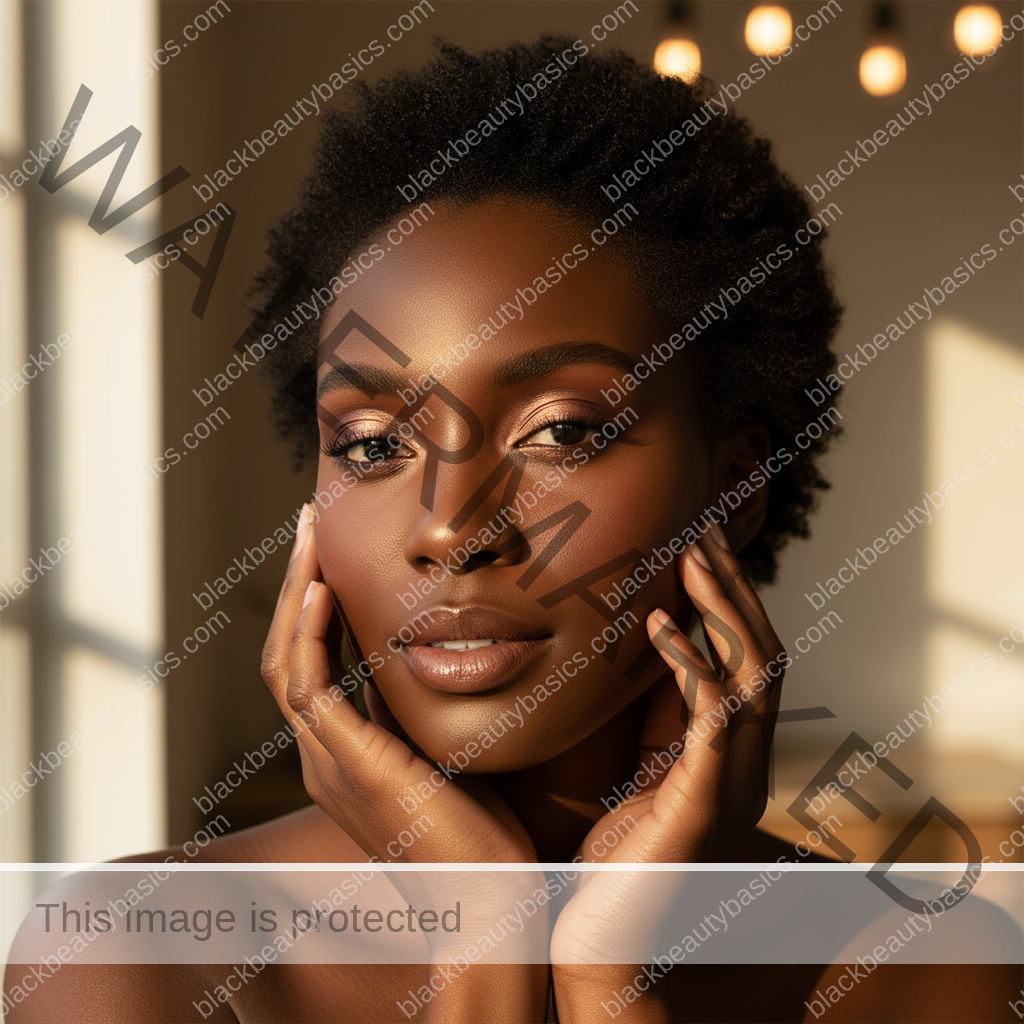
Keep this article connected to the Makeup for Deep Skin Tones system. Use the related guides below to decide whether your next step is better shade matching, a base makeup adjustment, or a color product strategy that keeps depth and dimension.
- Makeup for Deep Skin Tones
- The related makeup cluster guide
- shade matching systems and undertones for deep skin
- olive undertones on deep skin
- shade-matching foundation in store
- shade-matching foundation online
Related next steps
Related posts:
 Skincare Mistakes Black Women Make That Cause Dark Marks and Sensitivity
 Black-Owned Beauty Shopping Guide: How to Build a Balanced Routine
 How to Find Your Undertone as a Black Woman (With Examples)
 Best Nude Lip Combinations for Dark Skin by Undertone
 How to Shade-Match Foundation in Store on Deep Skin
 How to Read Your Undertone on Deep, Melanin-Rich Skin