For the woman of color, our beauty journey is often a testament to resilience, a vibrant tapestry woven with the threads of self-discovery and celebration. Yet, even in this era of expanded beauty offerings, the quest for the perfect foundation shade can feel like navigating a labyrinth, especially when your deep skin harbors the elusive, yet undeniably regal, olive undertone. This isn’t just about finding a match; it’s about honoring the unique warmth and complexity of your complexion, ensuring your radiance is never dulled by a shade that simply doesn’t understand your exquisite glow. Start with the related BBB makeup cluster guide if you want the broader map.
The Unseen Hue: Decoding Olive Undertones on Deep Skin
For far too long, the beauty industry operated within a narrow spectrum, often categorizing complexions into simplistic warm, cool, or neutral binaries. While these classifications serve a purpose, they frequently fail to capture the nuanced beauty of melanin-rich skin, particularly when an olive undertone is present. On deep skin, olive is not a straightforward green; it’s a sophisticated interplay of golden, yellow, and subtle greenish-gray hues that can make traditional shade matching a true enigma.
What Exactly is an Olive Undertone?
An undertone is the subtle color beneath the surface of your skin that affects its overall hue. Unlike surface tones, which can change due to sun exposure or conditions, your undertone remains constant. For many, undertones are easily identified as cool (pink, red, blue), warm (yellow, peach, gold), or neutral (a balance of both). However, olive undertones introduce a unique dimension. They are often described as a mix of yellow and green, but on deep skin, this “green” is rarely overt. Instead, it manifests as a muted, earthy quality that prevents skin from appearing overly yellow or overly red.
The Spectrum of Olive: From Subtle to Striking
It’s important to understand that olive undertones exist on a spectrum. Some deep complexions might have a very subtle olive cast, while others exhibit a more pronounced greenish-yellow depth. This variability is precisely what makes shade matching so challenging. A foundation that works for one woman with deep olive skin might look entirely different on another, even if their surface tones appear similar.
Why Traditional Shade Matching Falls Short for Deep Olive Skin
The conventional approach to foundation matching often relies on a limited palette of warm, cool, and neutral. This framework struggles to accommodate the unique characteristics of olive undertones on deep skin for several reasons:
- Lack of Green Pigment in Formulas: Most foundations are formulated with red, yellow, and blue pigments. The subtle green-gray component of olive undertones is often missing, leading to shades that look too orange, too red, or too ashy.
- Misinterpretation of Warmth: Deep olive skin often has a golden warmth, but it’s not the same as a purely yellow or peachy warm undertone. Foundations designed for “warm” complexions might lean too orange or brassy, clashing with the underlying olive.
- The “Ashy” Effect: When a foundation lacks the necessary olive pigment, it can sit on top of the skin and create an ashy or grayish cast, particularly if the formula is too pink or too cool. Conversely, a foundation that is too yellow can make olive skin appear sallow.
- The “Orange” Dilemma: A common frustration is finding foundations that oxidize or apply with an orange tint. This often happens when a formula tries to compensate for deep skin by adding too much red or orange pigment, without considering the olive undertone that would neutralize it.
Understanding these pitfalls is the first step toward reclaiming your power in the beauty aisle. It’s not you; it’s the limited understanding of your exquisite complexion.
The Art of Identification: Uncovering Your Deep Olive Undertone
Before you can conquer the world of foundation, you must first truly see and understand your own skin. Identifying an olive undertone on deep skin requires a discerning eye and a departure from conventional wisdom. It’s about looking beyond the surface and observing the subtle nuances that make your complexion uniquely yours.
The Vein Test: A Starting Point, Not the Final Word
The classic vein test (observing the color of your veins on your wrist) is a common starting point, but it’s less definitive for deep olive skin. While green veins often indicate warm undertones and blue/purple veins suggest cool, olive undertones can present a mix, or the veins might appear less distinct. If your veins look a bit green, a bit blue, and you’re still unsure, it’s a hint that you might be more complex than a simple warm/cool.
The Jewelry Test: Gold, Silver, or Both?
Another popular method is the jewelry test. Does gold jewelry flatter your skin more, or does silver? For many with olive undertones, both gold and silver can look harmonious. Gold might bring out a subtle warmth, while silver might complement the cooler, muted aspects. If you find you can wear both metals with ease, it’s another indicator of a neutral-leaning or olive undertone.
The White Fabric Test: The Most Revealing Clue
This test is often the most effective for identifying olive undertones. Drape a pure white towel or piece of fabric around your shoulders and observe your skin in natural light (avoiding direct sunlight). If your skin appears slightly grayish, greenish-yellow, or muted in comparison to the stark white, you likely have an olive undertone. It’s not a sickly green, but a subtle, earthy cast that prevents your skin from looking purely golden or purely reddish against the white.
Observing Your Skin in Relation to Other Tones
Pay attention to how your skin reacts to different colors. Do bright orange or fuchsia lipsticks look jarring? Do certain yellows make you look sallow, while others enhance your glow? Does your skin sometimes look a little “muddy” or “ashy” in foundations that are supposed to be “warm” for deep skin? These are all clues. Deep olive skin often thrives in jewel tones, earthy hues, and colors that have a slight muted quality.
Tip List: How to Spot Deep Olive Undertones
- The “Greenish-Gray” Hint: In natural light, does your skin have a subtle, almost imperceptible greenish-gray or muted yellow cast, especially compared to true golden or red-brown skin?
- The “Ashy” Foundation Experience: Do foundations marketed for “warm” deep skin often look too orange or red, while “cool” ones look ashy or pink?
- The Versatile Jewelry Wearer: Do both gold and silver jewelry look equally flattering on your skin?
- The Sun’s Embrace: Do you tan easily to a rich, earthy brown rather than burning or turning distinctly red?
- The Absence of Clear Warm/Cool: Do you struggle to definitively categorize yourself as purely warm, cool, or even neutral, feeling like you’re somewhere in between?
The Foundation Quest: Strategies for Shade Matching Deep Olive Skin
Armed with the knowledge of your unique undertone, the foundation hunt transforms from a frustrating ordeal into a strategic mission. The goal is no longer just to find a “deep” shade, but to find a deep shade with the correct underlying pigment balance. This often means looking beyond the shade name and truly understanding the nuances of the formula.
Embrace the Mixer: Your Secret Weapon
For many with deep olive skin, a perfect out-of-the-bottle match is a rare gem. This is where foundation mixers become indispensable. A blue or green color corrector can be mixed into a foundation that is otherwise a good depth but too warm (orange/red) or too yellow. A yellow mixer can adjust a shade that’s too pink or neutral. This allows you to customize your perfect hue.
Shop Foundation Mixers on Amazon
Swatching Smart: Beyond the Jawline
While the jawline is a classic swatch spot, it’s not always sufficient for deep olive skin. Swatch on your cheek, near your neck, and even a little on your chest if it’s exposed. The goal is to find a shade that blends seamlessly into all areas, without creating a line of demarcation. Let the foundation sit for a few minutes to see how it oxidizes, as this can drastically change the color.
Look for Specific Shade Descriptions
Some brands are becoming more sophisticated in their shade descriptions. Look for terms like “golden olive,” “neutral olive,” “warm olive,” “deep olive,” or shades with a “muted” quality. Avoid shades that are explicitly described as “red,” “peach,” or “rosy” unless you are intentionally trying to counteract an extreme sallow appearance.
Shop Foundation for Deep Olive Skin on Amazon
Brands That Understand: A Curated List
While no brand is perfect for everyone, some have made significant strides in offering shades that cater to deep olive undertones. These brands often have a wider range of nuanced shades, including those with a more balanced yellow-green-brown pigment profile.
Table: Brands Known for Deep Olive-Friendly Shades
| Brand | Product Type | Notes for Olive Undertones |
|---|---|---|
| Fenty Beauty | Foundation, Concealer | Known for extensive shade range with diverse undertones, including many olive-friendly options. Look for shades with ‘neutral-warm’ or ‘olive’ descriptions. |
| NARS | Foundation, Concealer | Offers shades like ‘Tahoe’, ‘Cadiz’, ‘Macao’, ‘New Guinea’ which are often celebrated by those with deep olive undertones. |
| Estée Lauder | Foundation | Double Wear Stay-in-Place Foundation has a broad range, with some shades like ‘Spiced Sand’ or ‘Pecan’ working for deeper olive tones. |
| Dior | Foundation | Dior Backstage Face & Body Foundation often has shades with a good balance for olive complexions, look for ‘neutral’ or ‘warm’ with a golden lean. |
| Pat McGrath Labs | Foundation | Sublime Perfection Foundation offers rich, deep shades with complex undertones that can suit olive skin. |
| Danessa Myricks Beauty | Foundation, Concealer | Vision Cream Cover and Yummy Skin Serum Foundation are praised for their inclusive range and ability to cater to nuanced undertones. |
Shop Fenty Beauty Foundation on Amazon
Shop NARS Foundation on Amazon
Shop Estée Lauder Foundation on Amazon
Shop Dior Foundation on Amazon
Shop Pat McGrath Labs Foundation on Amazon
Shop Danessa Myricks Beauty Foundation on Amazon
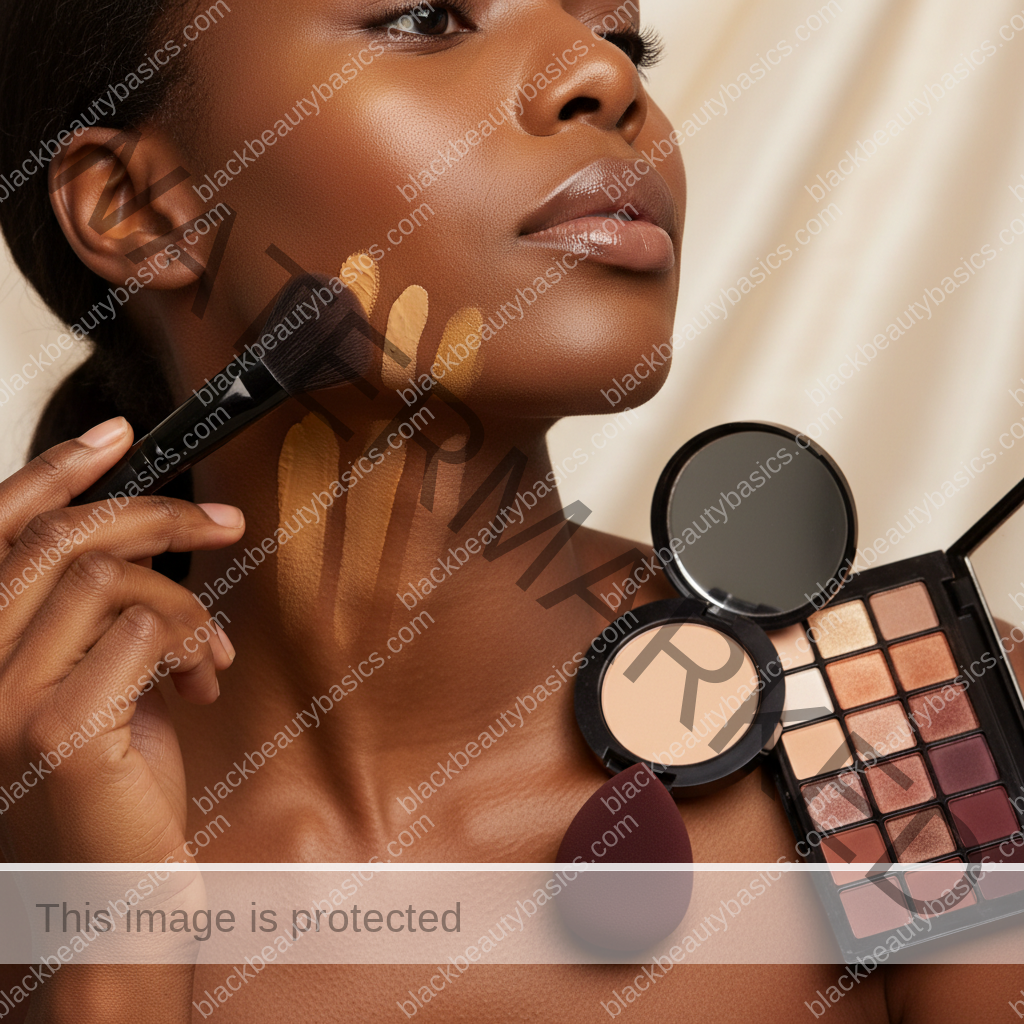
Beyond Foundation: Concealers, Bronzers, and Blush for Deep Olive Skin
The journey to a perfectly harmonious complexion doesn’t end with foundation. Concealers, bronzers, and blushes must also complement your deep olive undertone to create a seamless, radiant look. Choosing the wrong shades in these categories can undo all the careful work of matching your foundation.
Concealers: Brighten, Correct, and Conceal
For deep olive skin, concealer often serves multiple purposes: brightening the under-eye area, spot concealing blemishes, and correcting discoloration. The key is to choose shades that work with, not against, your olive undertone.
Under-Eye Brightening
To brighten, opt for a concealer that is one to two shades lighter than your foundation and has a slightly peachy or golden undertone. Avoid concealers that are too pink or too stark white, as these can look ashy or unnatural against deep olive skin. A peachy tone helps to counteract any purplish or grayish discoloration without clashing with the olive.
Shop Peach Undertone Concealers on Amazon
Spot Concealing
For spot concealing, match your concealer as closely as possible to your foundation shade and undertone. This ensures seamless coverage that blends into your base without highlighting the blemish with an incorrect color.
Shop Concealer for Deep Olive Skin on Amazon
Color Correcting
If you have significant dark circles or hyperpigmentation, a color corrector might be beneficial before concealer. For deep olive skin, a deep orange or red-orange corrector can effectively neutralize dark areas. Apply sparingly and blend well before layering your regular concealer.
Shop Orange Color Correctors on Amazon
Bronzers: Warmth Without the Orange
Bronzer is essential for adding warmth and dimension to deep skin, but for olive undertones, it’s crucial to select shades that don’t lean too orange or muddy. Look for bronzers with a golden, reddish-brown, or neutral-brown undertone. Avoid anything too shimmery if you’re aiming for a natural contour, and opt for a matte or satin finish.
Shop Bronzer for Deep Olive Skin on Amazon
Blush: The Perfect Pop of Color
Blush can instantly liven up deep olive skin, but the right shade makes all the difference. While many colors can work, certain hues truly sing against an olive complexion.
Table: Blush Shades for Deep Olive Skin
| Blush Shade Category | Why it Works for Deep Olive Skin | Examples |
|---|---|---|
| Deep Berries & Plums | These rich, cool-toned shades provide a beautiful contrast and depth without clashing with the olive undertone. They create a sophisticated flush. | Deep plum, blackberry, wine, rich berry. |
| Terracotta & Burnt Orange | Earthy and warm, these shades complement the natural golden aspects of deep olive skin, adding a sun-kissed glow without being overtly orange. | Terracotta, burnt orange, rust, brick red. |
| Rich Mauves & Roses | Muted and sophisticated, these shades offer a natural-looking flush that harmonizes with the subtle green-gray of olive undertones. | Dusty rose, deep mauve, rosewood. |
| Warm Corals (with caution) | While some corals can be too bright or orange, a deeper, more muted coral with a hint of red can add a vibrant pop. Test carefully. | Deep coral, red-orange. |
Shop Blush for Deep Olive Skin on Amazon
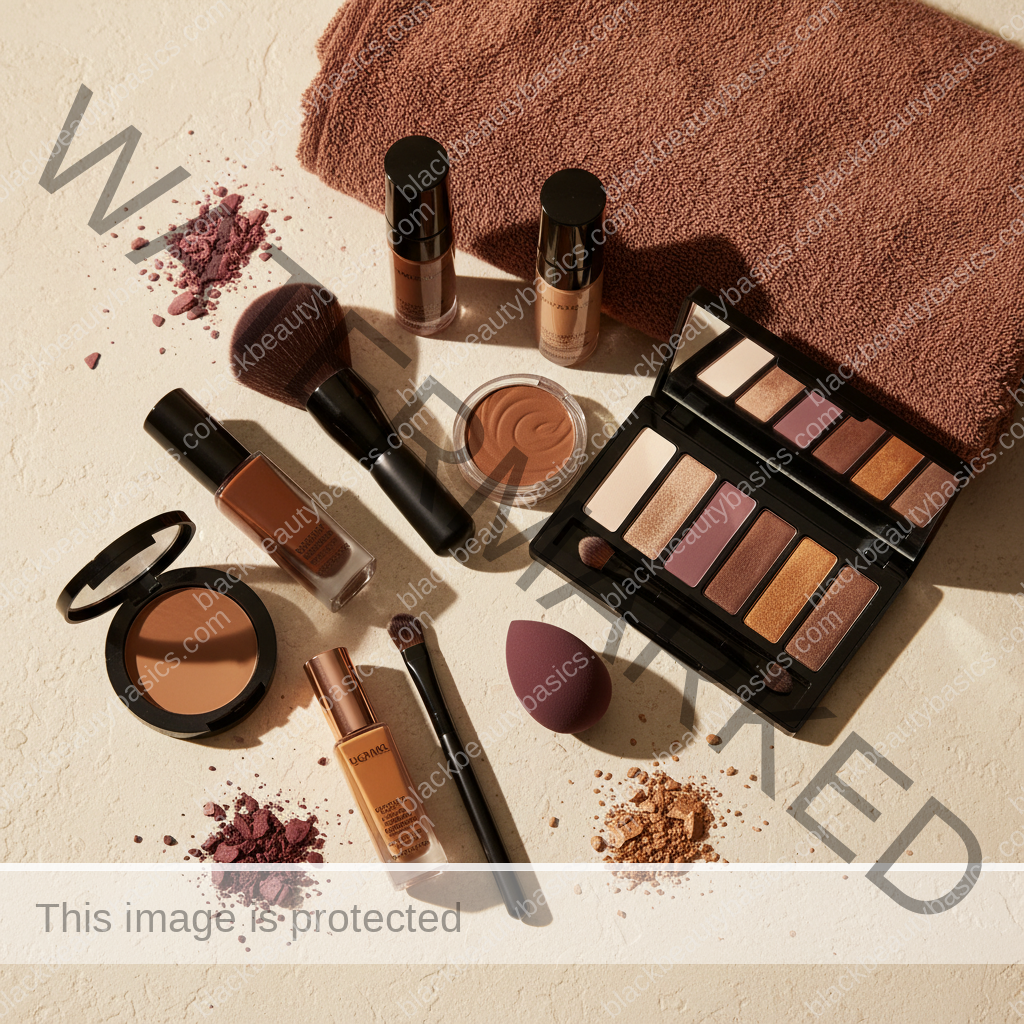
Mastering Your Melanin: Advanced Tips for Deep Olive Tones
Once you’ve conquered the basics of shade matching, you can elevate your makeup routine with advanced techniques and product choices that truly celebrate your deep olive complexion. It’s about enhancing your natural beauty with precision and pride.
The Power of Primer and Setting Spray
A good primer can create a smooth canvas, helping your carefully chosen foundation sit better and last longer. For deep olive skin, consider color-correcting primers if you have specific concerns like redness or sallowness. A green-tinted primer can subtly neutralize overall redness, while a peach-tinted one can brighten dullness. Finish your look with a setting spray to lock everything in place and meld powders into your skin for a more natural finish.
Shop Color Correcting Primers on Amazon
Shop Setting Sprays on Amazon
Highlighting with Intention
Highlighter can bring a luminous glow to deep olive skin. Opt for shades with a golden, bronze, or champagne hue. Avoid highlighters that are too silver or iridescent pink, as they can look stark or unnatural. Cream or liquid highlighters often melt into the skin more seamlessly than powders, providing a natural, lit-from-within glow.
Shop Golden Highlighters on Amazon
Lip Colors That Pop
Deep olive skin is incredibly versatile when it comes to lip colors. Rich, warm tones like deep berries, terracotta, and brick reds are stunning. Nudes with a peachy, brown, or mauve undertone will complement without washing you out. Even some cool-toned reds and fuchsias can look striking, offering a beautiful contrast. Experiment to find what makes you feel most vibrant.
Shop Lipsticks for Deep Skin on Amazon
Embracing Your Natural Radiance
Ultimately, the goal of makeup is to enhance, not to mask. For deep olive skin, this means embracing the unique depth and warmth of your complexion. Don’t be afraid to let your natural skin shine through. Use lighter coverage foundations or tinted moisturizers on days when you want a more natural look, and always ensure your skincare routine keeps your skin healthy and glowing.
Shop Tinted Moisturizers for Deep Skin on Amazon
FAQ: Your Deep Olive Undertone Questions Answered
Q1: Can deep skin really have a green undertone? I thought green was only for lighter skin.
A1: Yes, absolutely! While the “green” in olive undertones is often more pronounced on lighter skin, it absolutely exists on deep skin too. It’s not a vibrant green, but rather a subtle, muted, almost grayish-green or yellow-green cast that influences the overall warmth and depth of your complexion. It prevents your skin from appearing purely golden, red, or ashy, giving it a unique, earthy richness.
Q2: My foundation always looks too orange or too red. Does this mean I have an olive undertone?
A2: This is a very strong indicator! Many foundations for deep skin are formulated with an abundance of red or orange pigments to add warmth. If your skin has an olive undertone, these warm foundations will clash, making your face look distinctly orange or red compared to your neck and chest. This is because the olive undertone needs a more balanced pigment profile, often with a subtle yellow-green component, to look harmonious.
Q3: What’s the difference between a neutral undertone and an olive undertone on deep skin?
A3: A neutral undertone on deep skin typically means a balanced mix of warm (yellow/gold) and cool (red/blue) pigments, without a dominant lean towards either. An olive undertone, while often appearing neutral or warm, has that distinct, subtle greenish-gray or muted yellow quality that sets it apart. While a neutral foundation might work, an olive-specific shade will often look even more seamless and natural, preventing any slight ashiness or excessive warmth.
Q4: How can I tell if a foundation has an olive undertone just by looking at it in the bottle?
A4: This can be tricky, as lighting in stores can be deceiving. However, look for shades that appear slightly muted, not overtly yellow, orange, or pink. Sometimes, you might perceive a very subtle grayish or greenish cast in the bottle, especially when compared to a truly warm or cool shade of similar depth. Brands that explicitly label shades as “olive” or “golden olive” are your best bet. Always swatch in natural light!
Q5: Should I use a blue or green mixer for my deep olive skin?
A5: It depends on the foundation you’re trying to correct. If your foundation is too orange or red (too warm), a blue mixer will help neutralize that warmth and bring it closer to a true olive. If your foundation is too yellow or golden, a tiny bit of green mixer can help mute that intensity and lean it more towards an olive tone. Start with a tiny drop, as a little goes a very long way with these highly pigmented mixers.
Q6: Can I use a foundation that’s slightly too warm and just adjust it with powder?
A6: While you can try to correct a slightly off foundation with powder, it’s generally not the most effective or natural-looking solution for significant undertone mismatches. A powder with a different undertone might sit on top of the foundation, creating a layered, unnatural look or even making the problem worse. It’s best to get the foundation undertone as close as possible, either by finding a better match or using a liquid mixer, and then use powder for setting or light coverage.
Q7: What kind of eyeshadows look best on deep olive skin?
A7: Deep olive skin is beautifully complemented by a wide range of eyeshadows! Earthy tones like warm browns, coppers, and golds are stunning. Jewel tones such as emerald green, sapphire blue, and amethyst purple create a striking contrast. Even rich plums and deep mauves can enhance the natural warmth and depth of your complexion. Experiment with metallics and shimmers in these shades for a truly captivating look.
The journey to understanding and celebrating your deep olive undertone is a powerful act of self-love and beauty discernment. No longer will you settle for shades that merely “work”; you will seek out those that truly sing, harmonizing with the unique, rich tapestry of your melanin-rich skin. Embrace the complexity, wield your knowledge, and let your authentic radiance shine through, uncompromised and utterly magnificent.
How to make makeup choices fit your actual undertone and finish
For Black women and people with deep skin tones, makeup shopping can feel emotional because too many shade systems still treat deep complexions as an afterthought. This guide focuses on understanding olive undertones on deep skin and why many foundations pull orange, red, gray, or too golden, while keeping the related BBB makeup cluster as the home base. The goal is not to make your skin easier for a brand to understand. The goal is to help you read color, finish, placement, and undertone with more confidence.
Start with what you can actually see. Does the product turn orange, red, gray, ashy, too yellow, too pink, too flat, or too icy? Does it look right in store but strange in daylight? Does it match your jaw but fight your chest? Those details matter more than a shade name that sounds flattering but does not behave well on your skin.
The strongest makeup strategy is usually the one that respects depth and dimension. Deep skin often needs warmth, balance, and enough pigment, but not every product needs to be dramatic. Sometimes the better choice is a more accurate undertone, a softer placement, a different powder tone, or a formula that dries down without changing the whole face.
What to notice gently
- Where the color shifts: face, jaw, chest, under-eye, cheek, or high points.
- Whether the undertone reads red, golden, neutral, olive, muted, orange, gray, or pink.
- How the product looks in daylight, indoor lighting, flash, and after dry-down.
- Whether the finish keeps depth and dimension or makes the face look flat.
- Which placements make the makeup feel polished without erasing your complexion.
What usually makes makeup for deep skin harder than it needs to be
The first challenge is shade language that sounds precise but is not precise enough. “Deep warm” might mean red in one brand, golden in another, orange in another, and olive in none. That is why the same person can wear one brand beautifully and look completely off in another.
The second challenge is testing makeup in conditions that hide the problem. Store lighting can soften ashiness, phone cameras can warm a shade, and wet swatches can look better than dry foundation. Deep skin deserves enough time, light, and comparison points to see what is really happening.
The third challenge is using products meant to correct a problem created by the wrong base. Too-light concealer, chalky highlight, orange bronzer, or flat powder can make the whole face feel off. Often the answer is not more product. It is better tone, placement, formula, or restraint.
What to do next
Keep this article connected to the Makeup for Deep Skin Tones system. Use the related guides below to decide whether your next step is better shade matching, a base makeup adjustment, or a color product strategy that keeps depth and dimension.
- Makeup for Deep Skin Tones
- The related makeup cluster guide
- shade matching systems for deep skin
- undertone mistakes when shopping foundation
- shade matching in store
- shade matching online
Related next steps
Related posts:
 Beyond the Shade: Why Sunscreen is a Non-Negotiable for Black Women
 How to Shade-Match Foundation in Store on Deep Skin
 Best Foundations for Deep Skin: How to Choose Shade, Formula, and Finish
 Decoding Brand Shade Systems for Deep Skin
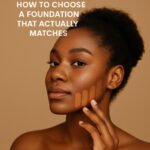 No More Ashy Undertones — How to Choose a Foundation That Actually Matches (Tailored for African American Women)
 Travel Skincare Routine for Melanin-Rich Skin That Gets Dull on Planes