For far too long, the beauty industry has overlooked the rich, multifaceted tapestry of deep skin tones, leaving many of us to navigate the frustrating labyrinth of foundation shade matching alone. The quest for that perfect, seamless match—one that celebrates our unique undertones and melts into our complexion like a second skin—can feel like an elusive dream. But beloved, it’s time to reclaim our power and demystify this process, transforming what was once a challenge into an art form. Start with the related BBB makeup cluster guide if you want the broader map.
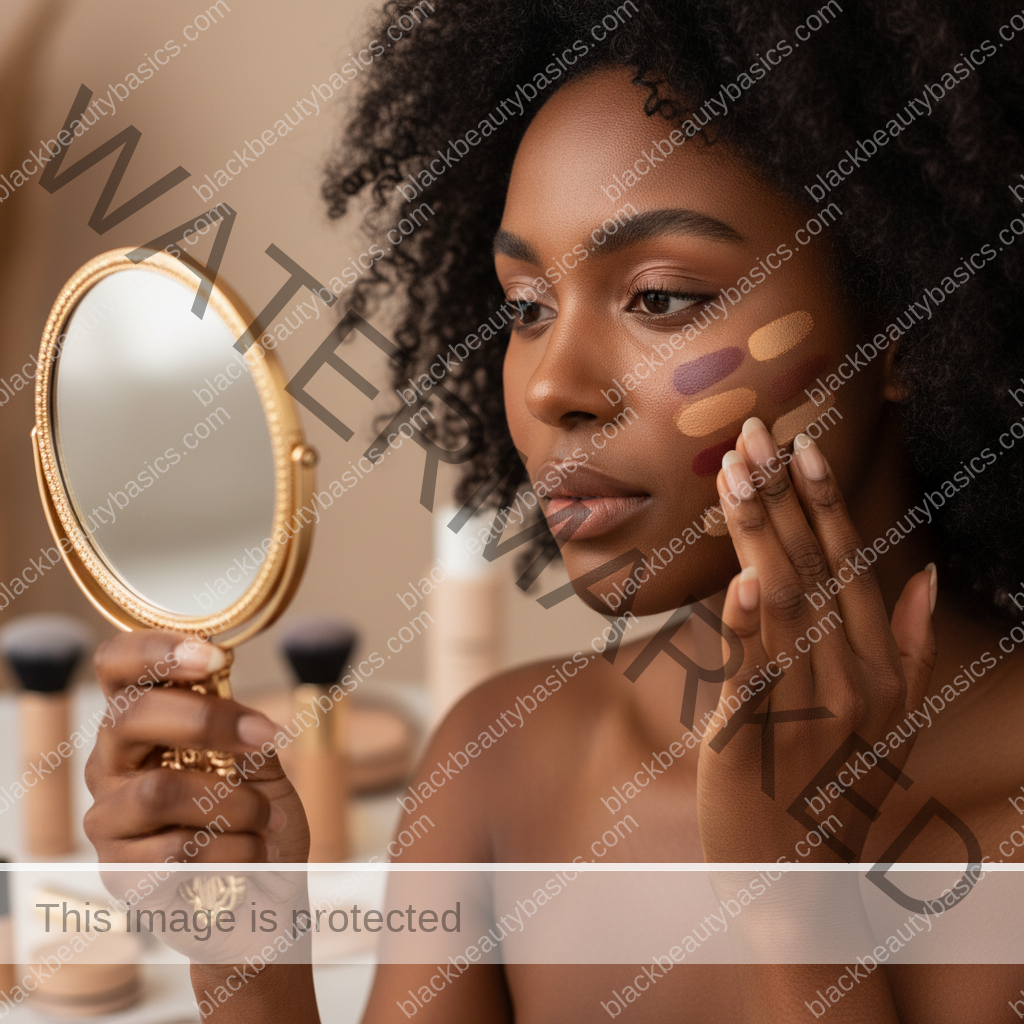
At Black Beauty Basics, we believe every woman deserves to feel exquisitely seen and beautifully adorned. This comprehensive guide is your essential companion, empowering you with the knowledge, tools, and confidence to master the art of shade matching foundation in-store, ensuring your melanin-rich skin is always celebrated, never compromised. No more ashy undertones, no more visible lines of demarcation—just pure, radiant perfection that honors your unique glow.
The Melanin Masterclass: Understanding Your Unique Canvas
Before we even step foot into a beauty aisle, the first and most crucial step is to understand the magnificent canvas that is your own skin. Deep skin tones are anything but monolithic; they are a vibrant spectrum of hues, depths, and undertones that demand precision and reverence. This foundational knowledge will be your compass, guiding you toward shades that truly enhance your natural beauty.
Beyond “Dark”: Deconstructing the Nuances of Deep Skin Tones
The beauty industry’s past tendency to lump all deep skin tones into a handful of “dark” categories was a disservice. We know better. Our complexions boast an incredible range, from rich caramels and warm mahoganies to deep espressos and cool ebony. Recognizing this diversity is the beginning of a truly personalized shade match.
Consider the varying depths within deep skin: some complexions are lighter in their deepness, while others are profoundly rich. The key is not just identifying your general depth but also observing how light interacts with your skin, revealing its inherent warmth or coolness. This nuanced observation is what elevates a good match to a truly exceptional one.
The Underrated Power of Undertones: Your Skin’s Hidden Harmony
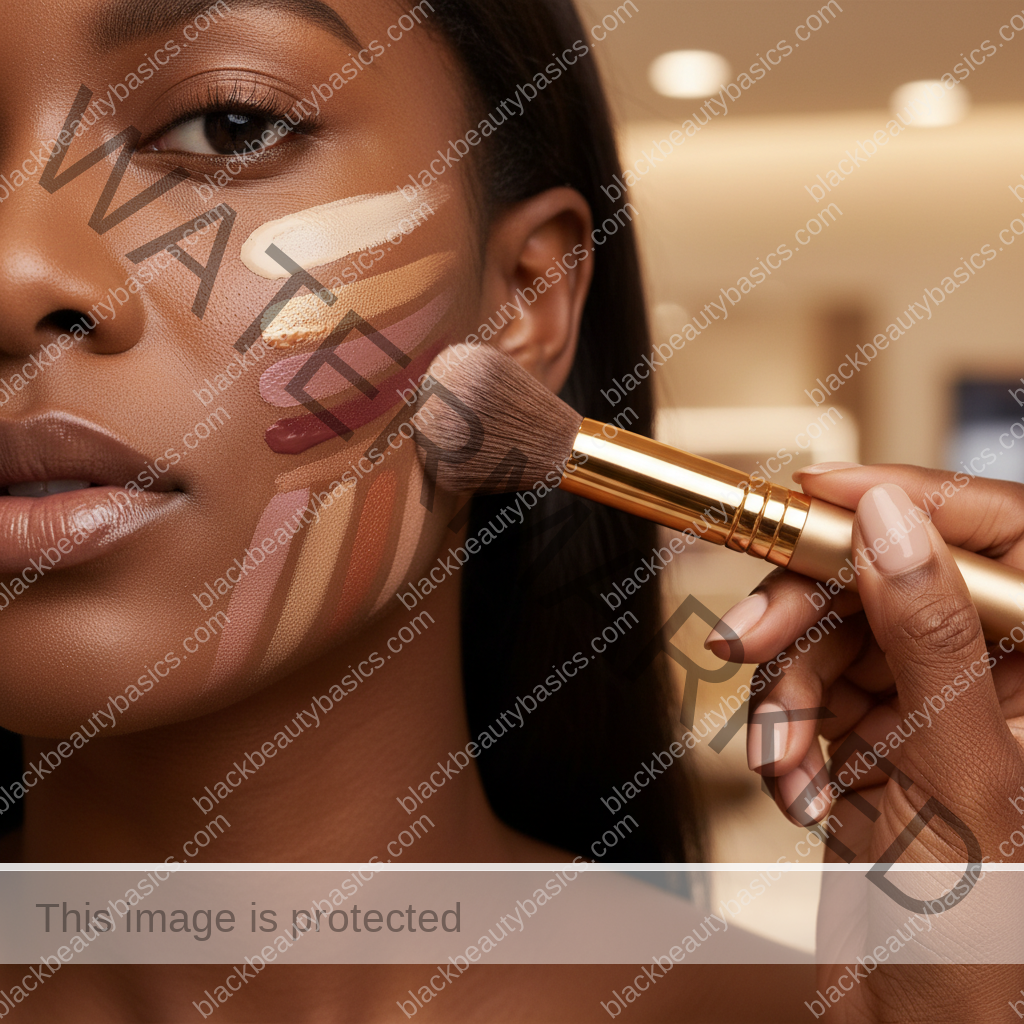
If depth is the volume of your skin’s color, then undertone is its melody—the subtle hue beneath the surface that dictates whether a foundation will sing in harmony or clash. This is arguably the most critical factor in achieving a truly seamless blend. Misunderstanding your undertone is the primary culprit behind foundations that look too orange, too gray, or simply “off.”
Identifying Your Undertone: The Golden Rules
There are three primary undertones, with variations and combinations:
- Warm (Golden, Yellow, Peach): Your skin has a golden, peachy, or yellow hue. You might tan easily and look good in gold jewelry.
- Cool (Red, Pink, Blue): Your skin has a rosy, reddish, or bluish tint. You might burn easily and look good in silver jewelry.
- Neutral (Balanced): Your skin has a mix of warm and cool tones, or no obvious dominant undertone. You might look good in both gold and silver.
For deep skin, identifying undertones can be a bit more intricate. Cool undertones in deeper skin might manifest as a reddish-brown or a subtle blue-black, while warm undertones often appear as golden caramel or rich olive. Neutral undertones are often the most versatile, blending seamlessly with a wider range of shades.
The Vein Test: A Classic Starting Point
Look at the veins on the inside of your wrist in natural light:
- Blue or Purple Veins: You likely have cool undertones.
- Green or Olive Veins: You likely have warm undertones.
- A Mix of Both, or Undecipherable: You likely have neutral undertones.
The Jewelry Test: A Stylish Indicator
Which metal complements your skin best?
- Gold Jewelry: Often indicates warm undertones.
- Silver Jewelry: Often indicates cool undertones.
- Both Gold and Silver: Suggests neutral undertones.
The White Fabric Test: A Simple Revelation
Drape a pure white towel or wear a white shirt. In natural light, observe how your skin appears against the stark white:
- Yellow/Golden Cast: Warm undertones.
- Pink/Blue Cast: Cool undertones.
- Grayish/Even Cast: Neutral undertones.
Remember, these are guidelines, not rigid rules. Your unique complexion might lean slightly one way or another. The goal is to get a general sense, which will significantly narrow down your options in-store.
Shop Foundations for Deep Skin on Amazon
Pre-Shopping Prep: Setting Yourself Up for Success
The journey to your perfect foundation match begins long before you step into the bustling environment of a beauty store. Strategic preparation is key, ensuring you approach the task with clarity and confidence, minimizing overwhelm and maximizing your chances of success.
Research is Your Power: Digital Reconnaissance
In the age of digital beauty, information is at your fingertips. Leverage online resources to streamline your in-store experience.
Online Swatches and Reviews
Before you go, visit brand websites and explore their shade ranges. Many brands now feature models with diverse skin tones, offering a more realistic representation. Look for reviews and swatches from individuals with similar complexions to yours. Pay attention to how shades are described (e.g., “warm caramel,” “cool espresso”).
Foundation Finder Tools
Many brands and retailers offer online foundation shade finders. While not foolproof, these tools can provide a starting point by asking about your current foundation, desired coverage, and undertone. They can suggest shades within a specific range, giving you a shortlist to test in person.
Influencer and Editorial Content
Seek out beauty influencers and editorial content specifically catering to deep skin tones. They often provide invaluable insights, swatches, and real-world applications that can guide your choices. Black Beauty Basics, of course, is your premier destination for such curated wisdom.
The Art of the Clean Canvas: Preparing Your Skin
When you arrive at the store, your skin should be in its most natural state, free from any makeup that could interfere with accurate shade assessment. This means:
- Cleanse and Moisturize: Ensure your skin is fresh and hydrated. A well-moisturized base allows foundation to sit naturally and reveal its true color.
- No Makeup: Resist the urge to wear any foundation, tinted moisturizer, or heavy concealer. You want to see the foundation’s interaction directly with your bare skin.
- Natural Lighting: If possible, choose a day when you can visit the store during daylight hours. Natural light is your best friend for accurate shade matching.
Shop Face Moisturizers on Amazon
In-Store Strategy: Navigating the Beauty Counter with Confidence
Stepping into a beauty store can be overwhelming, but with a clear strategy, you’ll navigate the aisles like a seasoned pro. Your mission: to find that perfect foundation that celebrates your unique beauty.
The Golden Rule of Swatching: Where to Test
This is where many go wrong. Swatching on your hand or wrist is a common mistake, as the skin tone there rarely matches your face and neck. The goal is seamless integration, so you need to test where the foundation will actually be worn.
The Jawline is Your Sweet Spot
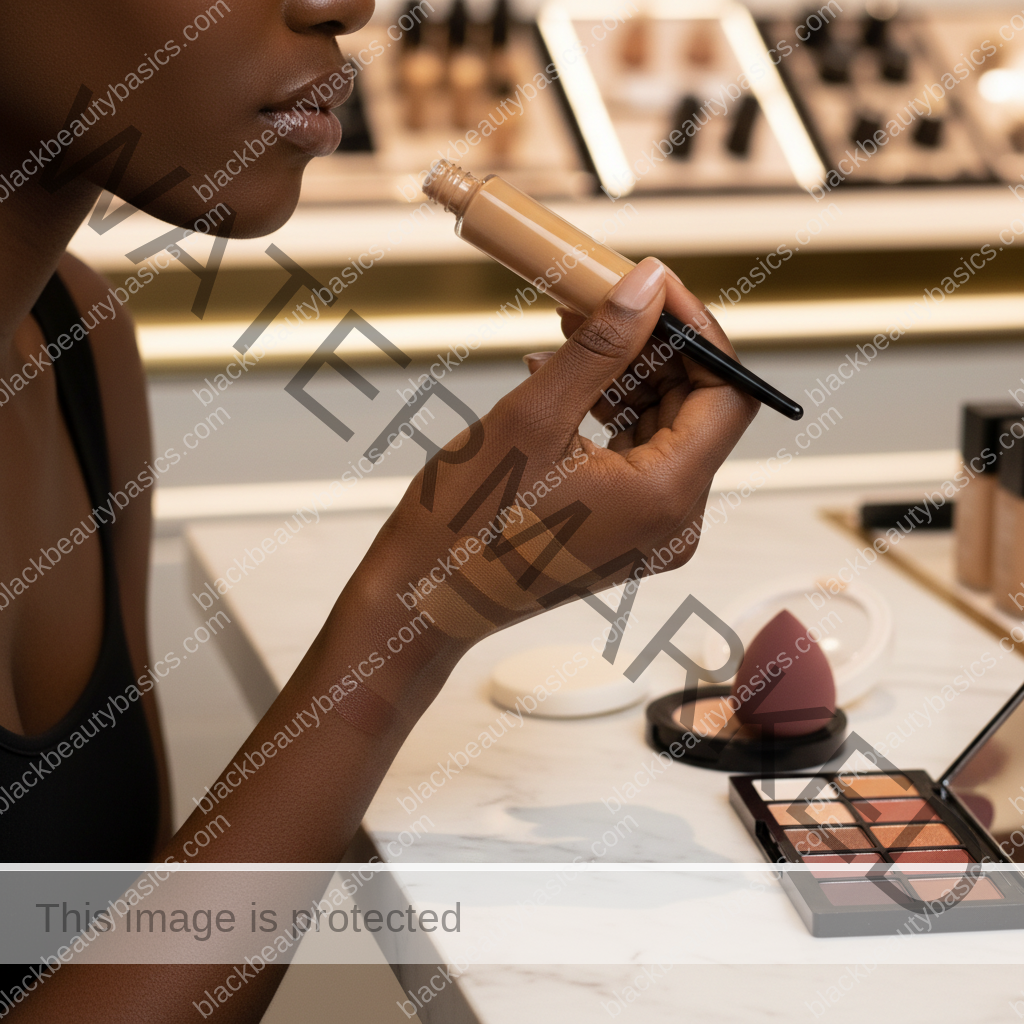
The most accurate place to swatch foundation is along your jawline, extending slightly down onto your neck. This area allows you to compare the foundation’s color against both your face and your neck, ensuring a harmonious blend. You want the foundation to disappear, not create a stark line of demarcation.
Why Not the Cheek or Forehead?
Your cheeks or forehead might be slightly lighter or darker than the rest of your face, or have more redness. The jawline provides a more neutral and representative area for comparison.
The Power of Three: Your Swatching Technique
Don’t just pick one shade. Select 2-3 shades that you believe are closest to your skin tone and undertone. These should include:
- The shade you think is your perfect match.
- One shade slightly lighter.
- One shade slightly darker.
This allows for direct comparison and helps you pinpoint the most accurate match. Apply each shade in a small stripe along your jawline, leaving a small space between each stripe.
The Wait and See: Allowing the Foundation to Settle
Foundation can oxidize, meaning its color can change slightly as it interacts with the air and your skin’s natural oils. This is particularly important for deep skin tones, where oxidation can lead to a foundation looking too orange or ashy. After swatching:
- Wait 5-10 Minutes: Allow the foundation to dry down and settle. This will reveal its true, oxidized color.
- Observe in Different Lighting: Move away from the bright, often artificial store lights. Step outside into natural daylight if possible, or at least move closer to a window. This is crucial for an accurate assessment.
The Disappearing Act: What You’re Looking For
The perfect shade match is the one that:
- Disappears into your skin: It should blend seamlessly, without leaving a visible line or looking like a mask.
- Enhances, not alters: It should even out your skin tone and provide coverage without changing your natural complexion.
- Matches both face and neck: Crucially, it should harmonize with both areas for a truly natural look.
If you’re torn between two shades, often the one that’s slightly lighter and can be warmed up with bronzer is preferable to one that’s too dark and can look muddy. However, the ultimate goal is the one that truly vanishes.
Shop Foundation Brushes on Amazon
Decoding the Language of Foundation: Formulas and Finishes
Beyond shade, the formula and finish of your foundation play a pivotal role in how it looks and feels on your skin. Understanding these aspects ensures your chosen foundation not only matches your color but also complements your skin type and desired aesthetic.
Foundation Formulas: Tailoring to Your Skin’s Needs
Different formulas cater to different skin types and coverage preferences. For deep skin, finding a formula that doesn’t look heavy or cakey is paramount, especially as many deep complexions can have varying oiliness or dryness.
Comparison Table: Foundation Formulas for Deep Skin
| Formula Type | Best For | Coverage | Finish | Considerations for Deep Skin |
|---|---|---|---|---|
| Liquid/Serum | All skin types, especially normal to dry | Sheer to Full (buildable) | Natural, Dewy, Satin | Excellent for a natural glow. Look for non-oxidizing formulas. |
| Cream/Stick | Normal to dry, mature skin | Medium to Full | Satin, Dewy | Can be very hydrating. Ensure it blends seamlessly without looking heavy. |
| Powder | Oily, combination skin | Sheer to Medium (buildable) | Matte, Natural | Great for oil control. Can look chalky if not matched perfectly or applied too heavily. |
| Tinted Moisturizer/BB/CC Cream | All skin types, especially normal to dry | Sheer to Light | Natural, Dewy | Ideal for “no-makeup” makeup. Limited shade ranges often a challenge for deep skin. |
Shop Liquid Foundations on Amazon
Shop Cream Foundations on Amazon
Shop Powder Foundations on Amazon
Shop Tinted Moisturizers on Amazon
Foundation Finishes: Your Desired Radiance
The finish dictates the overall look of your skin once the foundation is applied. This is a personal preference, but certain finishes can be more flattering for deep skin tones.
- Matte: A non-shiny finish, ideal for oily skin or those who prefer a velvety look. Be cautious that some matte foundations can look flat or ashy on deep skin if not properly matched.
- Satin/Natural: The most versatile finish, mimicking healthy skin. It offers a subtle glow without being overly dewy or completely flat. Often the most flattering for deep skin.
- Dewy/Radiant: Provides a luminous, glowing finish, perfect for dry or mature skin, or those desiring a youthful glow. Can enhance natural radiance on deep skin.
For deep skin, a natural or satin finish often allows the skin’s inherent luminosity to shine through beautifully. If you opt for matte, ensure it doesn’t strip your skin of its natural warmth.
Beyond the Base: Enhancing Your Flawless Finish
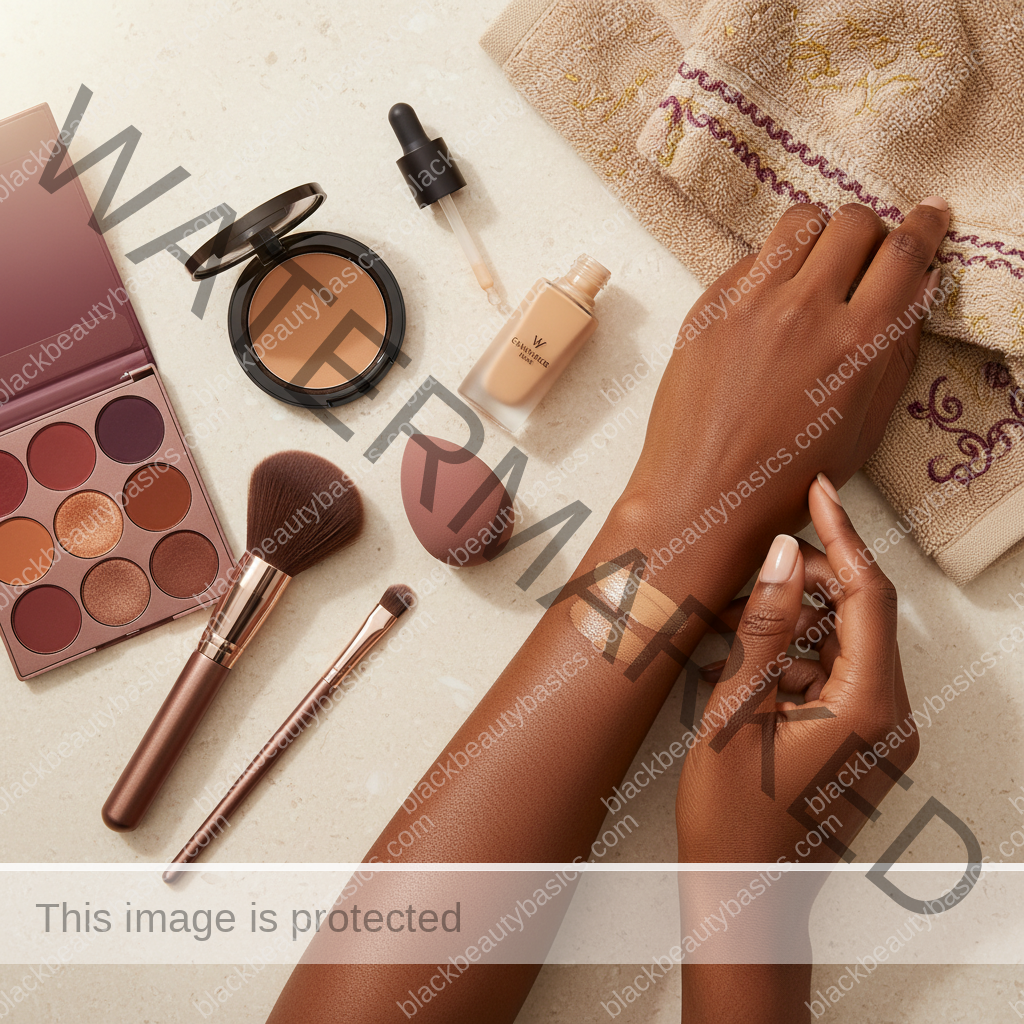
A perfectly matched foundation is the cornerstone, but achieving a truly flawless and harmonious look involves a few additional steps. These elements work in concert with your foundation to sculpt, brighten, and set your masterpiece.
Concealer: Your Strategic Ally
Concealer isn’t just for hiding blemishes; it’s a powerful tool for brightening and evening out specific areas. For deep skin, it’s crucial to select the right shade and undertone to avoid a stark, unnatural look.
- For Blemishes/Discoloration: Match your concealer as closely as possible to your foundation shade. If covering hyperpigmentation, a color corrector (e.g., orange or peach) applied underneath can neutralize the darkness before concealer.
- For Under-Eye Brightening: Choose a concealer 1-2 shades lighter than your foundation, with a warm (peach or golden) undertone to counteract any darkness or blueness. Avoid anything too light or cool, which can look ashy.
Apply sparingly and blend meticulously with a brush, sponge, or your finger. The goal is to brighten, not to create a reverse raccoon effect.
Shop Concealers on Amazon
Shop Color Correctors on Amazon
Setting Powder: The Final Touch
Setting powder locks your foundation in place, extends its wear, and can help control shine. For deep skin, the choice of powder is critical to avoid an ashy or ghostly finish.
- Translucent Powder: Opt for truly translucent powders that are finely milled and don’t leave a white cast. Many brands now offer “invisible” or “universal” powders specifically formulated not to alter the shade of deeper complexions.
- Tinted Powder: If you prefer a bit more coverage or want to ensure no ashy effect, choose a tinted setting powder that matches your foundation shade or is slightly warmer.
- Application: Apply powder sparingly, focusing on areas prone to oiliness (T-zone). A light dusting is often sufficient to set without looking heavy.
Shop Setting Powders on Amazon
Bronzer, Blush, and Highlight: Bringing Life Back to the Face
Once your base is perfected, these elements add dimension, warmth, and a healthy glow, preventing your face from looking flat.
- Bronzer: Choose a bronzer with warm, golden, or reddish-brown undertones (not orange or muddy gray) to add warmth and contour. Apply where the sun would naturally hit your face.
- Blush: Rich berry, deep plum, terracotta, or vibrant coral shades look stunning on deep skin. Apply to the apples of your cheeks for a flush of color.
- Highlighter: Gold, bronze, or copper highlighters beautifully complement deep skin tones, adding a luminous sheen to the high points of your face.
Shop Bronzers on Amazon
Shop Blushes on Amazon
Shop Highlighters on Amazon
Troubleshooting Common Shade Matching Challenges for Deep Skin
Even with the best intentions, challenges can arise. Here’s how to address some common pitfalls when shade matching foundation on deep skin.
Tip List: Overcoming Shade Matching Hurdles
- The “Ashy” Effect: This often happens when a foundation has too much gray or cool undertone for warm skin, or when a powder is too light. Re-evaluate your undertone and ensure your powder is truly translucent or a matching tint.
- The “Orange” Effect: This typically occurs when a foundation oxidizes to a warmer, more orange tone than intended, or when the undertone is too warm for a neutral or cool complexion. Wait for oxidation before deciding, and try a shade with a more neutral or slightly cooler undertone.
- Limited Shade Ranges: If a brand’s deepest shades still aren’t deep enough or lack the correct undertone, don’t settle. Explore brands known for their extensive deep shade offerings (e.g., Fenty Beauty, NARS, Pat McGrath Labs, Juvia’s Place, Estée Lauder).
- Different Complexion Areas: If your forehead is darker than your cheeks, or your neck is lighter than your face, prioritize matching your jawline and neck. You can use a slightly darker or lighter concealer/bronzer to balance other areas.
- Seasonal Skin Changes: Your skin tone can change with sun exposure. Have a slightly lighter and slightly darker foundation on hand, or a foundation mixer to adjust your shade as needed throughout the year.
- Artificial Lighting Deception: Always, always check your match in natural light. What looks perfect under fluorescent lights can be a disaster outside. If you can’t go outside, use your phone’s camera flash to see if there’s a white cast.
- Seeking Expert Help: Don’t hesitate to ask for assistance from a knowledgeable beauty advisor, especially one with experience matching deep skin tones. Be clear about your undertone and desired finish.
Shop Foundation Mixers on Amazon
FAQ: Your Most Pressing Questions Answered
Q1: Can I mix two foundation shades to create my perfect match?
Absolutely, mixing shades is a brilliant strategy, especially for deep skin tones that often fall between standard shades or require a custom undertone. Many professional makeup artists swear by this technique. You can mix a slightly lighter and a slightly darker shade, or even two shades with different undertones (e.g., a warm and a neutral) to create a bespoke match. Just ensure the formulas are compatible (e.g., both water-based or both oil-based) to prevent separation.
Q2: How do I know if a foundation is oxidizing on my skin?
Oxidation typically causes foundation to darken or turn slightly orange/reddish after it has been applied to the skin and exposed to air. To test for oxidation, apply a small swatch of the foundation to your jawline and wait 10-15 minutes. If the swatch darkens significantly or shifts to an undesirable color compared to when you first applied it, it’s likely oxidizing. Always allow foundation to settle before making a final decision.
Q3: Should my foundation match my face or my neck?
Ideally, your foundation should match both your face and your neck for a seamless, natural look. The jawline is the best place to test because it allows you to compare the foundation’s color against both areas simultaneously. If there’s a slight discrepancy between your face and neck, prioritize matching your neck to avoid a “floating head” effect, and you can always use bronzer or a touch of a darker foundation on your face’s perimeter to balance.
Q4: What if I have hyperpigmentation or uneven skin tone?
For hyperpigmentation, a color corrector is your best friend. For deep skin, an orange or peach-toned corrector applied sparingly to dark spots before foundation can neutralize the discoloration. Then, apply your perfectly matched foundation over it. For overall unevenness, a medium to full coverage foundation will help, but always ensure the shade matches your natural skin tone to avoid looking masked. Sometimes, different areas of your face might require slightly different shades or a targeted application of concealer.
Q5: Is it better to go lighter or darker if I’m in between shades?
When in doubt, it’s generally safer to go slightly lighter rather than darker, especially for deep skin tones. A foundation that is too dark can make your complexion look muddy or heavy. A slightly lighter foundation can often be seamlessly blended and warmed up with bronzer, blush, and contour. However, the ultimate goal is to find the shade that truly disappears into your skin, so continue searching if neither is quite right.
Q6: How important is a beauty advisor’s help?
A knowledgeable beauty advisor can be incredibly helpful, especially if they have experience matching deep skin tones. They can offer an objective perspective, suggest shades you might not have considered, and provide samples. However, always trust your own judgment and insist on testing shades on your jawline in natural light. Don’t feel pressured to purchase if you’re not 100% confident in the match.
Q7: What are some red flags that a foundation shade is wrong for me?
Several signs indicate a poor match: a visible line of demarcation at your jawline, your face looking significantly lighter or darker than your neck/chest, an ashy or gray cast, an overly orange or reddish hue, or your skin looking flat and one-dimensional. If you notice any of these, it’s time to re-evaluate your shade and undertone.
It’s a good practice to re-evaluate your foundation shade at least twice a year, typically with the changing seasons. Your skin tone can lighten in winter and deepen in summer due to sun exposure. Hormonal changes, lifestyle, and even new skincare routines can also subtly alter your complexion. Always check your match in natural light before committing to a new bottle.
Shop Foundation Samples on Amazon
Beloved, the journey to finding your perfect foundation match is an act of self-love, a celebration of your unique beauty. Armed with this knowledge, you are now equipped to navigate the beauty aisles with unwavering confidence, selecting shades that not only complement but truly elevate your magnificent melanin. Embrace the process, trust your instincts, and step into your radiance—because your flawless match is not just makeup, it’s a statement of exquisite self-expression.
How to make makeup choices fit your actual undertone and finish
For Black women and people with deep skin tones, makeup shopping can feel emotional because too many shade systems still treat deep complexions as an afterthought. This guide focuses on testing foundation in store on deep skin with lighting, undertone checks, dry-down time, jaw and chest comparisons, and oxidation awareness, while keeping the related BBB makeup cluster as the home base. The goal is not to make your skin easier for a brand to understand. The goal is to help you read color, finish, placement, and undertone with more confidence.
Start with what you can actually see. Does the product turn orange, red, gray, ashy, too yellow, too pink, too flat, or too icy? Does it look right in store but strange in daylight? Does it match your jaw but fight your chest? Those details matter more than a shade name that sounds flattering but does not behave well on your skin.
The strongest makeup strategy is usually the one that respects depth and dimension. Deep skin often needs warmth, balance, and enough pigment, but not every product needs to be dramatic. Sometimes the better choice is a more accurate undertone, a softer placement, a different powder tone, or a formula that dries down without changing the whole face.
What to notice gently
- Where the color shifts: face, jaw, chest, under-eye, cheek, or high points.
- Whether the undertone reads red, golden, neutral, olive, muted, orange, gray, or pink.
- How the product looks in daylight, indoor lighting, flash, and after dry-down.
- Whether the finish keeps depth and dimension or makes the face look flat.
- Which placements make the makeup feel polished without erasing your complexion.
What usually makes makeup for deep skin harder than it needs to be
The first challenge is shade language that sounds precise but is not precise enough. “Deep warm” might mean red in one brand, golden in another, orange in another, and olive in none. That is why the same person can wear one brand beautifully and look completely off in another.
The second challenge is testing makeup in conditions that hide the problem. Store lighting can soften ashiness, phone cameras can warm a shade, and wet swatches can look better than dry foundation. Deep skin deserves enough time, light, and comparison points to see what is really happening.
The third challenge is using products meant to correct a problem created by the wrong base. Too-light concealer, chalky highlight, orange bronzer, or flat powder can make the whole face feel off. Often the answer is not more product. It is better tone, placement, formula, or restraint.
What to do next
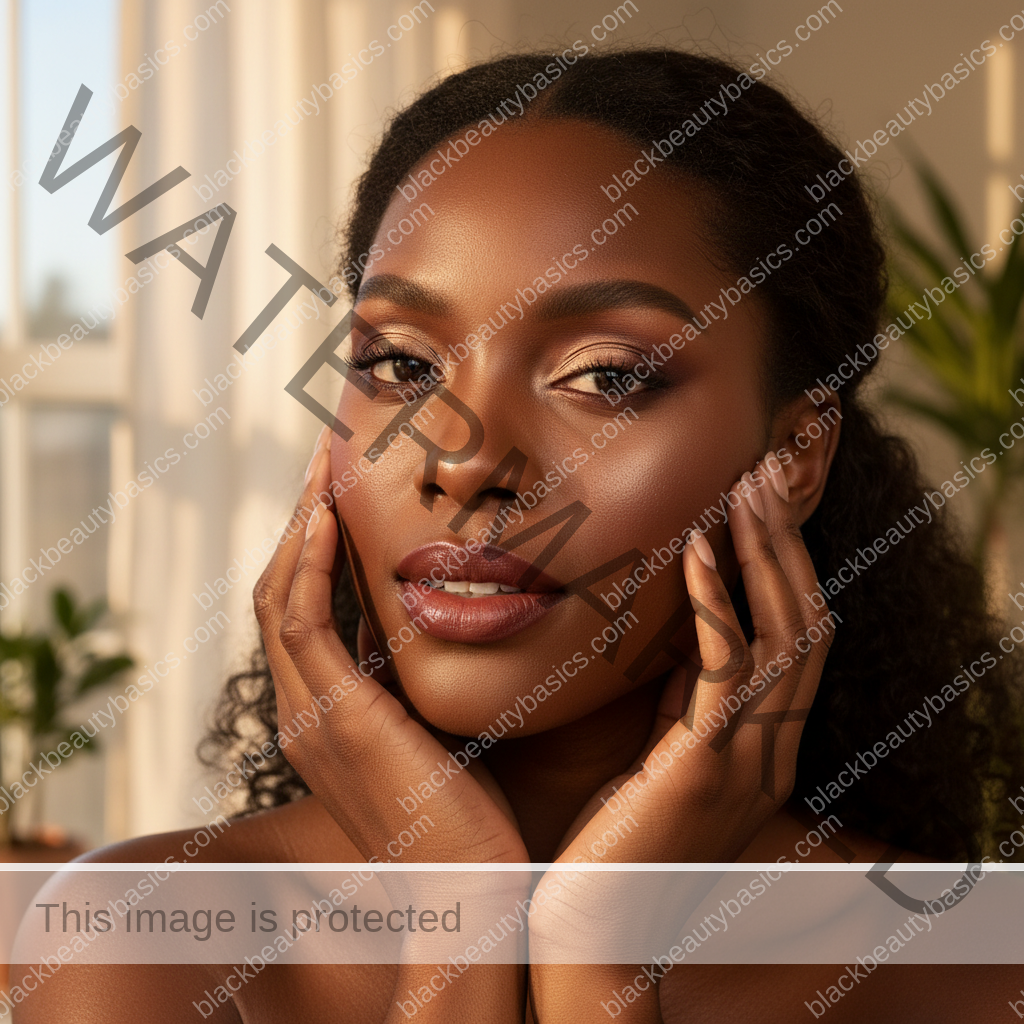
Keep this article connected to the Makeup for Deep Skin Tones system. Use the related guides below to decide whether your next step is better shade matching, a base makeup adjustment, or a color product strategy that keeps depth and dimension.
- Makeup for Deep Skin Tones
- The related makeup cluster guide
- shade matching systems and undertones
- undertone mistakes
- foundation oxidation on deep skin
- shade matching foundation online
Related next steps
Related posts:
 How to Shade-Match Foundation Online for Dark Skin
 Testing Shades in Store and Under Real-Life Lighting for Deep Skin Tones
 Decoding Brand Shade Systems for Deep Skin
 Olive Undertones on Deep Skin: Why Shade Matching Gets Tricky
 Fixing “Almost Right” Shades with Correctors and Mixers: Your Guide to a Perfect Match
 Best Foundations for Deep Skin: How to Choose Shade, Formula, and Finish