Bakuchiol is often introduced as “natural retinol,” which makes it sound like a simple swap: similar results, less irritation, no tradeoffs. The evidence is more modest than the marketing. Bakuchiol is not a retinoid, and the research behind it is much smaller than the research behind established retinoids. It may still be a reasonable ingredient to consider, especially when your goal is a measured, lower-pressure routine rather than the strongest possible active.
For Black women and people with richly melanated skin, irritation risk deserves real weight because inflammation can leave post-inflammatory hyperpigmentation behind. That does not mean every active is unsafe for dark skin. It means a product has to earn its place through tolerability, formulation, consistency, and realistic expectations, not through a “gentle” label alone.
This evidence review belongs to our Skincare for Black Women guide and the Skin Typing and Fundamentals for Melanin-Rich Skin hub. We will separate what bakuchiol is, what small clinical studies suggest, what has not been proven specifically for Black skin, and how to run a cautious trial if you still want to use it.
The answer is not that bakuchiol is useless or that it is equal to prescription care. It is an option with an early evidence base. Your decision should reflect your goal, tolerance, budget, current routine, and whether a dermatologist-guided treatment would better match the concern.

What Bakuchiol Is
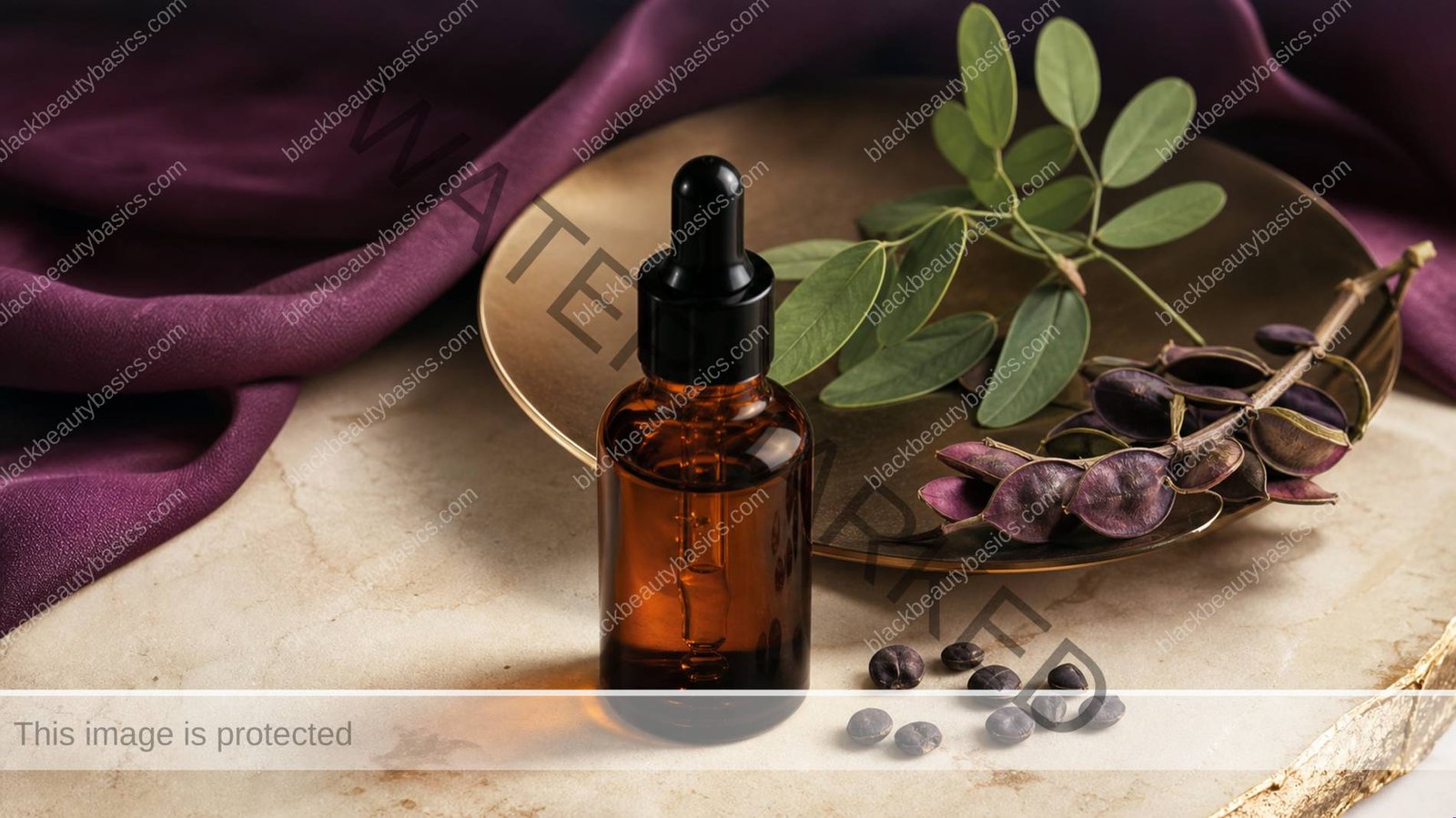
For generations, the pursuit of flawless, youthful skin has led us down many paths, often fraught with ingredients that, while effective, can be harsh on our delicate, melanin-rich complexions. Enter Bakuchiol, a star ingredient extracted from the Babchi plant (Psoralea corylifolia), revered in Ayurvedic and traditional Chinese medicine for its healing properties. This botanical wonder is gaining significant traction in the beauty world, not just for its efficacy but for its remarkable gentleness, making it particularly appealing for Black skin, which often requires a more nuanced approach to potent actives.
What Exactly is Bakuchiol?
Bakuchiol is a meroterpene phenol, a type of chemical compound found naturally in plants. Unlike synthetic retinoids, which are vitamin A derivatives, Bakuchiol is structurally different but functionally similar. It’s often hailed as a “retinoid-like” compound because it activates similar genetic pathways in the skin, stimulating collagen production and cell turnover, but without the common side effects associated with traditional retinols, such as irritation, redness, and increased sun sensitivity. This makes it an ideal choice for those with sensitive skin, or for those who have found retinols too aggressive in the past. Its natural origin also resonates deeply with a desire for clean, plant-based beauty solutions that honor both our skin and the earth.
How Bakuchiol Is Thought to Work
The beauty of Bakuchiol lies in its multifaceted approach to skin renewal. For melanin-rich skin, which is prone to specific concerns like hyperpigmentation and uneven tone, Bakuchiol offers a promising solution. Research indicates that Bakuchiol works by targeting key receptors in the skin that regulate collagen and elastin synthesis. By boosting these essential proteins, it helps to improve skin elasticity, reduce the appearance of fine lines and wrinkles, and promote a firmer, more supple complexion.
Furthermore, Bakuchiol possesses powerful antioxidant and anti-inflammatory properties. These attributes are crucial for Black skin, which can be more susceptible to post-inflammatory hyperpigmentation (PIH) from inflammation or irritation. By calming the skin and protecting it from environmental aggressors, Bakuchiol helps to prevent the very triggers that can lead to dark spots and uneven skin tone. Its ability to encourage healthy cell turnover also aids in fading existing hyperpigmentation, revealing a brighter, more uniform complexion over time. It’s a gentle whisper of renewal, rather than a harsh command, allowing our skin to flourish without distress.
What to Stop Assuming About Bakuchiol
Stop treating “plant-based” as a safety guarantee
Botanical origin does not prevent irritation or allergy. A finished serum also contains solvents, preservatives, fragrance components, oils, and other actives that influence how it feels. Patch testing still matters. If a formula burns, causes swelling, or creates a persistent rash, stop using it rather than assuming the reaction is part of a natural adjustment.
Stop treating bakuchiol as chemically identical to retinol
Bakuchiol is not vitamin A and does not belong to the retinoid family. Some studies examine similar appearance-related outcomes, but similar endpoints do not make two ingredients interchangeable. Retinoids have a much larger evidence base and may also have clearer clinical roles. Bakuchiol may be an alternative product choice, but calling it a one-for-one replacement overstates what is known.
Stop expecting a melanin-specific guarantee from general studies
A study that includes adults with photoaging or acne does not automatically answer every question for deeply melanated skin. Look at who was enrolled, how many people completed the study, what product and concentration were used, how long the trial lasted, and whether skin tone outcomes or post-inflammatory hyperpigmentation were measured. When those details are missing, the honest conclusion is uncertainty.
Stop adding it to a crowded active routine
If you already use a retinoid, exfoliating acids, benzoyl peroxide, or a strong vitamin C formula, adding bakuchiol makes the routine harder to interpret. “Gentle” does not mean it must be layered with everything. Add one variable at a time, keep your base routine stable, and protect the barrier so irritation does not become a new source of dark marks.
Bakuchiol vs. Retinoids: Similar Claims, Different Evidence
For years, retinol has been the undisputed champion of anti-aging skincare. Its ability to transform skin texture, reduce wrinkles, and combat acne is well-documented. However, the journey with retinol can be challenging, particularly for melanin-rich skin. The initial “retinization” period often involves redness, peeling, and increased sensitivity, which can exacerbate issues like post-inflammatory hyperpigmentation (PIH) in darker skin tones. This is where Bakuchiol steps in, offering a compelling alternative that delivers similar benefits with a significantly gentler touch.
Understanding the Differences and Similarities
While Bakuchiol and retinol share similar goals—promoting collagen production, accelerating cell turnover, and improving skin texture—their mechanisms of action and side effect profiles differ significantly. Retinol, a vitamin A derivative, directly binds to retinoic acid receptors in the skin, triggering a cascade of cellular responses. This direct action is potent but can also be irritating. Bakuchiol, on the other hand, works by activating similar gene expressions and pathways, but without directly binding to the same receptors, leading to less irritation.
For Black skin, this distinction is paramount. Our skin’s unique structure and higher melanin content mean we are more prone to irritation and, consequently, to PIH. A product that can deliver powerful results without triggering inflammation is invaluable. Bakuchiol offers that delicate balance, allowing us to pursue age-defying and skin-perfecting goals without the fear of exacerbating existing concerns or creating new ones.
Comparison Table: Bakuchiol vs. Retinol for Melanin-Rich Skin
Let’s break down the key differences and similarities to help you make an informed choice for your skincare ritual:
| Feature | Bakuchiol | Retinol (Traditional) |
|---|---|---|
| Origin | Plant-derived (Babchi plant) | Vitamin A derivative (synthetic or animal-derived) |
| Mechanism | Activates similar gene pathways to retinoids, stimulates collagen & cell turnover. | Directly binds to retinoic acid receptors, triggering cellular changes. |
| Irritation Potential | Low; generally well-tolerated, even by sensitive skin. | High; common side effects include redness, peeling, dryness, irritation. |
| Sun Sensitivity | Does not increase sun sensitivity; can even offer photoprotection. | Increases sun sensitivity; requires strict SPF adherence. |
| Hyperpigmentation Risk (PIH) | Low; anti-inflammatory properties help prevent PIH. | Higher; irritation can trigger PIH in melanin-rich skin. |
| Pregnancy/Breastfeeding | Generally considered safe, but always consult a doctor. | Generally not recommended due to potential risks. |
| Antioxidant Properties | Strong antioxidant, protects against free radical damage. | Some antioxidant properties, but less pronounced than Bakuchiol. |
| Speed of Results | Gradual, consistent improvement over weeks/months. | Can show faster initial results, but often with adjustment period. |
| Best For | Sensitive skin, those prone to PIH, pregnant/nursing (with doctor’s approval), daily use. | Resilient skin, severe acne, advanced anti-aging (with careful introduction). |
How to Read the Bakuchiol Evidence Without the Hype
The evidence base is promising but still small
A verified systematic review of bakuchiol applications in dermatology found a growing body of research across several concerns, while also showing how limited the literature remains compared with long-established retinoids. Small trials can identify a signal worth studying. They cannot establish that every retail formula will perform the same way, that results are guaranteed, or that the ingredient has been tested equally across all skin tones and conditions.
Finished formulas matter
Research findings belong to the formula, concentration, schedule, population, and outcome measures that were actually studied. A serum sold online may combine bakuchiol with retinoids, exfoliating acids, fragrance, or oils. If the product performs well, bakuchiol may not be the only reason. If it irritates, bakuchiol may not be the only cause. Read the entire ingredient list and avoid crediting a single marketing ingredient for everything the formula does.
Appearance claims are not the same as treatment claims
Fine lines, texture, breakouts, and discoloration are different outcomes. A change in one does not prove a change in the others. For post-inflammatory hyperpigmentation, preventing new inflammation remains essential. For active acne or a diagnosed condition, a dermatologist may recommend treatments with stronger evidence. Bakuchiol can be discussed as a cosmetic active without turning it into a universal medical substitute.
Comparison with retinol needs context
When a trial compares bakuchiol with retinol, look beyond the headline. Consider sample size, duration, adherence, side effects, and whether the products were truly comparable in vehicle and use. A finding of similar change on one scale does not erase the broader difference in research depth. It also does not tell you which product your skin will tolerate. The practical takeaway is that bakuchiol may be worth a cautious trial for some people, not that the evidence question is settled.
Black skin deserves direct study, not confident extrapolation
Melanin-rich skin is often underrepresented or poorly described in cosmetic research. That matters because visible redness may be harder to assess, pigment changes can follow irritation, and cultural product use can affect adherence. Until studies report those details consistently, BBB’s position stays measured: promising, potentially useful, but not proven superior or specifically optimized for Black skin.
What the Evidence Actually Supports
The scientific community has increasingly turned its attention to Bakuchiol, and the findings are particularly encouraging for those with melanin-rich skin. Clinical studies have demonstrated Bakuchiol’s efficacy in addressing key concerns without the typical drawbacks of retinoids.
What Clinical Research Has Studied
One pivotal study published in the British Journal of Dermatology directly compared Bakuchiol with retinol. Participants using Bakuchiol twice daily for 12 weeks showed significant improvements in wrinkles and hyperpigmentation, comparable to those using retinol, but with significantly less scaling and stinging. This is a monumental finding for Black skin, as it suggests we can achieve similar transformative results without enduring the irritation that often leads to post-inflammatory hyperpigmentation.
Further research has highlighted Bakuchiol’s ability to inhibit melanin synthesis, making it a promising ingredient for tackling hyperpigmentation and uneven skin tone, which are common concerns for Black women. Its anti-inflammatory action also plays a critical role in preventing the triggers that lead to dark spots, creating a virtuous cycle of skin health and clarity. This dual action—correcting existing discoloration and preventing future ones—positions Bakuchiol as a powerful ally in achieving a luminous, even complexion.
What We Know for Melanin-Rich Skin
Hyperpigmentation and Dark Spots
For Black skin, hyperpigmentation, whether from acne, sun exposure, or inflammation, is a pervasive concern. Bakuchiol’s ability to promote cell turnover gently helps to shed pigmented cells, while its anti-inflammatory properties calm the skin, preventing new dark spots from forming. This makes it an excellent choice for maintaining an even, radiant skin tone. It’s a testament to its gentle power, working in harmony with our skin’s natural rhythms.
Fine Lines and Wrinkles
While Black skin often shows signs of aging later than lighter skin tones, fine lines and wrinkles are an inevitable part of life’s journey. Bakuchiol stimulates collagen and elastin production, plumping the skin from within and reducing the appearance of these lines, leading to a smoother, more youthful appearance. It’s about celebrating the wisdom of our years while maintaining the vitality of our skin.
Sensitivity and Irritation
Many Black women experience skin sensitivity, and harsh ingredients can often do more harm than good. Bakuchiol’s gentle nature makes it a perfect fit, offering potent benefits without compromising the skin’s barrier or causing discomfort. This allows for consistent use, which is key to seeing lasting results.
A Four-Week Tolerance-First Trial
Week 0: Stabilize the base routine
Use a gentle cleanser, moisturizer, and sunscreen that already feel comfortable. Do not start bakuchiol while your face is burning, peeling, or reacting to another new product. If dryness keeps changing despite a simple routine, consider other triggers such as climate or hard-water mineral buildup and dryness.
Week 1: Patch test and use once
Test the complete product on a small, appropriate area according to label guidance. If there is no delayed reaction, use a small amount on one evening. Keep the rest of the routine plain. Do not apply extra because the texture feels light.
Weeks 2 and 3: Increase only if comfortable
Move to two or three nights per week if your skin remains calm. Watch for itching, persistent stinging, clustered bumps, scaling, or darker irritated patches. Comfortable skin is the gate for increasing frequency. If the product causes a problem, reducing frequency is reasonable; continuing through worsening irritation is not.
Week 4: Decide whether the routine is sustainable
Four weeks is usually too early to make a final judgment about every appearance goal, but it is long enough to assess basic fit. Is the product easy to layer? Does it cause discomfort? Can you afford to replace it? Are you using sunscreen consistently? If another evidence-aware ingredient category better fits your goal, compare peptide serums for Black women over 35 or review snail mucin benefits and limits without stacking all three.
How to Trial Bakuchiol Cautiously
Embracing Bakuchiol into your daily regimen is a straightforward process, designed to enhance your skin’s natural radiance. Its versatility means it can be seamlessly integrated into various steps of your existing routine, offering flexibility and powerful results.
How to Read a Bakuchiol Formula
When selecting Bakuchiol products, look for formulations that prioritize purity and efficacy. Serums and moisturizers are common forms, often combined with other beneficial ingredients like hyaluronic acid for hydration, or niacinamide for barrier support. Pay attention to the concentration of Bakuchiol, typically ranging from 0.5% to 2%, with 1% being a common and effective concentration in many reputable products. Always opt for brands that are transparent about their ingredient sourcing and testing, especially when catering to sensitive skin types.
A Simple Step-by-Step Trial
Integrating Bakuchiol into your routine is simple. Here’s a suggested order for optimal absorption and benefits:
- Cleanse: Start with a gentle, hydrating cleanser to remove impurities without stripping your skin.
- Tone (Optional): If you use a toner, apply it now to balance your skin’s pH.
- Bakuchiol Serum: Apply a few drops of your Bakuchiol serum to your face and neck. Gently pat it into your skin until absorbed. If you are using a Bakuchiol-infused moisturizer, this step might be combined.
- Eye Cream: Follow with an eye cream, if desired. Many Bakuchiol eye creams are available.
- Moisturize: Seal everything in with a nourishing moisturizer.
- SPF (Morning): In the morning, always finish with a broad-spectrum SPF of 30 or higher. While Bakuchiol doesn’t increase sun sensitivity, sun protection is non-negotiable for preventing hyperpigmentation and premature aging, especially for melanin-rich skin.
How to Protect Tolerance
To truly unlock the full potential of Bakuchiol for your radiant skin, consider these expert tips:
- Consistency is Key: Like all good things in skincare, Bakuchiol requires consistent use to show results. Aim for daily application, morning and/or night, as per product instructions.
- Patch Test: Although generally gentle, always perform a patch test on a small area of skin before applying a new product to your entire face, especially if you have very sensitive skin.
- Listen to Your Skin: While Bakuchiol is known for its gentleness, every individual’s skin is unique. If you experience any irritation, reduce frequency or consult with a dermatologist.
- Combine with Hydrating Ingredients: Bakuchiol pairs beautifully with humectants like hyaluronic acid and emollients like ceramides, which help to maintain skin barrier health and hydration.
- Sun Protection: Reiterate the importance of daily SPF. It’s the ultimate protector against hyperpigmentation and environmental damage, ensuring your Bakuchiol efforts are not undermined.
- Patience and Persistence: Visible results typically appear after 6-12 weeks of consistent use. Embrace the journey and trust the process.
Troubleshooting and When to Ask for Help
If you are irritated
Stop the product and return to your basic routine. Do not immediately replace it with another active. If symptoms are mild, wait for comfort to return before deciding whether to retry less often. Swelling, hives, blistering, significant pain, or eye involvement need prompt medical attention.
If nothing is changing
Confirm the product has been used consistently and long enough for the specific outcome you are tracking. Take photos in comparable lighting and track new breakouts or irritation, not only old marks. If the concern is persistent acne, melasma, rapidly changing pigment, or another condition, professional evaluation is more useful than endlessly switching cosmetic serums.
If pregnancy or breastfeeding changes the decision
Bakuchiol is often marketed as a pregnancy-friendly retinol alternative, but marketing language is not individualized medical guidance. Product formulas vary and pregnancy safety data may be limited. Ask your obstetric clinician or dermatologist to review the exact product and your routine before relying on a broad claim.
Frequently Asked Questions
Q1: Is Bakuchiol safe for all skin types, especially sensitive and acne-prone Black skin?
A1: Yes, Bakuchiol is generally considered safe and well-tolerated by all skin types, including sensitive and acne-prone Black skin. Its gentle nature and anti-inflammatory properties make it an excellent choice for those who find traditional retinoids too irritating. It helps to calm the skin while still providing powerful anti-aging and skin-renewing benefits.
Q2: How long does it take to see results from using Bakuchiol?
A2: While individual results may vary, most users report seeing noticeable improvements in skin texture, tone, and the appearance of fine lines within 6 to 12 weeks of consistent, daily use. Patience and consistency are key to unlocking Bakuchiol’s full potential.
Q3: Can Bakuchiol be used during pregnancy or breastfeeding?
A3: Bakuchiol is often marketed as a pregnancy-safe alternative to retinoids. While current research suggests it is generally safe, it is always crucial to consult with your doctor or a qualified healthcare provider before introducing any new skincare ingredients during pregnancy or breastfeeding. They can provide personalized advice based on your specific health circumstances.
Q4: Can I use Bakuchiol with other active ingredients like Vitamin C or AHAs/BHAs?
A4: Yes, one of the advantages of Bakuchiol is its compatibility with other active ingredients. Unlike retinol, which can sometimes be tricky to layer, Bakuchiol can generally be used alongside Vitamin C, hyaluronic acid, and even AHAs/BHAs. However, if you have very sensitive skin, it’s always wise to introduce new combinations gradually and observe how your skin reacts. Consider using Bakuchiol in the evening and Vitamin C in the morning, or alternating nights for AHAs/BHAs.
Q5: Does Bakuchiol make your skin more sensitive to the sun?
A5: No, Bakuchiol does not increase sun sensitivity, which is a significant advantage over traditional retinoids. In fact, some studies suggest it may even offer some photoprotective benefits. Nevertheless, daily application of a broad-spectrum sunscreen with SPF 30 or higher is always recommended, especially for melanin-rich skin, to protect against UV damage and prevent hyperpigmentation.
Q6: Is Bakuchiol effective for treating acne in Black skin?
A6: Bakuchiol’s anti-inflammatory and antioxidant properties, combined with its ability to promote healthy cell turnover, make it beneficial for acne-prone skin. It can help reduce inflammation associated with breakouts and prevent clogged pores, which can contribute to acne. While not a primary acne treatment like salicylic acid or benzoyl peroxide, it can be a valuable supportive ingredient in an acne-fighting regimen, particularly for preventing post-inflammatory hyperpigmentation.
Q7: Are there any side effects of using Bakuchiol?
A8: Bakuchiol is renowned for its excellent tolerability profile. Side effects are rare but can occasionally include mild redness or dryness, especially when first introduced. These reactions are typically much milder and less frequent than those associated with retinol. If you experience persistent irritation, discontinue use and consult a dermatologist.

What to Do Next
If you want to try bakuchiol, begin with one clearly labeled formula and a stable routine. Patch test, start slowly, and measure comfort before chasing visible change. If your concern is medical or persistent, bring the product and your goals to a qualified professional.
For a different evidence-focused path, read about peptide serums for Black women over 35. If dryness is confusing the trial, review hard water and melanin-rich skin. If you are comparing trendy hydrators, use the snail mucin decision guide.
As we conclude our exploration of Bakuchiol, it’s clear that this botanical gem offers a truly empowering pathway to radiant, resilient skin for Black women. It’s a testament to nature’s profound wisdom, providing a gentle yet potent solution for concerns ranging from hyperpigmentation to fine lines, all while honoring the unique needs of melanin-rich complexions. Embrace Bakuchiol as a cherished ally in your skincare ritual, and watch as your skin blossoms with a renewed vibrancy, reflecting the timeless beauty that is inherently yours.
Related next steps
Related posts:
 Collagen, Biotin, and Hair Vitamins for Black Women: What Science Actually Says
 Skin Type vs. Skin Condition on Melanin-Rich Skin: Unlocking Your Skin’s True Needs
 Sensitivity and Stinging on Dark Skin: Understanding Your Skin’s Early Warning Signs
 How to Layer Actives Safely on Melanin-Rich Skin
 Signs of a Damaged Skin Barrier on Melanin-Rich Skin: A Guide for Black Women
 Ceramide Barrier Repair for Black Women: Why Your Skin Keeps Drying Out