
When nearly every cleanser, moisturizer, sunscreen, or “gentle” serum stings, skincare can start to feel less like care and more like a negotiation. You may be tired of buying products that promised calm and delivered heat. You may be looking at your face in the mirror and wondering whether you are overreacting, doing too much, or somehow failing at a routine that seems easy for everyone else.
You are not failing. Burning is information. It does not automatically tell you exactly what is happening, and it is not a reason to shame your skin, your texture, or the choices you made while trying to help yourself. Richly melanated skin can show irritation in ways that are easy to dismiss: warmth, tightness, ashiness, rough patches, itching, tenderness, deeper-looking marks after a breakout, or a face that seems suddenly reactive to everything. This guide sits within our Skincare for Black Women resource because a calm routine should make room for your actual skin, not force your skin to perform for a trend.
For now, the goal is not glow, glass skin, flawless texture, or a ten-step recovery ritual. The goal is quiet. That means reducing variables, protecting comfort, and paying attention without constantly testing your skin’s limits. A simple routine can give you useful information over time. It can also create breathing room if you are carrying routine fatigue, product guilt, or pressure to fix every mark at once.
Start by treating burning as a signal to simplify
A burning sensation can happen for many reasons. Your skin may be dry, over-cleansed, irritated by a product, reacting to friction, or feeling the combined effect of several new steps. It may also be dealing with something that needs professional evaluation. You do not need to identify the exact reason before you make your routine gentler. You only need to notice that your skin is asking for less.
There is no single “Black skin barrier” experience. Research on skin barrier differences across racial and ethnic groups is limited by inconsistent definitions, methods, and study populations. Race, ethnicity, skin tone, pigmentation, and phototype are not interchangeable categories. What is useful here is more personal: your skin’s current response matters. If a product burns on your face, that response deserves attention whether or not someone online says the formula is supposed to be mild.
Try separating discomfort from normal adjustment language. A product may feel briefly cool because of evaporation. Sunscreen may have a mild moment around the eyes if it migrates with sweat. But persistent stinging, repeated warmth, itching, tenderness, obvious redness, swelling, cracking, or a worsening rash are not experiences you need to push through in the name of “purging” or getting used to a product.
In richly melanated skin, irritation does not always appear as bright pink or red. It can look deeper brown, purple-brown, grayish, dull, or uneven. It can also show up as patches that feel rougher than they look. Pay attention to sensation as much as appearance. A face that looks mostly normal but feels hot, taut, itchy, or sore still needs a gentler approach.
Think of your routine as a set of inputs: cleansing, water temperature, washcloths, shaving or hair removal, makeup removal, acne treatments, exfoliants, fragrance, hair products touching the face, sunscreen, and even how often you rub your skin with a towel. When everything burns, the answer is often not a more complicated product. It is fewer inputs at once.

What to pause while your skin needs quiet
A pause is not giving up on skincare. It is a deliberate way to remove confusion. If you are using several treatment products, stopping them temporarily can make it easier to tell what your skin can tolerate. You can revisit goals like acne, dark marks, texture, or uneven tone later. First, make comfort the priority.
Pause strong or optional treatment steps
Consider pausing exfoliating acids, scrubs, peel pads, retinoids, benzoyl peroxide, strong vitamin C formulas, spot treatments, acne washes, masks, clay treatments, and products marketed for resurfacing or brightening. Even a product you used without trouble in the past may feel like too much when your skin is already irritated. This is not a judgment about those ingredients. It is a recognition that timing and frequency matter.
Also pause the habit of adding a new product every few days. A skin emergency is not the best time for a haul, a challenge, or a shelf reset involving six unfamiliar formulas. If you need to replace an essential product, bring in one basic option at a time and use it consistently before deciding whether it belongs in your routine.
Reduce friction, heat, and “extra clean” habits
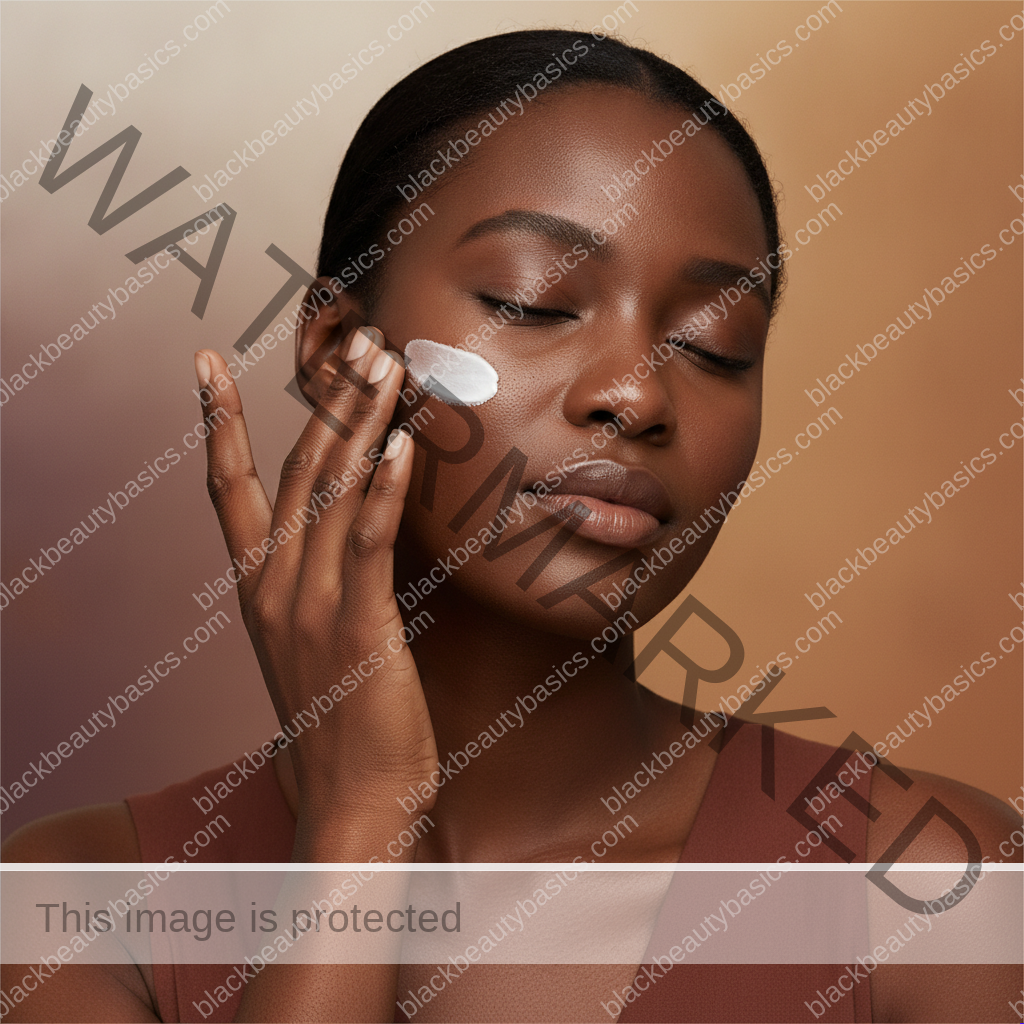
Skip cleansing brushes, textured pads, facial sponges, rough towels, abrasive washcloths, and vigorous massage. Do not scrub flakes away. Flaking can be tempting to polish off, especially when makeup is not sitting well, but friction can leave skin feeling more reactive and may contribute to lingering uneven-looking marks after irritation.
Use lukewarm rather than hot water. Keep showers and face washing brief. If your face feels tight after cleansing, do not respond by washing again. Clean skin is not supposed to feel squeaky, stripped, or stiff. Mild cleansing matters, but “low pH” on a label is not a complete measure of how gentle a cleanser will feel on your particular skin.
Watch for less obvious sources of contact. Hair oils, edge products, fragrance mists, beard products from a partner, makeup wipes, pillowcase detergent, and masks or scarves that rub the same area can all complicate the picture. You do not need to eliminate every possible trigger at once. Start with the products that touch your face most often and the steps that reliably sting.
Do not confuse endurance with skincare success
There is a common beauty message that discomfort means a product is active, effective, or working deeply. That message can be especially harmful when you already feel pressure to correct darkness, acne marks, pores, or texture. Skin does not need to hurt to deserve care. You do not earn results by tolerating pain.
If a product burns during use, rinse it off with lukewarm water rather than trying to wait it out. If burning continues, if there is swelling, or if your skin feels significantly worse afterward, stop using it. Save the packaging or take a clear photo of the ingredient list if you may need to discuss the reaction with a clinician later.
Build a gentle decision plan, not a perfect routine
When your face is reactive, a useful routine is intentionally boring. The baseline is usually simple: cleanse only as needed, moisturize, and use sun protection when you will be exposed to daylight. This approach aligns with common dermatology guidance around gentle cleansing and moisturizing, while leaving room for your own tolerance and environment.
Step one: choose the least irritating cleansing approach you can maintain
If you wake up without heavy sweat, makeup, or residue, you may be able to rinse with lukewarm water in the morning rather than fully cleanse. If water itself feels uncomfortable, keep the rinse brief and gently pat dry. At night, use a mild cleanser if you wore sunscreen, makeup, or have a day’s worth of oil and debris to remove.
Look for a cleanser that is fragrance-free, does not contain exfoliating acids or acne medication while your skin is burning, and rinses without leaving a squeaky feeling. A creamy, lotion-like, gel-cream, or mild foaming texture may work; texture alone does not guarantee gentleness. Avoid choosing based only on “for sensitive skin” claims. Your experience after rinsing matters more than the front label.
Once you understand those criteria, you can browse gentle fragrance-free face cleansers as optional product types to compare. Check the full ingredient list, introduce only one new cleanser at a time, and stop if it causes repeat burning. A cleanser does not have to be expensive, medicated, or heavily scented to do its job.
Step two: moisturize on slightly damp skin
After cleansing or rinsing, pat rather than rub. Leave your skin slightly damp, then apply a modest layer of moisturizer. Moisturizers can contain humectants that help hold water, emollients that soften the feel of skin, and occlusive ingredients that help reduce water loss. There is no universally best ingredient or ideal ratio for everyone, especially when your skin is reactive.
For now, look for a plain moisturizer without fragrance, exfoliating acids, retinoids, or a long list of botanical extracts. A lotion may suit skin that feels comfortable with lighter layers. A cream may be more helpful if your skin feels dry, rough, or tight. If your face feels coated, itchy, or warm after a rich product, that formula may not be the quiet option for you, even if it works beautifully for someone else.
Optional shopping can come after the criteria, not before them. If you need a replacement, compare fragrance-free moisturizers for sensitive skin and choose one uncomplicated formula rather than several new “repair” products. Patch testing can be useful, but it does not guarantee that a product will feel comfortable across your whole face.
Step three: keep sunscreen practical and tolerable
If your skin tolerates sunscreen, keep wearing one when you will be outside. Sun exposure can make existing uneven tone more noticeable, and protecting your skin can be part of a gentle routine. But do not force a formula that burns, especially around the eyes or on irritated areas. Try to identify whether the problem is the sunscreen itself, fragrance, a previous layer underneath, rubbing during application, or removal at night.
Choose the most tolerable sunscreen you can find and apply it with a light hand rather than aggressively massaging it into tender skin. Deep or rich skin tones deserve options that do not leave a distracting cast, but comfort comes first. If you are testing a new formula, test it on a small area during a calm period rather than on the morning of an important event.
Step four: hold the baseline long enough to observe
Do not rush to add an active because one calm day makes you nervous that you are “doing nothing.” The baseline routine is doing something: it is reducing exposure and helping you notice patterns. Keep a short note on your phone if that feels useful. Record what you used, where you felt burning, whether there was itching or tightness, and whether makeup, sweat, weather, or hair products were involved.
If you want an even more stripped-back approach, our guide to a no-actives routine for melanin-rich sensitive skin can help you decide what “basic” actually looks like without turning simplicity into deprivation. You are not required to stay minimal forever. You are giving your skin fewer things to manage right now.
Adjust the basics for the situation in front of you
“Everything burns” can describe several different experiences. The best adjustment depends on when the burning happens, where it happens, and what else your skin is doing. You do not need a diagnosis to make a thoughtful change.
If cleanser burns or your face feels tight after washing
First, reduce the intensity of cleansing. Use less product, less water heat, shorter contact time, and no tools. Avoid washing twice in the morning if your skin is already dry or reactive. If you wear makeup or a water-resistant sunscreen, you may still need a thorough evening cleanse, but thorough does not mean harsh. Use your fingertips and rinse gently.
If tightness is your recurring issue, read our guide to choosing a gentle cleanser when dark skin feels tight after washing. It can help you distinguish between wanting a cleaner-feeling finish and needing a cleanser that leaves your face comfortable enough to moisturize without urgency.
If moisturizer burns, but you know your skin feels dry
Keep the formula plain and the application gentle. Try applying a small amount to slightly damp skin instead of rubbing a thick layer onto completely dry, irritated areas. If every moisturizer you own stings, stop rotating through all of them in one night. Pick the least uncomfortable option, use a small amount if it does not worsen your symptoms, and consider professional guidance if even bland products are not tolerable.
Sometimes people add facial oils, multiple hydrating serums, or heavy balm layers because their skin feels dry. More layers are not automatically more soothing. Too many steps make it harder to know what is causing trouble. If your face is dry in some areas and oily in others, a targeted approach may help once things settle. Our advice on layering moisturizer for dry patches and oily zones offers a more measured way to adjust placement without treating oiliness as a failure.

If only one area burns
Location can offer clues. Burning around the eyes may be related to product migration, lash adhesive, eye makeup removal, fragrance, or rubbing. Burning around the mouth may happen after toothpaste, lip products, shaving, or treatment products placed too close to the lips. Burning along the hairline or temples may be connected to hair styling products, headwear, sweat, or hair removal.
Do not assume you need to discard every product immediately. Instead, keep your baseline simple and avoid applying questionable products directly to the affected area. Change one contact point at a time. For example, keep your cleanser and moisturizer the same for several days while changing only the hair product that touches your temples.
If burning came after acne or dark-mark treatments
Pause the treatment before trying to correct the irritation with another active. It can be frustrating to step back when acne or post-breakout marks are already affecting how you feel. Still, irritated skin is not an ideal place to chase faster fading. Repeated inflammation can make discoloration look more persistent or uneven on melanated skin.
When your skin is calm enough to consider exfoliation again, do not return to your previous schedule automatically. Our guide on how to reintroduce exfoliation after overdoing acids can help you create a slower re-entry plan. The point is not to fear all actives. It is to use them in a way that respects your skin’s feedback.
If weather, water, or travel seems to change everything
Cold air, indoor heating, dry climates, long flights, pool water, sweat, and travel routines can all change how products feel. Hard water is sometimes discussed in relation to eczema and skin barrier function, but the evidence does not support assuming that hard water is the answer for every reactive face. Focus first on changes you can easily control: shorten cleansing, use lukewarm water, moisturize promptly, and reduce unnecessary treatments.
A routine that works in humid weather may need fewer cleansing steps and more protective moisture in drier weather. That is not inconsistency. It is normal adaptation. Your skincare does not need to be identical every month to be stable.
Troubleshoot carefully and know when to seek care
When skin is uncomfortable, it is easy to start testing products repeatedly: one on Monday, another on Tuesday, a mask on Wednesday, then a stronger treatment because nothing seems to work. That cycle can keep irritation going. A calmer troubleshooting process is slower, but it gives you better information.
Use a one-change rule
Once you have a short baseline, change only one meaningful variable at a time. That might be your cleanser, a sunscreen, an acne treatment, or a hair product touching your face. Keep the rest of your routine steady while you observe. If you change five things at once, you may feel busy, but you will not know what helped or hurt.
When trying a new product, test a small amount on a limited area first, following the brand’s directions. Avoid testing on already cracked, raw, or intensely inflamed skin. A patch test can reveal an immediate problem for some people, but it cannot promise a full-face product will work for you. Stop if you notice burning, itching, swelling, or a rash.
Be cautious with DIY fixes
Skip lemon juice, baking soda, toothpaste, undiluted essential oils, rough sugar scrubs, alcohol-heavy astringents, and any social-media “detox” that makes your skin feel punished. Food-based and household remedies can be irritating, especially when your skin is already vulnerable. A tingling feeling is not proof of benefit.
Be equally wary of trying to lighten irritation away. Do not layer brightening products onto a burning area because you are worried about a dark mark. Your skin tone is not the emergency. The discomfort is the information. Protecting a calm surface is often more useful than escalating treatment during a reactive moment.
Get medical advice when symptoms are significant or persistent
Seek urgent medical help for trouble breathing, swelling of the lips, tongue, or face, widespread hives, blistering, severe pain, or a rapidly spreading reaction. Contact a dermatologist or another qualified clinician promptly if burning is persistent, recurrent, severe, associated with oozing or crusting, involves the eyes, or does not improve after stopping likely irritants and simplifying your routine.
A clinician can assess concerns that a skincare guide cannot: allergic reactions, inflammatory conditions, infection, medication effects, and other causes of facial discomfort. If you can, bring your products or photos of their ingredient lists and note when the symptoms began. You deserve care that takes your symptoms seriously and understands that inflammation can present differently across skin tones.
For a broader framework on reducing overload while supporting comfort, visit our barrier repair and moisture balance guide. Use it as a support for thoughtful routine choices, not as a substitute for medical care when your skin is in distress.
What to Do Next
Tonight, choose the smallest routine that feels realistic: a gentle cleanse if you need one, a plain moisturizer if you tolerate it, and no treatment products. Put the exfoliants, masks, scrubs, and spot treatments out of immediate reach so you are not tempted to negotiate with your skin in the bathroom mirror.
Over the next several days, stay with that baseline rather than searching for a dramatic rescue. Notice whether discomfort appears during cleansing, after moisturizing, in a particular area, or after contact with hair, makeup, sweat, or fragrance. Those details are more useful than trying to judge your skin by perfection.
If your face begins to feel steadier, keep protecting that progress. If it remains painful, hot, swollen, itchy, cracked, or increasingly reactive, make an appointment with a qualified clinician. The next right step may be less product, more time, or professional care. All three are valid forms of taking your skin seriously.
Frequently Asked Questions
Should I stop all skincare if everything burns?
Not always, but reducing your routine to essentials can be helpful. If you can tolerate them, keep a gentle cleansing method, a plain moisturizer, and sunscreen for daytime exposure. Pause optional treatment products such as exfoliants, retinoids, acne treatments, masks, and strong brightening formulas. If even water, moisturizer, or sunscreen causes significant burning, do not keep forcing products onto your skin. Stop likely irritants and seek professional advice, especially if symptoms are severe, worsening, or paired with swelling, rash, cracking, or eye involvement.
Why does my skin burn even with products labeled for sensitive skin?
“Sensitive skin” is a marketing label, not a guarantee that every formula will be comfortable for every person. A product may still contain ingredients, textures, or combinations that your skin dislikes right now. It may also be fine in isolation but uncomfortable when layered with other products, applied after hot water, used on irritated skin, or rubbed in too vigorously. Focus on your response rather than the label. Stop products that repeatedly sting, simplify your routine, and introduce replacements one at a time.
Can I use petroleum jelly when my face feels irritated?
Some people find a thin layer of an uncomplicated occlusive product helpful over moisturizer on dry, non-acne-prone areas, especially when skin feels tight from dryness. Others find heavier layers uncomfortable or too occlusive for their preferences. Keep it simple: use a small amount, avoid layering it over irritating treatment products, and do not use it as a reason to ignore ongoing burning. If your skin is weeping, severely inflamed, infected-looking, or reacting to nearly everything, seek medical guidance instead of experimenting with more layers.
Is burning after vitamin C, retinol, or acids normal?
Burning is not something you need to accept as the price of effective skincare. These ingredients can be useful for some people, but they can also be irritating depending on formula, strength, frequency, placement, and the condition of your skin. Pause the product if it burns. Do not stack it with other strong treatments in an attempt to get quicker results. Once your skin is comfortable again, you can decide whether to reintroduce one treatment slowly, use it less often, choose another formula, or leave it out entirely.
How can I tell whether my sunscreen is irritating me?
Look for a consistent pattern. Does stinging happen shortly after sunscreen application, especially around the eyes, cheeks, or areas with dry patches? Does it occur with one formula but not another? Also consider what is underneath it, whether you are rubbing it in aggressively, and whether sweat causes it to migrate. Pause a sunscreen that repeatedly burns and avoid applying it to visibly irritated skin if it worsens discomfort. If you test a replacement, try one new formula at a time rather than changing your whole routine.
Will simplifying my routine make my dark marks worse?
Taking a break from active treatments does not mean you are abandoning your concerns. In fact, repeatedly irritating your skin can make uneven-looking marks more noticeable or harder to manage. A calm baseline may help you avoid adding more inflammation while you decide what your skin can tolerate. If you can comfortably wear sunscreen outdoors, that is a practical protective step. Return to dark-mark treatments only when your skin feels stable enough, and consider a dermatologist if marks or acne are affecting your well-being.
When should I see a dermatologist instead of trying another product?
See a dermatologist or qualified clinician when symptoms are persistent, severe, recurrent, or difficult to connect to a product. Seek care sooner for swelling, hives, blistering, oozing, crusting, intense pain, eye-area symptoms, or any trouble breathing. It is also reasonable to book an appointment if you have simplified your routine and still cannot tolerate basic cleansing or moisturizing. Bring product names, ingredient photos, and a short timeline of your symptoms. You do not need to prove that your discomfort is serious enough to deserve help.
Related next steps
Related posts:
 Injury-Linked PIH (Scratches, Bites, Burns, Surgery) on Dark Skin
 How to Build a Skincare Routine When Your Skin Is Oily and Ashy at the Same Time
 How to Build a Skincare Routine for Black Women
 How to Build a Moisturizing Routine for High vs Low Porosity Hair
 How to Build a Body Routine for Strawberry Skin on Dark Tones
 Black-Owned Beauty Shopping Guide: How to Build a Balanced Routine