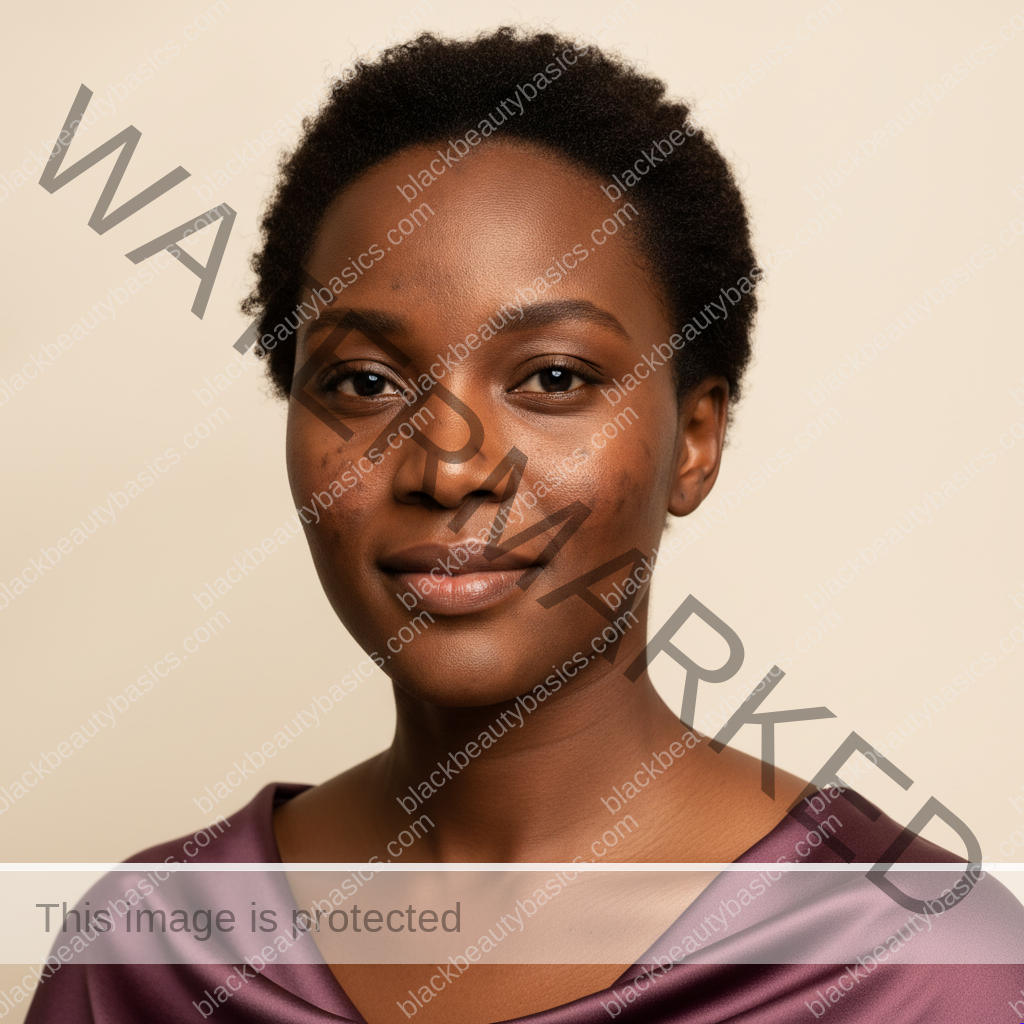
Melasma can feel personal in a way that few skin concerns do. The patches may appear across the cheeks, forehead, upper lip, chin, or jawline, and they can make someone who once felt neutral about her complexion suddenly feel watched. For Black women and people with melanin-rich skin, that pressure is often sharpened by colorism, beauty standards, and the exhausting idea that an even complexion must mean a lighter one. It does not.
The goal of melasma care is not to erase your natural depth of tone or make your skin look “brighter” by someone else’s standard. It is to support healthy, comfortable skin and, where possible, reduce the contrast or persistence of discoloration in a way that does not create more irritation. That sounds simple. In real life, it can require patience, boundaries, and a plan that protects your skin from panic buying and overly aggressive treatment.
Melasma can overlap visually with other forms of facial discoloration, including post-inflammatory hyperpigmentation from acne, irritation, hair removal, or a reaction to a product. A patch that looks brown, gray-brown, or uneven is not automatically melasma. A clinician can help sort out what is happening, especially when discoloration is new, changing, spreading, itchy, painful, or difficult to identify. This guide offers a calm framework for care, not a diagnosis.
Start with the larger picture in our hyperpigmentation and dark spots guide: pigment concerns often respond better to consistency and irritation prevention than to a harsh “fix it now” approach. Melasma deserves that same steady, non-shaming care.
Understanding Melasma on Dark Skin Without Making Assumptions
Melasma is a type of facial hyperpigmentation that often appears in patches. It is commonly associated with the cheeks, forehead, upper lip, bridge of the nose, chin, and sometimes the jawline. On dark skin, melasma may look medium brown, deep brown, gray-brown, or like a soft shadow that changes the overall evenness of the face. It does not always look like the sharply defined images that appear in generic skincare advertising.
Melanin-rich skin is not one single skin type. Black people have wide variation in tone, undertone, oiliness, dryness, sensitivity, acne tendency, medical history, and how skin reacts after inflammation. Two people with similar complexions may have very different experiences with a sunscreen, an exfoliant, a prescription, or a professional procedure. That is one reason one-size-fits-all advice can be especially frustrating in conversations about dark spots.
Melasma is often discussed alongside hormones, pregnancy, heat, daylight exposure, family patterns, and certain medications or health contexts. Those associations can be useful discussion points for a medical professional, but they are not proof of one cause in one person. You do not need to investigate your life for a personal failure. Melasma is not evidence that you neglected your face, used the “wrong” skincare product, or failed to be disciplined enough with your routine.
It also helps to separate melasma from post-inflammatory hyperpigmentation, often called PIH. PIH is discoloration that can remain after inflammation or injury, such as a breakout, rash, burn, ingrown hair, or irritating treatment. Melasma and PIH can exist at the same time. For example, someone may have patchy facial melasma on the cheeks and separate dark marks where acne has healed. Our guide to facial hyperpigmentation, acne marks, melasma, and uneven tone can help you understand those distinctions without trying to diagnose yourself from a mirror.
The distinction matters because care should match the pattern and the skin’s current condition. If your face is stinging, flaky, inflamed, or suddenly breaking out, pushing more pigment-focused products may make the situation harder. In skin of color, inflammation itself can leave or deepen discoloration. That does not mean you must fear every active ingredient forever. It means the skin barrier and the pigment concern need to be considered together.

Some people notice melasma gradually. Others feel that it appeared quickly because they only recognized it once the contrast became more visible. Lighting can make it seem different from one day to the next. Overhead bathroom lighting, direct sun, a phone camera, makeup, and seasonal changes can all alter how patches look. Try not to judge progress hour by hour or use one unflattering photo as evidence that your skin is “getting worse.”
A calm approach begins with language. “Uneven tone” may be a more comfortable phrase for some people, while others prefer to name melasma directly. Either is fine. What matters is refusing language that frames deep skin as dull, dirty, damaged, or in need of bleaching. Your baseline complexion is not a problem. Care is about reducing distress, managing changes you want help with, and protecting your skin from avoidable harm.
What to Avoid When You Feel Pressured to Fix It Fast
Melasma can invite urgency because the patches are visible and because social media is full of dramatic before-and-after promises. But quick-fix thinking is one of the biggest risks in pigment care. Strong products, frequent exfoliation, unverified “brightening” mixes, and procedures chosen without appropriate assessment can irritate the skin. Irritation may trigger or worsen discoloration, especially in melanin-rich skin.
Avoid treating your face like a testing ground for every new product that claims to fade spots. A long list of active ingredients used all at once can make it impossible to tell what your skin tolerates. It can also create dryness, burning, peeling, breakouts, or a compromised skin barrier. Those reactions are not proof that a product is “working.” Pain and persistent irritation are not skincare milestones.
Be cautious with products that promise bleaching, whitening, instant lightening, or a dramatically lighter complexion. Those promises are not aligned with respectful melasma care. In addition to reinforcing colorist ideas, unregulated products can contain ingredients that are not clearly disclosed or appropriate for your skin. If a label is vague, the seller is evasive, or the product relies on fear about dark skin, step away.
Do not assume that a high-strength peel, scrub, or at-home acid treatment is safer because someone online has used it. Chemical peels and other procedures can be helpful in selected situations, but they can also trigger irritation and post-inflammatory hyperpigmentation. The decision is more nuanced for darker skin tones, where preventing pigment complications matters deeply. If you are considering a peel or dealing with discoloration afterward, read our guidance on dark spots after chemical peels on melanin-rich skin and seek a clinician experienced with darker skin tones rather than trying to correct the result at home.
It is also wise to avoid constant picking, rubbing, scraping, or aggressive cleansing. A patch may tempt you to scrub because it feels as if something needs to be removed. Melasma is not surface dirt, and scrubbing will not lift it away. Friction can create irritation, particularly around the upper lip, cheeks, and jawline. Use a gentle touch when cleansing, drying your face, applying makeup, or removing makeup at night.
Be careful with advice that tells you to stop a prescription suddenly because of a temporary reaction or because someone online claims that “natural is better.” Prescription treatment plans should be followed according to the prescriber’s instructions. If you have concerns about dryness, burning, pregnancy, breastfeeding, medication interactions, cost, or whether a treatment is still appropriate, contact the prescriber or pharmacist for guidance. Do not independently stop, restart, combine, or change prescribed treatment.
Another trap is hiding from your own face. It is understandable to avoid mirrors, cameras, or bare-faced moments when pigment changes feel upsetting. But shame can make routine care feel impossible. You deserve a plan that fits your life, even if that plan is small: gentle cleansing, moisturizing when needed, thoughtful sun protection, and a check-in with a qualified professional. That is care. It does not have to be elaborate to be valid.
A Gentle, Protective Plan for Everyday Melasma Care
A sustainable melasma routine is usually more useful than an intense one. Start by choosing products and steps that your skin can tolerate consistently. The exact routine will vary, but the principles are straightforward: cleanse without stripping, moisturize as needed, reduce avoidable irritation, and use sun-protection habits that you can realistically maintain.
For cleansing, use a product that leaves your skin feeling clean but not tight, burning, or squeaky. If you wear makeup or sunscreen that needs more than one cleanse to remove, do so gently rather than scrubbing. If your face becomes dry or reactive after washing, consider whether the cleanser, water temperature, washcloth pressure, or frequency is contributing. More cleansing is not automatically better for pigmentation.
Moisturizer is not only for visibly dry skin. A well-tolerated moisturizer can support comfort and help reduce the urge to overcorrect every bit of texture or unevenness with stronger products. Look for a formula that feels comfortable under sunscreen and makeup. If your skin is acne-prone, choose based on what you personally tolerate rather than assuming every richer formula will cause breakouts or every lightweight gel will be sufficiently moisturizing.
Sun protection matters in dark skin too. Melanin provides some natural protection from certain effects of ultraviolet exposure, but it does not make anyone immune to sun-related pigment changes or eliminate the value of sunscreen. The American Academy of Dermatology recommends broad-spectrum sunscreen with SPF 30 or higher and water resistance when relevant. For melasma, the most useful sunscreen is often the one you will apply in a sufficient, comfortable layer and use consistently alongside other protective habits, such as shade, hats, and timing outdoor activities when possible.

Cosmetic acceptability is practical, not superficial. If a sunscreen leaves a cast you dislike, pills under makeup, stings your eyes, or feels impossible to reapply, it may not fit your daily life. You are allowed to keep looking for a formula that works with your skin tone, budget, routine, and sensory needs. Tinted sunscreen can be an appealing option for some people, while others prefer an untinted formula that disappears well on their complexion. The key is not to force yourself into a product you will avoid.
When introducing an over-the-counter pigment-focused product, simplify the rest of your routine first. Introduce only one new product at a time and pay attention to how your skin responds. The purpose is not to create a perfect home laboratory. It is to reduce confusion and lower the chance that several new products will cause a reaction at once. If you develop ongoing burning, swelling, marked itching, cracking, or a rash, stop using the newly introduced nonprescription product and seek professional advice.
Do not let “gentle” become another impossible standard. A routine can be gentle even if you occasionally miss an evening cleanse, fall asleep without the full ritual, or cannot reapply sunscreen exactly as planned. Consistency is helpful, but perfectionism often turns care into punishment. Put the steps that matter most where they are easy to reach. Keep your morning routine short enough to do on a rushed weekday. Choose a nighttime routine that you can manage when you are tired.
Makeup can be part of care if it helps you feel like yourself. There is no moral requirement to go bare-faced while managing melasma. At the same time, you do not owe anyone coverage. Wear makeup because it is expressive, convenient, professional, joyful, or simply what you prefer—not because you need to apologize for your complexion. Remove it gently at the end of the day, particularly if rubbing around the upper lip and cheeks tends to irritate your skin.
A basic routine may be enough to establish a stable foundation while you wait for a dermatology appointment or decide whether to pursue treatment. A clinician may discuss prescription or in-office options based on the pattern of discoloration, your health history, current medications, pregnancy or breastfeeding status, and your skin’s sensitivity. Their plan should include conversation about benefits, possible side effects, and how to respond if irritation develops. A good plan does not rush you into procedures because you feel insecure.
Real-Life Factors That Can Make Melasma Care Feel Complicated
Melasma care rarely happens in a vacuum. You may be managing acne, facial hair, pregnancy changes, work stress, a limited budget, or a routine that already feels crowded. A useful plan recognizes those realities instead of treating them as excuses. You are not failing if your skin concern intersects with the rest of your life.
Acne can make the picture confusing. New breakouts can leave PIH while melasma remains in broader patches, creating several kinds of discoloration at once. The urge may be to throw multiple spot-fading products at every mark. Yet treating acne harshly can also increase inflammation. If acne is active, it may be worth asking a clinician how to address breakouts and pigment changes together. That approach can be more protective than chasing each individual dark mark.
Facial hair removal is another common source of irritation. Tweezing, waxing, shaving, threading, and depilatory products can affect the skin differently. If you notice dark marks after removing facial hair, it may be related to inflammation or irritation rather than melasma alone. Our article on dark spots after tweezing facial hair offers a more focused discussion of that pattern. The important point is that repeated irritation can complicate a pigment routine, so gentler technique and professional input may matter.
Pregnancy, postpartum changes, hormonal contraception, and other hormonal contexts can be part of the conversation around melasma. This is a place for individualized medical advice, not internet assumptions. If you are pregnant, trying to conceive, breastfeeding, or using hormonal medication, tell the clinician who is helping with your skin. Some treatments may not be appropriate in every situation. Do not change prescribed medication or contraception on your own because of melasma concerns.
A dark neck can also raise questions, especially when someone has facial discoloration and begins scanning their whole body for a single explanation. A dark or velvety patch on the neck can have different causes and should be assessed rather than diagnosed from appearance or a social media post. It may not be melasma. Our guide to dark neck patches, friction, hormones, and when to seek help explains why a thoughtful assessment matters.
Budget deserves a place in this conversation. You do not need a shelf filled with expensive serums to begin caring for melasma. A gentle cleanser, a moisturizer if your skin needs one, and a sunscreen you can use regularly may be a more realistic starting point than a complicated collection of treatments. If a clinician recommends a prescription or procedure that is financially difficult, ask about lower-cost alternatives, generic options, a gradual plan, or whether the most important next step is simply stabilizing your routine.
Emotional fatigue is real too. You may have tried products before, felt disappointed, and decided it is safer not to hope. You may also be tired of relatives, coworkers, or strangers commenting on your complexion. Their comments are not medical assessments, and you do not have to turn them into a skincare emergency. It can help to prepare a boundary: “I’m not discussing my skin today,” or “I’m handling it with my doctor.” You are allowed to protect your peace while you make decisions at your own pace.
Troubleshooting Changes Without Turning Every Flare Into a Crisis
When melasma seems darker or more noticeable, pause before adding three new treatments. First, look at what has changed around your skin. Have you started a new exfoliant, makeup product, cleanser, hair-removal method, fragrance, or prescription? Has your face been itchy, dry, burning, or more sensitive? Have you been spending more time outside or finding your sunscreen difficult to use consistently? These questions are not meant to assign blame. They can help identify an irritation pattern worth discussing with a clinician.
Photos can be useful if they are taken with some consistency. Consider taking occasional photos in similar natural light, without filters, rather than checking daily under different bathroom bulbs. The goal is not to document every imperfection. It is to give yourself and a clinician a clearer sense of whether a patch is stable, changing, or reacting to a routine. If photos make you anxious, skip them. A written note about symptoms and new products can be just as helpful.
Pay attention to sensation. Melasma itself may not be painful, so significant itching, burning, tenderness, crusting, or a new rash deserves professional attention. Similarly, seek assessment for discoloration that changes quickly, has a very different pattern than usual, appears in an unusual location, or comes with other symptoms. A dermatologist or other qualified clinician can evaluate what cannot be determined safely from a photo, a mirror, or an online description.

If a product seems to be irritating your skin, do not try to “push through” escalating discomfort in pursuit of results. Stop the newly introduced nonprescription product and return to a simpler, comfortable routine while you arrange advice if needed. For a prescribed treatment, follow the instructions you were given and contact the prescriber or pharmacist with concerns rather than independently changing the plan. Clear communication is part of treatment, not a sign that you are difficult or impatient.
Procedure decisions deserve extra care. Chemical peels, lasers, microneedling, and other interventions are not casual add-ons for someone prone to discoloration. The evidence base and risk profile vary, and procedures may aggravate PIH in some circumstances. Ask the clinician how much experience they have treating darker skin tones, what pigment-related risks they consider, how they would prepare and follow you, and what you should do if irritation occurs. You have the right to ask questions before consenting to anything.
It can also be useful to examine the pressure behind the urgency. Are you preparing for a wedding, returning to an office, dating, grieving a change in your body, or responding to comments from others? None of those feelings are shallow. But knowing what is driving the panic can help you make a decision that protects you. A procedure booked in distress may not be the same decision you would make after a calm medical consultation.
Remember that a setback is not a character flaw. Skin can be unpredictable. A product that worked comfortably one season may feel different when your skin is dry, irritated, or under stress. A missed week of routine does not erase every supportive habit you have built. Reset with the simplest useful steps, then get help when the pattern is unclear. Calm is not denial; it is a safer way to respond.
What to Do Next When Melasma Is Taking Up Too Much Space
Begin by making your current routine easier to understand. Set aside products you are not actively using, note any recent additions, and keep only the basics that feel comfortable. If you are using a prescribed treatment, keep following your prescriber’s directions and contact them if you have concerns. If you are not under care and the discoloration is new, changing, distressing, or difficult to distinguish from other pigment concerns, consider booking an evaluation.
Prepare for that appointment with a short list: when you first noticed the patches, whether they changed around pregnancy or medication changes, products and treatments you have tried, any history of sensitivity or PIH, and what outcome matters to you. You might say, “I want care that respects my skin tone and minimizes the risk of making pigmentation worse.” That is a reasonable request.
Our practical guide on how to talk to a dermatologist about hyperpigmentation on Black skin can help you shape those questions and advocate for a thoughtful plan. Look for a clinician who listens, explains options plainly, and does not speak about deep skin as though it needs to be corrected into a lighter version of itself.
In the meantime, let your goal be steadiness. Wear the sunscreen you can tolerate. Avoid irritating experiments. Moisturize if your skin feels dry. Give yourself permission to use makeup, skip makeup, seek treatment, or wait until you have more information. Melasma may be a skin concern, but it does not get to become the measure of your beauty, professionalism, femininity, health, or worth.
Frequently Asked Questions
Is melasma different on dark skin?
Melasma can look different across skin tones because the contrast, depth, and undertone of the discoloration may vary. On dark skin, it may appear brown, deep brown, gray-brown, or as broad areas of uneven tone rather than the lighter-looking patches often shown in generic examples. However, Black skin is not biologically identical from person to person, so no single appearance applies to everyone. Other conditions, including post-inflammatory hyperpigmentation, can also resemble melasma. A qualified clinician can help identify the pattern and recommend care that accounts for your skin’s sensitivity and tendency to pigment after irritation.
Can sunscreen help if I have a deep skin tone?
Yes. Having a deep skin tone does not remove the value of sun protection, especially when you are managing hyperpigmentation concerns. Broad-spectrum sunscreen with SPF 30 or higher is a common dermatology recommendation, alongside practical measures such as shade and protective clothing. The best choice is one you can wear comfortably and consistently. If white cast, eye stinging, pilling, or texture makes you avoid sunscreen, keep looking for a more workable formula. Tinted or untinted options may suit different people. Sun protection is not about trying to lighten your natural complexion; it is about supporting skin health and pigment care.
Can I use exfoliating acids to get rid of melasma faster?
More exfoliation is not automatically better for melasma. Acids and other active ingredients can irritate the skin when used too often, at too high a strength, or alongside several other treatments. In melanin-rich skin, irritation can contribute to post-inflammatory hyperpigmentation, which may make uneven tone more complicated. If you want to use an over-the-counter active, consider simplifying the rest of your routine and introducing one product at a time. If melasma is persistent or you are considering stronger treatment, a dermatologist experienced with darker skin tones can help you decide what is appropriate rather than relying on aggressive DIY methods.
Why does my melasma seem darker some days?
Melasma can appear different depending on lighting, sun exposure, heat, makeup, dryness, irritation, and how closely you are examining your skin. A bathroom mirror under bright overhead light may show more contrast than a window-lit room. That does not mean your skin has changed dramatically overnight. If you want to track a pattern, occasional photos in similar natural lighting or brief notes about new products and symptoms can be more useful than daily mirror checks. If discoloration is changing rapidly, becoming symptomatic, or looking unlike your usual pattern, arrange a professional assessment.
Should I stop my prescription if my skin becomes dry or irritated?
Do not independently stop, restart, or alter a prescribed treatment plan. Dryness or irritation can be important to report, but the safest next step is to contact the prescriber or pharmacist and describe what you are experiencing. They can advise you based on the specific medication, your medical history, and the instructions already provided. Take note of when the symptoms started, where they occur, and whether you introduced any other products at the same time. This information can help the clinician decide how to guide you without guessing or relying on general internet advice.
Could a dark patch on my neck be melasma?
A dark or velvety patch on the neck can have different causes and should be assessed rather than diagnosed from appearance alone. It may not be melasma, even if you also have facial hyperpigmentation. Friction, irritation, and health-related factors can all be relevant to a clinician’s evaluation. Avoid trying to bleach, scrub, or peel the area aggressively, as that may cause more irritation. If the patch is new, changing, spreading, or concerning to you, make an appointment for individualized guidance and share any other symptoms or relevant health changes.
When should I see a dermatologist about melasma?
Consider seeing a dermatologist or qualified clinician when discoloration is new, changing, widespread, difficult to identify, emotionally distressing, or not responding to a gentle routine. Seek prompt assessment if you have pain, intense itching, crusting, swelling, a rash, or other symptoms that do not fit a simple pigment concern. A visit can also be useful before pursuing a peel, laser, or other procedure, particularly if you have a history of dark marks after irritation. Look for care that respects darker skin tones, explains risks clearly, and does not frame lighter skin as the goal.
Related next steps
Related posts:
 Melasma-Like Patches on Melanin-Rich Skin: Questions to Ask Your Doctor
 PIH vs Melasma on Dark Skin: How to Think About the Difference
 Pregnancy Skin Changes on Dark Skin: Hyperpigmentation, Melasma, and Linea Nigra
 Menopause Hyperpigmentation: Age Spots & Melasma on Dark Skin
 Retinoids for Uneven Tone on Melanin-Rich Skin: A Gentle, Informed Approach
 Using Benzoyl Peroxide on Dark, Sensitive Skin: A Thoughtful Approach