Is My Dark Skin Oily, Dry, or Combination? Understanding Your Melanin-Rich Complexion
For generations, Black women have navigated a beauty landscape that often overlooks or misunderstands the unique needs and characteristics of melanin-rich skin. We’ve been told our skin is “oily” because of a natural glow, or “dry” when it’s merely dehydrated. The journey to truly understand your own complexion can feel like deciphering a riddle, especially when generic advice falls short. You might find yourself staring in the mirror, perplexed by a face that feels tight and flaky in some areas, yet shiny and prone to breakouts in others. This common experience often leads to frustration, wasted money on unsuitable products, and a lingering sense that your skin isn’t “normal” or easily categorized.
The truth is, your skin is wonderfully complex and uniquely yours. Its behavior is influenced by a delicate interplay of genetics, environment, product choices, and even your emotional well-being. For melanin-rich skin, these factors can manifest differently than on lighter skin tones, leading to unique challenges and observations. For instance, what might be perceived as simple oiliness could be your skin’s protective response to dehydration, or what looks like dryness could be a sign of irritation rather than a fundamental skin type. This article is your compassionate guide to cutting through the confusion, offering a framework to truly listen to your skin and understand its language.
We’ll explore the nuances of oily, dry, and combination skin as they appear on dark skin, acknowledging the common phenomenon of being simultaneously shiny and ashy. More importantly, we’ll help you distinguish between your inherent skin type and temporary skin conditions, like dehydration or irritation, which can mimic other types. By the end of this journey, you’ll have the clarity and confidence to make informed choices for your skincare, embracing your skin’s natural beauty and providing it with the precise care it deserves. Let’s embark on this path to deeper understanding and radiant skin, together.
Why Understanding Skin Type Is More Nuanced for Melanin-Rich Skin
The conventional wisdom around skin typing often falls short when applied to melanin-rich skin. For decades, beauty standards and product formulations were developed with lighter skin tones as the default, leading to a significant gap in understanding and addressing the specific needs of Black women. This oversight has created a unique set of challenges when trying to determine if your dark skin is oily, dry, or combination.
One of the most common misconceptions is the idea that melanin-rich skin is inherently oily. While it’s true that darker skin tones often have more active sebaceous glands, which can lead to a natural, enviable glow, this doesn’t automatically equate to problematic oiliness. What might be a healthy, protective sebum production can be mislabeled as excessive oil, leading to the use of harsh, stripping products. These products, designed to “mattify” or “control oil,” can inadvertently strip the skin of its essential lipids, triggering a cascade of issues. When the skin’s natural barrier is compromised, it can paradoxically produce even more oil to compensate, creating a vicious cycle. This is often why many Black women experience the frustrating combination of being shiny in the T-zone yet feeling tight or seeing ashiness in other areas.
Furthermore, the visual cues for dryness and irritation can be less obvious or misinterpreted on darker skin. Flaking might be subtle, and redness, a key indicator of inflammation on lighter skin, can appear as hyperpigmentation or a dull, ashy tone on darker complexions. This can make it difficult to identify underlying issues like a compromised skin barrier or product sensitivities. The tendency for melanin-rich skin to develop post-inflammatory hyperpigmentation (PIH) in response to irritation or inflammation means that misdiagnosing a skin condition can have long-lasting cosmetic consequences, leaving behind dark spots that are challenging to fade. Understanding these nuances is not just about categorizing your skin; it’s about safeguarding its health and preserving its even tone. It requires a more discerning eye and a deeper understanding of how melanin interacts with various skin concerns.
The concept of “ashiness” itself is deeply rooted in the experience of melanin-rich skin. Ashiness is essentially a visible sign of dry, flaky skin cells that, on a darker canvas, appear as a dull, grayish, or white cast. While it’s a clear indicator of dryness, it’s often treated as a superficial problem to be covered up, rather than a symptom of an underlying need for deeper hydration and barrier support. This unique manifestation of dryness, coupled with the potential for increased oil production, makes the “oily, dry, or combination” question far more complex than a simple checklist. It demands a more holistic and culturally informed approach, one that recognizes the full spectrum of experiences within the Black community. This is why a premium resource like Black Beauty Basics is essential, providing guidance that resonates with your lived experience and empowers you to truly understand your skin’s voice.
Signs Your Skin May Be Oily
Oily skin is characterized by an overproduction of sebum, the natural oil produced by your sebaceous glands. While a certain amount of sebum is essential for healthy, supple skin, too much can lead to a range of concerns. For melanin-rich skin, the signs of oiliness can be particularly prominent and sometimes misinterpreted. It’s important to distinguish between a healthy, luminous glow and excessive oiliness that contributes to specific skin challenges.
Persistent Shine, Especially Midday
One of the most tell-tale signs of oily skin is a persistent, noticeable shine across your face, particularly in the T-zone (forehead, nose, and chin). This isn’t the subtle, dewy glow that comes from well-hydrated skin; rather, it’s a more pronounced, almost greasy luster that tends to appear or intensify as the day progresses. You might find yourself reaching for blotting papers or powder multiple times throughout the day to manage this shine. For Black women, this shine can sometimes be mistaken for a desired “glow,” but if it’s accompanied by other symptoms, it’s likely true oiliness. This shine is a direct result of your sebaceous glands working overtime, depositing excess oil onto the skin’s surface. The skin can feel slick to the touch, and you might even see a visible film of oil when you gently press a clean tissue against your face.
This persistent sheen can be particularly noticeable on melanin-rich skin due to its natural reflective qualities. What might appear as a subtle glisten on lighter skin can be a more pronounced, almost mirror-like reflection on darker tones. It’s not just about how it looks, but also how it feels. If your skin feels consistently “slippery” or “greasy” by lunchtime, even after cleansing in the morning, it’s a strong indicator of an oily skin type. This isn’t to say that all shine is bad; a healthy glow is beautiful. The key is to observe the intensity and persistence of the shine and whether it’s accompanied by other issues like enlarged pores or breakouts.
Enlarged-Looking Pores
Oily skin often goes hand-in-hand with enlarged or more visible pores. When your sebaceous glands produce an abundance of oil, this excess sebum can accumulate within the pores. This accumulation, combined with dead skin cells, can stretch the pore walls, making them appear larger. While pore size is largely genetic, oily skin types typically have more prominent pores, especially around the nose, forehead, and chin where oil glands are most concentrated. On melanin-rich skin, these enlarged pores can sometimes appear as tiny dark dots, particularly if they become clogged or oxidized. This is a common concern for many Black women and is directly linked to the skin’s oil production.
The appearance of enlarged pores isn’t just a cosmetic concern; it’s also a gateway for other issues. When pores are constantly filled with sebum and dead skin cells, they become prime breeding grounds for bacteria, leading to breakouts. The constant stretching and filling can also contribute to a slightly uneven skin texture. It’s important to note that while you can’t permanently shrink your pores, managing oil production and keeping them clean can significantly improve their appearance. Regular, gentle exfoliation and the use of non-comedogenic products are crucial for oily skin to prevent pores from becoming further congested and appearing even larger. Observing the texture of your skin under good lighting, particularly in the T-zone, can give you a good indication of whether enlarged pores are a consistent feature of your complexion.
Frequent Breakouts and Blackheads
The combination of excess sebum and dead skin cells creates a perfect storm for acne. When pores become clogged with this mixture, bacteria (Propionibacterium acnes) can multiply, leading to inflammation, blackheads, whiteheads, and cystic acne. Oily skin types are inherently more prone to these types of breakouts. For melanin-rich skin, breakouts are not just a temporary nuisance; they often leave behind post-inflammatory hyperpigmentation (PIH), which can linger for months or even years. This makes managing breakouts on dark skin a priority, not just for immediate relief but also for long-term skin clarity.
If you consistently experience blackheads (small, dark bumps caused by oxidized sebum in the pores), whiteheads (small, flesh-colored bumps where pores are fully blocked), or inflammatory acne (red, tender papules, pustules, or cysts), it’s a strong indicator of oily skin. These breakouts can appear anywhere on the face, but are often concentrated in the T-zone and sometimes extend to the jawline, chest, and back. The frequency and severity of these breakouts are key. Occasional hormonal pimples are common for many skin types, but persistent, widespread acne suggests an underlying oily skin type. For Black women, the concern isn’t just the breakout itself, but the dark spot it leaves behind. Therefore, understanding and managing oily skin is crucial for preventing PIH and maintaining an even skin tone.
Makeup Slides Off or Doesn’t Last
If you find that your makeup, especially foundation and concealer, seems to “melt” or slide off your face within a few hours of application, even with primers and setting sprays, excess oil is likely the culprit. The sebum produced by oily skin can break down makeup formulas, causing them to separate, crease, or disappear. This can be incredibly frustrating, as it means constant touch-ups or a perpetually shiny complexion despite your best efforts to mattify. This phenomenon is a direct result of the oil creating a slippery surface that prevents makeup from adhering properly and then actively dissolving it throughout the day.
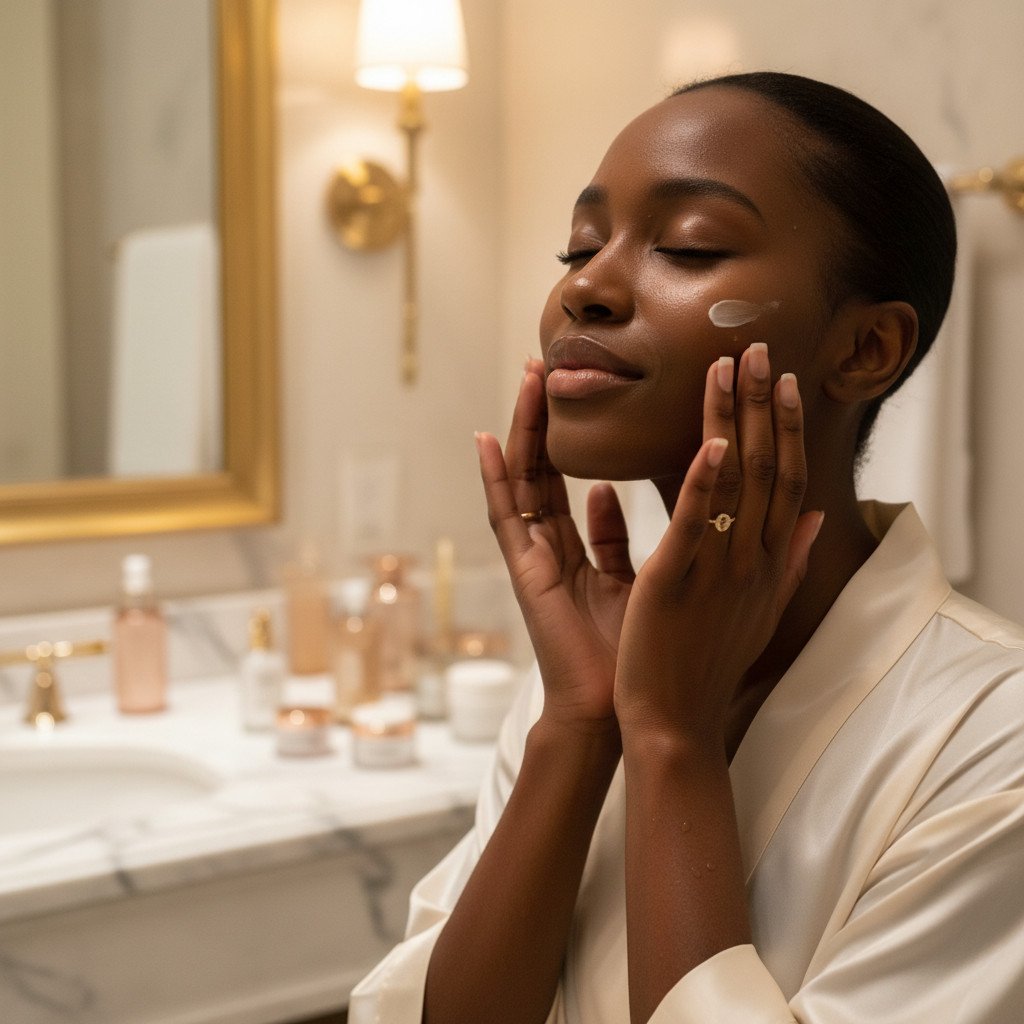
This issue is particularly relevant for Black women who often seek full coverage to address hyperpigmentation. When makeup doesn’t last, it not only compromises the desired aesthetic but also means that the underlying concerns, like dark spots, become visible again prematurely. If you notice your foundation looking patchy, your powder disappearing, or your T-zone becoming a grease slick by midday, it’s a clear sign that your skin is producing more oil than average. This isn’t a reflection of your makeup quality, but rather an indication of your skin’s inherent oiliness. Opting for oil-free, long-wear formulas and incorporating oil-absorbing primers can help, but addressing the underlying oil production through your skincare routine is key. Using a light moisturizer for dark skin can also help balance oil production without feeling heavy. Shop light moisturizer for dark skin on Amazon.
Signs Your Skin May Be Dry
Dry skin is characterized by a lack of natural oils (sebum) and often a compromised skin barrier, leading to insufficient moisture retention. For melanin-rich skin, dryness can manifest in ways that are distinct and sometimes more challenging to identify, especially when coupled with the common experience of ashiness. It’s crucial to differentiate between naturally dry skin and skin that is simply dehydrated or irritated.
Tightness, Especially After Cleansing
One of the most immediate and common indicators of dry skin is a feeling of tightness or tautness, particularly after washing your face. This sensation is often described as feeling like your skin is “too small for your face” or like it’s been stretched. It’s a direct result of your skin’s natural moisture barrier being stripped, either by harsh cleansers or by an inherent lack of lipids, allowing water to evaporate rapidly from the skin’s surface. This feeling can persist even after applying a light moisturizer if the product isn’t sufficiently hydrating or occlusive.
For melanin-rich skin, this tightness can be especially uncomfortable and can quickly lead to other visible signs of dryness. If your skin feels uncomfortably tight, stiff, or even slightly painful after cleansing, even before you’ve applied any other products, it’s a strong signal that your skin is lacking moisture and possibly that your cleanser is too harsh. A gentle cleanser for dark skin is essential to avoid this stripping feeling. Shop gentle cleanser for dark skin on Amazon.
Ashiness and Flaking
Ashiness is a hallmark sign of dry skin on darker complexions. It refers to the dull, grayish, or whitish cast that appears on the skin, particularly on the cheeks, forehead, and around the mouth. This phenomenon occurs when dead skin cells accumulate on the surface and reflect light differently, making the skin appear lackluster and dry. It’s a visual indicator that your skin barrier is not functioning optimally and that your skin is shedding cells unevenly.
In addition to ashiness, you might observe visible flaking or scaling, especially in areas prone to dryness like around the nose, eyebrows, or mouth. These tiny flakes are dead skin cells that are not being properly shed and replaced, indicating a lack of moisture and impaired skin barrier function. While flaking can sometimes be a sign of irritation or certain skin conditions, when it consistently accompanies tightness and ashiness, it points strongly to a dry skin type. This is why many Black women seek out rich moisturizers and body butters – to combat the persistent ashiness that can be both uncomfortable and visually distracting. The presence of both ashiness and flaking suggests a significant need for hydration and barrier support.
Dullness and Lack of Radiance
Unlike oily skin, which often has a natural sheen, dry skin tends to appear dull and lack natural radiance. This is because the surface of dry skin is often rougher and more uneven due to the accumulation of dead skin cells and a compromised barrier. A smooth, well-hydrated skin surface reflects light evenly, giving a luminous appearance. Dry skin, with its irregular texture, scatters light, resulting in a lackluster, muted complexion. This dullness can make your skin look tired or less vibrant, even if you’re well-rested.
For melanin-rich skin, this dullness can sometimes be mistaken for a general lack of vitality, but it’s often a direct consequence of insufficient hydration. The natural warmth and richness of darker skin tones can be obscured by a dull, dry surface. If your skin consistently lacks that healthy, subtle glow and appears flat or muted, especially after cleansing and before moisturizing, it’s a strong indicator of dryness. Restoring hydration and supporting the skin barrier can significantly improve radiance and bring back the natural vibrancy of your complexion.
Rough or Uneven Texture
Beyond visible flaking, dry skin often feels rough or coarse to the touch. This uneven texture is due to the accumulation of dead skin cells and a lack of moisture that keeps the skin supple and smooth. When the skin is dry, its natural exfoliation process (desquamation) can slow down, leading to a buildup of old cells on the surface. This creates a bumpy or sandpaper-like feel, rather than the soft, smooth texture of well-hydrated skin.
You might notice this rough texture when you run your fingers across your cheeks or forehead. It can also make makeup application challenging, as foundation and powder can cling to dry patches, emphasizing the unevenness. For melanin-rich skin, this rough texture can also contribute to the perception of dullness. A healthy skin barrier, rich in lipids and moisture, keeps the skin surface smooth and resilient. When this barrier is compromised by dryness, the skin loses its natural elasticity and becomes more susceptible to environmental damage and irritation. Improving skin texture is a key goal for those with dry skin, achieved through consistent hydration and gentle exfoliation.
Increased Sensitivity and Itchiness
Dry skin often has a compromised skin barrier, which means it’s less able to protect itself from external irritants and allergens. This makes dry skin more prone to sensitivity, redness (which can appear as hyperpigmentation or a darker patch on melanin-rich skin), and itchiness. You might experience stinging or burning sensations when applying certain products, or a general feeling of discomfort throughout the day. The skin’s protective lipid layer acts like a shield; when it’s weakened, irritants can penetrate more easily, triggering an inflammatory response.
For Black women, this increased sensitivity can be particularly problematic, as inflammation often leads to post-inflammatory hyperpigmentation (PIH). Therefore, identifying and addressing dryness is crucial not only for comfort but also for preventing dark spots. If your skin frequently feels itchy, especially after showering or in dry environments, or reacts negatively to products that others tolerate well, it’s a strong indicator of dry and sensitive skin. This sensitivity underscores the need for gentle, fragrance-free products and a focus on barrier repair. Learn more about sensitivity and stinging on dark skin to better understand and manage this concern.
Signs Your Skin May Be Combination
Combination skin is arguably the most common skin type, yet it’s also one of the most perplexing. It’s characterized by having different skin types in different areas of the face, most typically an oily T-zone (forehead, nose, and chin) and normal to dry cheeks and outer areas of the face. This duality makes skincare challenging, as products that work for one area might be entirely unsuitable for another. For melanin-rich skin, this can be further complicated by the unique manifestations of oiliness and dryness we’ve already discussed.
Oily T-Zone with Dry Cheeks
The hallmark of combination skin is the distinct contrast between your T-zone and your cheeks. If you find that your forehead, nose, and chin become shiny and prone to breakouts, blackheads, or enlarged pores, while your cheeks feel tight, dry, or even flaky, you likely have combination skin. This is the most classic presentation, where the sebaceous glands are more active in the central part of the face, leading to excess oil production, while the peripheral areas experience less oil and more moisture loss.

For Black women, this can mean a perpetually shiny nose and forehead, perhaps with visible pores and occasional breakouts, juxtaposed with cheeks that show signs of ashiness, dullness, or feel rough to the touch. You might find yourself blotting your T-zone while simultaneously needing a richer moisturizer for your cheeks. This simultaneous experience of being “shiny and ashy” is a strong indicator of combination skin. It requires a nuanced approach to skincare, often involving different products or application techniques for different areas of the face. Recognizing this distinct pattern is the first step toward creating a balanced and effective routine.
Breakouts Concentrated in the T-Zone
If you experience breakouts, blackheads, or whiteheads primarily in your T-zone (forehead, nose, and chin), but rarely on your cheeks or jawline, this further supports a combination skin diagnosis. The increased oil production in the T-zone creates an environment conducive to clogged pores and bacterial growth, leading to acne. Meanwhile, the drier areas of your face remain relatively clear. This localized breakout pattern is a key differentiator from uniformly oily skin, where breakouts might be more widespread.
For melanin-rich skin, these T-zone breakouts can be particularly frustrating due to the risk of post-inflammatory hyperpigmentation (PIH). A single pimple on the forehead can leave a dark spot that lingers for weeks or months. Therefore, managing the oiliness and preventing breakouts in the T-zone is crucial for maintaining an even skin tone. This often means using targeted treatments like salicylic acid or niacinamide in the oily areas, while being careful not to over-dry the normal or dry parts of the face. Observing where your breakouts consistently occur can provide valuable clues about your skin type.
Makeup Applies Differently Across Your Face
If you notice that your makeup behaves inconsistently across your face – perhaps your foundation looks smooth and radiant on your cheeks but quickly breaks down and becomes patchy on your forehead and nose – it’s a strong sign of combination skin. The oilier areas will cause makeup to slide, crease, or disappear, while the drier areas might make makeup cling to dry patches or appear dull. This can make achieving a uniform, long-lasting finish a constant challenge.
Many Black women who use makeup to even out skin tone or cover hyperpigmentation find this particularly frustrating. The need for different primers or setting methods for different facial zones is a common experience for those with combination skin. You might use a mattifying primer in your T-zone and a hydrating primer on your cheeks, or blot your T-zone throughout the day while leaving your cheeks untouched. This constant adjustment in makeup application and maintenance is a practical, everyday indicator that your skin has varying needs across its surface, pointing directly to a combination skin type.
When Dehydration or Irritation Is Confusing the Picture
One of the most common pitfalls in skin typing, especially for melanin-rich skin, is confusing a temporary skin condition with an inherent skin type. Dehydration and irritation are two such conditions that can mimic the signs of oily, dry, or even combination skin, making it incredibly difficult to accurately assess your complexion. Understanding the difference is crucial for providing your skin with the correct care and avoiding product choices that could exacerbate problems, particularly the risk of post-inflammatory hyperpigmentation (PIH) on dark skin.
Dehydration: The Imposter of Dryness and Oiliness
Dehydrated skin is a condition, not a skin type, and it means your skin is lacking water, regardless of how much oil it produces. Any skin type – oily, dry, or combination – can become dehydrated. This is a critical distinction, especially for Black women, as dehydration can manifest in confusing ways that mimic both dryness and oiliness.
Signs of Dehydration
- Tightness, even with oil: You might feel a sensation of tightness or tautness, similar to dry skin, but you may also notice oiliness or shine. This is your skin’s way of trying to compensate for the lack of water by producing more oil to create a protective barrier. This is often the root of the “shiny and ashy” phenomenon.
- Dullness and uneven tone: Dehydrated skin often looks lackluster, dull, and can emphasize fine lines and wrinkles. On melanin-rich skin, this can contribute to an overall muted appearance and make existing hyperpigmentation appear more prominent.
- Increased sensitivity: A compromised skin barrier due to dehydration makes your skin more vulnerable to external irritants, leading to stinging, burning, or redness (which, again, can manifest as darker patches on dark skin).
- Crepey texture or fine lines: When skin lacks water, it loses plumpness, making fine lines more visible, especially under the eyes or around the mouth.
- Makeup doesn’t sit well: Foundation can look patchy, cakey, or settle into lines, as the skin surface isn’t smooth and hydrated.
Why it’s confusing for dark skin
For melanin-rich skin, dehydration is often misdiagnosed as inherent dryness, leading to the use of heavy, occlusive moisturizers that might not provide enough water-based hydration. Conversely, the compensatory oil production can be mislabeled as true oiliness, prompting the use of harsh, stripping products that further deplete the skin’s water content and damage the barrier. This cycle can lead to persistent ashiness, dullness, and even breakouts, all stemming from a lack of water, not necessarily an inherent oil or moisture deficiency. Recognizing dehydration requires looking beyond surface oil or dryness and considering the overall plumpness, comfort, and resilience of your skin. Adequate hydration is foundational for all skin types, especially for maintaining the health and vibrancy of melanin-rich skin.
Irritation: The Silent Trigger for Melanin-Rich Skin
Irritation is another common skin condition that can throw off your skin type assessment. It occurs when the skin reacts negatively to internal or external factors, leading to inflammation. For melanin-rich skin, irritation is particularly concerning because it is a primary trigger for post-inflammatory hyperpigmentation (PIH), where dark spots appear after the inflammation subsides. This makes identifying and addressing irritation paramount.
Signs of Irritation
- Redness or darker patches: On lighter skin, irritation often manifests as visible redness. On melanin-rich skin, redness can be subtle or appear as darker, more pigmented patches. These patches might feel warm or tender to the touch.
- Itching, stinging, or burning: These sensations are direct indicators of an inflammatory response. Your skin might feel uncomfortable, especially after applying certain products.
- Unusual texture or bumps: Irritated skin can develop small bumps, a rough texture, or even a mild rash. This isn’t necessarily flaking from dryness, but rather a reaction to an irritant.
- Sudden breakouts: While oily skin is prone to breakouts, irritation can also trigger acne-like lesions, especially if the skin barrier is compromised and bacteria can penetrate more easily.
- Increased sensitivity to products: Products that once worked well might suddenly cause discomfort, indicating a heightened state of irritation.
Why it’s confusing for dark skin
The biggest challenge with irritation on melanin-rich skin is the way it presents. The absence of overt redness can lead to under-diagnosis, allowing the irritation to persist and inevitably lead to PIH. A slight darkening of the skin, which might be dismissed as a tan or a natural variation, could actually be a subtle sign of ongoing inflammation. Furthermore, irritation can disrupt the skin barrier, leading to increased transepidermal water loss (TEWL) and making the skin feel dry and tight, even if it’s not inherently a dry skin type. This can lead to mislabeling your skin as dry and using heavy products that might further clog pores if your skin is actually oily but irritated.
Understanding that irritation is a temporary state, often triggered by harsh ingredients, over-exfoliation, environmental factors, or product mismatch, is key. If your skin is behaving erratically, feeling uncomfortable, or developing new dark spots without an obvious cause, consider irritation as a strong possibility. Prioritizing gentle, soothing ingredients and repairing the skin barrier should be your first step, regardless of your perceived skin type. This holistic approach helps you address the root cause of discomfort and prevent long-term hyperpigmentation. For more on this, consider reading about skin type vs. skin condition on melanin-rich skin.
A Simple Way to Check Your Baseline: The Bare Face Test
To truly understand your skin’s inherent type, you need to observe it in its most natural state, free from the immediate influence of products. This is where the “Bare Face Test” comes in. It’s a simple, non-invasive method that allows you to assess your skin’s behavior after it has had a chance to normalize, giving you a clearer picture of its baseline characteristics. This test helps cut through the confusion caused by temporary conditions like dehydration or irritation, which are often influenced by the products you just applied.
Step-by-Step Guide to the Bare Face Test
Step 1: Cleanse Your Face Gently
Start by cleansing your face with a mild, non-stripping cleanser. The goal is to remove all makeup, dirt, and excess oil without disturbing your skin’s natural balance. Avoid harsh foaming cleansers, hot water, or vigorous scrubbing, as these can strip your skin and give you a false reading of dryness or tightness. Use lukewarm water and your fingertips to gently massage the cleanser onto your skin for about 30-60 seconds, then rinse thoroughly. Pat your skin dry with a clean, soft towel – do not rub.
For melanin-rich skin, choosing a gentle cleanser is paramount. Look for formulas that are sulfate-free, fragrance-free, and designed for sensitive skin. A cream or gel cleanser is often a good choice. The aim is to leave your skin feeling clean, but not tight or squeaky. If your skin feels immediately tight or uncomfortable after cleansing, your cleanser might be too harsh, and you’ll need to adjust it before re-doing the test. Remember, the goal is a neutral starting point.

Step 2: Wait for 30-60 Minutes
This is the most crucial part of the test. After cleansing and gently patting your skin dry, do not apply any other products – no toner, no serum, no moisturizer, no makeup. Simply let your skin be. Allow 30 to 60 minutes for your skin to return to its natural state. During this time, your sebaceous glands will start producing oil, and your skin’s natural moisture levels will begin to stabilize. This waiting period allows your skin to “speak for itself” without any external interference.
During this waiting period, avoid touching your face excessively. You can go about your normal activities, but just be mindful not to introduce anything to your skin. This window is essential because it allows your skin’s inherent tendencies to emerge. If you have oily skin, you’ll start to see shine. If you have dry skin, you’ll start to feel tightness. If you have combination skin, you’ll notice different sensations in different areas. This neutral observation period provides the most accurate snapshot of your skin’s baseline behavior.
Step 3: Observe Your Skin’s Behavior
After the waiting period, carefully observe your skin in a well-lit mirror. Pay close attention to how it looks and feels in different areas of your face. This is where you’ll apply the knowledge you’ve gained about the signs of oily, dry, and combination skin.
What to Look For:
- Overall Shine: Is your entire face shiny, particularly in the T-zone? Does it feel greasy to the touch? If so, you likely have oily skin.
- Tightness and Ashiness: Does your skin feel tight, uncomfortable, or stretched across your entire face, especially on your cheeks? Do you see any dullness, ashiness, or flaking? If yes, dry skin is probable.
- Mixed Signals (T-zone vs. Cheeks): Is your T-zone shiny, perhaps with visible pores, while your cheeks feel tight, dry, or even show signs of ashiness? This is the classic indicator of combination skin.
- Comfortable and Balanced: Does your skin feel comfortable, neither tight nor greasy, with a subtle, healthy glow and no visible signs of dryness or excessive oil? This suggests you have normal skin, which is well-balanced.
Take your time with this observation. Touch your skin gently. Note the texture, the level of shine, and any sensations of discomfort. For melanin-rich skin, pay particular attention to areas where ashiness might appear, or where pores seem more prominent. This test provides a foundational understanding, but remember that skin is dynamic. Factors like hormones, climate, and stress can temporarily shift your skin’s behavior. However, the Bare Face Test gives you a solid baseline from which to understand these fluctuations. Once you have a clearer picture, you can then choose products that cater to your inherent skin type while also addressing any temporary conditions like dehydration or irritation.
Frequently Asked Questions
What is the difference between dry skin and dehydrated skin?
Dry skin is a skin type characterized by a lack of natural oils (sebum), leading to a compromised barrier and chronic moisture loss. Dehydrated skin, on the other hand, is a temporary skin condition that means your skin is lacking water, regardless of its oil production. All skin types, including oily skin, can experience dehydration.
Can my skin type change over time?
While your inherent skin type (oily, dry, normal, combination) is largely genetic and tends to remain consistent, its behavior can fluctuate due to factors like age, hormones, climate, diet, and skincare products. These shifts are often temporary conditions rather than a fundamental change in your skin type. For more, see how hormones and climate shift your skin behavior.
Why does my dark skin look shiny and ashy at the same time?
This common phenomenon often indicates combination skin or dehydrated skin. Your T-zone might be genuinely oily (shiny), while your cheeks and other areas are dehydrated or dry (ashy). Your skin might also be producing excess oil to compensate for a lack of water, leading to both shine and underlying dullness or tightness.
What kind of cleanser should I use for melanin-rich skin?
Regardless of your skin type, melanin-rich skin benefits most from gentle, non-stripping cleansers. Look for sulfate-free, fragrance-free formulas that are pH-balanced. Cream, gel, or oil cleansers are often excellent choices as they cleanse without compromising your skin’s delicate barrier, which is crucial for preventing PIH. Shop gentle cleanser for dark skin on Amazon.
How can I prevent dark spots (hyperpigmentation) if I have oily or acne-prone skin?
Preventing dark spots on oily, acne-prone dark skin involves gentle cleansing, consistent use of non-comedogenic products, and targeted treatments like salicylic acid or niacinamide to manage oil and breakouts. Crucially, always use sunscreen daily, even indoors, as UV exposure darkens existing spots and triggers new ones. Learn more about sunscreen for dark skin.
What is the best moisturizer for combination skin on dark skin?
For combination skin, a lightweight, non-comedogenic moisturizer can work well for the entire face, or you might opt for a lighter gel or fluid in your T-zone and a slightly richer cream on your drier cheeks. The key is to provide hydration without clogging pores or adding excessive oil. Look for ingredients like hyaluronic acid, ceramides, and niacinamide. Shop cream moisturizer for dark skin on Amazon.
Should I avoid oils if my dark skin is oily?
Not necessarily. While heavy, pore-clogging oils should be avoided, certain non-comedogenic facial oils (like jojoba, grapeseed, or squalane) can actually help balance oil production and provide beneficial nutrients to oily skin. The key is to choose the right type of oil and use it sparingly, often as a last step in your routine or mixed with a lighter moisturizer. It’s about finding balance, not complete avoidance.
Where to Go Next: Building Your Confident Skincare Routine
Understanding whether your dark skin is oily, dry, or combination is more than just a label; it’s the foundational knowledge that empowers you to build a truly effective and nurturing skincare routine. This journey of self-discovery, listening intently to your skin’s unique language, is a profound act of self-love. You’ve now gained valuable insights into the distinct ways melanin-rich skin expresses its needs, moving beyond generic advice to a place of informed confidence. Remember, your skin is dynamic, and while its inherent type remains, its conditions can shift. Continuous observation and gentle adjustments are key to maintaining its health and radiance.
Now that you have a clearer picture of your skin’s baseline, you’re ready to make intentional choices about the products and practices that will truly serve your complexion. This understanding allows you to select cleansers that don’t strip, moisturizers that truly hydrate, and treatments that address your specific concerns without causing irritation or unwanted hyperpigmentation. Embrace this knowledge as your compass, guiding you towards a routine that celebrates and protects the inherent beauty of your melanin-rich skin. For a deeper dive into these fundamentals, explore our comprehensive guide on Skin Typing & Fundamentals for Melanin-Rich Skin, and continue your journey to radiant, healthy skin with Black Beauty Basics.
Related next steps
Related posts:
 Building Routines for Oily, Dry, and Combination Dark Skin
 SPF for Oily and Combination Dark Skin: Shine, Texture, and Staying Power
 Skin Type Basics for Melanin-Rich Skin: Understanding Your Unique Glow
 Morning Skincare Routine for Black Women by Skin Type (Oily, Dry, Combo)
 Dry Scalp vs Dandruff on Melanin-Rich Scalps: Understanding Your Flakes
 Understanding Your Skin Barrier for Dark Skin