Morning Routine Order: Where Face Sunscreen Fits on Melanin-Rich Skin
For many of us, the morning ritual is a sacred time—a quiet moment to prepare for the day ahead, nurture our skin, and embrace the beauty that is uniquely ours. We cleanse, we hydrate, we treat, all with the intention of revealing our most radiant selves. Yet, there’s one crucial step that often feels like a puzzle piece that just won’t quite fit: face sunscreen. It’s not uncommon to feel a flicker of uncertainty when it comes to layering SPF, especially when you’re already juggling serums, moisturizers, and perhaps even makeup. This isn’t a reflection of your skincare savvy; it’s a testament to the fact that integrating a new, essential product into an established routine can feel daunting.
The truth is, understanding where your face sunscreen belongs in your morning lineup is less about rigid rules and more about optimizing its effectiveness and ensuring a comfortable, seamless wear. For melanin-rich skin, this comfort is paramount. We want SPF that melts in, protects without a trace, and doesn’t interfere with our carefully chosen products or our natural glow. The confusion often stems not from the product itself, but from the sequence—the “when” and “after what” that can make all the difference in how sunscreen feels, performs, and ultimately, whether we commit to wearing it daily. This guide is designed to demystify that process, offering clarity and practical advice so that integrating face sunscreen becomes a natural, effortless part of your self-care ritual.
At Black Beauty Basics, we believe that consistent sun protection is a non-negotiable act of self-love, a powerful tool in preserving the health and vibrancy of melanin-rich skin, and a key strategy in managing concerns like hyperpigmentation. But consistency only happens when the process is easy and enjoyable. By understanding the optimal placement of your face sunscreen, you unlock a smoother application, a more comfortable feel throughout the day, and a greater likelihood of making this vital step a cherished part of your daily routine. Let’s explore how to weave this essential protector into your morning, transforming it from a chore into a confident, radiant habit.
Why Routine Order Affects Sunscreen Wear on Melanin-Rich Skin
The sequence in which you apply your skincare products isn’t just a suggestion; it’s a strategic framework that significantly impacts how each product performs, and nowhere is this more evident than with face sunscreen. For melanin-rich skin, where concerns like hyperpigmentation are often top of mind and the desire for an invisible finish is paramount, understanding this order becomes even more critical. When products are layered incorrectly, you can encounter a host of issues that compromise both the efficacy of your SPF and the overall aesthetic of your skin.
One of the most common frustrations is the dreaded “pilling”—those tiny, annoying balls of product that form on your skin as you rub. Pilling often occurs when different formulas, particularly those with varying textures or base ingredients, are applied in a way that prevents them from fully absorbing or interacting harmoniously. Imagine trying to paint a smooth canvas that already has a thick, uneven layer of paint; the new layer won’t adhere properly. Similarly, if your sunscreen is applied over a product that hasn’t fully dried down or creates a film that prevents proper adhesion, pilling is almost inevitable. This isn’t just an aesthetic inconvenience; pilling can indicate that your sunscreen isn’t forming a uniform protective layer, potentially compromising its SPF rating and leaving your skin vulnerable to UV damage.
Beyond pilling, incorrect layering can lead to a heavy, greasy, or occlusive feeling on the skin. Melanin-rich skin often benefits from lightweight, breathable formulations, and adding products in the wrong order can negate the benefits of even the most elegant sunscreens. If a rich moisturizer is applied after sunscreen, for instance, it might dilute the SPF or prevent it from setting properly, leading to a sticky finish or an uncomfortable sensation throughout the day. Conversely, applying sunscreen too early in the routine, before serums or treatments have had a chance to absorb, can create a barrier that prevents those beneficial ingredients from reaching your skin effectively. The goal is to create a seamless synergy where each product enhances the next, rather than hindering it.
Furthermore, the order directly impacts how well your sunscreen interacts with makeup. Many Black women desire a flawless, natural-looking base, and a sunscreen that shifts, separates, or creates an uneven texture can undermine the entire makeup application. If your sunscreen doesn’t dry down properly or creates a slick surface, your foundation might slide off, crease, or appear patchy. This can be particularly frustrating when you’ve invested time and effort into achieving a polished look. By understanding the optimal layering sequence, you can ensure your sunscreen acts as a smooth, protective canvas for makeup, allowing your foundation and other products to apply beautifully and last longer. Ultimately, getting the order right isn’t about being overly prescriptive; it’s about empowering you to achieve maximum protection, comfort, and a radiant finish, ensuring that your daily SPF application becomes a joy, not a challenge.
A Simple Morning Order That Keeps SPF Practical
Integrating face sunscreen into your morning routine doesn’t have to be a complex scientific endeavor. The goal is to create a flow that feels natural, allows each product to perform its best, and ensures your skin is adequately protected without feeling heavy or overwhelmed. For melanin-rich skin, this means prioritizing absorption and a seamless finish. The general rule of thumb for skincare layering is to apply products from thinnest to thickest consistency, allowing each to fully absorb before moving to the next. Sunscreen, being your primary protector against UV radiation, holds a specific, crucial place in this sequence.
The Foundational Steps: Cleanse and Treat
Your morning routine begins with a clean slate. A gentle cleanse removes any overnight impurities or residual products without stripping your skin’s natural oils. Follow this with your targeted treatments. This is the stage for your serums—those concentrated elixirs designed to address specific concerns like hyperpigmentation, hydration, or antioxidant protection. Think of vitamin C serums, hyaluronic acid serums, or niacinamide treatments. These potent ingredients need direct contact with your skin to be most effective, so they should be applied immediately after cleansing and toning (if you use a toner). Allow each serum a minute or two to fully absorb. You want your skin to feel slightly tacky, not wet, before moving on.
For those who incorporate eye cream, this is typically applied after serums and before moisturizer. The delicate skin around the eyes benefits from targeted hydration and treatment. Gently pat a small amount around the orbital bone, allowing it to sink in.
The Hydration Layer: Moisturizer
After your serums have had their moment, it’s time for moisturizer. This step is vital for locking in hydration, supporting your skin barrier, and creating a smooth, supple canvas. Choose a moisturizer that suits your skin type—lighter gels or lotions for oily skin, richer creams for dry skin. For melanin-rich skin, a good moisturizer helps to maintain an even tone and can prevent the ashiness that can sometimes occur with certain products. Apply your moisturizer evenly and allow it to fully absorb. This is a critical waiting period. If your moisturizer is still wet or tacky when you apply sunscreen, you increase the risk of pilling and a compromised finish. Give it 2-5 minutes, or until your skin feels soft and hydrated but not greasy or sticky.
The Protective Shield: Face Sunscreen
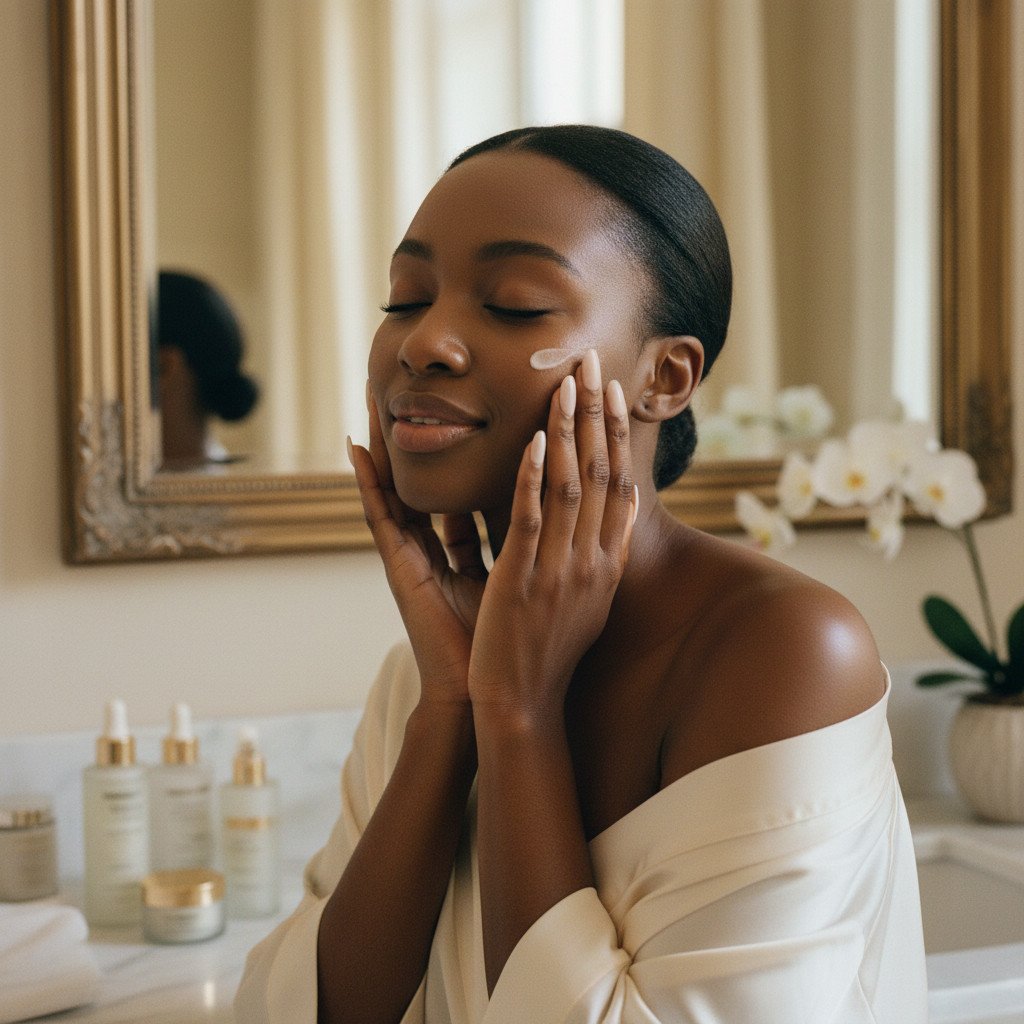
Now for the star of the show: your face sunscreen. This is the penultimate step in your skincare routine, applied after all your treatment serums and moisturizer have fully absorbed. Why here? Because sunscreen needs to form an even, uninterrupted film on the surface of your skin to effectively block or reflect UV rays. Applying it over fully absorbed products ensures it can create this protective barrier without being diluted or interfered with. If you apply sunscreen before moisturizer, the moisturizer could disrupt the SPF film, reducing its effectiveness. If you apply it after makeup, it won’t be able to form a proper layer on your skin.
For melanin-rich skin, selecting a face sunscreen dark skin no white cast on Amazon is key. Look for formulations specifically designed to blend seamlessly without leaving a ghostly residue. Apply a generous amount—typically two finger-lengths for your face and neck—and spread it evenly. Gently patting it in rather than vigorously rubbing can also help prevent pilling, especially if you’ve layered several products underneath. Allow your sunscreen to dry down completely. This can take anywhere from 5-15 minutes, depending on the formula. This “dry-down” time is crucial for the sunscreen to set and form its protective film, and it also prevents your makeup from disturbing it.
The Finishing Touch: Makeup
Once your sunscreen has fully absorbed and dried down, you’re ready for makeup. Your sunscreen now acts as a smooth, protected base. If you use a primer, apply it after sunscreen but before foundation. A gripping primer dark skin makeup on Amazon can help your foundation adhere even better and prolong its wear, especially over sunscreen. Then proceed with your foundation, concealer, and other makeup products as usual. This order ensures that your sunscreen is doing its job directly on your skin, and your makeup can then enhance your complexion without compromising your protection.
A Quick Recap of the Ideal Morning Order:
- Cleanse: Gently wash your face.
- Treat (Serums): Apply targeted serums (e.g., Vitamin C, Hyaluronic Acid). Allow to absorb.
- Eye Cream: Gently pat around the orbital bone.
- Moisturize: Apply your daily moisturizer. Allow to fully absorb (2-5 minutes).
- Face Sunscreen: Apply a generous amount evenly. Allow to dry down completely (5-15 minutes).
- Primer (Optional): If using, apply after sunscreen.
- Makeup: Apply foundation, concealer, etc.
This simple, logical progression ensures that each product has the opportunity to work effectively, culminating in a well-protected, radiant complexion that feels comfortable and looks flawless throughout the day. Remember, consistency is key, and a routine that feels good is a routine you’ll stick with.
How Serums, Moisturizer, and Makeup Can Affect Sunscreen Feel
The interplay between your various morning skincare and makeup products is a delicate dance, and each step can significantly influence how your face sunscreen feels, looks, and performs on melanin-rich skin. It’s not just about the order, but also about the formulation of each product and how they interact with one another. Understanding these dynamics can help you troubleshoot issues and optimize your routine for maximum comfort and efficacy.
The Impact of Serums
Serums are typically lightweight, concentrated formulas designed to penetrate deeply and deliver active ingredients. When applied correctly—on clean skin and allowed to fully absorb—they generally create an ideal base for subsequent layers. However, certain serum formulations can sometimes pose challenges. Serums rich in silicones, for instance, can create a very smooth, almost slick surface. While this can feel lovely, if not fully absorbed, it might create a barrier that prevents your sunscreen from adhering properly, leading to pilling. Similarly, serums that leave a slightly sticky or tacky residue, while excellent for hydration (like some hyaluronic acid serums), need ample time to dry down before sunscreen application. If your sunscreen is applied over a tacky serum, it can drag, clump, or feel heavier than intended. The key is patience: allow your serums to fully sink in until your skin feels soft and hydrated, but not wet or overly sticky, before moving on.
The Influence of Moisturizer
Moisturizer is arguably the most critical layer before sunscreen. Its primary role is to hydrate and nourish the skin, creating a comfortable canvas. However, the type and amount of moisturizer you use can profoundly affect your sunscreen’s wear. Rich, occlusive moisturizers, especially those with heavy oils or butters, can sometimes make sunscreen feel heavier or more prone to pilling if not given sufficient time to absorb. If your moisturizer creates a thick film on the skin, your sunscreen might struggle to form its own uniform layer, leading to a greasy feeling or a tendency to shift. Conversely, a very lightweight, fast-absorbing moisturizer can be an excellent partner for sunscreen, providing hydration without adding unnecessary bulk. The trick is to find a moisturizer that adequately hydrates your melanin-rich skin without leaving a significant residue. And, as always, allow it to fully absorb until your skin feels supple and moisturized, but not slick, before applying SPF.
The Interaction with Makeup
For many Black women, makeup is an integral part of their morning routine, and the seamless integration of sunscreen beneath it is a top priority. When sunscreen is applied correctly and given time to set, it should act as a smooth, protective base for your foundation and other complexion products. However, if your sunscreen hasn’t fully dried down, or if its formulation is incompatible with your makeup, you can encounter issues. A sunscreen that remains tacky or greasy can cause foundation to slide, streak, or separate, leading to a patchy appearance. It can also reduce the longevity of your makeup, causing it to wear off unevenly throughout the day. Some sunscreens, particularly those with a very dewy finish, might make matte foundations appear less matte, or vice versa. The goal is to choose a sunscreen that complements your desired makeup finish—perhaps a more matte or “gripping” sunscreen if you prefer a velvet finish, or a dewy one if you’re aiming for a radiant glow. Alternatively, using a primer specifically designed to work with sunscreen and makeup can bridge any gaps, creating a perfect canvas. Remember, the dry-down time for sunscreen is not just about its effectiveness; it’s also about ensuring your makeup applies flawlessly over it, allowing your natural beauty to shine through without compromise.
What to Do When Sunscreen Pills, Shifts, or Feels Heavy
Even with the best intentions and a clear understanding of routine order, sometimes sunscreen just doesn’t cooperate. Pilling, shifting, or a heavy, uncomfortable feeling are common frustrations, especially for those with melanin-rich skin who prioritize a seamless, invisible finish. These issues aren’t necessarily a sign that you’re doing something wrong, but rather an indication that a slight adjustment in your technique or product choice might be needed. Troubleshooting these common challenges can transform your SPF experience from a battle to a breeze.
Addressing Pilling: The Tiny Balls of Frustration
Pilling is perhaps the most common and annoying sunscreen woe. It occurs when products don’t absorb properly and instead clump together, forming small, eraser-like bits on your skin. Here’s how to tackle it:

- Allow Ample Absorption Time: This is the golden rule. Each product—serum, eye cream, moisturizer—needs time to fully sink into your skin before the next layer is applied. Don’t rush. After applying your moisturizer, wait at least 2-5 minutes, or until your skin feels hydrated but not wet or tacky. For sunscreen itself, give it 5-15 minutes to dry down before applying makeup.
- Less is More (Sometimes): While it’s crucial to apply enough sunscreen for adequate protection, over-applying other products can contribute to pilling. Use a pea-sized amount of serum and a nickel-sized amount of moisturizer.
- Application Technique: Instead of vigorously rubbing, try gently patting your sunscreen onto your skin. This can help it lay down smoothly without disturbing the layers underneath.
- Examine Product Formulations: Pilling often happens when incompatible ingredients meet. Silicones (ingredients ending in -cone, -xane, -conol) are common culprits. If your serum or moisturizer is silicone-heavy and your sunscreen also has a high silicone content, they might not play well together. Try switching one product to a silicone-free alternative, or ensure there’s a significant dry-down time between them. Similarly, some film-forming polymers in sunscreens can pill when rubbed excessively.
- Exfoliate Regularly: Dead skin cells can create an uneven surface, making it harder for products to absorb smoothly. Regular, gentle exfoliation (1-2 times a week) can help maintain a smooth canvas for your skincare.
Combating Shifting and Uneven Wear
If your sunscreen seems to migrate, separate, or cause your makeup to look patchy, it often relates to its finish and how it interacts with subsequent layers:
- Ensure Complete Dry-Down: A sunscreen that hasn’t fully set will inevitably shift. Give it time. If you’re in a rush, a quick, gentle pat with a tissue can absorb excess oil without disturbing the film, or you can use a small fan to speed up the drying process.
- Consider Your Sunscreen’s Finish: If your sunscreen leaves a very dewy or slick finish, it might not be the best base for a matte foundation, and vice versa. Experiment with sunscreens that offer different finishes—some are designed to be more matte or “gripping.” A tinted sunscreen deep skin tones on Amazon can also help with an even, seamless base.
- Primer Power: A good primer, applied after sunscreen, can create a bridge between your SPF and your makeup. Look for primers that are designed to grip makeup, blur pores, or control oil, depending on your needs.
- Makeup Application: Instead of rubbing foundation over sunscreen, try patting or stippling it on with a sponge or brush. This minimizes friction and helps the makeup adhere without disturbing the sunscreen layer.
Alleviating a Heavy or Greasy Feeling
For melanin-rich skin, a heavy or greasy sunscreen can feel particularly uncomfortable and contribute to an unwanted shine. This often comes down to product choice and application:
- Opt for Lighter Formulations: Not all sunscreens are created equal. Many brands now offer lightweight, fluid, or gel-cream sunscreens that feel virtually weightless. Look for terms like “fluid,” “gel,” “lotion,” “non-comedogenic,” or “oil-free.”
- Chemical vs. Mineral: While mineral sunscreens (zinc oxide, titanium dioxide) have come a long way, some can still feel heavier or leave a slight cast if not formulated well. Chemical sunscreens often have a lighter, more transparent feel. Explore both options to see what works best for your skin and preferences. You can learn more about this in our article on mineral vs. chemical SPF on dark skin.
- Adjust Moisturizer: If your sunscreen feels heavy, consider if your moisturizer is contributing to the issue. On warmer days or if your skin is naturally oily, you might opt for a lighter moisturizer or even skip it and rely on a hydrating serum and your sunscreen if it’s sufficiently moisturizing.
- Blotting Papers: Keep blotting papers handy throughout the day to absorb any excess oil or shine without disturbing your sunscreen or makeup.
- Setting Powder: A light dusting of translucent setting powder after your makeup can help to mattify any shine and set your sunscreen and makeup in place.
By systematically addressing these points, you can transform your sunscreen experience, ensuring it provides robust protection without compromising on comfort, feel, or the beautiful finish of your melanin-rich skin. Remember, finding the perfect routine is often a journey of gentle experimentation and observation.
How to Keep the Routine Simple Enough to Repeat
The most effective skincare routine isn’t the one with the most steps or the most expensive products; it’s the one you can consistently adhere to every single day. For melanin-rich skin, daily sun protection is non-negotiable, but if the process feels like a burdensome chore, consistency will inevitably falter. The key to making face sunscreen a non-negotiable, joyful part of your morning is to simplify the overall routine, making it efficient, intuitive, and genuinely pleasant to repeat.
Prioritize and Streamline
Take an honest look at your current morning skincare regimen. Do you truly need every single serum or treatment every single morning? While multi-step routines can be beneficial, sometimes less is more, especially for daily consistency. Identify your core needs: cleansing, a key treatment (like Vitamin C for antioxidant protection and brightening), hydration, and crucially, sun protection. If you have multiple serums, consider rotating them (e.g., Vitamin C in the morning, a hydrating serum at night) or using a multi-tasking product that combines several benefits. The fewer layers you have, the less potential for pilling or a heavy feeling, and the quicker your routine will be. Remember, the goal is effective simplicity.
Choose Multi-Tasking Products
One of the easiest ways to streamline is to select products that pull double duty. Many sunscreens now come with added skincare benefits, such as antioxidants, niacinamide, or hyaluronic acid, offering hydration and treatment alongside SPF. Some moisturizers also contain a low SPF, though it’s often recommended to use a dedicated sunscreen for adequate protection. For those who wear makeup, a tinted sunscreen deep skin tones on Amazon can serve as both your SPF and a light foundation or skin tint, reducing a step. By opting for products that combine functions, you can reduce the number of layers and the overall time spent, making your morning routine more efficient without sacrificing benefits.
Embrace the “Less is More” Philosophy with Application
While we emphasize applying a generous amount of sunscreen, the same principle doesn’t always apply to every other product. Using excessive amounts of serums or moisturizers can lead to a longer absorption time, a heavier feel, and increased likelihood of pilling. A pea-sized amount for serums and a nickel-sized amount for moisturizer is often sufficient for the face and neck. Focus on gentle, even application, allowing each layer to absorb fully. This not only prevents product waste but also ensures a smoother canvas for your sunscreen.
Create a Dedicated “Sunscreen Moment”
Instead of viewing sunscreen as just another step, reframe it as a conscious act of self-care and protection. Make it a dedicated “sunscreen moment” in your routine. This means having your chosen SPF readily accessible, understanding exactly where it fits, and giving it the necessary time to dry down. This pause can be a moment for reflection, a quick stretch, or simply a chance to let your skin breathe before the next step. When you build this mindful habit, the application becomes less of a chore and more of an ingrained ritual, like brushing your teeth.
Find Your “Holy Grail” Sunscreen
The biggest barrier to consistent sunscreen use is often finding a formula that you genuinely love to wear. For melanin-rich skin, this means a sunscreen that is truly invisible, comfortable, non-pilling, and doesn’t interfere with makeup. Don’t be afraid to experiment. There are countless options on the market—mineral, chemical, fluid, gel, lotion, matte, dewy. Invest time in finding a sunscreen that feels amazing on your skin, blends seamlessly, and makes you look forward to applying it. Once you find that perfect match, the battle for consistency is largely won. You can explore various options and recommendations in our face sunscreen basics for melanin-rich skin article.
Consistency Over Perfection
Finally, remember that consistency trumps perfection. There might be days when you’re rushed, or when your sunscreen doesn’t lay perfectly. Don’t let these minor hiccups derail your entire routine. The most important thing is to apply *some* SPF every day. Even a slightly imperfect application is better than none. Cultivate a mindset of self-compassion and focus on the long-term benefits for your skin health and radiance. By simplifying, prioritizing, and finding joy in the process, applying face sunscreen will become an effortless and cherished part of your daily ritual, protecting your beautiful melanin-rich skin for years to come.

Frequently Asked Questions
What is the absolute last step before makeup in a morning routine?
The absolute last step before makeup in a morning routine should be your face sunscreen. It needs to form a protective film directly on your skin to be most effective, and applying makeup over it ensures it stays in place to do its job. Allow your sunscreen to fully dry down before proceeding with any makeup application.
Can I mix my sunscreen with my moisturizer or foundation?
It is generally not recommended to mix your sunscreen with your moisturizer or foundation. Doing so can dilute the sunscreen, reduce its SPF rating, and compromise the integrity of its protective film. For optimal protection, apply your sunscreen as a distinct layer after moisturizer and before makeup.
How long should I wait between applying products in my morning routine?
A good rule of thumb is to wait 30-60 seconds between applying serums and moisturizer, and then 2-5 minutes after moisturizer before applying sunscreen. For sunscreen itself, allow 5-15 minutes for it to fully dry down and set before applying makeup. This ensures each product absorbs properly and prevents pilling.
What if my sunscreen feels too heavy or greasy on my melanin-rich skin?
If your sunscreen feels heavy or greasy, consider switching to a lighter formulation such as a gel, fluid, or serum-like texture. You might also be using too much moisturizer underneath, or the sunscreen itself might be too emollient for your skin type. Explore different brands and types, including those specifically formulated for a matte finish or for darker skin tones.
Should I reapply sunscreen if I’m wearing makeup?
Yes, sunscreen should be reapplied every two hours, especially if you’re outdoors or sweating. Over makeup, you can use a powder sunscreen, a sunscreen mist or spray, or gently pat on a thin layer of a liquid sunscreen with a damp beauty sponge. Prioritize protection, even if it means a slight touch-up to your makeup.
Does tinted sunscreen count as both my SPF and foundation?
Tinted sunscreen can serve as both your SPF and a light foundation or skin tint, especially if you apply the recommended amount (two finger-lengths) for adequate sun protection. However, if you need more coverage, you might still apply a separate foundation over it, ensuring the tinted SPF is fully absorbed first. Tinted sunscreens formulated for deep skin tones can be an excellent option for a seamless finish.
What if I have a beard or facial hair? Where does sunscreen fit?
If you have a beard or facial hair, apply your face sunscreen to all exposed skin, including any areas of the face not covered by hair. For the beard area itself, ensure you thoroughly work the sunscreen into the skin beneath the hair, not just on the hair strands. This might require a lighter, more fluid sunscreen that can penetrate easily without leaving residue.
Where to Go Next
You’ve taken a significant step in understanding the vital role of routine order in maximizing your face sunscreen’s effectiveness and comfort on melanin-rich skin. This knowledge empowers you to build a morning ritual that not only protects your skin but also celebrates its natural radiance. Remember, consistent sun protection is one of the most powerful tools in your skincare arsenal, helping to preserve your skin’s health, prevent premature aging, and manage concerns like hyperpigmentation.
To deepen your understanding and continue your journey towards optimal sun protection, we invite you to explore more resources designed specifically for your beautiful skin. Understanding the foundational aspects of face sunscreen is key to making informed choices. Dive into our comprehensive guide on Face Sunscreen Basics for Melanin-Rich Skin to learn about different types, ingredients, and what to look for in a formula that truly disappears on your complexion. Knowing How Much Face SPF to Use and Where to Apply on Dark Skin is equally crucial for ensuring you’re getting the advertised protection without overdoing it. And if you’re still weighing your options between different formulations, our article on Mineral vs. Chemical SPF on Dark Skin offers a balanced perspective to help you choose the best fit for your lifestyle and preferences.
Beyond the fundamentals, understanding the profound impact of sun protection on specific skin concerns is invaluable. Learn How Face Sunscreen Supports Hyperpigmentation and Dark Spots, a common concern for melanin-rich skin, and solidify your commitment to daily SPF as a preventative and corrective measure. For a broader perspective on caring for your unique skin, explore our foundational content on Skincare for Black Women, which covers a holistic approach to nurturing your complexion. And for those who love to complete their look with makeup, our insights on Makeup for Deep Skin Tones can help you integrate your SPF seamlessly into your beauty routine, ensuring your foundation and other products sit beautifully over your protective layer. Finally, for a deeper dive into managing specific concerns, our section on Hyperpigmentation and Dark Spots offers targeted strategies and product recommendations.
Embrace the journey of consistent sun protection with confidence and grace. Your beautiful melanin-rich skin deserves nothing less than the best care, and by integrating face sunscreen thoughtfully into your morning routine, you are investing in its long-term health, vibrancy, and undeniable glow. This is an act of deep self-love, a commitment to preserving the beauty that is uniquely yours. Continue to explore, learn, and empower yourself with the knowledge to make every day a radiant day.
INTERNAL LINKING OPPORTUNITIES
- https://blackbeautybasics.com/sunscreen-for-dark-skin/face-sunscreen-fundamentals-for-dark-skin/: Primary backlink to the cluster overview.
- https://blackbeautybasics.com/sunscreen-for-dark-skin/: Secondary backlink to the parent pillar page for sunscreen.
- https://blackbeautybasics.com/sunscreen-for-dark-skin/face-sunscreen-fundamentals-for-dark-skin/mineral-vs-chemical-spf-on-dark-skin/: Link to sibling article discussing mineral vs. chemical sunscreens.
- https://blackbeautybasics.com/sunscreen-for-dark-skin/face-sunscreen-fundamentals-for-dark-skin/face-sunscreen-basics-for-melanin-rich-skin/: Link to sibling article on face sunscreen basics.
- https://blackbeautybasics.com/sunscreen-for-dark-skin/face-sunscreen-fundamentals-for-dark-skin/how-much-face-spf-to-use-and-where-to-apply-on-dark-skin/: Link to sibling article on sunscreen application amount.
- https://blackbeautybasics.com/sunscreen-for-dark-skin/face-sunscreen-fundamentals-for-dark-skin/how-face-sunscreen-supports-hyperpigmentation-and-dark-spots/: Link to sibling article on sunscreen and hyperpigmentation.
- https://blackbeautybasics.com/skincare-for-black-women/: Cross-pillar link to general skincare for Black women.
- https://blackbeautybasics.com/makeup-for-deep-skin-tones/: Cross-pillar link to makeup for deep skin tones.
- https://blackbeautybasics.com/hyperpigmentation-and-dark-spots/: Cross-pillar link to hyperpigmentation and dark spots.
Related next steps
Related posts:
 Where Body SPF Fits Into Your Routine on Melanin-Rich Skin
 Morning Skincare Routine for Black Women by Skin Type (Oily, Dry, Combo)
 How Face Sunscreen Supports Hyperpigmentation and Dark Spots Work on Melanin-Rich Skin
 Morning and Night Skincare Routine for African American Women
 Morning to Evening – A Skincare Routine for Black Women
 The Right Order to Apply Your Skincare Products (AM/PM Cheat Sheets)