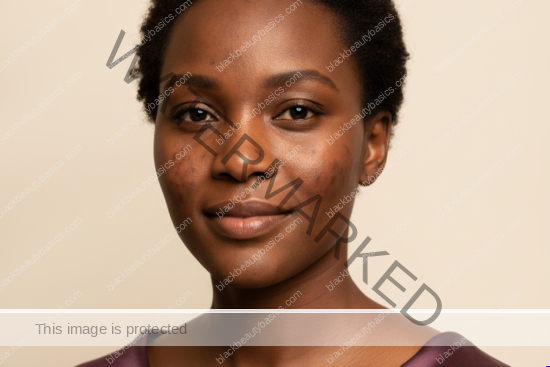
Dark spots after ingrown hairs on the bikini line are incredibly common, but they are also wrapped in a lot of unnecessary shame. The area is private, sensitive, and often judged by beauty standards that pretend bodies should be hairless, frictionless, poreless, and perfectly even. Real skin does not work that way. Hair grows, curls, rubs, gets removed, and sometimes leaves marks.

This guide explains why bikini-line ingrown hairs can leave dark spots on melanin-rich skin, what makes the cycle worse, and how to care for the area in a way that is gentle, modest, and realistic. For the broader context, BBB’s intimate-area hyperpigmentation guide covers bikini line, buttocks, and inner-thigh discoloration with the same no-shame approach.
Why Ingrown Hairs Leave Dark Spots
Ingrown hairs happen when hair grows back into the skin or gets trapped under the surface. Curly and coily hair patterns can be more prone to this, especially after shaving, waxing, tight clothing, friction, or irritation. When the bump becomes inflamed, the skin may respond by making extra pigment. On deep skin, that pigment can remain long after the bump flattens.
The bikini line is especially vulnerable because it deals with hair removal, sweat, movement, seams, underwear, leggings, swimsuits, and friction. If bumps are repeatedly irritated, picked, shaved over, or squeezed, the marks can deepen. This is post-inflammatory hyperpigmentation, not poor hygiene.
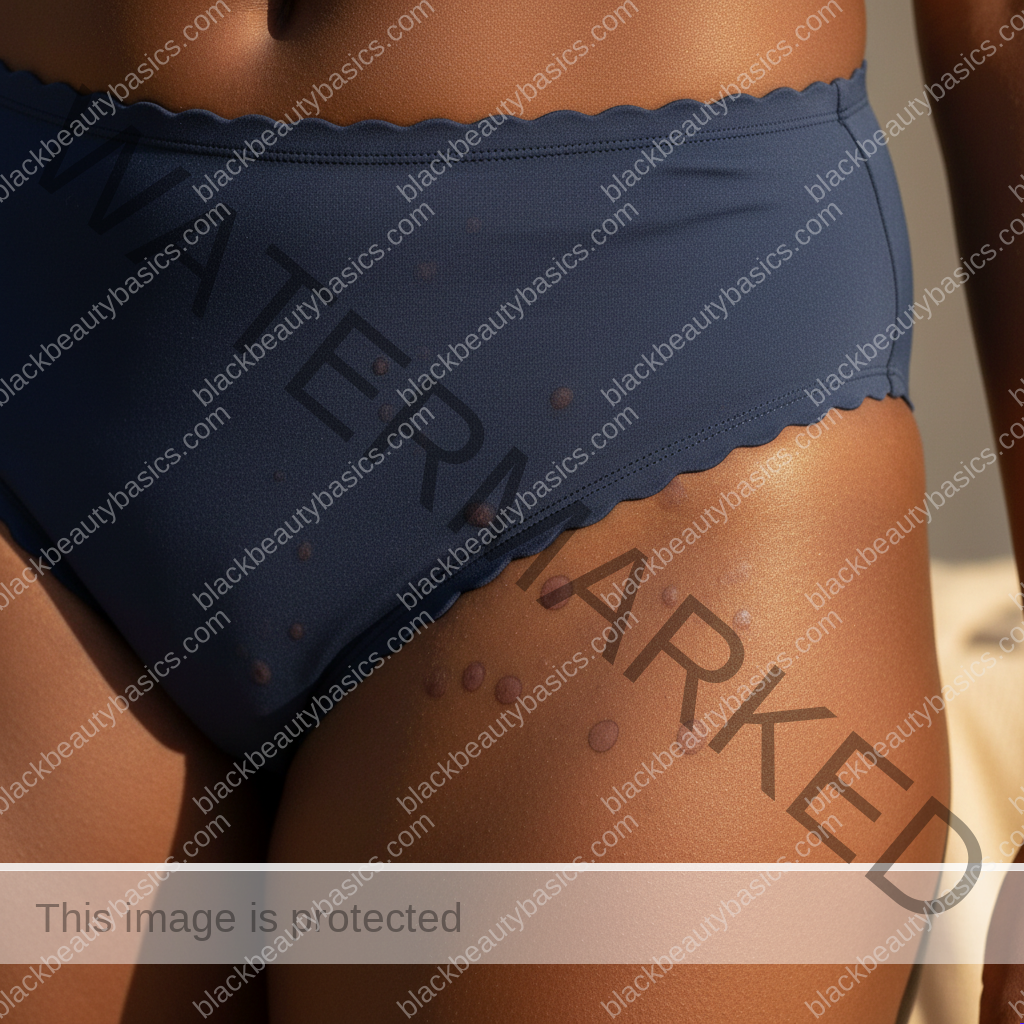
Some bumps are more than simple ingrowns. Painful, recurring, draining, or scar-like bumps may need medical evaluation, especially if they happen in the bikini line, buttocks, or underarms. Conditions like folliculitis or hidradenitis suppurativa can be mistaken for ordinary ingrowns. If bumps are severe or recurring, it is worth getting help.
What to Stop Doing
Stop shaving over active bumps. Shaving irritated skin can cut bumps, spread irritation, and create new marks. If the area is inflamed, give it a break. Smoothness is not worth a longer pigment cycle.
Stop digging for trapped hairs with nails, tweezers, or pins. It may feel satisfying in the moment, but it can create deeper injury, infection risk, and more hyperpigmentation. If a hair is not easily released without trauma, leave it alone or ask a professional.
Stop using harsh scrubs on the bikini line. The area is sensitive, and rough exfoliation can make inflammation worse. Chemical exfoliants may help some people once skin is fully healed, but they should be used carefully and not on broken or freshly shaved skin.
Stop blaming your body. Dark marks in this area are common on deep skin because the area sees friction and hair growth. The goal is not to make your skin look untouched by life. The goal is to reduce irritation and support healing.
A Gentle Bikini-Line Care Plan
Start with a gentle cleanse. Use a mild, fragrance-free body wash if scented products irritate you. Avoid scrubbing with rough tools. If you want product examples to compare, use criteria first: gentle, non-stinging, fragrance-free if reactive. A search like fragrance-free body wash for sensitive skin can help you compare options.
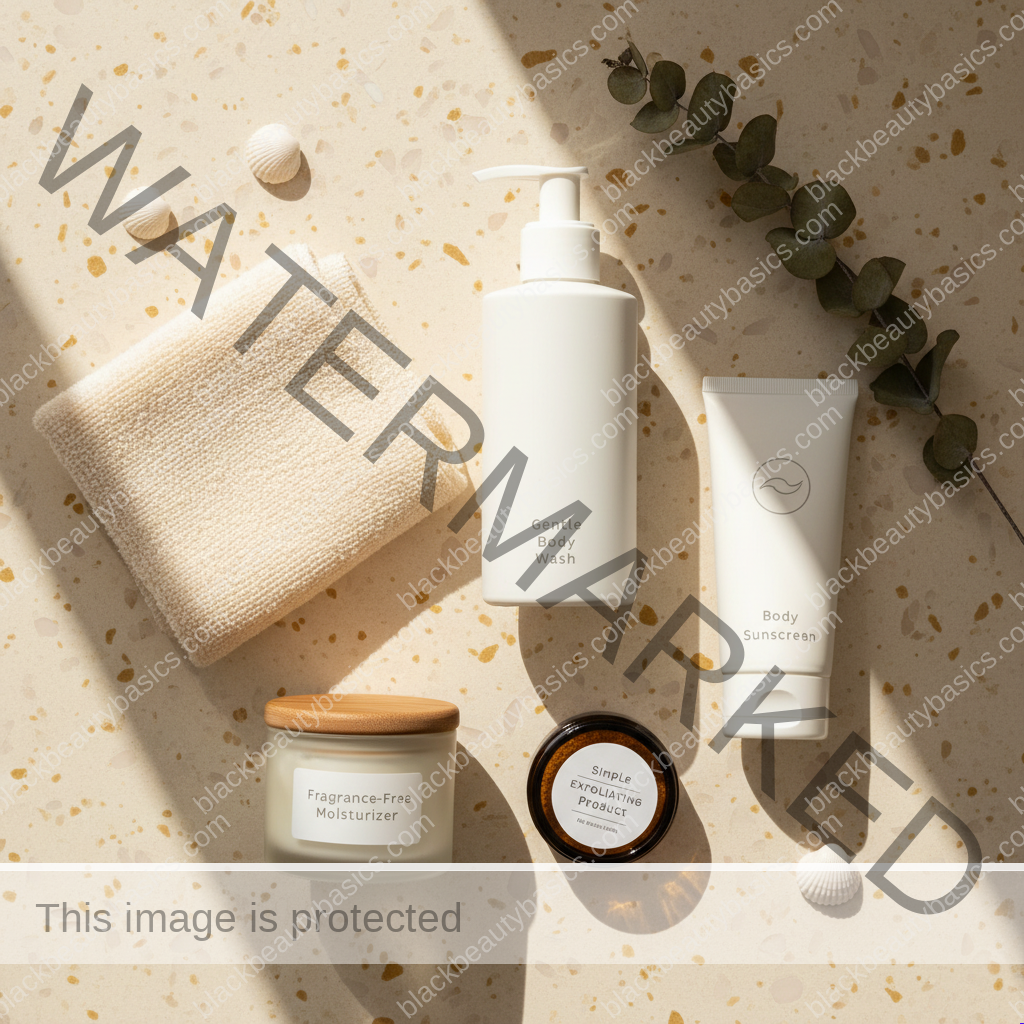
Moisturize once the skin is clean and dry. A lightweight, fragrance-free moisturizer can reduce dryness and friction. If the area gets sweaty or rubbed by seams, breathable fabrics and looser clothing can help. For some people, an anti-chafe balm on areas that rub can reduce irritation. Compare product types like anti-chafe balm for sensitive skin, but avoid applying anything irritating to broken skin.
If you exfoliate, wait until skin is fully healed. A gentle chemical exfoliant may help reduce clogged follicles for some people, but it should not sting or burn. Use it sparingly and avoid using it right before or after shaving or waxing. More exfoliation is not more progress.
Rethink hair removal if bumps keep returning. Shaving with the grain, using a fresh razor, not stretching skin aggressively, trimming instead of shaving, or spacing out waxing may help. Laser hair removal can help some people, but it must be done by someone experienced with deep skin tones and appropriate devices.

When Marks Are Already There
Once bumps are healed, focus on preventing new ones. Old marks fade more slowly when new irritation keeps happening. If the skin is calm, you can consider gentle pigment-supportive body products, but avoid strong acids or brighteners on sensitive, recently irritated areas. BBB’s guide to fading dark spots without damaging your barrier applies here, too.
Be patient with the timeline. Bikini-line marks can take months to soften because the area sees ongoing friction. If marks are raised, painful, spreading, or connected to recurring boils or drainage, see a dermatologist. You deserve care that looks beyond “just exfoliate.”
Frequently Asked Questions
1. Are bikini-line dark spots normal on Black skin?
Yes, they are common, especially after ingrown hairs, shaving bumps, waxing irritation, and friction. Common does not mean you have to accept discomfort, but it does mean you should not shame yourself for having them.
2. Should I exfoliate ingrown hair marks?
Only after the skin is fully healed, and gently. Do not exfoliate active bumps, broken skin, or inflamed areas. If exfoliation stings or causes more bumps, stop and simplify.
3. Can shaving cause more dark spots?
Yes, if shaving causes bumps, cuts, or irritation. Shaving over active bumps can deepen marks. Technique, razor freshness, direction, lubrication, and spacing all matter. Trimming may be a better option for some people.
4. Is waxing better than shaving?
Not always. Waxing helps some people and irritates others. If waxing leaves bumps, burns, or dark marks, it may not be the best method for your skin. The gentler method is the one that causes fewer flares for you.
5. Can I use brightening creams on the bikini line?
Be careful. The area is sensitive, and harsh brighteners can irritate or worsen pigment. Avoid products that burn, peel aggressively, or promise bleaching. If you are unsure, ask a dermatologist.
6. How long do bikini-line marks take to fade?
They can take several months, especially if friction and ingrowns continue. Preventing new bumps is just as important as treating old marks. Slow fading is common on melanin-rich skin.
7. When should I see a dermatologist?
See a dermatologist if bumps are painful, recurring, draining, scarring, or spreading. Also seek help if dark marks are distressing or not improving after gentle care. A skin-of-color-informed dermatologist can help reduce both bumps and pigment risk.

What to Do Next
If bikini-line ingrowns leave dark spots, build your plan around prevention: gentler hair removal, less friction, breathable clothing, no picking, and patient pigment care once skin is healed. Avoid harsh brightening shortcuts in sensitive areas.
For related support, read inner-thigh discoloration care and realistic hyperpigmentation timelines. Your bikini line deserves the same gentleness you would give your face.
Related next steps
Related posts:
 Treating Active Ingrown Hairs, Bumps, and Dark Marks on Melanin-Rich Skin
 Dark Inner Thighs and Bikini Line: What Really Works on Dark Skin
 Why Ingrown Hairs Are More Common on Melanin-Rich, Coily Hair
 Shaving the Bikini Line on Dark Skin: Step‑by‑Step for Fewer Razor Bumps
 Bikini Line Darkening on Melanin-Rich Skin: Patterns & Care
 Preventing and Treating Razor Bumps on the Face, Underarms, and Bikini Line for Black Women