
Inner-thigh discoloration is one of those body concerns people whisper about, search privately, and feel alone with, even though it is extremely common. Thighs touch. Skin moves. Clothing rubs. Sweat happens. Hair removal happens. Bodies live. On melanin-rich skin, repeated friction or irritation can leave deeper color, and that does not mean your body is dirty, broken, or in need of punishment.

This guide covers inner-thigh discoloration on melanin-rich skin with a practical care plan: reduce friction, protect the barrier, treat gently once skin is calm, and know when to get medical guidance. For the broader body-care map, BBB’s body hyperpigmentation guide connects inner thighs with underarms, knees, elbows, and other high-friction zones.
Why Inner Thighs Darken
The inner thighs are a friction zone. Skin may rub against skin, seams, leggings, shapewear, swimsuits, or underwear. Sweat and heat can intensify that friction. Over time, repeated irritation can trigger post-inflammatory hyperpigmentation on deep skin.
Hair removal can also contribute. Shaving, waxing, ingrown hairs, and razor bumps can leave marks along the bikini line and inner thigh area. If bumps are recurring, the marks may keep appearing faster than old ones fade. BBB’s guide to dark spots after bikini-line ingrown hairs goes deeper on that pattern.
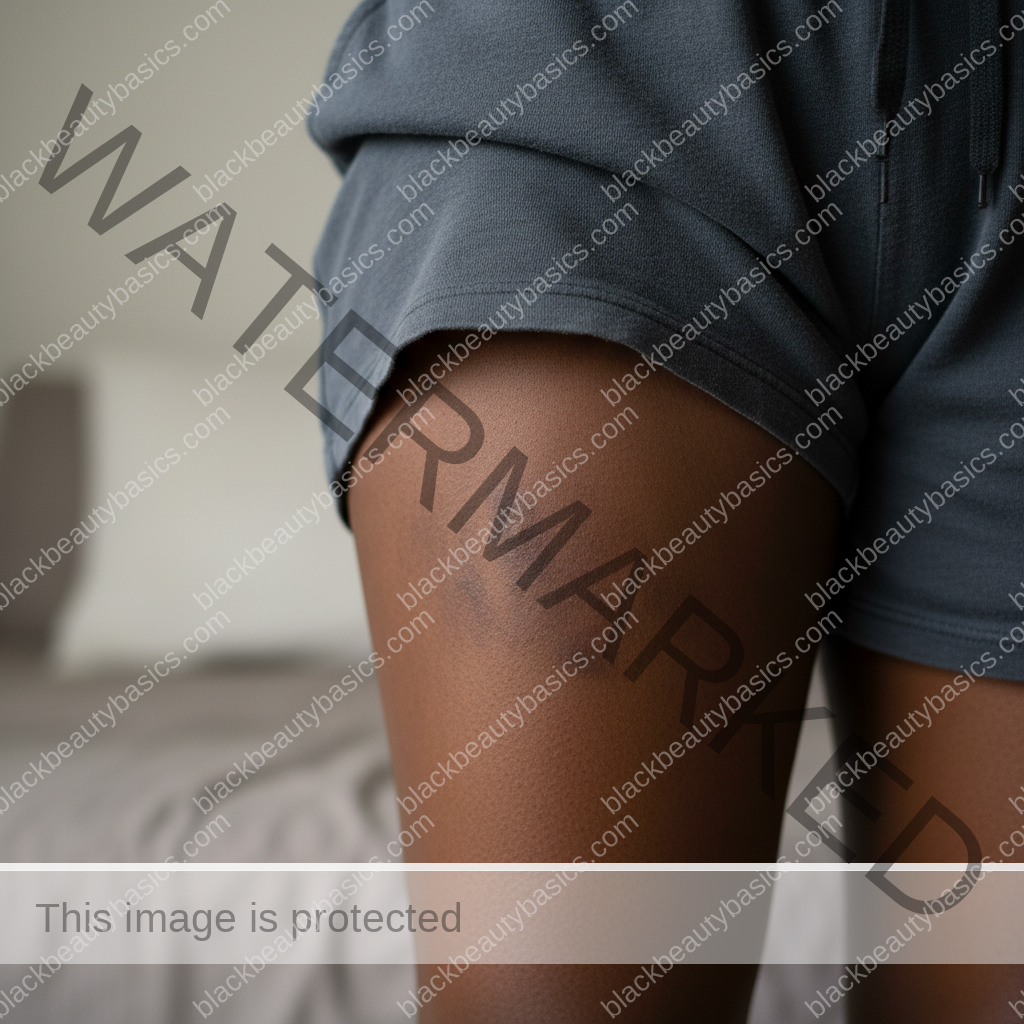
Sometimes inner-thigh darkening is connected to rashes, yeast irritation, eczema, hidradenitis suppurativa, or other skin conditions. If there is itching, pain, odor change, drainage, boils, scaling, or spreading rash, treat the medical concern first. Pigment care comes after safety and comfort.
What to Avoid
Avoid lemon juice, baking soda, harsh scrubs, and bleaching promises. Sensitive high-friction skin can become more irritated from aggressive treatments. If a product burns, stings, or peels the area, it may be creating the next mark.
Avoid tight clothing when the area is already irritated. You do not have to give up leggings forever, but if the skin is tender, a few days of softer, looser fabrics may help. Friction management is part of care.
Avoid treating inner-thigh darkness as a hygiene issue. Washing harder will not erase pigment caused by friction, inflammation, or hair removal. Overwashing may dry and irritate the skin, making the cycle worse.
A Practical Inner-Thigh Care Routine
Start with gentle cleansing. Use a mild body wash and rinse well. Avoid rough scrubbing tools on irritated skin. If scented body wash makes the area itchy or dry, compare options like gentle fragrance-free body wash for sensitive skin. Criteria matter more than the brand name.
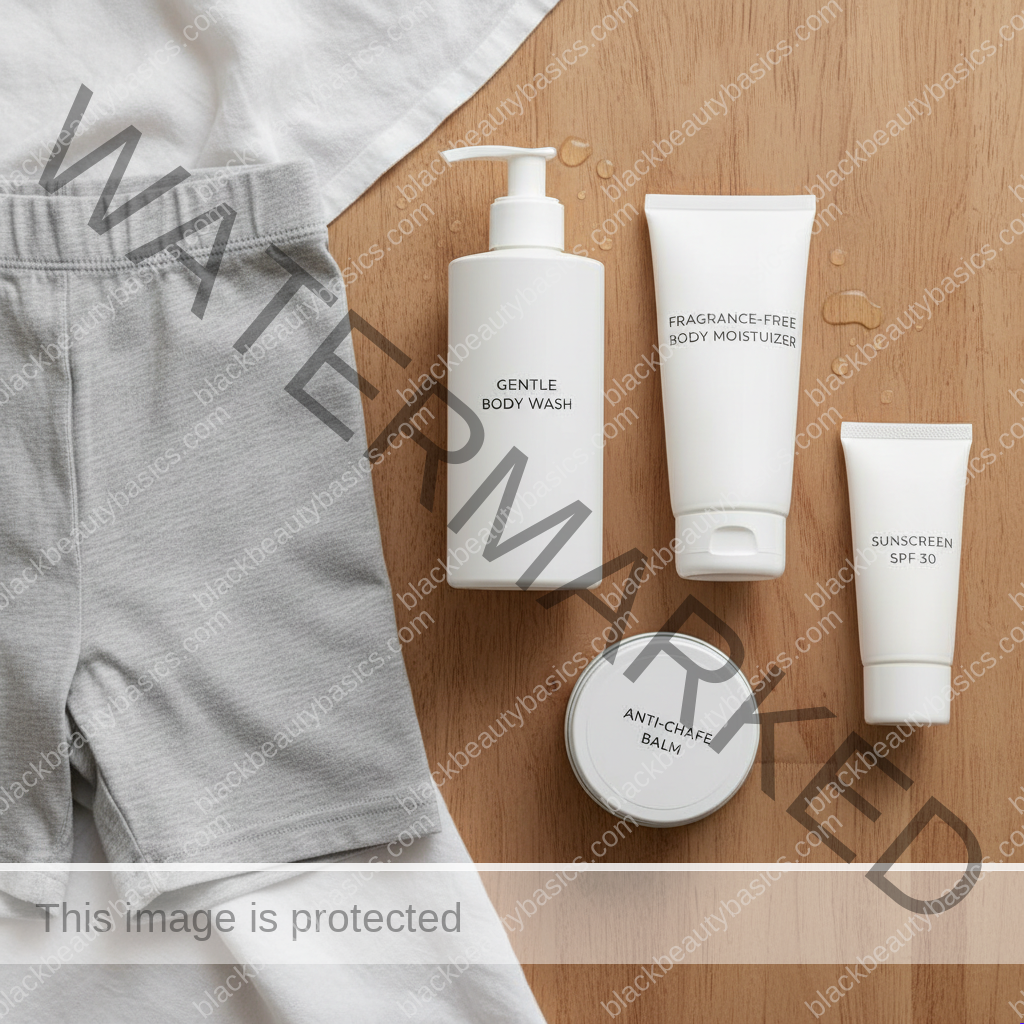
Moisturize after bathing. A fragrance-free body lotion or cream can reduce dryness and help the skin tolerate movement. If thigh rubbing causes discomfort, an anti-chafe balm can help create slip and reduce irritation. You can compare examples like anti-chafe balm for thighs and sensitive skin, but avoid using anything that stings or traps irritation on broken skin.
Use gentle exfoliation only when the skin is calm. If the area is not itchy, broken, bumpy, or irritated, a mild exfoliating body product may help texture for some people. Start slowly. Once or twice a week may be plenty. Do not combine scrubs, acids, and hair removal in the same window just because you want fast results.
Protect exposed skin when relevant. Inner thighs may not always see sun, but if you wear swimwear or shorter clothing, sunscreen can help prevent exposed marks from darkening. A search like body sunscreen for dark skin with no white cast can help compare textures.

When to Get More Help
If inner-thigh discoloration comes with recurring boils, painful lumps, drainage, scarring, or tunnels under the skin, ask a dermatologist about hidradenitis suppurativa or other inflammatory conditions. These need more than a brightening routine.
If the area is itchy, smells different, burns, flakes, or has a spreading rash, consider yeast, dermatitis, or another irritation pattern. Treating pigment before treating the active issue can make things worse. Comfort first, pigment second.
If the skin is velvety, thickened, or darkening in multiple folds, medical evaluation may be helpful. Some body-fold changes can be connected to internal factors. A clinician can help you understand what is happening without shame.
Frequently Asked Questions
1. Are dark inner thighs normal on Black skin?
Yes, they are common. Friction, movement, sweat, hair removal, and inflammation can all contribute. Natural tone variation is also normal. The goal is comfort and less irritation, not forcing the area to match another part of your body.
2. Can thigh rubbing cause discoloration?
Yes. Repeated friction can trigger inflammation, and melanin-rich skin may respond with extra pigment. Reducing friction with clothing choices, moisture, or anti-chafe products can help prevent new darkening.
3. Should I scrub my inner thighs?
No aggressive scrubbing. It can irritate the skin and worsen marks. Gentle exfoliation may help some people once skin is calm, but harsh scrubs and DIY bleaching routines are not safe care.
4. Can shaving make inner-thigh marks worse?
Yes, if shaving causes bumps, cuts, or ingrown hairs. Avoid shaving irritated skin, use gentle technique, and consider trimming or professional guidance if ingrowns keep returning.
5. How long does inner-thigh discoloration take to fade?
It can take months, especially if friction or bumps continue. Preventing new irritation is just as important as treating old marks. Slow progress is normal on deep skin.
6. Are brightening creams safe for inner thighs?
Some products may be too irritating for this sensitive area. Avoid anything that burns, peels aggressively, or promises bleaching. If you want treatment, choose gentle products and consider dermatologist guidance.
7. When should I see a dermatologist?
See a dermatologist if there are painful lumps, drainage, recurring boils, severe itching, rash, odor change, thick velvety skin, or discoloration that worries you. Active skin conditions need proper care before pigment treatment.

What to Do Next
Start with the simplest support: reduce friction, moisturize, avoid harsh scrubbing, and treat bumps or rashes before treating pigment. If the skin is calm, you can add gentle exfoliation or pigment support slowly.
For related concerns, read bikini-line ingrown hair dark spots and underarm darkening on dark skin. Dark inner thighs are not a moral issue. They are a body-care pattern you can meet with patience.
Related next steps
Related posts:
 Inner Thigh and Bikini-Adjacent Darkening from Friction: Understanding and Nurturing Melanin-Rich Skin
 Inner Thigh Darkening Near the Groin: Friction, Hair, and Fabrics
 Knee and Elbow Discoloration on Deep Skin: Routine-Building Guide
 Intimate-Area Hyperpigmentation: Bikini, Buttocks & Inner Thighs on Melanin-Rich Skin
 Self-Care Activities for Women: 101 Practical Ways to Reconnect & Relax
 Focused Care for Knees, Elbows, Heels, and Inner Thighs