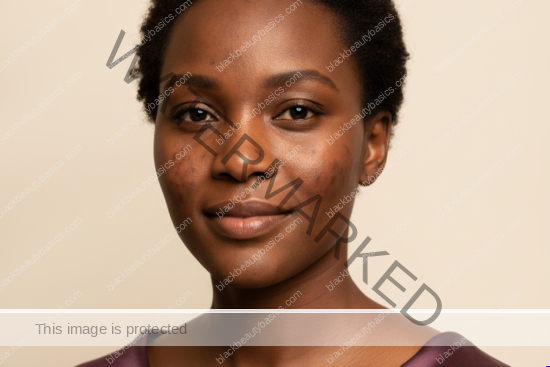
Not every dark mark behaves the same way. One spot may show up after a pimple and slowly soften. Another may look like a soft brown patch that keeps returning around the cheeks, forehead, upper lip, or jawline. On deep, melanin-rich skin, both can be easy to call “hyperpigmentation,” but the difference between post-inflammatory hyperpigmentation and melasma matters because the care strategy is not always the same.
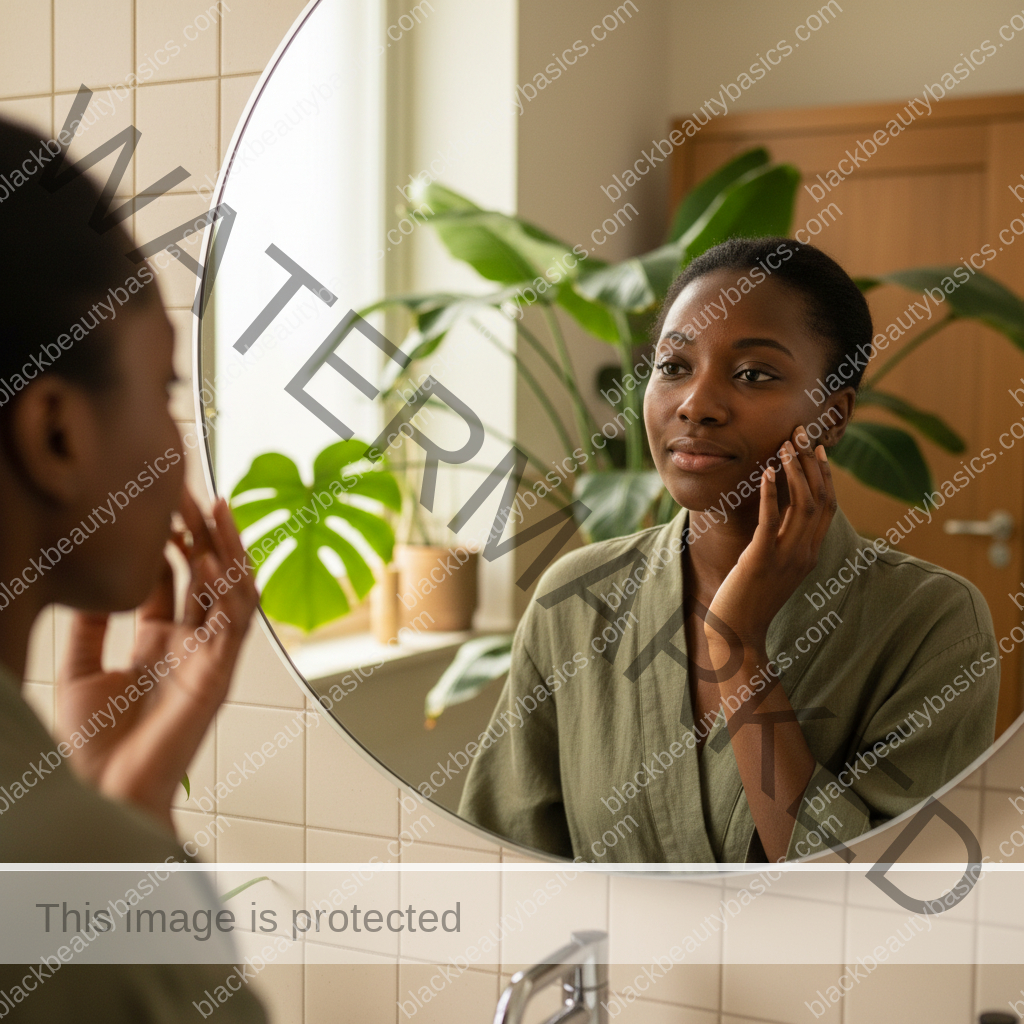
This guide will help you think through PIH vs melasma on dark skin in a calmer, more useful way. It is not a diagnosis, and it is not meant to replace a dermatologist, especially if your discoloration is changing, spreading, painful, or emotionally heavy. But it can help you understand the pattern, avoid common mistakes, and decide when home care makes sense versus when professional guidance is the kinder move. For the wider foundation, start with BBB’s facial hyperpigmentation guide, then use this article to sort the two most common conversations people mix together.
Why PIH and Melasma Get Confused on Dark Skin
PIH stands for post-inflammatory hyperpigmentation. It means the skin made extra pigment after inflammation or injury. The trigger may be acne, eczema, a bug bite, a burn, waxing, threading, shaving irritation, picking, or a product that was too harsh. The mark is the after-story. On richly melanated skin, that after-story may look brown, gray-brown, purple-brown, or almost blue-brown depending on depth and lighting.
Melasma is different. It is a type of hyperpigmentation that often appears in broader patches rather than isolated dots. It can be influenced by hormones, genetics, heat, UV exposure, visible light, and sometimes pregnancy or hormonal medications. It may show up on the cheeks, forehead, upper lip, nose bridge, or jawline. Melasma can be stubborn because it is not only a mark left behind by one clear irritation. It can behave more like a recurring pattern that is easily re-triggered.
They get confused because both can look brown on deep skin, both can last for months, and both may darken with sun exposure. A person can also have both at the same time. You might have acne marks on the cheeks plus melasma-like patches around the mouth or forehead. That overlap is one reason generic “dark spot” advice can feel frustrating. If the advice assumes every mark came from a pimple, it may miss the bigger pattern.
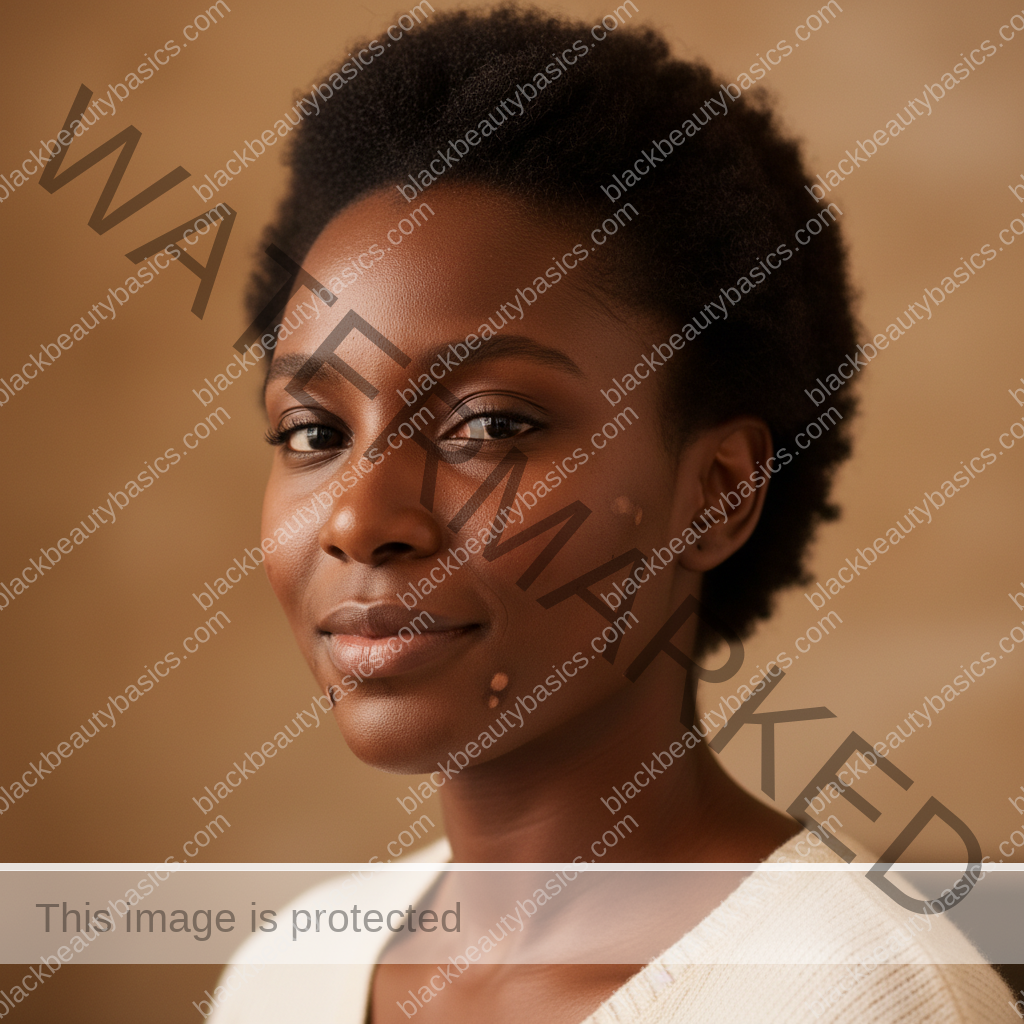
The first clue is usually history. If a mark appeared exactly where a pimple, scratch, rash, or ingrown hair used to be, PIH is more likely. If the discoloration looks patchy, symmetrical, recurring, or tied to sun, heat, pregnancy, hormones, or family history, melasma may be part of the picture. That does not mean you need to label yourself perfectly from a bathroom mirror. It means you can stop treating every mark like the same emergency.
How PIH Usually Behaves
PIH is usually tied to a trigger you can name. The pimple was there. The waxing irritation was there. The eczema flare was there. Then the dark mark stayed behind after the original problem calmed down. That is why treating PIH is partly about fading and partly about prevention. If new inflammation keeps happening, new marks keep forming, even if your brightening product is doing some work on the old ones.
PIH can be shallow or deeper. Shallow marks may look warm brown and soften more visibly over time. Deeper marks may look gray-brown or blue-brown and can linger longer. The depth matters because deeper pigment is harder for topical products to influence quickly. This is one reason two dark spots from two different breakouts may fade at completely different speeds. The size, depth, trigger, picking, sun exposure, and your skin’s current barrier health all play a role.
With PIH, a gentle plan often begins by controlling the source of inflammation. If acne is still active, an acne-supportive routine matters. If shaving bumps are the trigger, hair-removal habits matter. If eczema keeps flaring, calming the skin condition matters more than layering brightening serums. You can read more about the timeline in BBB’s guide to why dark spots last longer on deep skin.
The mistake with PIH is trying to scrub the mark off. Scrubs, strong acids used too often, and aggressive spot treatments can keep the skin irritated. That irritation can create more pigment, especially on melanin-rich skin. PIH improves best when the routine lowers inflammation, protects from UV exposure, supports the barrier, and uses treatments slowly enough for the skin to tolerate them.
How Melasma Usually Behaves
Melasma often behaves less like a single leftover mark and more like a pattern. It may look like soft-edged patches across the cheeks, forehead, upper lip, or jawline. It can become more noticeable after sun exposure, heat, pregnancy, hormonal shifts, or certain medications. Some people notice it returns in the same areas even after it improves. That repeat behavior is one of the clues that the discoloration may not be simple PIH.
On dark skin, melasma may look brown, gray-brown, or muddy rather than clearly tan. It can be emotionally hard because it sits in visible areas of the face and may not respond quickly to the products people use for post-acne marks. That does not mean your skin is impossible. It means melasma often requires more strategy, more protection, and sometimes professional care.
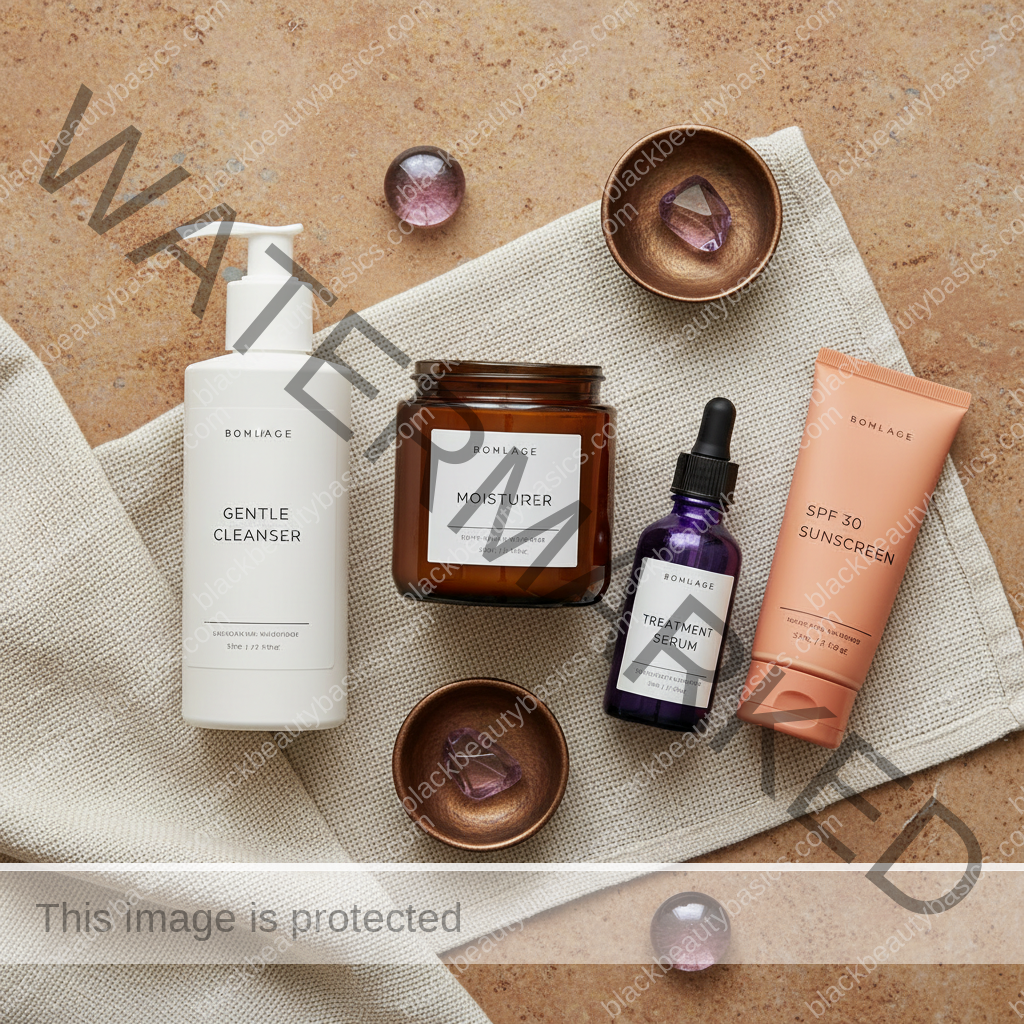
The baseline for melasma usually includes serious light protection. Broad-spectrum sunscreen matters, and for many people, visible light protection can matter too. Tinted sunscreens with iron oxides are often discussed because visible light can contribute to pigmentation for some melasma-prone skin. Heat can also be a trigger for some people, so repeated high-heat exposure may complicate the picture. This is not about living in fear of the sun. It is about understanding that melasma may need a more protective routine than a random dark spot.
Melasma is also one of the places where a dermatologist can be especially helpful. Prescription options, carefully supervised peels, and professional evaluation may be appropriate depending on your skin, history, and goals. Because deep skin can be more vulnerable to post-procedure pigmentation when care is too aggressive, it is important to work with someone who respects skin of color rather than chasing intensity for its own sake.
What to Avoid When You Are Not Sure Which One You Have
If you are not sure whether you have PIH, melasma, or both, the safest move is not to attack your skin harder. Avoid daily scrubs, harsh peels at home, lemon juice, baking soda, undiluted essential oils, and stacking several brightening products at once. These approaches can irritate the barrier, and irritation is exactly what deep skin does not need when pigment is already active.
Avoid judging your skin under changing light. Bathroom light, car mirrors, phone cameras, and late-night inspection can make the same patch look different from hour to hour. If you want to track progress, use consistent lighting every few weeks. Daily inspection often creates stress without adding useful information. Your face is not a case file that needs to be prosecuted every morning.
Avoid using one person’s before-and-after as your deadline. PIH and melasma do not follow the same timeline, and two people with deep skin can respond differently to the same ingredient. A product that helps one person’s acne marks may not meaningfully touch another person’s melasma. That does not make you careless or unlucky. It means the pattern matters.
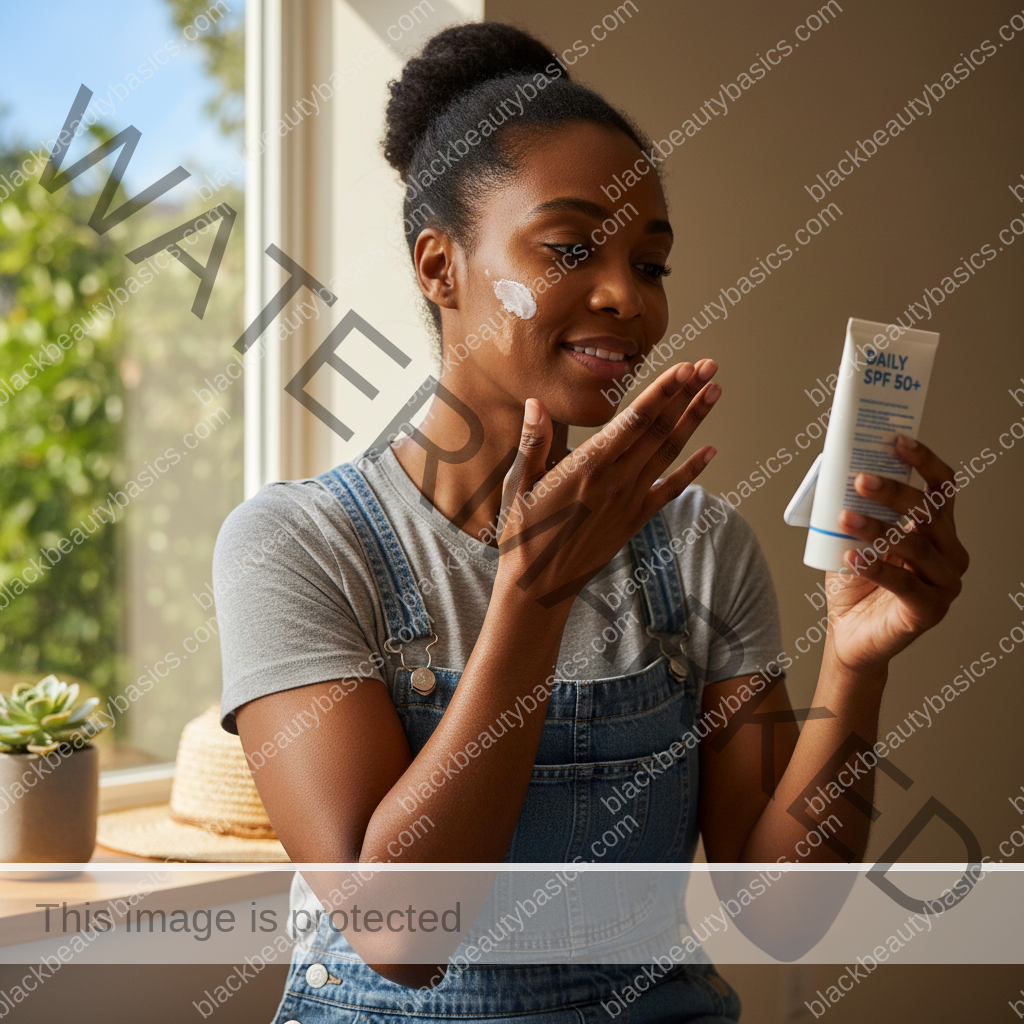
Avoid skipping sunscreen because “melanin protects me.” Melanin is real protection, but it is not enough when your goal is to reduce visible hyperpigmentation. Sunscreen is not a moral test. It is a support tool. If every sunscreen you have tried looks gray, greasy, or dusty, keep the problem specific: the formula did not work for you. That is different from sunscreen being useless.
A Gentle Decision Framework
Start with the question: did something happen here first? If there was acne, a rash, shaving irritation, waxing, picking, or a bite in the exact spot, think PIH first. Your next step is to reduce the trigger, protect the skin, and use one tolerated treatment direction at a time. If acne marks are your main issue, BBB’s guide to routine order for fading acne marks on Black skin will help you put the steps in a better sequence.
Next ask: is the discoloration patchy, symmetrical, or recurring in the same facial zones? If yes, keep melasma on the list. You may still have PIH too, but melasma-like behavior deserves a more protective approach. Be especially careful with heat, sun, visible light, and irritation. A routine that burns is not proof that melasma is being “lifted.” It may be a new trigger.
Then ask: is my barrier calm enough for treatment? If your skin is tight, flaky, burning, rough, or stinging, prioritize comfort before intensity. A damaged barrier makes almost every dark-spot plan harder. BBB’s guide to fading dark spots without damaging your barrier is the better next read if your skin reacts easily.
Finally, ask: do I need help identifying this? If the patches are new, spreading, emotionally overwhelming, or not improving after steady gentle care, a dermatologist can help. If you have access to a skin-of-color-informed professional, use that support. More guessing is not always cheaper if it leads to irritation, product waste, or months of anxiety.
Troubleshooting When the Pattern Is Mixed
Many people do not fit neatly into one box. You might have hormonal melasma plus PIH from breakouts. You might have acne marks on the cheeks and a shadow around the mouth from irritation, friction, or melasma-like pigmentation. You might have a sunscreen problem, a picking problem, and a treatment-overload problem all at once. That is not failure. That is why slow, organized care matters.
If your marks are scattered dots, treat the trigger first. If the dots keep coming from acne, prioritize acne management and reduce picking. If the marks come from hair removal, adjust the method and aftercare. If the marks come from eczema, reduce flares. Fading products cannot keep up with repeated new inflammation forever.
If your discoloration is broad and patchy, protect first. Sunscreen, shade habits, hats when useful, and less irritation may matter more than the newest brightening serum. Consider professional evaluation sooner, especially if the pattern is symmetrical or tied to hormonal changes. Melasma can improve, but it often asks for patience and maintenance rather than a quick “erase it” approach.
If you are using several actives and nothing is working, simplify. Choose a gentle cleanser, moisturizer, sunscreen, and one treatment direction. Stay there long enough to learn. Too many changes can make your skin more reactive and make your results harder to read.
Frequently Asked Questions
1. Can I have PIH and melasma at the same time?
Yes. This is common enough that it is worth saying clearly. You can have post-acne marks in one area and melasma-like patches in another. You can also have inflammation that makes an existing melasma pattern look more obvious. When the pattern is mixed, the safest home strategy is usually to calm the skin, protect it daily, and avoid aggressive treatment stacking. A dermatologist can help identify what is what if the pattern is unclear.
2. Is PIH easier to fade than melasma?
Sometimes, but not always. PIH from a shallow pimple may fade more predictably once inflammation stops. Deeper PIH can linger for a long time. Melasma can be more recurring because it may be influenced by hormones, heat, UV exposure, visible light, and genetics. The point is not to decide which one is “worse.” The point is to understand that melasma may need stronger protection habits and sometimes professional care.
3. Can sunscreen help both PIH and melasma?
Yes. Sunscreen can help protect both PIH and melasma from getting darker with UV exposure. For melasma, visible light protection may also be relevant for some people, which is why tinted sunscreens with iron oxides are often discussed. Sunscreen does not replace treatment, but it helps preserve the progress your routine is trying to make.
4. Do brightening serums work for melasma?
Some over-the-counter brightening ingredients may help the overall look of uneven tone, but melasma can be stubborn and recurring. If you suspect melasma, do not rely only on random serums or harsh exfoliation. Protection, consistency, and professional guidance may matter more. A dermatologist may suggest options that are not appropriate to guess at on your own.
5. How can I tell if a spot is deep?
You cannot always tell perfectly at home. In general, deeper pigment may look gray-brown, blue-brown, or more shadow-like, and it may fade more slowly. Surface pigment may look warmer brown. Lighting can change how it appears, so do not diagnose yourself from one mirror. If the color, shape, texture, or behavior worries you, let a professional evaluate it.
6. Should I exfoliate melasma?
Be careful. Gentle exfoliation may be part of some routines, but melasma-prone skin can worsen when irritated. Strong peels or frequent acids at home can backfire, especially on deep skin. If your skin stings, peels, burns, or becomes more sensitive, pull back. Melasma care is not won by forcing the skin to shed faster.
7. When should I see a dermatologist?
See a dermatologist if the discoloration is spreading, patchy, symmetrical, changing, emotionally distressing, or not improving after consistent gentle care. Also seek help if you have ongoing acne, eczema, pain, bleeding, texture changes, or marks that look unusual. A skin-of-color-informed dermatologist can help reduce guessing and lower the risk of worsening hyperpigmentation.

What to Do Next
If you remember one thing, let it be this: PIH is usually the pigment left after inflammation, while melasma often behaves like a broader, recurring pattern influenced by light, heat, hormones, and genetics. Both deserve patience. Both deserve protection. Neither deserves panic.
Your next step is to observe the pattern without turning your face into a project of criticism. Was there a pimple, rash, bite, or irritation first? Is the discoloration patchy or symmetrical? Is your routine calming your skin or keeping it on edge? Those answers can guide you toward a smarter plan.
For the next layer, read routine order for fading acne marks if your marks came from breakouts. If your skin is reactive, go to how to fade dark spots without damaging your barrier. If timeline anxiety is the problem, read how long hyperpigmentation takes to fade. The goal is not to chase perfect skin. The goal is to care for your skin with enough clarity that you stop making it fight for peace.
Related next steps
Related posts:
 Pregnancy Skin Changes on Dark Skin: Hyperpigmentation, Melasma, and Linea Nigra
 Menopause Hyperpigmentation: Age Spots & Melasma on Dark Skin
 Facial Hyperpigmentation on Melanin-Rich Skin: Acne Marks, Melasma & Uneven Tone
 Melasma-Like Patches on Melanin-Rich Skin: Questions to Ask Your Doctor
 Melasma in Black Women: Pregnancy, Hormones, and Safe Treatments
 Is Your Hair Breaking or Shedding? How to Tell the Difference and Fix It