For the woman whose crown tells a symphony of textures, each curl and coil a unique note, the journey to hair harmony can feel like a complex composition. You know the feeling: one section thrives with a particular product, while another rebels, leaving you to wonder if your hair has a mind of its own. But what if embracing this beautiful complexity, rather than fighting it, was the key to unlocking your hair’s ultimate potential? Start with the related BBB natural-hair cluster guide if you want the broader map.
Embracing the Symphony: Understanding Your Mixed-Texture Natural Hair
Your natural hair is a masterpiece, a rich tapestry woven with diverse curl patterns, densities, and porosities. For many Black women, this inherent variation isn’t an anomaly; it’s the norm. From the delicate waves framing your face to the tightly coiled strands at your crown, mixed textures are a testament to the incredible versatility and beauty of our hair. But this diversity also means that a one-size-fits-all approach to haircare simply won’t suffice.
Understanding your unique texture profile is the first step in creating a routine that truly nurtures every strand. This isn’t about categorizing your hair into rigid types, but rather observing its behavior, its needs, and its nuances. Does your hairline tend to be finer and more prone to dryness? Are the coils at your nape tighter and more susceptible to tangles? Recognizing these differences is empowering, transforming potential frustrations into opportunities for tailored care.
The Science of Texture: Why Variation is Common
Hair texture is determined by the shape of the hair follicle and the way keratin proteins are arranged. In individuals of African descent, hair follicles are often elliptical or flat, leading to the characteristic curls, coils, and kinks we adore. However, genetic influences, hormonal shifts, and even environmental factors can lead to variations across the scalp. It’s not uncommon to have 3C curls at the temples, 4A coils at the crown, and 4B/4C strands at the nape. This genetic predisposition to mixed textures is a beautiful aspect of our heritage, demanding a sophisticated approach to care that celebrates every aspect of its glory.
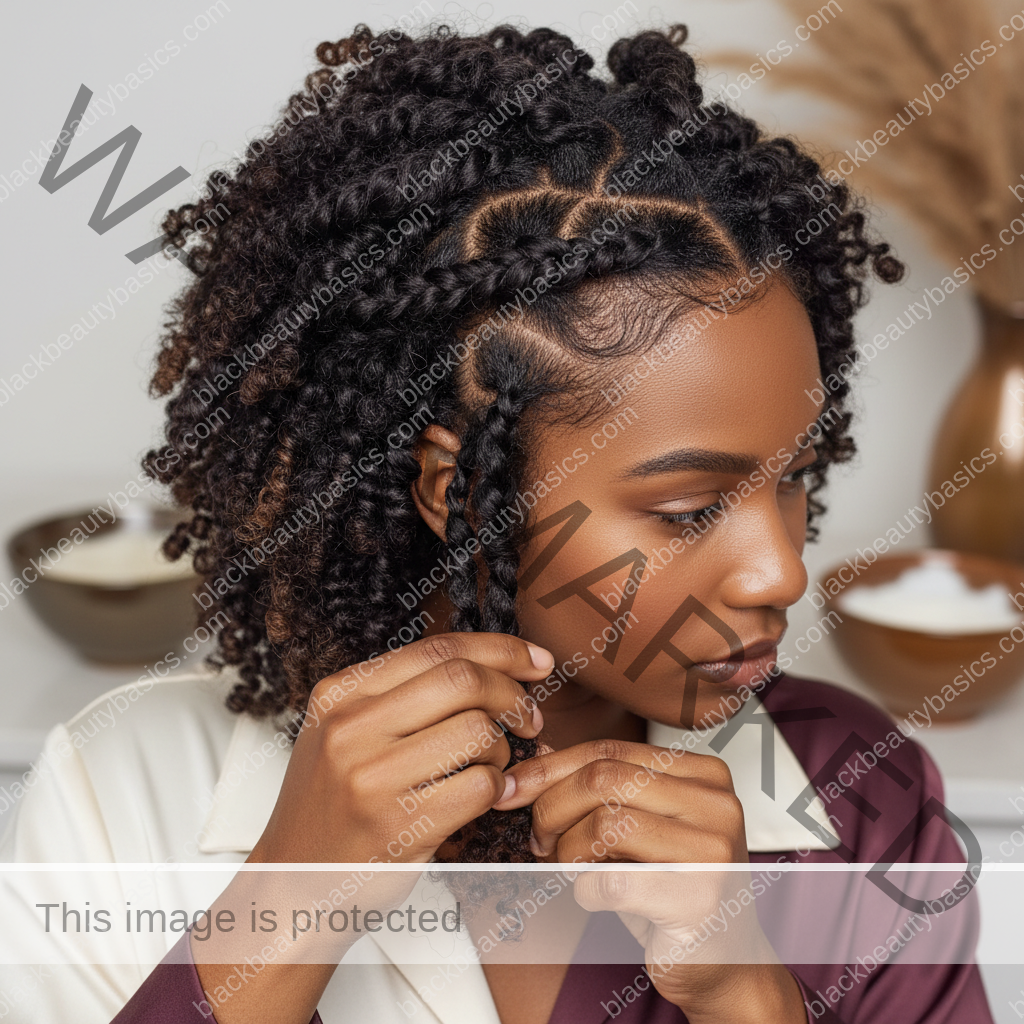
The Foundational Pillars: Essential Steps for Mixed-Texture Hair
While specific product choices and techniques will vary by section, the core principles of natural hair care remain paramount. These foundational pillars ensure that every part of your mixed-texture crown receives the love and attention it deserves, setting the stage for healthy, vibrant hair.
1. Gentle Cleansing: The Art of Purity Without Stripping
Cleansing is the cornerstone of any healthy hair routine, but for mixed textures, it requires a delicate touch. Over-cleansing or using harsh sulfates can strip essential moisture, leaving some sections parched while others might feel adequately clean. The goal is to remove product buildup and environmental impurities without compromising your hair’s natural oils.
Choosing Your Cleanser Wisely:
- Sulfate-Free Shampoos: Opt for gentle, sulfate-free formulas that cleanse effectively without stripping. Look for ingredients like aloe vera, glycerin, and natural oils. Shop Sulfate-Free Shampoos on Amazon
- Co-Washes: For sections that are particularly dry or delicate, a co-wash (conditioner wash) can be an excellent alternative, offering a moisturizing cleanse. Shop Co-Washes on Amazon
- Clarifying Shampoos: Incorporate a clarifying shampoo once a month or as needed to remove stubborn buildup, especially if you use a lot of styling products. Follow with a deep conditioner. Shop Clarifying Shampoos on Amazon
Technique for Mixed Textures:
Focus the shampoo primarily on your scalp, gently massaging to lift dirt and oil. Allow the suds to run down the length of your hair without aggressively scrubbing the strands themselves. For tighter, more delicate sections, consider pre-pooing with an oil or conditioner to provide an extra layer of protection before cleansing.
2. Deep Conditioning: The Elixir of Moisture and Strength
Deep conditioning is non-negotiable for all natural hair, but it becomes even more critical for mixed textures. Different sections may have varying porosity levels and moisture retention capabilities, meaning some areas will drink up conditioner more readily than others. Regular deep conditioning infuses hair with much-needed moisture, strengthens strands, and improves elasticity, reducing breakage.
Selecting Your Deep Conditioner:
- Moisture-Rich: Look for ingredients like shea butter, avocado oil, honey, and hyaluronic acid for intense hydration. Shop Moisture-Rich Deep Conditioners on Amazon
- Protein-Based: If certain sections feel weak, mushy, or overly elastic, a protein-based deep conditioner can help strengthen the hair shaft. Use these sparingly and balance with moisturizing treatments. Shop Protein Deep Conditioners on Amazon
Application Strategy:
After cleansing, gently squeeze excess water from your hair. Apply your deep conditioner generously, ensuring even distribution. For sections that are particularly dry or prone to tangles, apply extra product. Cover your hair with a plastic cap and allow the conditioner to penetrate for 20-30 minutes, optionally using indirect heat (like a hooded dryer or steamer) to enhance absorption. Rinse thoroughly with cool water to seal the cuticles.
3. Detangling with Care: A Gentle Unraveling
Detangling is often where the challenges of mixed textures become most apparent. Tighter coils are more prone to tangles and knots, while finer sections can be more fragile and susceptible to breakage. Patience and the right tools are key.
Detangling Essentials:
- Wide-Tooth Comb: Essential for gently working through larger sections. Shop Wide-Tooth Combs on Amazon
- Denman Brush or Flexy Brush: Excellent for defining curls and removing smaller tangles without excessive pulling. Shop Denman Brushes on Amazon
- Finger Detangling: Often the gentlest method, especially for very delicate or tightly coiled sections.
- Slippery Conditioner or Detangler: A product with excellent slip is crucial to minimize friction and breakage. Shop Detangling Conditioners on Amazon
The Sectional Detangling Method:
Always detangle on wet or damp hair, saturated with conditioner or a detangling spray. Divide your hair into 4-8 manageable sections. Start from the ends and work your way up to the roots, gently teasing out knots. Pay extra attention to areas known for tangles, like the nape or crown. For very tight sections, apply more conditioner and use your fingers first before moving to a wide-tooth comb.
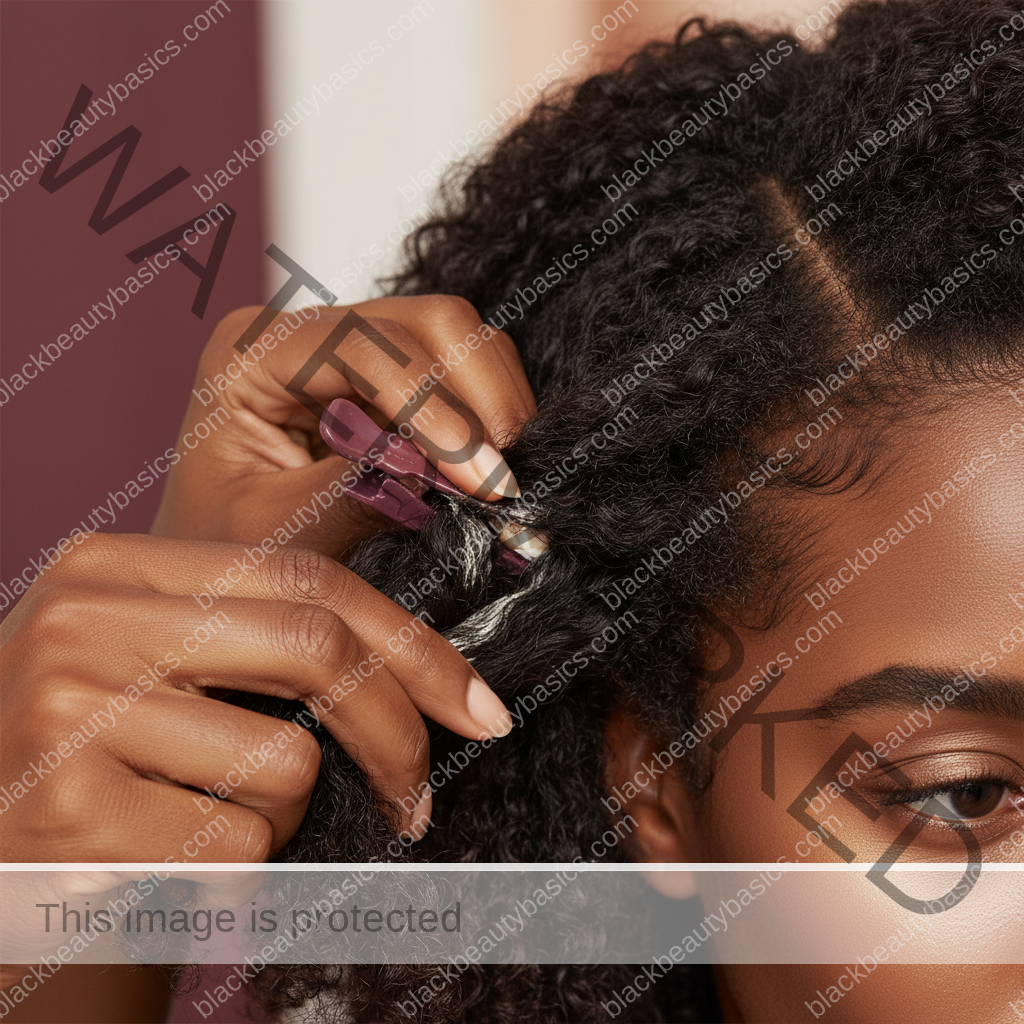
The Art of Differentiation: Treating Sections Differently
This is where the magic truly happens for mixed-texture hair. Once your foundational care is in place, you can begin to tailor your product application and styling techniques to meet the specific needs of each section. Think of yourself as a sculptor, carefully molding and nurturing each part of your masterpiece.
Identifying Your Hair’s “Zones”
Before you begin, take a moment to truly observe your hair. Common zones include:
- Hairline/Temples: Often finer, more delicate, and prone to dryness or breakage due to styling or manipulation.
- Crown/Top: Can be the tightest or loosest texture, often where volume is desired.
- Sides: May have a different texture or density than the crown.
- Nape/Back: Frequently the tightest, most coily, and most prone to tangles and dryness.
Your zones might be different! The key is to identify *your* unique pattern.
Tailoring Product Application: A Section-by-Section Guide
The core principle here is to apply products based on what each section needs most. This might mean using a heavier product on tighter coils and a lighter one on looser curls, or varying the amount of product you use.
Tip List: Product Application for Different Textures
- For Finer, Looser Sections (e.g., hairline, temples):
- Moisturizers: Use lightweight leave-in conditioners or milk-based moisturizers. Avoid heavy butters that can weigh down curls. Shop Lightweight Leave-In Conditioners on Amazon
- Stylers: Opt for mousses, foams, or light gels for definition without stiffness or crunch. Shop Hair Mousses on Amazon
- Oils: Use light oils like argan or jojoba oil sparingly to seal in moisture. Shop Lightweight Hair Oils on Amazon
- For Medium, Defined Sections (e.g., mid-crown, sides):
- Moisturizers: A creamy leave-in conditioner or a slightly richer hair milk works well. Shop Creamy Leave-In Conditioners on Amazon
- Stylers: Creamy curl definers, custards, or medium-hold gels can enhance definition and reduce frizz. Shop Curl Custards on Amazon
- Oils: Medium-weight oils like grapeseed or almond oil can be used to seal. Shop Medium-Weight Hair Oils on Amazon
- For Tighter, Coily Sections (e.g., nape, back, tightest parts of crown):
- Moisturizers: Rich, emollient leave-in conditioners, shea butter-based creams, or heavy hair milks are ideal for deep hydration. Shop Rich Leave-In Conditioners on Amazon
- Stylers: Thick curl creams, heavy gels, or butter-based stylers provide maximum moisture, definition, and frizz control. Shop Thick Curl Creams on Amazon
- Oils: Heavier oils like castor oil or olive oil are excellent for sealing in moisture and promoting strength. Shop Heavy Hair Oils on Amazon
The LOC/LCO Method, Section by Section
The LOC (Liquid, Oil, Cream) or LCO (Liquid, Cream, Oil) method is a beloved technique for sealing in moisture. For mixed textures, you can adapt this method by varying the products used in each step for different sections.
- Liquid: Start with water or a water-based leave-in conditioner for all sections.
- Oil/Cream: Apply a lighter oil/cream to looser sections and a heavier oil/cream to tighter sections.
- Cream/Oil: Follow with a cream/oil, again adjusting the richness based on the section’s needs.
This allows you to provide intense moisture where needed most, without over-moisturizing or weighing down other areas.
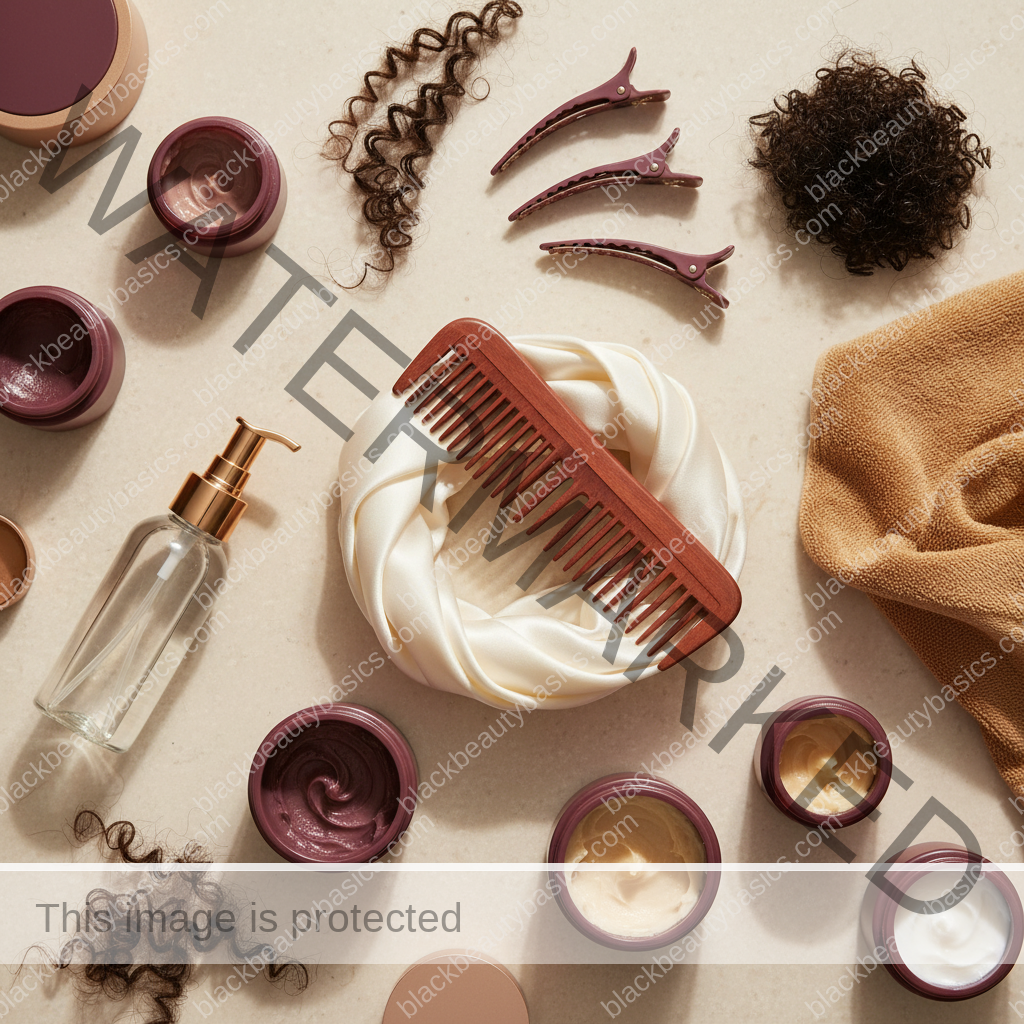
Styling Strategies for Seamless Mixed-Texture Looks
Once your hair is cleansed, conditioned, and moisturized according to its unique needs, styling becomes an opportunity to unify your textures into a cohesive, beautiful look. The goal is to enhance the natural beauty of each section while creating a harmonious overall style.
Techniques to Harmonize Textures:
- Braids & Twists: These are excellent for stretching tighter sections and blending them with looser ones. Consider two-strand twists, flat twists, or braids. For sections that are very different, you might use smaller twists on tighter areas and slightly larger ones on looser areas to achieve a more uniform stretch.
- Rod Sets & Curlformers: These tools can help standardize curl patterns across different sections. Use smaller rods/Curlformers on looser sections to tighten the curl, and larger ones on tighter sections to stretch and define. Shop Rod Sets on Amazon
- Wash & Go with Strategic Product Application: While a true “wash & go” might seem challenging with mixed textures, it’s achievable with the sectional product application discussed earlier. Focus on defining the tighter sections first, using a stronger hold product, then move to looser sections with lighter products.
- Bantu Knots: Similar to rod sets, Bantu knots can create consistent curl patterns. Adjust the size of the knots based on the texture of the section.
Comparison Table: Styling Techniques for Mixed Textures
| Styling Technique | Best For | How It Helps Mixed Textures | Recommended Products |
|---|---|---|---|
| Two-Strand Twists/Braids | Definition, elongation, blending | Stretches tighter coils, adds definition to looser curls, creates a cohesive pattern when unraveled. | Creamy stylers, curl creams, light gels. Shop Twist Creams on Amazon |
| Rod Sets/Flexi-Rods | Uniform curl pattern, volume, elongation | Creates consistent curls across varying textures. Use different rod sizes to match or enhance patterns. | Foams, setting lotions, light gels. Shop Flexi-Rods on Amazon |
| Bantu Knots | Defined curls, waves, elongation | Excellent for creating defined waves or curls and stretching tighter textures. | Curl creams, butter-based stylers. Shop Bantu Knot Creams on Amazon |
| Wash & Go (Strategic) | Embracing natural pattern, quick styling | Enhances natural texture of each section with tailored products, minimizing frizz and maximizing definition. | Leave-in, curl definer, gel (varied hold). Shop Wash & Go Products on Amazon |
Maintaining Your Style & Protecting Your Crown
Once your mixed-texture masterpiece is styled, proper maintenance is crucial to prolong its life and protect your hair.
- Nighttime Protection: Always sleep on a silk or satin pillowcase or wear a silk/satin bonnet or scarf. This reduces friction, prevents frizz, and helps retain moisture, especially for more delicate sections. Shop Silk Bonnets on Amazon
- Refreshing: In between wash days, use a light refreshing spray (water mixed with a little leave-in) to rehydrate and reactivate curls. Focus on the sections that tend to dry out or lose definition fastest. Shop Hair Refreshing Sprays on Amazon
- Protective Styles: When you need a break from daily manipulation, consider protective styles like braids, twists, or cornrows. Ensure they are not too tight, especially around the delicate hairline.
Common Challenges & Solutions for Mixed-Texture Hair
Even with a tailored routine, mixed textures can present unique challenges. Here’s how to navigate them with grace and expertise.
Challenge 1: Uneven Drying Times
Problem: Looser sections dry quickly, while tighter coils take hours, leading to frizz in some areas and dampness in others.
Solution:
- Sectional Drying: Focus diffusing heat on the slower-drying, tighter sections first.
- Air Drying Strategy: Apply a slightly more emollient product to the tighter sections to help them retain moisture longer during air drying, allowing looser sections to dry naturally without becoming overly frizzy.
- Microfiber Towel: Gently blot excess water from all sections with a microfiber towel to speed up drying without causing frizz. Shop Microfiber Towels on Amazon
Challenge 2: Product Buildup in Some Areas, Dryness in Others
Problem: Heavy products needed for tight coils might weigh down or build up on looser curls, while lighter products might not be enough for the tighter sections.
Solution:
- Tailored Product Application: Reiterate the importance of using different products or varying amounts for each section.
- Clarifying Shampoo: Use a gentle clarifying shampoo specifically on sections prone to buildup, while using a co-wash or moisturizing shampoo on drier areas during the same wash day.
- Rinse Thoroughly: Ensure all sections are rinsed completely to prevent product residue.
Challenge 3: Frizz in Looser Sections, Shrinkage in Tighter Sections
Problem: The desire for elongated, defined curls can be thwarted by frizz in some areas and extreme shrinkage in others.
Solution:
- Layering Products: For looser sections prone to frizz, layer a leave-in with a light gel or mousse. For tighter sections, use a rich curl cream followed by a strong-hold gel to combat shrinkage and enhance definition.
- Stretching Techniques: Utilize styling techniques like banding, braiding, or twisting on tighter sections while they are still damp to encourage elongation.
- Cool Air Diffusing: Use the cool setting on your diffuser to dry hair, which helps to set curls and minimize frizz. Shop Hair Diffusers on Amazon
FAQ: Your Mixed-Texture Natural Hair Questions Answered
Q1: How often should I wash my mixed-texture hair?
A: The frequency depends on your hair’s specific needs, activity level, and product usage. Generally, every 7-10 days is a good starting point. However, if your scalp gets oily quickly or you use heavy products, you might wash more often. If certain sections are very dry, you might opt for co-washing in between full washes. Listen to your hair; it will tell you when it needs cleansing.
Q2: Can I use different brands of products on different sections of my hair?
A: Absolutely! Your hair doesn’t care about brand loyalty, only about what works best for each section. Feel free to mix and match products from different lines to cater to the diverse needs of your mixed textures. The key is to ensure the products are compatible and don’t cause flaking or residue when combined.
Q3: My hairline is much looser and more delicate. How can I protect it?
A: The hairline (edges) is often the most fragile area. Avoid tight hairstyles that pull on your edges. When styling, use lighter products and gentle techniques. Consider applying a growth oil or balm specifically to your edges daily to keep them moisturized and nourished. Always sleep with a silk scarf or bonnet to prevent friction.
Q4: My nape is very tight and prone to tangles. What’s the best approach?
A: The nape can be a challenging area. Always detangle this section with plenty of slip (conditioner or detangler) and use your fingers first, then a wide-tooth comb. Consider keeping this section in a loose protective style (like a few large twists) during the week to minimize manipulation. When washing, focus extra attention on moisturizing this area with rich conditioners and creams.
Q5: Is heat styling safe for mixed-texture hair?
A: Heat styling should be approached with extreme caution, especially for mixed textures, as different sections may respond differently to heat. If you must use heat, always apply a high-quality heat protectant to all sections. Use the lowest effective heat setting and limit frequency. Remember that tighter coils are generally more susceptible to heat damage than looser curls.
Q6: How do I deal with different porosity levels in my mixed-texture hair?
A: Different porosity levels (how well your hair absorbs and retains moisture) are common with mixed textures. For low porosity sections (products sit on top), use lightweight, water-based products and apply heat during deep conditioning to help open the cuticle. For high porosity sections (absorbs quickly but loses moisture fast), focus on heavier creams and butters to seal in moisture, and use protein treatments as needed to strengthen the cuticle.
Q7: Should I trim my hair more frequently because of mixed textures?
A: Regular trims are essential for all natural hair to remove split ends and maintain health. For mixed textures, pay close attention to the ends of all sections. If you notice split ends predominantly in one area, you might need to trim that section slightly more often, or adjust your product application to provide more protection to that specific area. A trim every 3-4 months is a good general guideline.
Embracing your mixed-texture natural hair is not just about a routine; it’s a celebration of your unique beauty, a testament to the intricate artistry that is your crown. By listening to each strand, honoring its individual needs, and treating every section with intention, you transform your haircare from a chore into a ritual of self-love and empowerment. May your journey be one of discovery, confidence, and radiant, harmonious curls.
Let different sections have different needs
For Black women with textured hair, hair-care choices can feel emotional because they sit at the intersection of identity, time, styling expectations, budget, and all the advice we have been given about what our hair “should” do. This guide focuses on customizing routines for tighter, looser, drier, frizzier, finer, or more fragile sections on the same head, while keeping the related BBB natural-hair cluster as the home base. The goal is not to force every curl, coil, kink, or section into the same behavior. The goal is to build a routine that protects the hair you actually have.
Look at the sections that behave differently before deciding on products for the whole head. Your crown may tangle sooner, the nape may stay damp longer, or the front may lose definition first. Notice those patterns after washing and again a day or two later. They tell you where to use more time, smaller sections, or a lighter hand without turning your routine into several separate wash days.
A mixed-texture routine works best when the shared basics stay simple and the adjustments stay local. Cleanse and condition the whole scalp and hair gently, then give the sections that need it a little more slip, drying time, or styling attention. You do not have to force the crown, sides, and nape into identical results for the routine to be successful.
What to notice gently
- Where your hair tangles first: ends, nape, crown, edges, or interior sections.
- How your hair responds to water, conditioner, gels, creams, oils, and drying time.
- Which steps leave your hair softer, rougher, stretched, shrunken, defined, or weighed down.
- How much manipulation your schedule and strands can realistically handle.
- What improves the style without making wash day feel impossible.
What makes mixed-texture care harder
One mistake is treating the loosest or tightest section as the template for everything else. The part that dries quickly may not need the same layering as the part that stays wet longer. Try observing each section on its own terms. A difference in curl pattern is not evidence that one area is better or more manageable than another.
Another mistake is buying a second full product routine before testing a small technique change. Different section sizes, a little more water during detangling, or a slower drying step may be enough to make one area easier to style. Change one section at a time so you can tell what made the difference.
It is tempting to keep reworking the section that does not match the rest, especially around the hairline or crown. Repeated handling can leave that area more fragile and more frustrating. Choose a style that allows some variation, and let the sections with different textures contribute to the finished look rather than trying to erase the difference.
What to do next
At your next wash day, map one or two sections that need extra care and change only those steps. The related guides below can help with moisture balance or a lower-manipulation style if uniform definition is taking too much effort. Your hair does not need a single texture to have a coherent routine.
- Natural Hair Care & Protective Styles
- The related natural-hair cluster guide
- texture-specific routines
- 4C low-energy wash day
- keeping twist-outs moisturized
- everyday low-manipulation styling
Related next steps
Related posts:
 Do Black Skin Ages Differently? A Look at Wrinkles vs. Sagging
 Caring for Mixed Textures on One Head: A Guide to Section-Aware Routines
 How to Treat Dark Circles With the Right Skincare Products
 How to Treat Acne on Dark Skin Without Causing Dark Spots
 Reframing “Treat Yourself” for Black Women: From Obligation to Intentional Luxury and Deep Care
 How to treat dark marks when your skin is also sensitive