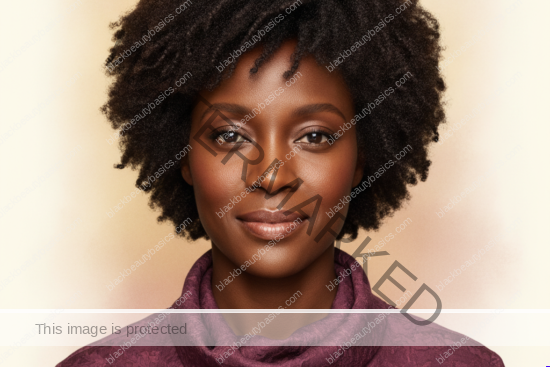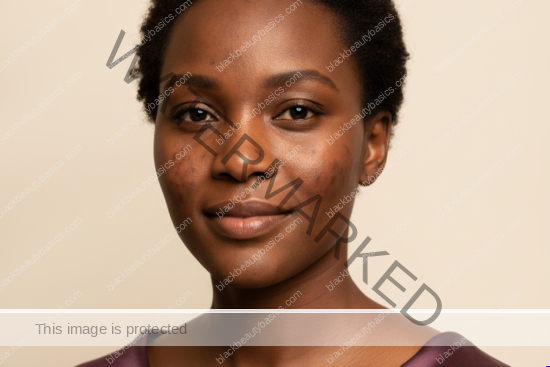
The exquisite artistry of braids is a crown we wear with pride, a testament to our heritage, style, and versatility. Yet, beneath these meticulously crafted styles, a persistent, unwelcome guest can sometimes emerge: the dreaded itchy scalp. It’s a sensation that can transform a regal look into an uncomfortable ordeal, leaving us questioning the very foundation of our protective style. But before you reach for that scratching tool or consider an early takedown, let’s embark on a journey of understanding, pinpointing the root causes, and reclaiming the serenity of a healthy scalp. Start with the related BBB scalp-health cluster guide if you want the broader map.
The Silent Saboteur: Understanding Itchy Scalp Under Braids
An itchy scalp under braids isn’t just an annoyance; it’s often a signal from your body, a whisper that something is amiss. For women of color, our scalp health is intrinsically linked to our hair health, and ignoring these signals can lead to more significant issues down the line, from breakage to traction alopecia. Our hair textures and scalp sensitivities are unique, requiring a nuanced approach to care, especially when adorned with protective styles.
Braids, while offering a reprieve from daily manipulation, also create a microenvironment. This enclosed space can become a breeding ground for issues if not properly managed. Understanding the common culprits behind that relentless itch is the first step toward effective relief and prevention.
Why Braids and Itchiness Often Go Hand-in-Hand
It’s a paradox: we braid our hair for protection, but sometimes the very act of braiding seems to trigger discomfort. Several factors contribute to this phenomenon, and recognizing them is key to addressing the problem effectively.
Tension: The Immediate Culprit
One of the most common and immediate causes of scalp irritation under braids is excessive tension. When braids are installed too tightly, especially around the hairline and edges, it pulls on the hair follicles. This constant tugging can lead to inflammation, tenderness, and, inevitably, an itchy sensation. Over time, this can even contribute to traction alopecia, a form of hair loss caused by repetitive pulling.
- Signs of Too-Tight Braids: Immediate pain, small bumps around the hairline, redness, headaches, and extreme tenderness when touched.
- What to Do: Communicate with your stylist during installation. If it feels too tight, speak up. After installation, try gently misting your scalp with warm water and a leave-in conditioner to help relax the tension.
Product Buildup: A Hidden Menace
Under braids, our scalp isn’t as easily accessible for regular cleansing. This can lead to an accumulation of styling products, natural oils, dead skin cells, and environmental debris. This buildup can clog follicles, create an imbalance in the scalp’s microbiome, and lead to irritation, flaking, and itching.
- Sources of Buildup: Heavy gels, waxes, mousses used during braiding, infrequent cleansing, and even residue from shampoos and conditioners not fully rinsed out.
- What to Do: Opt for lightweight, water-based products. Ensure thorough, yet gentle, cleansing between washes, focusing on the scalp.
Dry Scalp: The Thirsty Truth
Our scalps, like our skin, require moisture. When the scalp becomes excessively dry, it can lead to flaking, tightness, and an intense itch. Braids can sometimes exacerbate dryness by making it harder for natural oils to distribute evenly along the hair shaft and scalp, or by limiting access for direct moisturization.
- Signs of Dry Scalp: Small, fine flakes (not oily), a feeling of tightness, and persistent itching without visible irritation.
- What to Do: Regularly moisturize your scalp with lightweight oils or scalp serums. Drink plenty of water to hydrate from within.
Allergic Reactions: The Unexpected Irritant
Sometimes, the itch isn’t about technique or dryness, but an adverse reaction to a product or even the braiding hair itself. Synthetic braiding hair, particularly Kanekalon, is often coated with an alkaline solution to prevent mold and mildew during shipping. This coating can be a significant irritant for sensitive scalps, leading to what’s often termed “braiding hair allergy.”
- Signs of Allergic Reaction: Intense itching immediately or shortly after installation, redness, bumps, swelling, and sometimes oozing or crusting.
- What to Do: Always pre-wash synthetic braiding hair with apple cider vinegar (ACV) and water before installation. Choose hypoallergenic or human hair options if sensitivity persists.
Fungal or Bacterial Infections: When Things Get Serious
In some cases, persistent itching, especially when accompanied by redness, swelling, pus, or severe flaking, could indicate a fungal or bacterial infection. These can arise from improper hygiene, excessive moisture trapped under braids, or a compromised scalp barrier.
- Signs of Infection: Localized pain, pus-filled bumps, large yellow or white flakes, foul odor, and persistent, severe itching.
- What to Do: Consult a dermatologist immediately. Self-treating can worsen the condition.
Your First Line of Defense: What to Look at Immediately
When that familiar itch begins, your immediate response shouldn’t be to scratch. Instead, it’s a call to investigate. Becoming a detective of your own scalp health is an empowering step towards maintaining your protective style with grace and comfort.
1. Assess the Installation: Is It Too Tight?
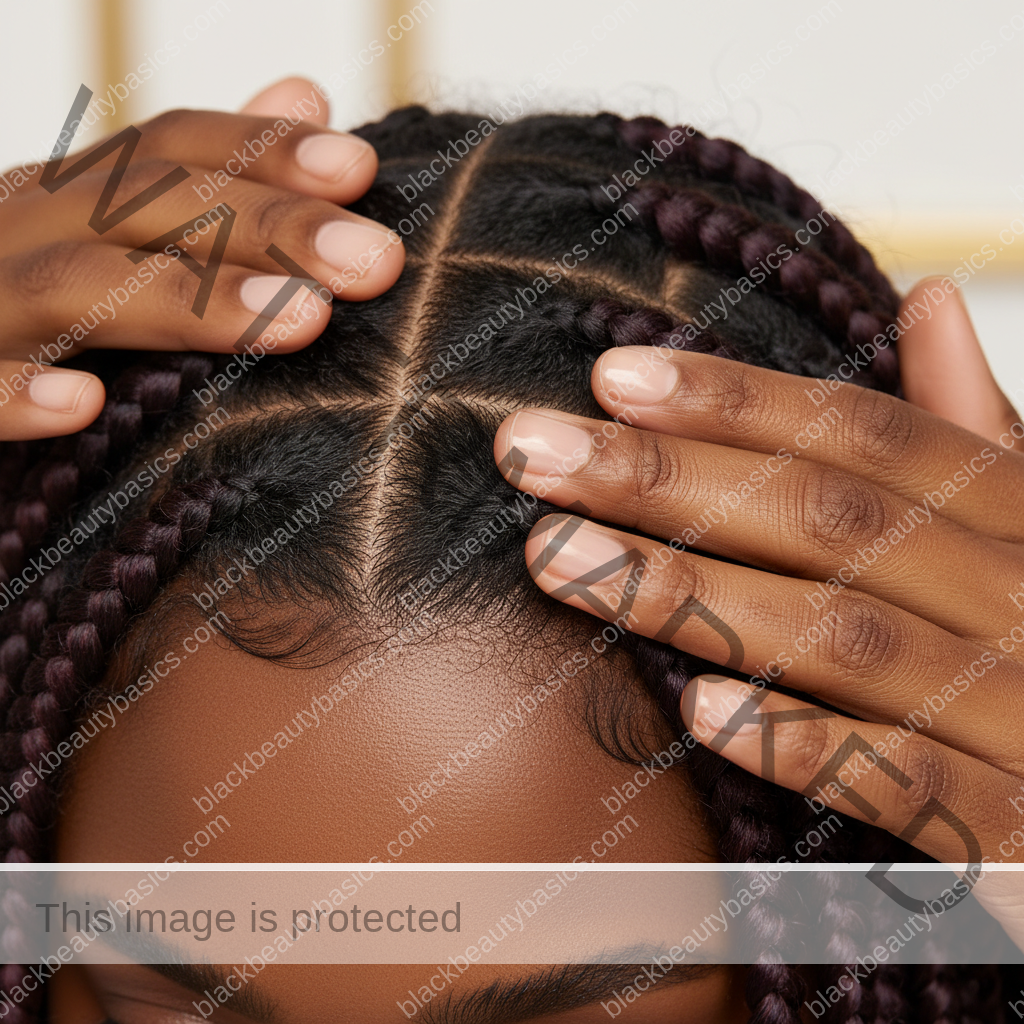
This is often the very first thing to consider, especially if the itching starts shortly after your braids are installed. Gently touch your scalp. Is it tender? Do you feel pulling at the roots? Look in a mirror: are there small, raised bumps around the base of your braids, particularly at the temples or nape? Are your edges pulled back severely?
Immediate Action:
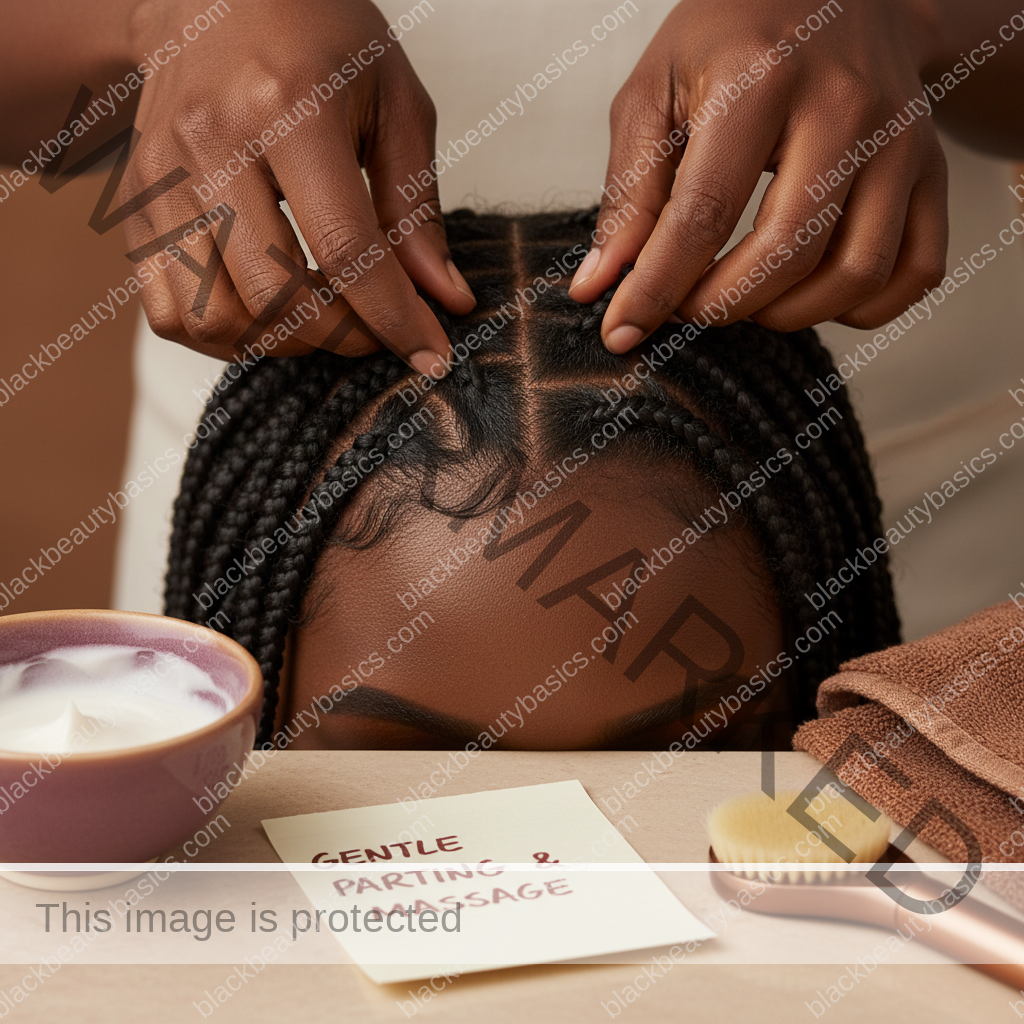
- Loosen Gently: If possible, gently massage the base of the braids with your fingertips to encourage a slight release of tension.
- Warm Water Mist: A light mist of warm water mixed with a soothing leave-in conditioner (Shop Leave-In Conditioner on Amazon) can help relax the hair and scalp.
- Communicate: If the tension is unbearable, don’t hesitate to contact your stylist. A good stylist prioritizes your comfort and scalp health.
2. Examine Your Scalp: What Do You See?
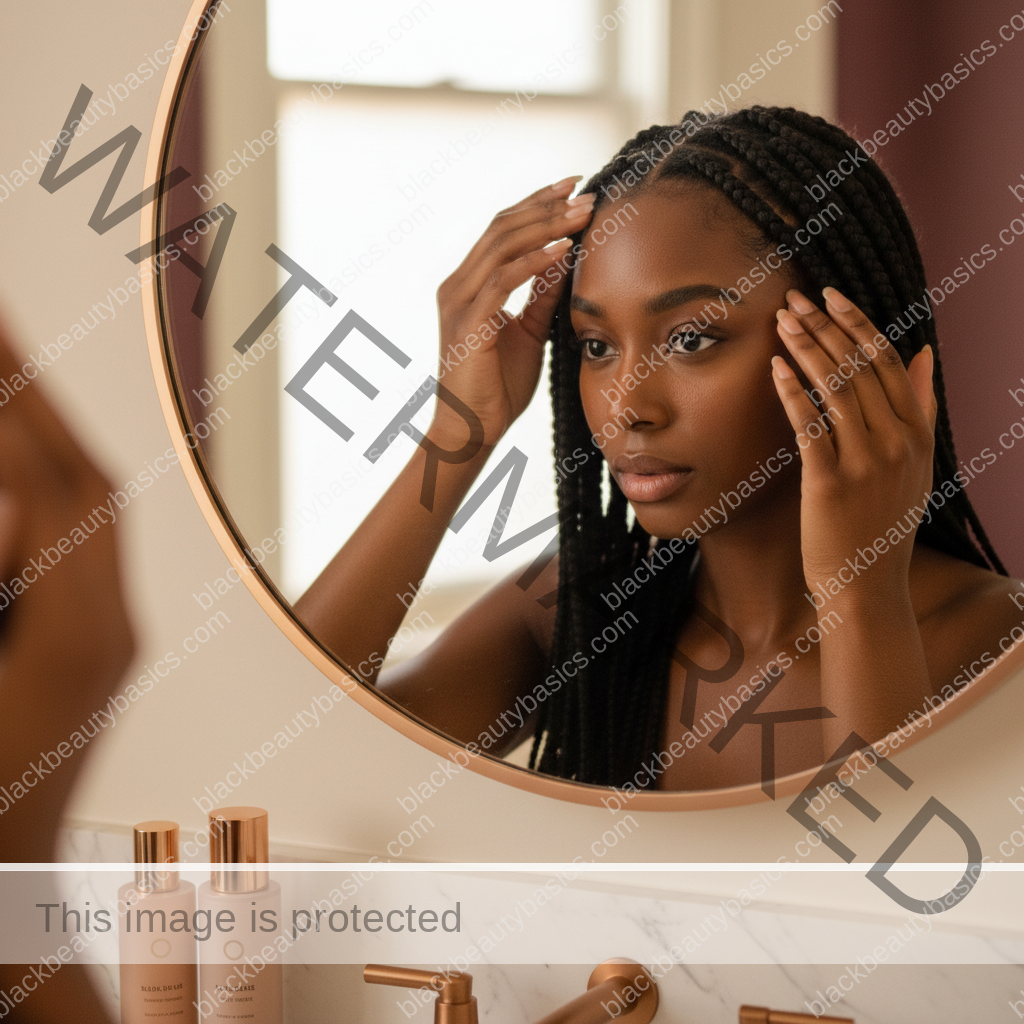
A thorough visual inspection is crucial. Use a handheld mirror or ask a trusted friend to help you examine your scalp closely. What you observe can provide significant clues.
- Flakes: Are they small and white (dry scalp) or larger, yellowish, and oily (buildup, possibly seborrheic dermatitis)?
- Redness/Irritation: Are there red patches, bumps, or signs of inflammation? This could indicate an allergic reaction, infection, or severe irritation from tension/buildup.
- Sores/Scabs: Any open sores, scabs, or signs of breakage at the roots are red flags that require immediate attention.
- Odor: A persistent, unpleasant odor can signal bacterial or fungal overgrowth.
Immediate Action:
- Identify Flake Type: This guides your next steps (moisturizing for dry scalp vs. clarifying for buildup).
- Note Redness/Bumps: If severe or widespread, consider an allergic reaction or infection.
- Document: Take photos if possible to track changes or share with a professional.
3. Consider Your Products: What Have You Used?
Think about everything that has touched your scalp and hair recently, from the shampoo used before braiding to the styling products applied during and after. Product ingredients can be major culprits.
- Braiding Hair: Did you pre-wash your synthetic hair? If not, the alkaline coating is a prime suspect.
- Styling Gels/Waxes: Are they heavy, pore-clogging, or do they contain ingredients you might be sensitive to (e.g., strong fragrances, certain alcohols)?
- Cleansers/Conditioners: Are they leaving residue? Are they too harsh or too stripping for your scalp?
- New Products: Have you introduced any new products since your last braid installation?
Immediate Action:
- Review Ingredients: Look for common irritants like sulfates, parabens, heavy silicones, and artificial fragrances if you suspect sensitivity.
- Gentle Cleansing: Use a diluted apple cider vinegar rinse or a gentle, sulfate-free clarifying shampoo (Shop Sulfate-Free Clarifying Shampoo on Amazon) to remove potential irritants.
- Patch Test: For new products, always patch test on a small area of your skin before full application.
Proactive Measures: Nurturing Your Scalp Under Braids
Prevention is always better than cure, especially when it comes to scalp health. Integrating a proactive scalp care regimen into your routine is paramount for enjoying your braided styles without discomfort.
Pre-Braiding Rituals: Setting the Stage for Success
The health of your scalp under braids begins even before the first strand is woven. A thoughtful pre-braiding routine can significantly reduce the likelihood of irritation.
Scalp Detox and Deep Cleanse
Start with a clean slate. Use a clarifying shampoo (Shop Clarifying Shampoo on Amazon) to remove all product buildup from your hair and scalp. Follow with a moisturizing, sulfate-free shampoo to ensure your scalp is clean but not stripped. A gentle scalp scrub (Shop Gentle Scalp Scrub on Amazon) can also be beneficial to exfoliate dead skin cells.
Moisturize and Condition
After cleansing, deep condition your hair and scalp. Focus on hydrating the scalp with a lightweight, non-comedogenic oil or serum. Ensure your hair is thoroughly dry before braiding to prevent mildew or bacterial growth.
Pre-Washing Braiding Hair
This step is non-negotiable for synthetic hair. Soak synthetic braiding hair in a solution of apple cider vinegar and warm water for at least 30 minutes, then rinse thoroughly and air dry. This removes the alkaline coating that often causes irritation.
Table 1: Pre-Braiding Checklist for Scalp Health
| Step | Purpose | Recommended Products/Actions |
|---|---|---|
| Clarify Scalp | Remove all buildup, oils, and dead skin cells. | Sulfate-free clarifying shampoo, gentle scalp scrub. |
| Deep Condition | Infuse moisture into hair and scalp. | Hydrating deep conditioner, lightweight scalp oil/serum. |
| Dry Thoroughly | Prevent mildew and bacterial growth under braids. | Air dry or cool blow dry until completely dry. |
| Pre-Wash Synthetic Hair | Remove alkaline coating from braiding hair. | Apple cider vinegar (ACV) + warm water soak. |
| Communicate with Stylist | Ensure comfortable tension during installation. | Discuss tension preferences, avoid overly tight braids. |
During Braids: Maintaining Scalp Serenity
Once your braids are in, your scalp care routine shifts but doesn’t stop. Consistent, gentle maintenance is key.
Regular Cleansing and Refreshing
You don’t need to wash your entire head frequently, but regular scalp cleansing is vital. Use a diluted shampoo or a specialized braid spray cleanser (Shop Braid Spray Cleanser on Amazon) with a nozzle applicator to clean your scalp between the braids. Follow with a rinse and ensure thorough drying.
Moisturizing and Oiling
Keep your scalp hydrated. Use a lightweight, non-comedogenic oil (like jojoba, almond, or grapeseed oil) or a specialized scalp serum (Shop Scalp Serum on Amazon) with an applicator tip to reach your scalp directly. Focus on areas prone to dryness and itching, such as the hairline and crown.
Soothing Sprays and Mists
For immediate relief, a soothing scalp spray (Shop Soothing Scalp Spray on Amazon) containing ingredients like aloe vera, tea tree oil, peppermint, or witch hazel can be a lifesaver. These can calm inflammation and provide a cooling sensation.
Protecting Your Scalp at Night
Always sleep with a silk or satin bonnet (Shop Silk Bonnet on Amazon) or on a silk pillowcase (Shop Silk Pillowcase on Amazon). This reduces friction, prevents moisture loss from your scalp, and keeps your braids neat, extending their life.
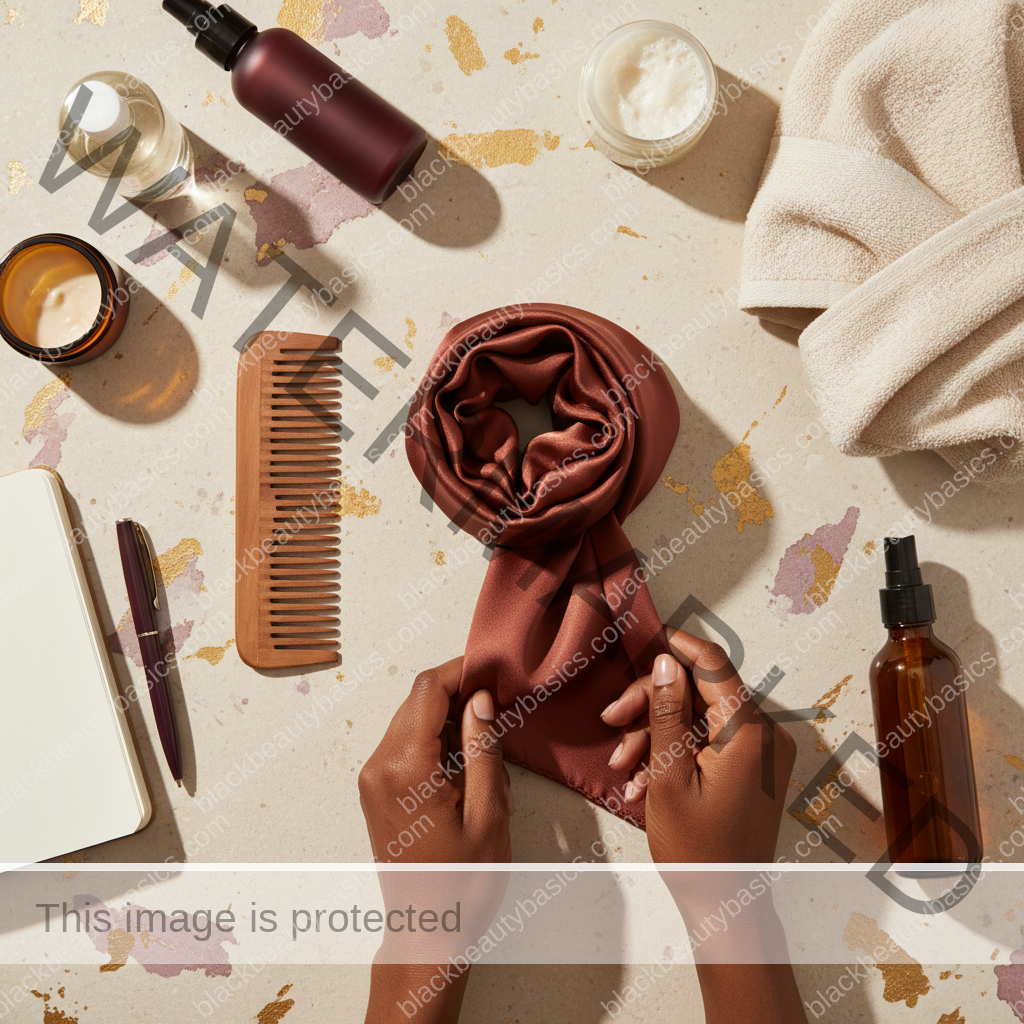
Table 2: Daily Maintenance for Itch-Free Braids
| Routine Item | Frequency | Benefit | Recommended Products/Ingredients |
|---|---|---|---|
| Scalp Cleansing Mist | 2-3 times/week or as needed | Removes light buildup, refreshes scalp. | Diluted witch hazel, aloe vera, tea tree oil. |
| Lightweight Scalp Oil/Serum | Daily or every other day | Moisturizes, reduces dryness, promotes health. | Jojoba, grapeseed, almond oil, peppermint oil, salicylic acid serum. |
| Soothing Scalp Spray | As needed for immediate relief | Calms irritation, provides cooling sensation. | Aloe vera, peppermint, tea tree, witch hazel. |
| Night Protection | Every night | Reduces friction, retains moisture, preserves style. | Silk/satin bonnet or pillowcase. |
| Hydration (Internal) | Daily | Supports overall skin and scalp health. | Water, herbal teas. |
When to Seek Professional Help: Knowing Your Limits
While many cases of itchy scalp can be managed at home with proper care, there are instances when professional intervention is necessary. Ignoring severe or persistent symptoms can lead to more serious scalp conditions or even permanent hair loss.
Signs You Need to See a Dermatologist:
- Severe, Unrelenting Itching: If the itch is so intense it disrupts sleep or daily activities, and doesn’t respond to home remedies.
- Excessive Redness and Inflammation: Widespread or worsening redness, swelling, or tenderness.
- Pus, Sores, or Oozing: These are clear signs of infection (bacterial or fungal) that require medical treatment.
- Large, Oily Flakes or Crusting: Could indicate seborrheic dermatitis or another inflammatory condition.
- Hair Loss Around Braids: If you notice significant thinning or bald patches, especially around the hairline, it could be traction alopecia or another form of hair loss.
- Foul Odor: A persistent, unpleasant smell from the scalp despite cleansing.
- Bumps That Don’t Go Away: Persistent, painful bumps that may indicate folliculitis or other skin conditions.
A board-certified dermatologist, especially one familiar with the unique needs of melanin-rich skin and hair, can accurately diagnose the underlying issue and prescribe appropriate treatment, whether it’s a medicated shampoo, topical steroid, or oral medication.
FAQ: Your Most Pressing Questions Answered
Q1: How often should I wash my scalp when I have braids?
A: This largely depends on your scalp type and activity level. For most, a gentle scalp cleanse every 1-2 weeks is sufficient. Use a diluted shampoo or a specialized braid cleanser with a nozzle applicator to reach the scalp directly. Focus on cleansing the scalp and rinsing thoroughly, ensuring your braids dry completely to prevent mildew. If you have an oily scalp or are very active, you might need to cleanse more frequently, perhaps once a week.
Q2: Can I use regular shampoo on my braids?
A: While you can, it’s often not ideal. Regular shampoos can be too thick, making it difficult to rinse thoroughly from the braids, leading to buildup. They can also be too harsh, stripping moisture from your scalp and hair. Opt for a diluted shampoo, a clarifying shampoo for occasional deep cleans, or a specialized braid shampoo/cleanser designed to penetrate and rinse easily without leaving residue. Always ensure it’s sulfate-free to protect your hair’s natural moisture.
Q3: What are the best oils for an itchy scalp under braids?
A: For an itchy scalp, lightweight, non-comedogenic oils with soothing properties are best. Jojoba oil is excellent as it mimics natural sebum. Grapeseed and almond oils are also great for moisture without heaviness. For soothing properties, consider oils infused with peppermint or tea tree oil, but always dilute essential oils with a carrier oil before applying directly to the scalp. Avoid heavy oils like castor oil or petroleum jelly, which can clog pores and lead to buildup.
Q4: How can I tell if my braids are too tight?
A: Immediate signs include pain, tenderness, and a feeling of tightness around your scalp, especially at the hairline. You might also experience headaches, small red bumps around the base of the braids, or a feeling of extreme discomfort when moving your head. If you experience any of these symptoms, your braids are likely too tight and should be addressed immediately to prevent damage like traction alopecia.
Q5: Is it normal for my scalp to itch a little bit after getting braids?
A: A very mild, temporary itch or slight tenderness for the first day or two can be normal as your scalp adjusts to the new tension and weight. However, persistent, intense, or worsening itching is not normal and indicates an underlying issue that needs attention, such as tension, dryness, buildup, or an allergic reaction.
Q6: How do I prevent an allergic reaction to braiding hair?
A: The most effective way is to pre-wash synthetic braiding hair. Soak the hair in a solution of apple cider vinegar (ACV) and warm water for at least 30 minutes, then rinse thoroughly with clean water and allow it to air dry completely. This removes the alkaline coating that often causes irritation. If you have very sensitive skin, consider using hypoallergenic braiding hair or human hair extensions.
Q7: When should I take my braids out if my scalp is very itchy?
A: If your scalp is experiencing severe, persistent itching accompanied by significant redness, swelling, bumps, sores, or an unpleasant odor, and home remedies offer no relief, it’s advisable to take your braids out immediately. Prolonged irritation can lead to scalp damage, infection, or hair loss. Prioritize your scalp health over the longevity of the style.
The journey to an itch-free scalp under braids is one of understanding, proactive care, and attentive listening to your body’s signals. Our braids are a statement of beauty and resilience, and they deserve to be worn with utmost comfort and confidence. By embracing these insights and rituals, you can ensure your scalp remains a healthy, vibrant foundation for every exquisite style you choose to adorn. May your crown always sit comfortably, and your spirit shine brightly.
How to notice the pattern without diagnosing yourself
For Black women with textured hair, scalp and hair-loss concerns can be emotionally loaded because they often sit at the intersection of styling, identity, health, and being dismissed. This guide focuses on checking braid tension, buildup, dryness, product residue, allergic irritation, and scalp condition signals, while keeping the related BBB scalp-health cluster as the home base. The goal is not to diagnose yourself from a mirror. The goal is to notice patterns clearly enough to choose safer next steps.
Start with the timeline. Did the change begin after a new style, product, postpartum season, illness, medication change, stressful period, or scalp flare? Did it show up at the edges, crown, hairline, part, or all over? Is there pain, itch, flaking, bumps, tenderness, odor, bleeding, scaling, or smooth shiny areas? These details matter because different patterns need different care.
The safest home routine is usually the one that lowers tension, reduces irritation, and keeps the scalp clean without aggressive scraping. If a symptom is painful, spreading, scarring, repeatedly returning, or connected to visible thinning, professional care matters. Early documentation can help a dermatologist, primary care clinician, or other qualified professional see the pattern more clearly.
What to track gently
- Location: edges, crown, hairline, part, nape, or all over.
- Timing: new style, postpartum shift, cycle change, illness, product, or stress season.
- Sensations: tenderness, burning, itching, tightness, soreness, or pain.
- Visible signs: flakes, bumps, redness that may look subtle on brown skin, thinning, or broken hairs.
- When the pattern improves or worsens.
What usually makes scalp concerns harder to read
The first challenge is tension. Tight braids, ponytails, wigs, sew-ins, loc maintenance, edge styling, and repeated parting can make it harder to tell whether the scalp is reacting to the style, an underlying condition, or both. That does not mean protective styles are bad. It means comfort and scalp access need to be part of the plan.
The second challenge is product layering. Oils, gels, sprays, dry shampoo, edge control, medicated products, and sweat can build up together. A scalp can be dry and still have residue. It can itch from buildup, irritation, inflammation, or a condition that needs professional treatment. Scratching harder does not solve that confusion; it can create more irritation.
The third challenge is waiting too long because you do not want to be dramatic. You are allowed to ask questions early. You are allowed to document a change before it becomes severe. And you are allowed to want care that understands textured hair instead of telling you to abandon your whole beauty routine without nuance.
What to do next
Keep this article connected to the Scalp Health, CCCA & Hair Loss system. Use the related guides below to decide whether your next step is tension reduction, scalp-routine adjustment, pattern tracking, or professional evaluation.
- Scalp Health, CCCA & Hair Loss
- The related scalp-health cluster guide
- scalp routines with protective styles
- protective style strategy
- scalp tenderness patterns
How to keep scalp care protective while you wait for clarity
While you are watching a pattern, keep the scalp routine steady and low-drama. Avoid styles that pull on the tender area. Do not scratch flakes or bumps open. Keep cleansing realistic for your style, sweat level, and scalp condition. If a product burns, stings, or makes itching worse, pause it instead of trying to push through.
Photos can be helpful, but they should not become a source of obsession. Take clear photos in similar lighting every few weeks if you are tracking thinning, part width, edges, or crown changes. Pair the photos with notes about styles, wash days, tenderness, shedding, and product changes. That kind of record can make an appointment more productive.
If you already suspect scarring hair loss, CCCA, severe traction, infection, psoriasis, or another scalp condition, do not rely on home care alone. Professional evaluation is not a failure of your routine. It is part of protecting the hair and scalp you have now.
Most importantly, do not let shame make the scalp quieter than it needs to be. Black women deserve care that respects our hair practices and also takes symptoms seriously. Both can be true at the same time.
Related next steps
Related posts:
 Scalp Care Under Braids, Twists, and Cornrows: Nurturing Your Foundation While You Glow
 As I Am Dry & Itchy Scalp Care Olive & Tea Tree Oil Shampoo Review
 As I Am Dry & Itchy Scalp Care Conditioner Review
 As I Am Dry & Itchy Scalp Care Cowash Review
 Keeping Your Scalp Healthy Under Wigs and Weaves
 How Often to Wash Your Scalp in Braids, Twists, or Wigs