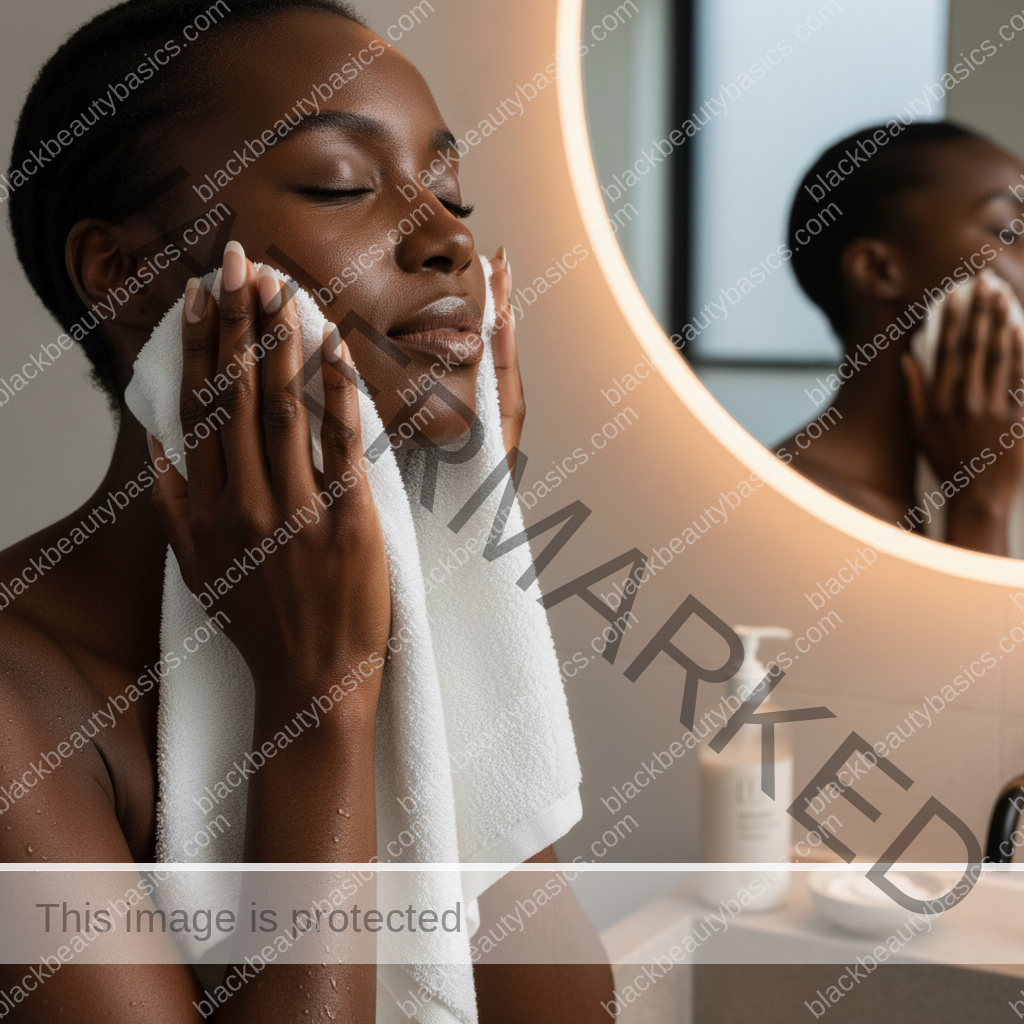
If your face feels tight, hot, or “squeaky” after washing, your cleanser may be doing too much. A lot of people are taught to treat that feeling as proof that cleansing worked. For melanin-rich skin, that can backfire fast.
When cleansing is too harsh, the fallout can show up as dryness, shiny-tight skin, irritation, breakouts, and stubborn dark marks after inflammation. This guide helps you spot the signs early and shift into a gentler routine that still keeps skin clean.
If you want the broader system, keep BBB’s routine design guide open. Here we’re focused on one critical troubleshooting question: is your cleanser helping your skin, or quietly stressing it out?
Why Cleanser Choice Matters So Much for Dark Skin
Cleansing is the first step in most routines, so when it is wrong, everything after it has to compensate. A harsh cleanser can strip lipids, increase water loss, and make your barrier more reactive. Then moisturizer has to work harder, sunscreen sits worse, and makeup can cling in ways that look like “texture problems” when the root issue is barrier stress.
For people with richly melanated skin, inflammation often leaves longer visible reminders. A tiny cycle of irritation can turn into breakouts, picking, and post-inflammatory marks that last weeks or months. That is why cleanser gentleness is not a “nice to have.” It is foundational prevention.
Harsh cleansing is also confusing because it can create mixed signals. You might feel tight and dry, but still look shiny. You might see flakes and assume you need stronger exfoliation. You might keep buying new products when the real issue is step one. Getting cleanser fit right simplifies everything else.
Most Common Signs Your Cleanser Is Too Harsh
Watch for patterns, not one random off day. If several of these are happening consistently, your cleanser is a likely suspect.
1) Tightness Right After Washing
Clean skin should feel refreshed, not stretched. If you smile and your cheeks feel pulled, that is a warning sign.
2) Stinging with Basic Products
If moisturizer, sunscreen, or a once-safe serum suddenly burns after cleansing, your barrier may be irritated.
3) “Squeaky-Clean” Finish
That squeak can mean too much oil removal, not better cleansing quality.
4) Shiny but Uncomfortable Skin
You may look oily but feel tight. That often reflects dehydration and barrier stress, not true balance.
5) Flaking, Ashiness, or Dullness
Over-cleansing can make texture and ashiness more visible, especially on deeper skin tones.
6) More Reactivity Than Usual
If your skin becomes easier to irritate or unpredictable week to week, cleanser aggression may be part of it.
7) Breakouts in a “Dry” Routine
Barrier disruption can push skin into a cycle of irritation and congestion, even when you are trying to simplify.
What Causes Harsh Cleansing
Sometimes it is the formula itself. Sometimes it is how it is used. Common triggers include:
Using a strong foaming cleanser twice daily when your skin only tolerates that once daily. Washing with very hot water. Cleansing too long. Double-cleansing when you did not wear much product. Pairing harsh cleanser with frequent exfoliation. Treating every shine signal as dirt that must be stripped.
Product categories can matter too. If your current formula feels aggressive, comparing gentler options can help. For quick category browsing, gentle fragrance free facial cleanser is a useful search type. The goal is comfort plus effective removal, not foam drama.
How to Reset If Your Cleanser Is Too Harsh
When your skin is irritated, do less for a short window and let the barrier settle.
Step 1: Pause Extra Aggressive Steps
Temporarily reduce exfoliation and pause new high-intensity treatments if your skin is stinging or tight.
Step 2: Switch to Gentle Cleansing
Use a milder cleanser and shorter wash time. Lukewarm water only. No scrubbing.
Step 3: Moisturize Consistently
Apply a barrier-supportive moisturizer right after cleansing while skin is still slightly damp.
Step 4: Keep Sunscreen Daily
Protection matters even more when barrier is stressed, especially if you are prone to dark marks.
Step 5: Observe for 10-14 Days
Look for less stinging, better comfort, and calmer texture before deciding on any next additions.
If your routine is overloaded and you need a full simplification lane, use BBB’s routine reset guide.
How to Build a Better Cleansing Routine Going Forward
Choose a cleanser by outcome, not marketing language. Your face should feel clean without feeling raw. If you wear heavier sunscreen or makeup, you may need a little more removal at night and a gentler morning approach. If mornings leave you comfortable, a rinse may be enough some days.
Match the rest of your routine to your cleanser reality. If your skin feels balanced, avoid adding unnecessary “fixes.” If it still feels tight, look at moisturizer support and layering. BBB’s moisturizer guide for acne-prone dehydrated skin can help if you are nervous about clogging.
Keep your routine readable. If too many variables are changing at once, you cannot tell what helped. One change, one observation window, then decide.
How This Connects to the Cluster
This post pairs directly with oily and ashy skin routine, signs your skin barrier is healing, and layering serum, moisturizer, and SPF without pilling. Together, these help you move from reactivity to steadier daily care.
Frequently Asked Questions
How do I know if my cleanser is too harsh or if my skin is just dry?
Look at timing. If tightness appears immediately after washing and repeats daily, cleanser fit is likely part of the problem. Dry skin can still exist, but harsh cleansing often amplifies it. If comfort improves quickly after switching cleanser behavior, that is a strong clue.
Is foaming cleanser always bad for dark skin?
No. Some foaming cleansers are gentle and work well. The issue is not foam itself. It is the result on your skin: comfort, tightness, reactivity, and routine compatibility.
Should my face ever feel squeaky clean?
Not ideally. “Squeaky” often means over-cleansed. Clean skin should feel refreshed and flexible, not stripped.
Can a harsh cleanser make dark marks look worse?
Indirectly, yes. Barrier irritation can increase breakouts and inflammation, and those can leave longer marks on melanin-rich skin. Gentler cleansing helps reduce that cycle.
What if I have oily skin and still feel tight after cleansing?
That is common in oily-dehydrated patterns. You may be removing too much and creating rebound behavior. Shift to gentler cleansing and add hydration support before assuming you need stronger oil control.
How long should I test a new gentle cleanser?
Usually 10-14 days for comfort signals, assuming no severe reaction. You should notice reduced tightness or stinging fairly quickly if cleanser harshness was a core issue.
When should I see a dermatologist?
If irritation is painful, persistent, spreading, infected-looking, or repeatedly leaving significant dark marks, professional care is appropriate. Also seek care if acne and sensitivity remain uncontrolled despite a simplified routine.
What to Do Next
Run a cleanser audit this week: note how your skin feels 5 minutes after washing, then midday, then at night. If tightness and stinging patterns are clear, switch to gentler cleansing behavior first before buying a full new shelf.
If your skin calms, keep the routine simple and steady. If it does not, move to structured troubleshooting with the related BBB guides and consider professional support when needed.
Your cleanser should make the rest of your routine easier. If it is making everything harder, that is your signal.
Related next steps
Related posts:
 How to Choose a Cleanser for Melanin-Rich Skin (By Type and Concern)
 Is Your Hair Breaking or Shedding? How to Tell the Difference and Fix It
 The Moisture-Protein Balance – How to Tell What Your Hair Needs and Avoid Breakage
 Shedding vs Breakage: How Black Women Can Tell the Difference
 How to Tell If Your Hair Needs More Moisture or More Protein
 unwash Bio-cleansing Conditioner Hair Cleanser Review