Dark underarms are common on dark skin, but common does not mean the feelings around them are simple. Sleeveless tops, gym clothes, photos, dancing, stretching, and summer heat can all bring attention to an area people are often taught to hide. Let’s take the pressure off first: underarm darkening does not mean you are dirty, careless, or less feminine. It usually means the skin is responding to friction, hair removal, products, inflammation, or natural depth.
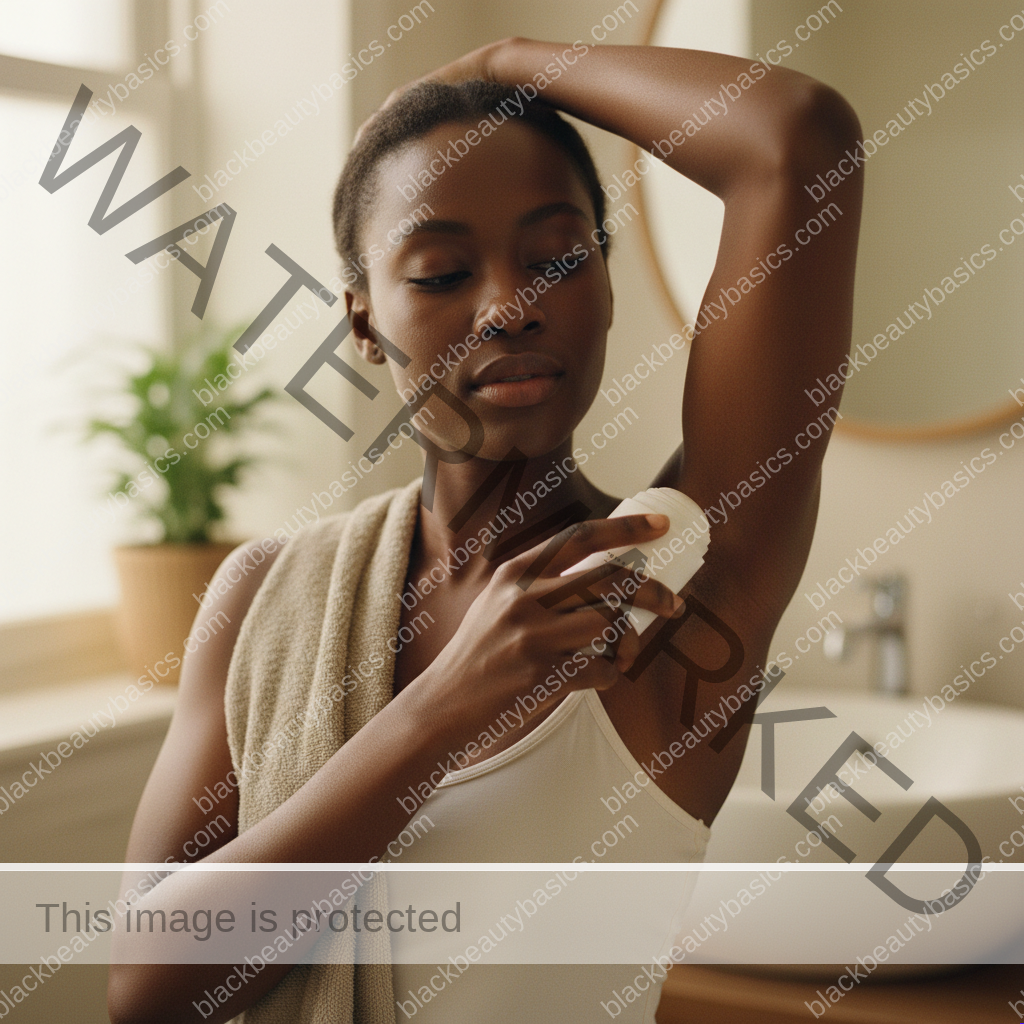
This guide looks at underarm darkening on dark skin through friction, shaving, deodorant, and skin-barrier factors. We will focus on gentle care and realistic next steps. For the wider body-care context, BBB’s body hyperpigmentation guide explains how underarms fit into the larger pattern of body discoloration.
Why Underarms Can Darken
Underarm skin sits in a high-friction zone. Skin rubs against skin, fabric, seams, sweat, deodorant, shaving, waxing, and sometimes fragrance. That repeated contact can create irritation. On melanin-rich skin, irritation can trigger extra pigment, leaving the area darker or more shadowed.
Hair removal is another major factor. Shaving can create tiny cuts, razor burn, bumps, and ingrown hairs. Waxing can irritate or burn if the skin is sensitive or the technique is too aggressive. If inflammation repeats every few days or weeks, the pigment may become more visible.
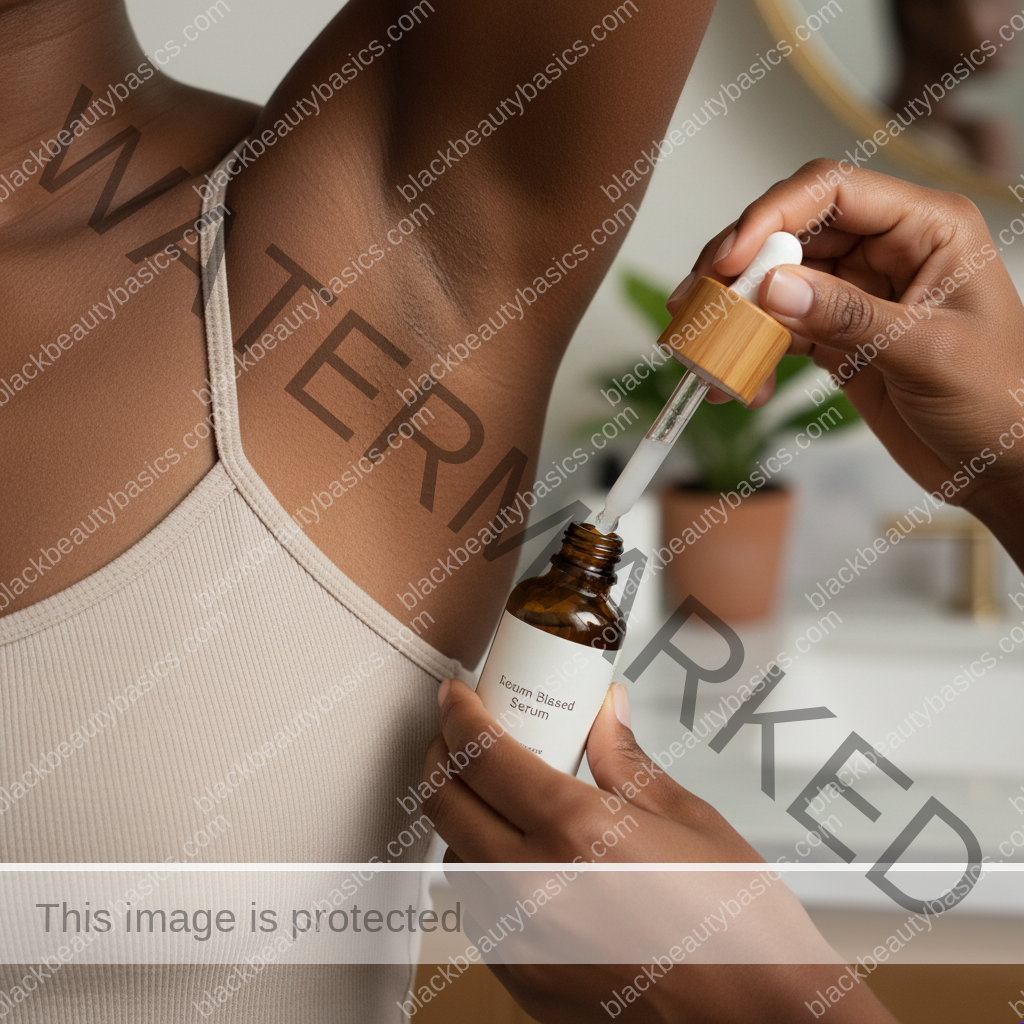
Deodorant can also play a role. Some people react to fragrance, baking soda, certain acids, alcohol-heavy formulas, or essential oils. A deodorant can smell beautiful and still irritate your skin. If the area burns, itches, peels, or gets bumpy after a product, pay attention.
What to Avoid
Avoid scrubbing your underarms aggressively. The area is delicate and folded, and harsh scrubbing can worsen irritation. If you are trying to remove deodorant buildup, use gentle cleansing and patience instead of rough tools.
Avoid shaving over bumps or irritated skin. Shaving inflamed underarms can deepen the cycle of bumps and dark marks. If you are dealing with razor irritation, pause and let the skin calm before shaving again.
Avoid deodorants that repeatedly sting, burn, or itch. “Natural” does not automatically mean gentle. Some natural deodorants are irritating for sensitive underarms. Your skin’s response matters more than the marketing.
Avoid bleaching language and harsh lightening products. The goal is not to make your underarms look like someone else’s filtered image. The goal is less irritation, smoother texture, and skin that feels comfortable.
A Gentle Underarm Routine
Cleanse gently in the shower. Use a mild body wash and your hands or a soft cloth. If deodorant residue is stubborn, give the cleanser enough time to work instead of scraping. If fragrance irritates you, compare options like fragrance-free body wash for sensitive skin.
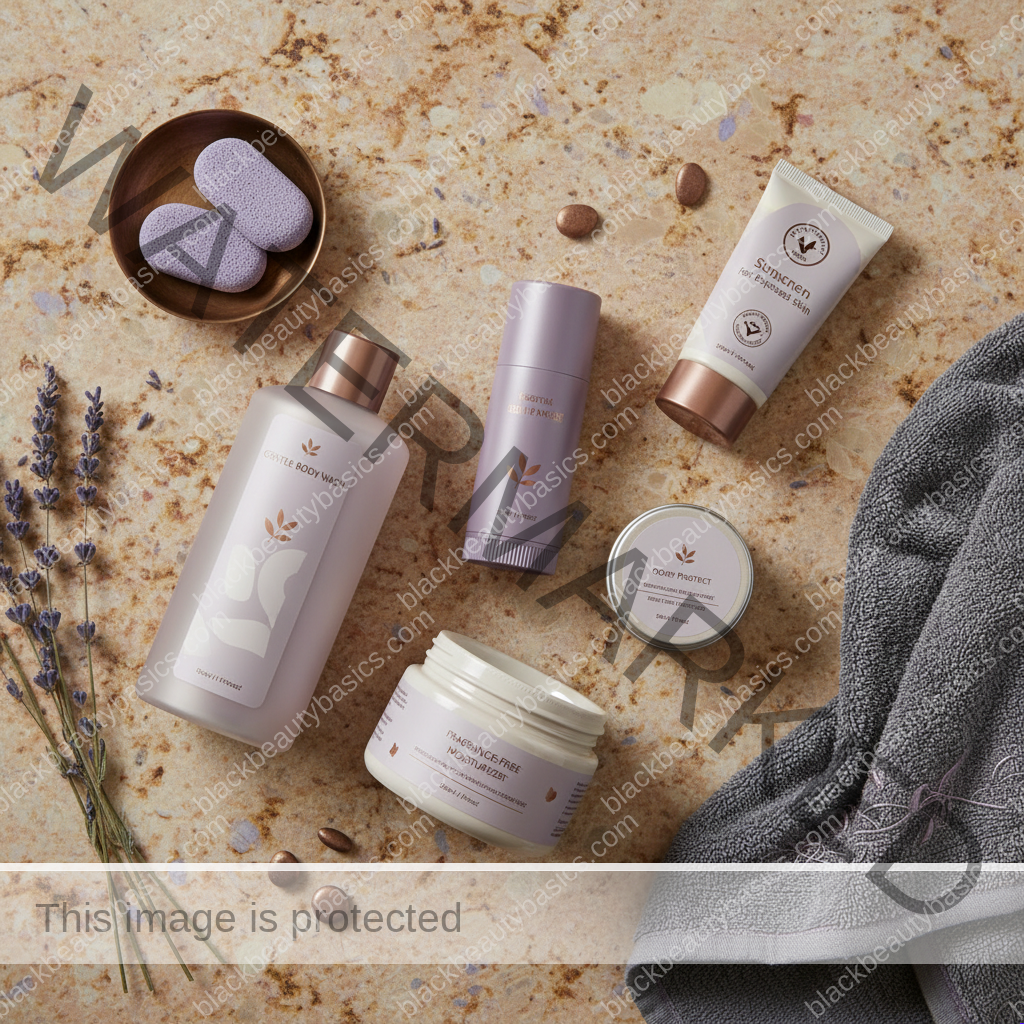
Choose deodorant based on tolerance. If a formula burns or makes the skin peel, stop using it. You may need fragrance-free, baking-soda-free, or sensitive-skin options. A search like fragrance-free deodorant for sensitive skin can help you compare product types, but your skin decides.
Adjust shaving habits if shaving is the trigger. Use a clean razor, do not dry shave, avoid pressing hard, and consider shaving less often or trimming instead. If ingrowns and painful bumps keep happening, a dermatologist can help you explore safer options, including professional hair-removal approaches for deep skin.
Reduce friction where possible. Softer fabrics, better-fitting bras, breathable tops, and not applying irritating products right before heavy sweating can help. If your underarms darken after workouts, the issue may be sweat plus friction plus product residue, not a lack of cleanliness.

When Underarm Darkening Needs a Closer Look
If the underarm skin is thick, velvety, rapidly darkening, or darkening in multiple folds such as neck and groin, consider medical evaluation. Not every underarm shadow is about shaving or deodorant. Some skin changes deserve a clinician’s input.
If you have painful bumps, recurring boils, drainage, or scarring in the underarms, ask about hidradenitis suppurativa or other conditions. Treating the pigment alone will not solve recurring inflammation. Professional care can reduce flares and future marks.
If the skin is itchy, cracked, or rashy, pause actives and scented products. Treat comfort first. BBB’s guide to barrier-safe dark spot care applies to underarms too.
Frequently Asked Questions
1. Are dark underarms normal on dark skin?
Yes, they can be. Underarms naturally sit in a fold and see friction, hair removal, sweat, and product contact. A deeper tone there is common. If the change is sudden, painful, thick, or spreading, get medical advice.
2. Can deodorant cause underarm darkening?
It can if it irritates your skin. Fragrance, baking soda, acids, or other ingredients may trigger itching, peeling, bumps, or inflammation in some people. Repeated irritation can leave pigment on melanin-rich skin.
3. Does shaving make underarms darker?
Shaving can contribute if it causes razor burn, cuts, bumps, or ingrown hairs. The hair itself can also create a shadow under the skin. Gentler shaving, trimming, or professional guidance may help if shaving is a trigger.
4. Should I exfoliate my underarms?
Only gently and only if your skin tolerates it. Do not exfoliate irritated, freshly shaved, broken, or rashy skin. Over-exfoliation can worsen darkening. Many people need less friction, not more.
5. Can I use face dark-spot products on underarms?
Be careful. Underarm skin can be sensitive and folded, so face actives may sting or irritate. If you try anything, patch test and go slowly. Stop if burning, itching, or peeling appears.
6. How long does underarm darkening take to improve?
It depends on the trigger and how often irritation repeats. If shaving bumps or deodorant reactions continue, marks may keep returning. Once the trigger is reduced, visible softening may take months.
7. When should I see a dermatologist?
See a dermatologist if darkening is sudden, velvety, spreading, painful, or linked to lumps, boils, drainage, rash, or scarring. A professional can help identify whether this is friction-related pigment or something else.

What to Do Next
Start by identifying the trigger: shaving, deodorant, friction, sweat, rash, or bumps. Then simplify. Cleanse gently, choose products your skin tolerates, reduce friction where possible, and avoid harsh lightening shortcuts.
For nearby body concerns, read inner-thigh discoloration on melanin-rich skin and knee and elbow discoloration care. Your body care should make you feel safer in your skin, not more inspected.
Related next steps
Related posts:
 Underarm and Leg Shaving on Dark Skin: A Strategic Guide for Melanin-Rich Skin
 Underarm Darkening on Melanin-Rich Skin: Common Patterns & Care
 Inner Thigh and Bikini-Adjacent Darkening from Friction: Understanding and Nurturing Melanin-Rich Skin
 Inner Thigh Darkening Near the Groin: Friction, Hair, and Fabrics
 Environmental Factors & Dark Skin Barrier: Climate, Pollution & More
 Body Odor, pH, and Deodorant for Black Women: Natural vs Clinical Strength