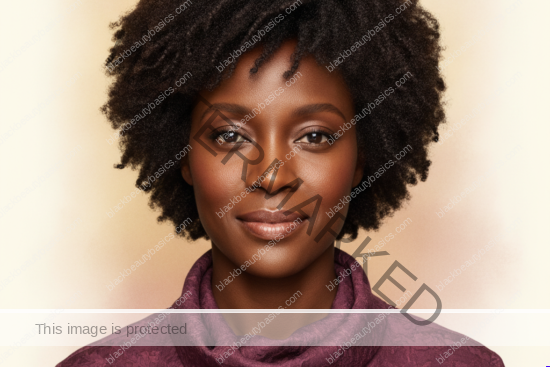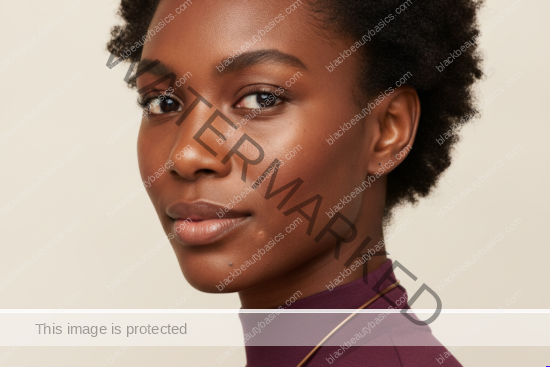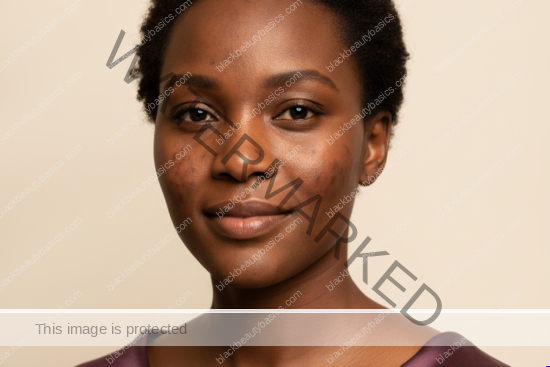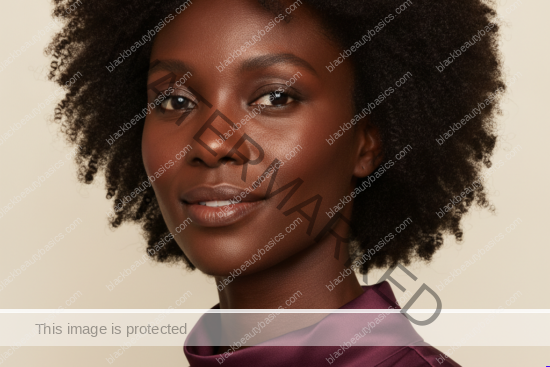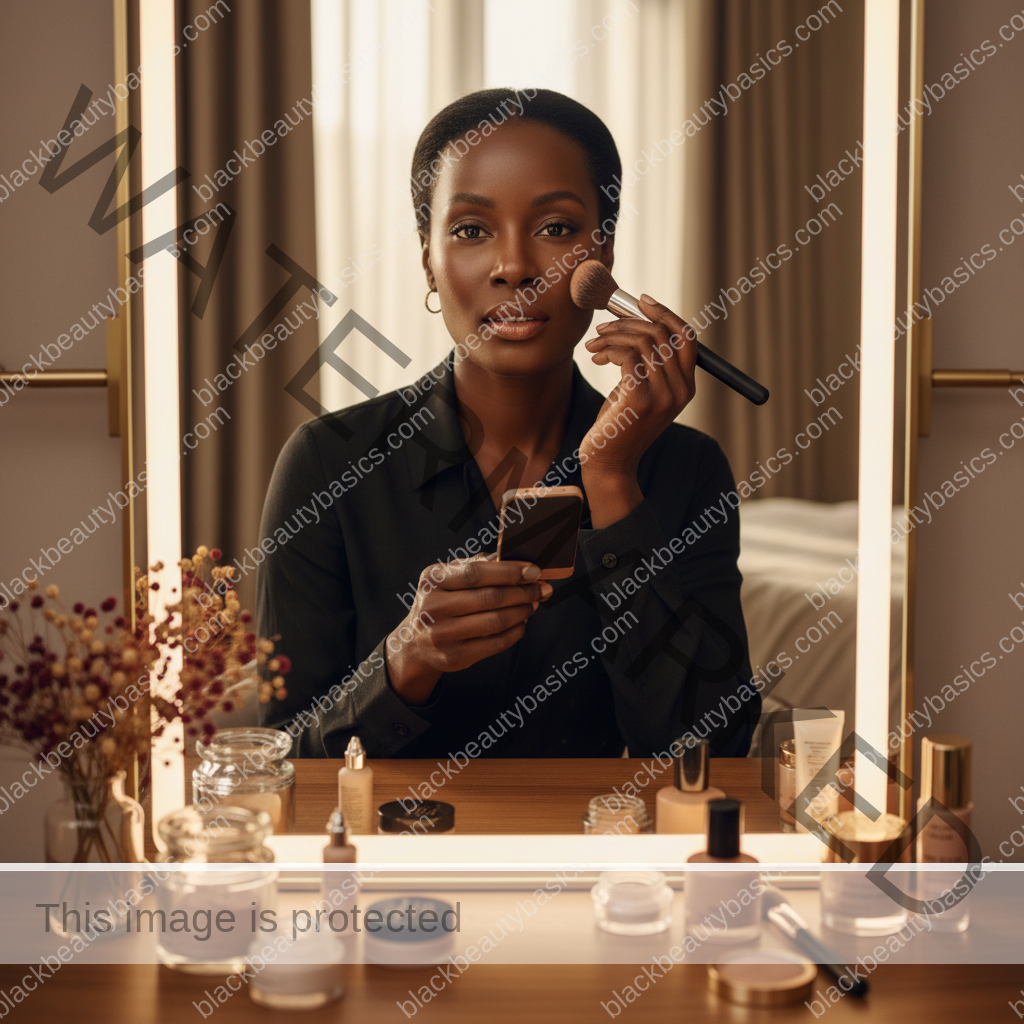
In a world increasingly connected through screens, your digital presence is as vital as your physical one. For the discerning Black woman, mastering the art of camera-ready makeup for Zoom and video calls isn’t just about looking good; it’s about confidently owning your narrative, ensuring your exquisite features and radiant complexion are beautifully captured, even through a lens. Start with the related BBB makeup cluster guide if you want the broader map.
Embracing the Digital Canvas: Why Camera-Ready Makeup Matters for Deep Skin Tones
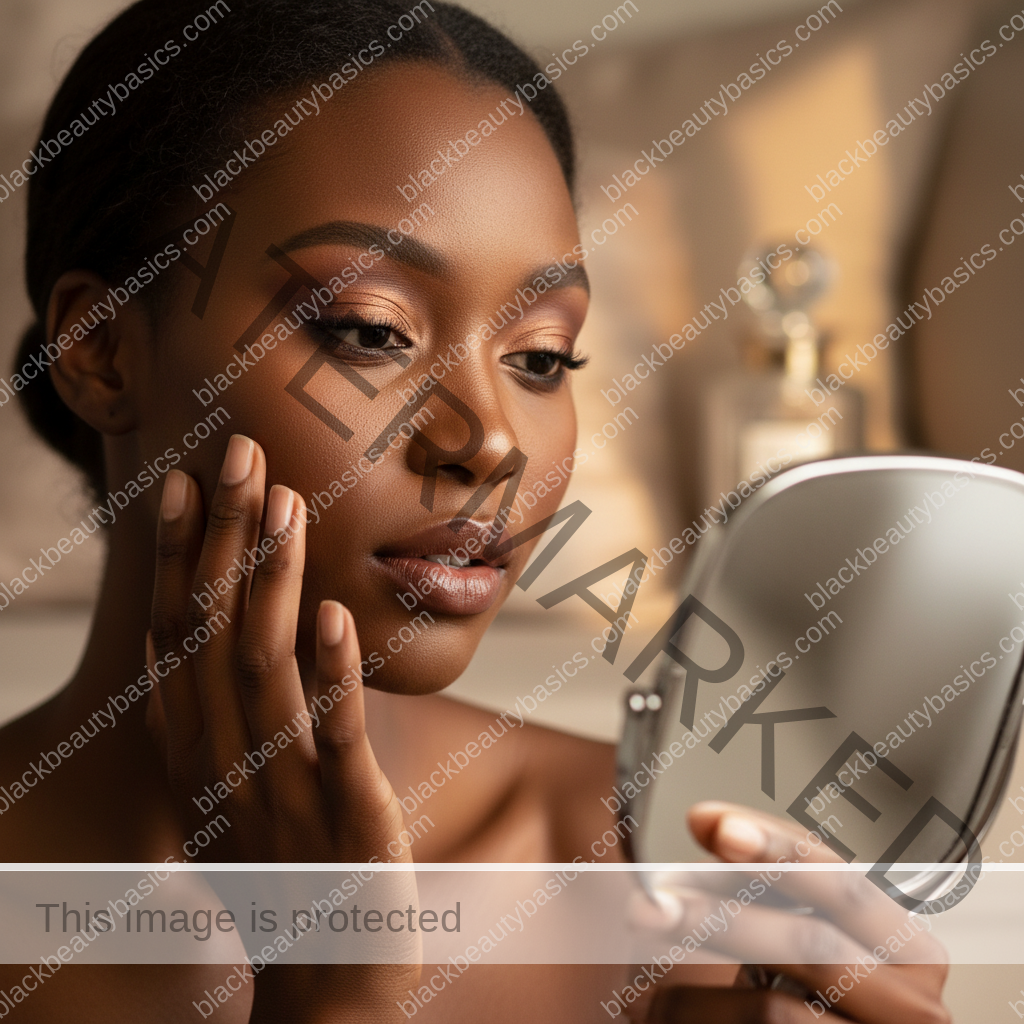
The transition from in-person meetings to virtual conferences has reshaped our professional and social landscapes. While convenient, video calls present unique challenges for makeup application, especially for deep skin tones. The nuances of lighting, camera resolution, and screen display can often wash out, flatten, or misrepresent the rich, multidimensional beauty of melanin-rich complexions. Our goal isn’t to transform you, but to enhance and ensure your authentic glow translates perfectly, empowering you to command attention and radiate confidence from every pixel.
Understanding the Digital Gaze: How Cameras & Lighting Affect Deep Skin
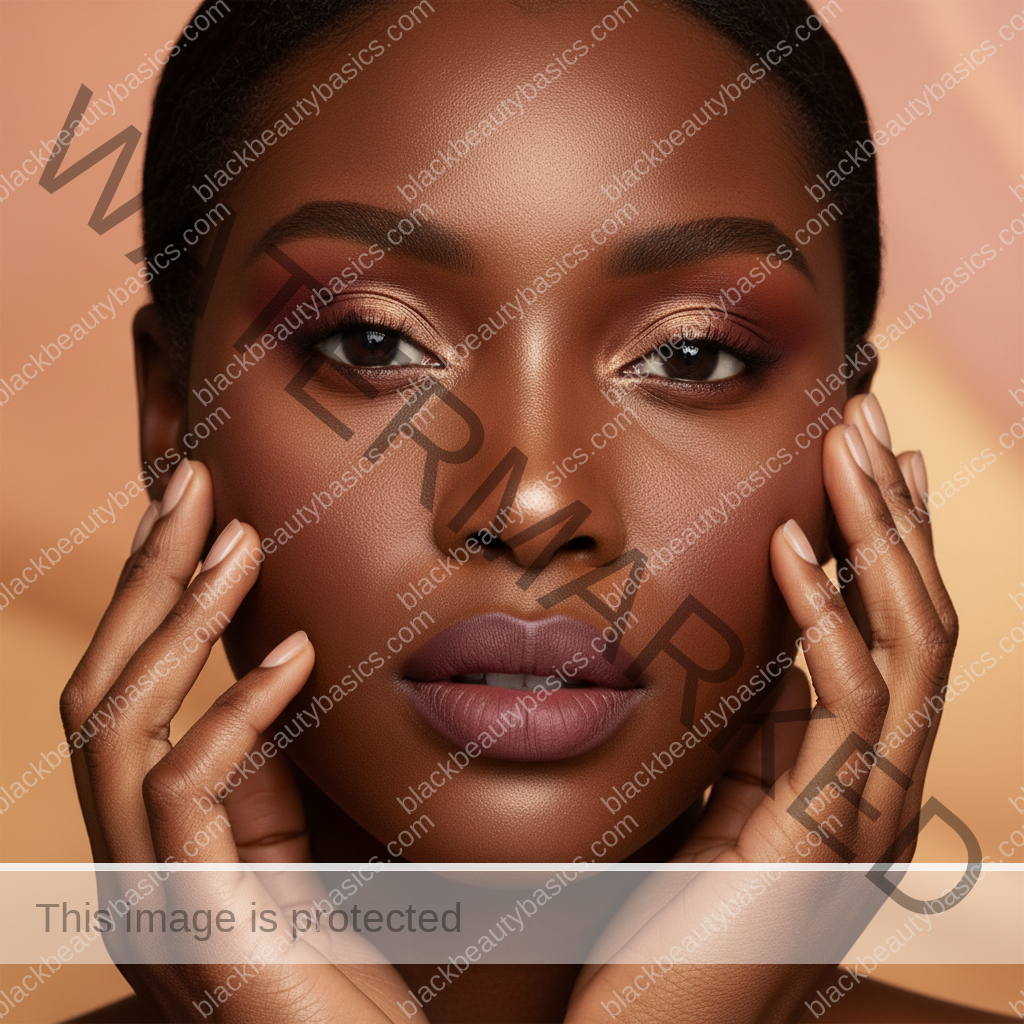
Before we delve into products and techniques, let’s understand the digital gaze. Cameras, particularly webcams, tend to have a lower dynamic range than the human eye. This means they struggle to capture the full spectrum of light and shadow, often leading to:
- Washout: Bright lighting can make deep skin appear lighter or desaturated.
- Flattening: Lack of dimension can make features appear less defined.
- Ashiness: Certain foundations or powders can appear gray or ashy under artificial light.
- Shine vs. Glow: Uncontrolled oil can look greasy, rather than a healthy luminosity.
The key is to create contrast and definition strategically, ensuring your natural radiance is amplified, not diminished.
The Foundation of Flawless: Prepping Your Canvas
A truly camera-ready look begins long before the first stroke of makeup. Skincare is paramount, particularly for deep skin which can sometimes be prone to hyperpigmentation or uneven texture. A well-prepped canvas ensures makeup glides on smoothly, lasts longer, and looks more natural on screen.
Step 1: The Skincare Ritual – Hydrate & Protect
Begin with a gentle cleanse to remove impurities, followed by a hydrating toner to balance your skin’s pH. Next, apply a serum packed with antioxidants to protect and brighten. For deep skin, ingredients like Vitamin C, Niacinamide, and Hyaluronic Acid are excellent for promoting an even tone and supple texture. Finish with a moisturizer suited for your skin type, ensuring it’s fully absorbed before makeup application. Don’t forget a broad-spectrum SPF, even indoors, as screen light can contribute to skin damage.
Shop Hydrating Toners on Amazon
Shop Vitamin C Serums on Amazon
Shop Moisturizers for Deep Skin on Amazon
Step 2: The Power of Primer – Your Makeup’s Best Friend
Primer is non-negotiable for video calls. It creates a smooth base, blurs imperfections, minimizes pores, and helps your makeup adhere better, preventing it from settling into fine lines or caking. For deep skin, look for primers that offer:
- Mattifying properties: If you have oily skin, to control shine.
- Hydrating properties: If you have dry skin, for a dewy finish.
- Color-correcting properties: A peach or orange-toned primer can subtly neutralize hyperpigmentation, creating a more even base before foundation.
Apply a thin layer evenly across your face, focusing on areas prone to shine or large pores.
Shop Mattifying Primers on Amazon
Shop Hydrating Primers on Amazon
Shop Color-Correcting Primers for Deep Skin on Amazon
The Art of Complexion: Achieving a Luminous, Even Tone
This is where the magic truly happens. For deep skin, selecting the right foundation, concealer, and powder is crucial to avoid an ashy or flat appearance on camera. The goal is to enhance your natural undertones and create a seamless, radiant finish.
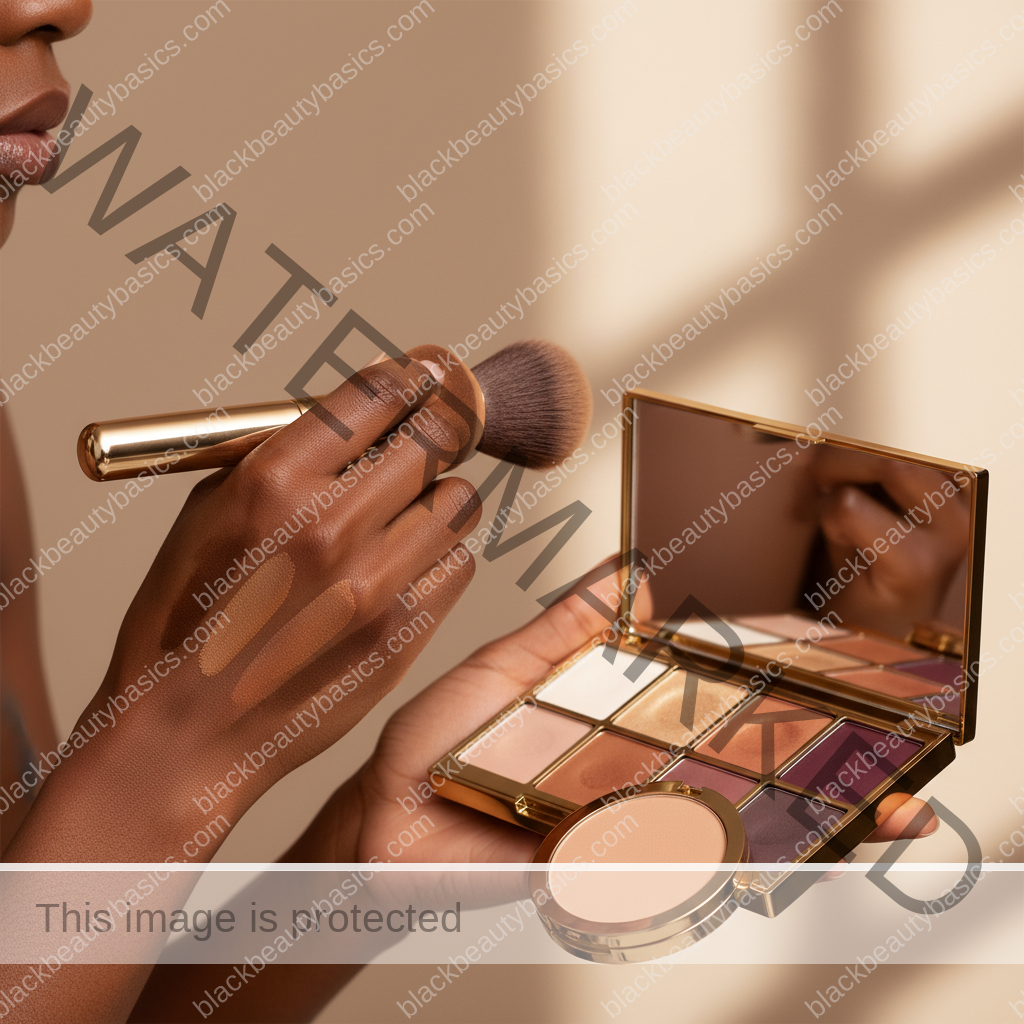
Step 3: Foundation – Your Perfect Match
Finding the right foundation shade for deep skin can be challenging, but it’s paramount for video calls. Avoid shades that are too light or too red/orange. Your ideal foundation should disappear into your skin, matching your neck and chest.
- Undertones: Identify your undertone (warm/golden, cool/red, or neutral). Many deep skin tones have warm or golden undertones.
- Formulation: Opt for medium-to-full coverage foundations that offer a natural or satin finish. Matte foundations can sometimes look flat on camera, while overly dewy ones might appear greasy.
- Application: Apply foundation with a damp beauty sponge or a dense foundation brush for an airbrushed finish. Start in the center of your face and blend outwards, ensuring there are no harsh lines, especially along the jawline.
Shop Foundations for Deep Skin Tones on Amazon
Step 4: Concealer – Brighten & Correct
Concealer serves two purposes: correcting discoloration and brightening.
- Color Correcting: For hyperpigmentation or dark circles, use an orange or peach-toned color corrector before your concealer. Apply sparingly to the affected areas and gently pat to blend.
- Concealing & Brightening: Choose a concealer that is one shade lighter than your foundation for brightening under the eyes and other areas you want to highlight (e.g., bridge of the nose, center of the forehead). For blemishes, use a concealer that matches your foundation exactly. Apply in an inverted triangle shape under the eyes and blend gently with a finger or small brush.
Shop Orange Color Correctors for Deep Skin on Amazon
Shop Concealers for Deep Skin on Amazon
Step 5: Setting Powder – The Invisible Veil
Setting powder is essential for locking in your makeup and controlling shine, especially under bright lights.
- Translucent Powder: For most of your face, a finely milled translucent powder is ideal. Ensure it’s truly translucent and doesn’t leave a white cast on deep skin.
- Banana Powder: For brightening under the eyes and the T-zone, a yellow-toned “banana” powder works wonders on deep skin without looking ashy.
- Application: Apply powder sparingly with a fluffy brush or a damp beauty sponge (for “baking” in specific areas like under the eyes). Press, don’t swipe, to set your makeup.
Shop Translucent Setting Powders for Deep Skin on Amazon
Shop Banana Setting Powders on Amazon
Comparison Table: Foundation Finishes for Video Calls
| Foundation Finish | Description | Pros for Video Calls (Deep Skin) | Cons for Video Calls (Deep Skin) |
|---|---|---|---|
| Matte | No shine, velvety look. | Excellent for oily skin, controls shine, long-lasting. | Can look flat or mask-like, may emphasize texture, can appear ashy if not the right shade. |
| Satin/Natural | Subtle sheen, mimics natural skin. | Most versatile, provides healthy glow without excess shine, looks natural and dimensional. | May require touch-ups for very oily skin. |
| Dewy/Radiant | Luminous, glowing finish. | Adds youthful radiance, great for dry skin. | Can appear greasy or overly shiny on camera, may require more powder to control. |
Sculpting & Illuminating: Bringing Dimension to the Screen
Without proper contour, blush, and highlight, your face can appear one-dimensional on camera. These steps are crucial for adding warmth, definition, and that coveted inner glow to deep skin tones.
Step 6: Contour & Bronzer – Defining Your Features
Contouring creates shadows to define facial structure, while bronzer adds warmth. For deep skin, choose contour shades that are cool-toned and about two shades darker than your foundation. Bronzers should have a golden or reddish-brown undertone to complement your complexion, avoiding anything too orange or muddy.
- Contour: Apply to the hollows of your cheeks, along your jawline, and lightly on the temples. Blend meticulously to avoid harsh lines.
- Bronzer: Apply where the sun would naturally hit your face – forehead, cheekbones, bridge of the nose.
Cream products often blend more seamlessly on deep skin and appear more natural on camera than powders.
Shop Cream Contours for Deep Skin on Amazon
Shop Bronzers for Deep Skin Tones on Amazon
Step 7: Blush – The Flush of Life
Blush brings life and vibrancy back to your complexion. For deep skin, rich, vibrant shades truly pop on camera.
- Shades: Think terracotta, berry, fuchsia, deep plums, and vibrant oranges. Avoid pale pinks or nudes that can disappear or look chalky.
- Formulation: Cream or liquid blushes often look more natural and blend seamlessly into deep skin, providing a beautiful, lit-from-within glow. Powder blushes can also work, but ensure they are highly pigmented.
- Application: Apply to the apples of your cheeks and blend upwards towards your temples.
Shop Cream Blushes for Deep Skin on Amazon
Shop Powder Blushes for Deep Skin on Amazon
Step 8: Highlighter – Your Luminous Signature
Highlighter is your secret weapon for a radiant, camera-ready glow. It catches the light and emphasizes your bone structure.
- Shades: Golden, bronze, copper, and rose gold shades are stunning on deep skin. Avoid silver or icy tones that can look stark.
- Formulation: Liquid or cream highlighters often provide a more natural, dewy finish that translates beautifully on camera. Powder highlighters can also be used for a more intense glow.
- Application: Apply to the high points of your face – cheekbones, brow bone, cupid’s bow, and a tiny dab on the bridge of your nose. Blend well to avoid harsh streaks.
Shop Liquid Highlighters for Deep Skin on Amazon
Shop Powder Highlighters for Deep Skin on Amazon
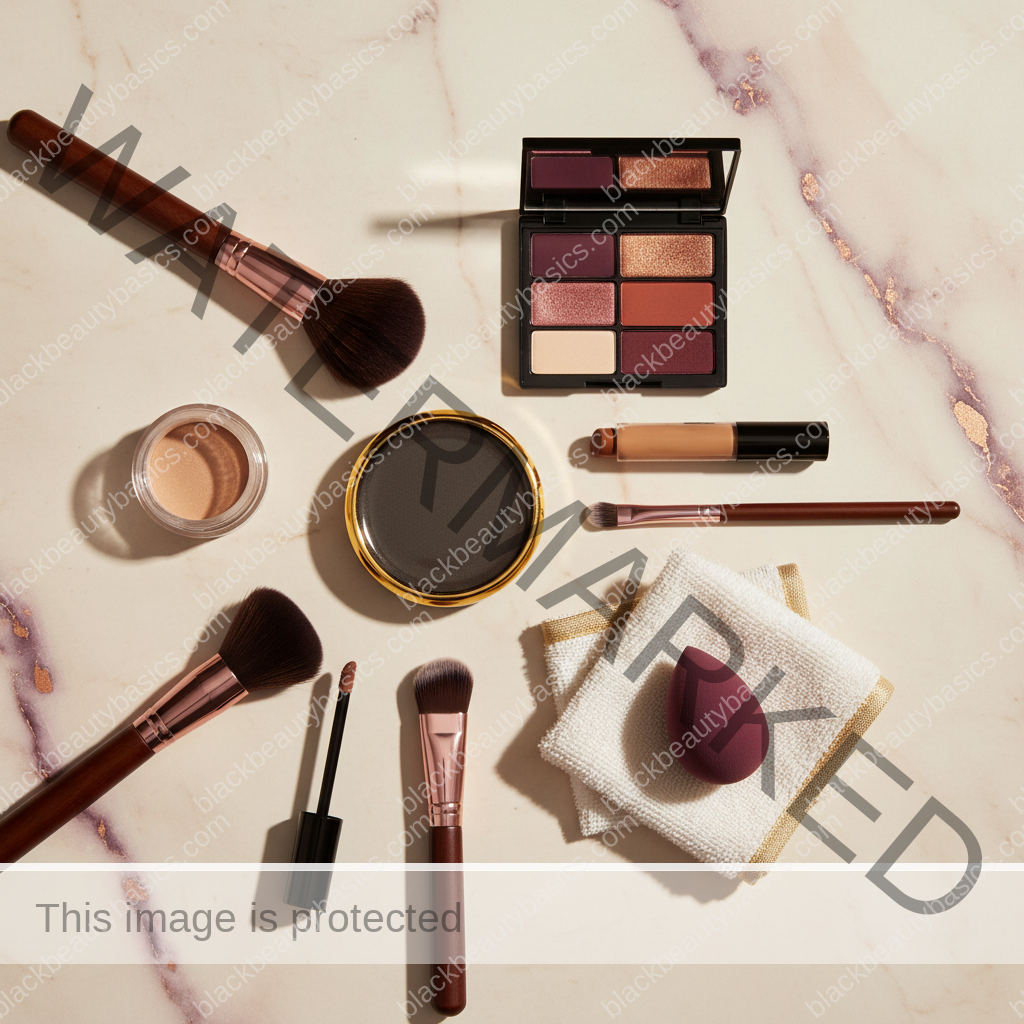
Eyes That Captivate & Lips That Speak: Finishing Touches
Your eyes are the windows to your soul, and on video calls, they are often the focal point. Defined brows and expressive eyes, paired with a complementary lip, complete your camera-ready look.
Step 9: Brows – The Frame of Your Face
Well-groomed brows frame your face and add structure. Fill in sparse areas with a brow pencil, powder, or pomade that matches your natural brow hair. Brush them into place with a spoolie and set with a clear or tinted brow gel. Defined brows instantly make you look more polished and awake on screen.
Shop Brow Pencils for Deep Skin on Amazon
Shop Brow Gels on Amazon
Step 10: Eyes – Expressive & Defined
For video calls, a slightly more defined eye look is often beneficial to prevent eyes from disappearing.
- Eyeshadow: Stick to neutral tones that complement deep skin, such as warm browns, bronzes, golds, and plums. A matte transition shade in your crease adds depth, while a shimmer on the lid catches the light beautifully.
- Eyeliner: A crisp black or deep brown eyeliner along the upper lash line (and a subtle tightline) can make your eyes pop.
- Mascara: Generous coats of volumizing and lengthening mascara are a must. Consider curling your lashes beforehand.
Shop Neutral Eyeshadow Palettes for Deep Skin on Amazon
Shop Black Eyeliners on Amazon
Shop Volumizing Mascaras on Amazon
Step 11: Lips – Your Statement
Your lips are an opportunity to add a final touch of polish and personality.
- Liner: Always use a lip liner that matches your natural lip color or your chosen lipstick. This defines your lips and prevents feathering.
- Shades: Deep skin tones can beautifully carry a wide range of lip colors. Rich nudes, warm browns, berries, deep reds, and vibrant fuchsias are all excellent choices. Avoid shades that are too pale or cool-toned, as they can wash you out on camera.
- Finish: A satin or cream finish is generally best for video calls. A matte lip can sometimes look dry, while an overly glossy lip might reflect too much light.
Shop Lip Liners for Deep Skin on Amazon
Shop Lipsticks for Deep Skin Tones on Amazon
Tip List: Camera-Ready Makeup Essentials for Deep Skin
- Color Corrector: Orange/peach for hyperpigmentation.
- Foundation: Medium-to-full coverage, satin/natural finish, perfectly matched to undertone.
- Concealer: One shade lighter for brightening, exact match for blemishes.
- Setting Powder: Translucent or banana powder.
- Contour: Cool-toned, two shades darker than foundation (cream preferred).
- Bronzer: Golden or reddish-brown undertone.
- Blush: Rich berry, terracotta, fuchsia, or plum (cream/liquid preferred).
- Highlighter: Golden, bronze, copper, or rose gold (liquid/cream preferred).
- Brow Product: Pencil, powder, or pomade matching brow hair.
- Eyeshadow: Warm neutrals, bronzes, golds, plums.
- Eyeliner: Black or deep brown.
- Mascara: Volumizing and lengthening.
- Lip Liner: Matches natural lip or lipstick.
- Lipstick: Rich nudes, browns, berries, deep reds, fuchsias (satin/cream finish).
- Setting Spray: To lock it all in.
Shop Setting Sprays on Amazon
Beyond the Brush: Lighting & Setup for Your Best Digital Self
Even the most expertly applied makeup can fall flat with poor lighting. Your environment plays a significant role in how you appear on camera. Investing a little time in optimizing your setup will make a world of difference.
Optimal Lighting Strategies for Deep Skin
- Frontal Lighting is Key: Position a light source directly in front of you, slightly above eye level. This minimizes shadows and illuminates your face evenly. A ring light or a softbox is ideal.
- Avoid Backlighting: Never sit with a window or bright light source directly behind you, as this will cast your face into shadow and make you appear darker.
- Natural Light is Your Friend: If possible, sit facing a window during daylight hours. Natural light is the most flattering.
- Warm vs. Cool Tones: Aim for natural or warm-toned LED lights (around 3000K-4000K). Cool-toned lights (blue-ish) can make deep skin appear sallow or ashy.
Shop Ring Lights on Amazon
Shop Softbox Lighting Kits on Amazon
Camera Angles & Backgrounds
- Eye-Level Camera: Position your webcam or laptop at eye level. This creates a more engaging and flattering angle. Use books or a stand if needed.
- Clean, Uncluttered Background: A simple, uncluttered background ensures you remain the focus. A solid color wall or a tastefully decorated space works best.
- Distance: Sit far enough back so your head and shoulders are comfortably in the frame, allowing for natural hand gestures if you speak with your hands.
Maintaining Your Digital Radiance: Touch-Ups & Setting
Even with the best prep, a long video call might require a quick touch-up.
- Blotting Papers: Keep blotting papers handy to absorb excess oil without disturbing your makeup.
- Powder Puff: A small powder puff with your translucent or banana powder can be used to lightly press away shine in the T-zone.
- Setting Spray: A final mist of setting spray not only locks your makeup in place but also helps fuse powders into the skin, creating a more natural, skin-like finish. Look for hydrating or mattifying formulas depending on your skin type.
Shop Blotting Papers on Amazon
Shop Hydrating Setting Sprays on Amazon
How to make makeup choices fit your actual undertone and finish
For Black women and people with deep skin tones, makeup shopping can feel emotional because too many shade systems still treat deep complexions as an afterthought. This guide focuses on adjusting makeup for Zoom and video calls with lighting, powder, glow, brows, blush, lips, and screen contrast, while keeping the related BBB makeup cluster as the home base. The goal is not to make your skin easier for a brand to understand. The goal is to help you read color, finish, placement, and undertone with more confidence.
Start with what you can actually see. Does the product turn orange, red, gray, ashy, too yellow, too pink, too flat, or too icy? Does it look right in store but strange in daylight? Does it match your jaw but fight your chest? Those details matter more than a shade name that sounds flattering but does not behave well on your skin.
The strongest makeup strategy is usually the one that respects depth and dimension. Deep skin often needs warmth, balance, and enough pigment, but not every product needs to be dramatic. Sometimes the better choice is a more accurate undertone, a softer placement, a different powder tone, or a formula that dries down without changing the whole face.
What to notice gently
- Where the color shifts: face, jaw, chest, under-eye, cheek, or high points.
- Whether the undertone reads red, golden, neutral, olive, muted, orange, gray, or pink.
- How the product looks in daylight, indoor lighting, flash, and after dry-down.
- Whether the finish keeps depth and dimension or makes the face look flat.
- Which placements make the makeup feel polished without erasing your complexion.
What usually makes makeup for deep skin harder than it needs to be
The first challenge is shade language that sounds precise but is not precise enough. “Deep warm” might mean red in one brand, golden in another, orange in another, and olive in none. That is why the same person can wear one brand beautifully and look completely off in another.
The second challenge is testing makeup in conditions that hide the problem. Store lighting can soften ashiness, phone cameras can warm a shade, and wet swatches can look better than dry foundation. Deep skin deserves enough time, light, and comparison points to see what is really happening.
The third challenge is using products meant to correct a problem created by the wrong base. Too-light concealer, chalky highlight, orange bronzer, or flat powder can make the whole face feel off. Often the answer is not more product. It is better tone, placement, formula, or restraint.
What to do next
Keep this article connected to the Makeup for Deep Skin Tones system. Use the related guides below to decide whether your next step is better shade matching, a base makeup adjustment, or a color product strategy that keeps depth and dimension.
- Makeup for Deep Skin Tones
- The related makeup cluster guide
- everyday vs occasion routines
- powder strategy
- concealer placement
- stopping flashback in photos
Frequently Asked Questions About Camera-Ready Makeup for Deep Skin
Q1: How do I prevent my foundation from looking ashy on Zoom?
A1: Ashiness often comes from foundations that are too light, have the wrong undertone (too cool/pink), or from translucent powders that leave a white cast. Ensure your foundation perfectly matches your skin’s undertone (often golden or warm for deep skin). Use a color corrector if needed. For setting, opt for truly translucent powders designed for deep skin, or a yellow-toned “banana” powder, applied sparingly. Good frontal lighting also significantly reduces ashiness.
Q2: What’s the best way to deal with shine on video calls for oily deep skin?
A2: Start with a mattifying primer. Use a medium-to-full coverage foundation with a natural or satin finish, avoiding overly dewy formulas. Set your T-zone with a mattifying or banana powder. Keep blotting papers or a powder puff handy for quick touch-ups during longer calls. A mattifying setting spray can also help prolong a shine-free look.
Q3: Should I use cream or powder products for contour, blush, and highlight on deep skin for video calls?
A3: For deep skin on video calls, cream and liquid products often provide a more natural, seamless, and dimensional finish. They blend beautifully into the skin and don’t tend to look as powdery or flat as some powder formulas can on camera. Powders can be used, but ensure they are highly pigmented and blended meticulously. Many prefer to layer: cream products first, then a light dusting of powder for setting.
Q4: My eyes disappear on camera. How can I make them stand out?
A4: Focus on definition. Fill and define your brows, as they frame your eyes. Use a deep brown or black eyeliner along your upper lash line, and consider a subtle tightline. Apply generous coats of volumizing and lengthening mascara. For eyeshadow, use a matte transition shade in your crease for depth, and a shimmery bronze, gold, or copper on your lids to catch the light. Avoid very light, pastel, or shimmery shades all over, which can make eyes recede.
Q5: What lip colors are most flattering for deep skin on video calls?
A5: Deep skin tones look stunning in rich, vibrant hues. Think warm nudes, caramel browns, deep berries, plums, fuchsias, and true reds. Avoid very pale nudes or cool-toned pinks that can wash out your complexion on camera. A satin or cream finish is generally ideal, as it provides a healthy sheen without being overly reflective like a high-gloss. Always use a lip liner to define your shape.
Q6: Is a setting spray really necessary for video calls?
A6: Yes, a setting spray is highly recommended. It helps to melt all your makeup layers together, creating a more skin-like finish that looks less powdery on camera. It also extends the wear of your makeup, ensuring you stay camera-ready throughout your call, and can help control shine or add hydration depending on the formula you choose.
Q7: How important is lighting for camera-ready makeup on deep skin?
A7: Lighting is paramount! Even the best makeup can look terrible under poor lighting. Frontal, soft, warm-toned lighting (like a ring light or natural daylight from a window you’re facing) is crucial. It minimizes harsh shadows, prevents washout, and ensures your deep skin tones are accurately and beautifully represented, making your makeup truly shine.
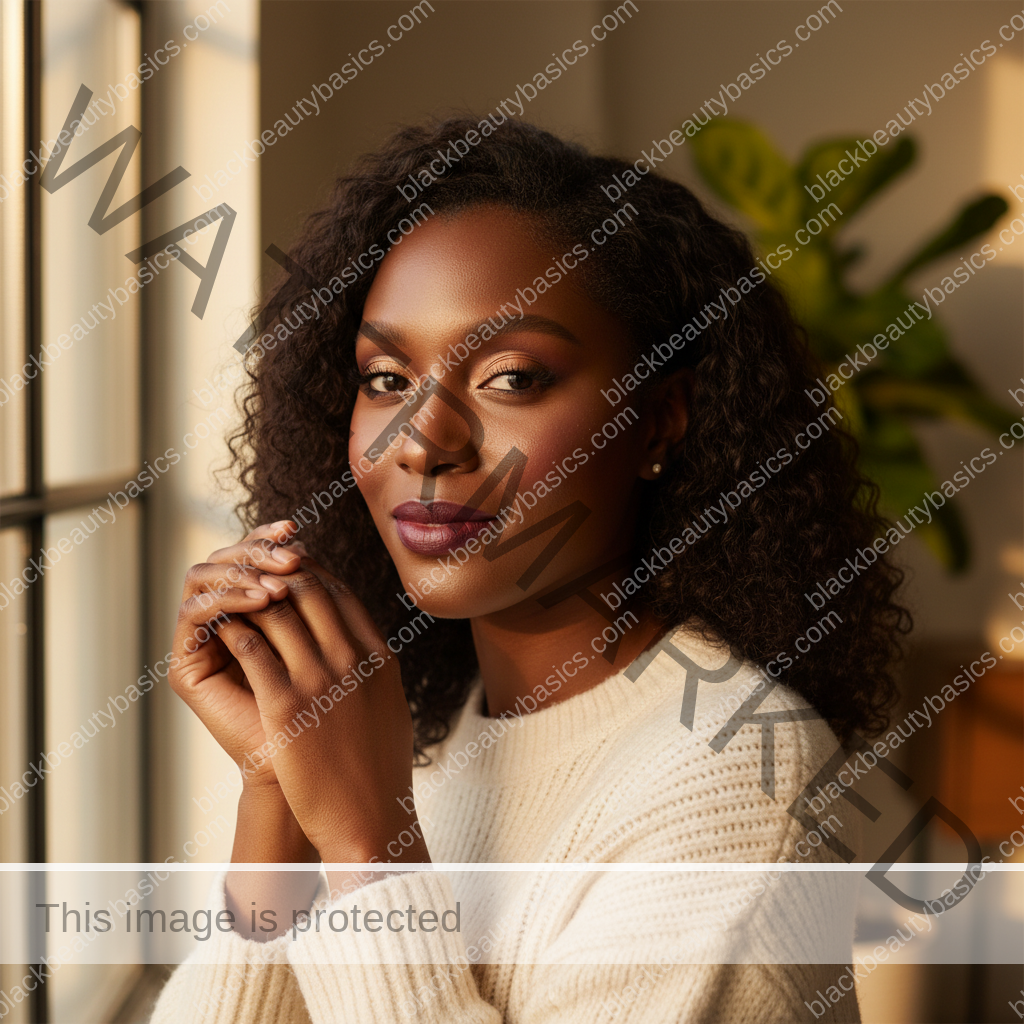
With these insights and techniques, you are now equipped to navigate the digital realm with the same grace and confidence you exude in person. Your camera-ready look is not just about makeup; it’s about honoring your exquisite complexion and ensuring your presence, your voice, and your beauty are unmistakably seen and celebrated, pixel by pixel. Go forth, radiant one, and shine brilliantly on every screen.
Related next steps
Related posts:
 Camera-Ready Makeup for Deep Skin: Photo, Video, and Zoom
 Makeup for Photos and Video on Deep Skin: Lighting and Products
 Building an Everyday Office-Ready Makeup Routine for Deep Skin
 Getting-Ready Rituals Before Weddings, Parties, and Big Work Events
 Night-Out Makeup for Deep Skin That Still Feels Wearable
 Wedding Guest Makeup for Deep Skin