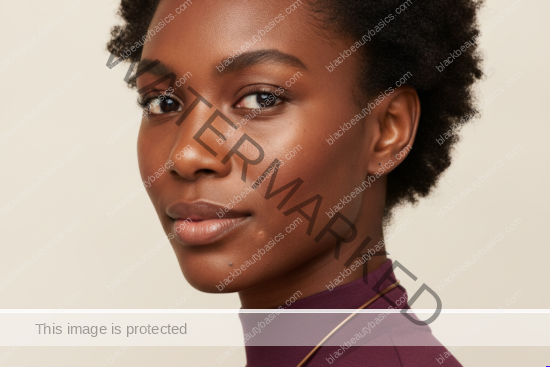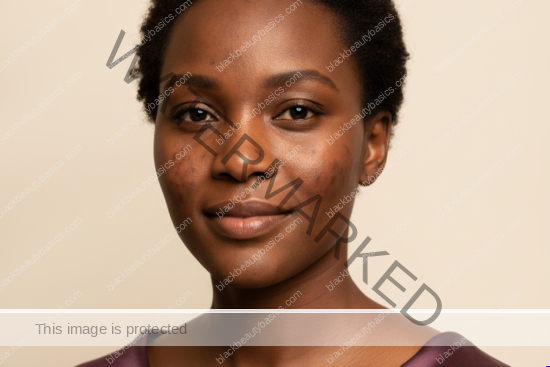
Dry patches beside an oily T-zone can make moisturizing feel oddly high stakes. If you use too little, your cheeks may feel tight, look dull, or hold onto rough texture. If you use too much everywhere, your forehead, nose, or chin may feel coated by midday. That does not mean you are “bad at skincare,” nor does it mean your skin needs a complicated shelf of products. It usually means your routine needs more placement, less pressure.
For Black women, femmes, and people with richly melanated skin, comfort matters beyond the immediate feeling of dryness. Repeated irritation, rubbing, and over-cleansing can leave marks that linger visibly on melanin-rich skin. The goal is not to force every part of your face into the same finish. It is to give dry areas enough cushion while letting oilier areas breathe. Our broader Skincare for Black Women guide can help you build that foundation with gentleness rather than trends.
Moisturizer layering is simply the practice of using light hydration first, then adding a richer cream or protective layer where it is actually needed. You may use one moisturizer in different amounts, or two compatible textures in different zones. There is no prize for making your face feel uniformly matte or uniformly dewy. A balanced routine should support your skin through weather changes, hormonal shifts, makeup days, and the ordinary fatigue of trying to figure out what works.
Understand What Your Skin Is Asking For
Combination skin is often described as oily in the center of the face and drier around the perimeter, but your own pattern may be different. You might have dry patches at the corners of the mouth, between the brows, around the nostrils, on the temples, or beneath the eyes. You may also have an oily forehead while your cheeks feel fine. Skin can produce oil and still feel dehydrated or uncomfortable, so shine alone is not a reliable reason to skip moisturizer.
Start by noticing sensations and patterns rather than assigning yourself a permanent skin type. Does your face feel tight after cleansing? Do dry areas look more textured under sunscreen or foundation? Does a richer cream make only your T-zone feel congested, or does it bother your cheeks too? Does your skin become more reactive after exfoliating, shaving, threading, using acne treatments, or spending time in dry indoor air? These observations are more useful than trying to copy someone else’s routine.
Moisturizers generally work through a combination of three jobs. Humectants help hold water in the upper layers of skin. Emollients help soften and smooth the feel of roughness. Occlusive ingredients form a more protective layer that can reduce water loss from the skin’s surface. A product does not need to announce all three categories on the front label to be useful. What matters is whether its texture and placement suit your skin on that day.
Skin-barrier research involving different racial and ethnic groups is still complex and uneven. Race, ethnicity, skin tone, pigmentation, and phototype are not interchangeable categories, and no single claim about “Black skin” can explain every person’s needs. What is practical to know is that irritation can be especially frustrating when it contributes to uneven-looking tone. A calm, low-friction routine is worth protecting.
Think of layering as editing, not piling on. A watery serum plus a cream plus a balm is not automatically better than one well-chosen cream. The useful question is: which area needs more support, and which area is already comfortable? If your cheeks feel settled with a light lotion, they may not need a thick sealing layer every night. If the folds around your nose sting or flake, that small area may need a more protective finish than the rest of your face.
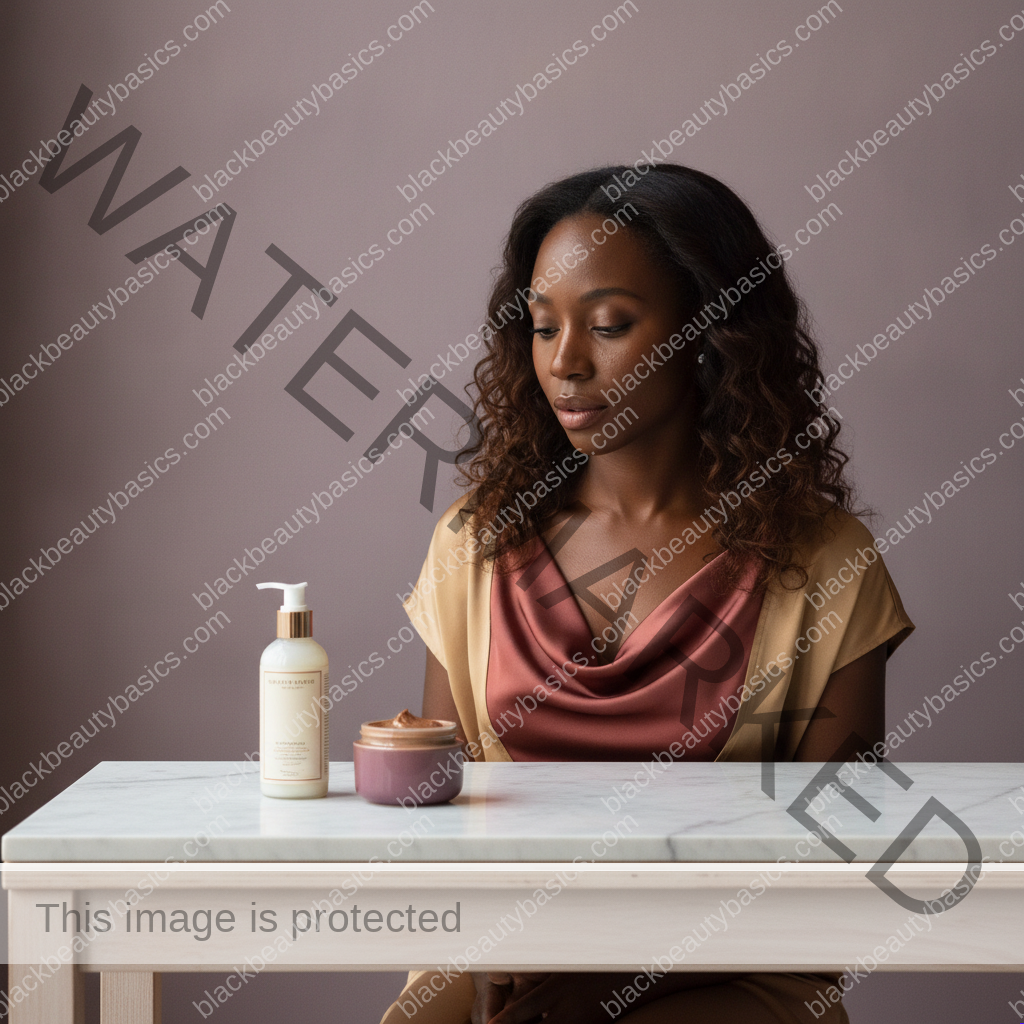
What to Pause When Your Face Feels Both Dry and Greasy
When dry patches and oily zones show up together, the instinct is often to attack the oil. This can turn into a cycle of strong cleanser, exfoliant, toner, spot treatment, and then a heavy cream to compensate. Your skin does not need punishment for being shiny. It may need fewer competing messages.
Pause the “squeaky clean” test
A face that feels stripped immediately after washing is not necessarily cleaner. Hot water, frequent cleansing, washcloth scrubbing, cleansing brushes, and harsh surfactants can all make a routine feel more intense than it needs to be. If you cleanse twice daily and your cheeks are persistently tight, consider whether a gentle morning rinse or a very mild cleanse would feel better. At night, remove sunscreen and makeup thoroughly but without repeated passes over the same area.
If tightness after washing is your most consistent clue, this guide to choosing a gentle cleanser when dark skin feels tight after washing can help you simplify that first step. Moisturizer has a harder job when cleansing leaves your face feeling exposed before you even begin.
Pause unnecessary exfoliation on flaky-looking areas
Flaking does not always mean dead skin needs to be scrubbed away. It can also be a sign that the area is irritated, dry, or overwhelmed by actives. Grainy scrubs, exfoliating pads, acids, retinoids, and acne treatments can be helpful in some routines, but adding them to a patch that is stinging or peeling often creates more uncertainty. You do not have to earn hydration by exfoliating first.
For now, avoid applying an active everywhere just because one zone is oily. It may be more sensible to use it only where it was already tolerated, less often, or to pause it briefly while you restore comfort. If you need a pared-down framework, a no-actives routine for melanin-rich sensitive skin offers a useful reset point.
Pause fragrance experiments and too many new launches
A scented moisturizer is not automatically a problem, but fragrance can make it harder to identify what is bothering sensitive or reactive skin. Essential oils, heavily fragranced mists, and strong “cooling” sensations may feel luxurious while adding another variable to a stressed routine. The same goes for introducing several products at once. If you change cleanser, serum, moisturizer, sunscreen, and makeup primer in the same week, you may not know which product deserves credit or caution.
Try not to respond to one bad skin day with a complete product purge. Routine fatigue is real, especially when you have spent money trying to solve dryness without making oiliness worse. Pause the most likely stressors first, keep a few dependable basics, and give your skin a quieter environment in which to respond.
A Gentle Moisturizer Layering Plan
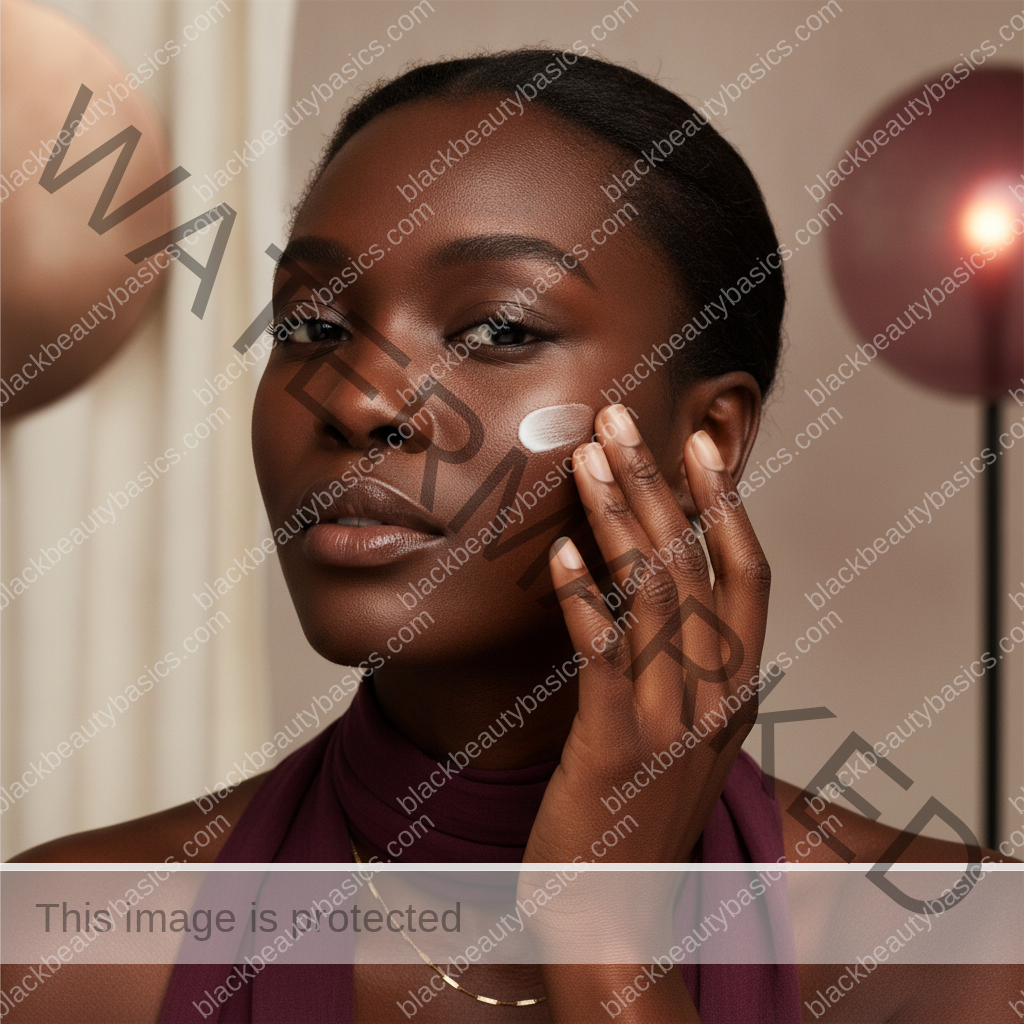
The most effective plan is usually the one you can repeat without dread. You do not need to layer every category of product morning and night. Begin with clean hands, damp—not dripping—skin, and a small amount of product. Apply from the lightest texture to the richest texture, then decide whether every zone needs the next layer.
Step 1: Cleanse without chasing a matte finish
In the morning, use a gentle cleanser if you wake up oily, sweaty, or wearing residue from a rich nighttime routine. Otherwise, a lukewarm water rinse may be enough for some people. At night, use a gentle cleanser that removes sunscreen, makeup, and the day without leaving your face tight. Take extra care around dry patches: do not linger there with a cleansing cloth or rub hard at makeup around the mouth and nose.
Pat your skin until it is lightly damp. Waiting until your face is fully dry can make a lightweight hydrating step feel less comfortable, particularly on dry cheeks. Damp does not mean soaking wet; you want enough moisture that your next product spreads easily rather than sliding around.
Step 2: Add a light hydrating layer where it helps
A simple hydrating serum, essence, or light lotion can be useful if your skin feels thirsty but dislikes rich textures across the whole face. Look for a formula that feels comfortable without a sharp fragrance or a long list of new active ingredients. Apply a thin layer to the whole face, or focus it on dry areas. You do not need a separate hydration product if your moisturizer already gives you that comfortable, flexible feeling.
If your T-zone becomes shiny quickly, use less there rather than omitting hydration automatically. A pea-size amount of a thin product can be spread across the forehead, nose, and chin. Your cheeks may take a little more. Press instead of aggressively massaging if rubbing makes your skin flush, pill, or feel sensitive.
Step 3: Use your main moisturizer strategically
Your main moisturizer should be the dependable middle of your routine. A lotion or gel-cream may suit oilier zones, while a cream may feel better on dry cheeks. You can use one product in a thin, even layer and then add a second product only where needed. Or use a lighter moisturizer through the center of your face and a richer cream around the perimeter.
Selection matters more than fashionable texture. For a lighter all-over option, consider a fragrance-free moisturizer that spreads easily, leaves no burning sensation, and does not force you to use a large amount for basic comfort. If you are comparing options, browse lightweight fragrance-free face moisturizers as product types, then read the ingredient list and patch-test rather than assuming one popular formula will suit everyone.
Use roughly a pea-size amount for the face as a starting point, then adjust. That is not a strict dosage. A thicker cream may need less, while a thinner lotion may need more. The useful signal is whether your skin feels comfortable after application and still reasonably comfortable a few hours later. If only your cheeks need another touch, add it there. You are allowed to have a face map instead of a single all-over rule.
Step 4: Seal only the areas that need a protective finish
A balm, ointment, or richer cream can be helpful as a final step on stubborn dry patches, especially at night. Use a rice-grain to pea-size amount, warm it between clean fingertips, and press it over the patch rather than coating your full face by default. Common placement areas include the outer cheeks, corners of the mouth, sides of the nose, or a dry spot that repeatedly catches on makeup.
Choose this final layer by feel. It should reduce the sense of exposure without making the area hot, itchy, or overly slick. A simple fragrance-free occlusive can be useful for spot sealing; if you need to compare formats, look for fragrance-free occlusive balms and use them as optional examples, not as a requirement for every routine.
In the morning, allow your moisturizer to settle before sunscreen. Then use a broad-spectrum sunscreen that you will actually wear in an adequate amount. If sunscreen makes dry patches bunch up, the answer may be a thinner moisturizer layer beneath it, more time between steps, or less rubbing during application. It does not necessarily mean you need to abandon moisture.
Try to make changes one at a time. For example, keep your cleanser and sunscreen the same while changing only how much moisturizer reaches each zone. That small bit of structure can protect you from buying several products to solve a problem that was really about application. Your notes do not need to be perfect; even a quick observation about comfort by noon can be useful.
Adjust the Routine for Your Actual Face Map
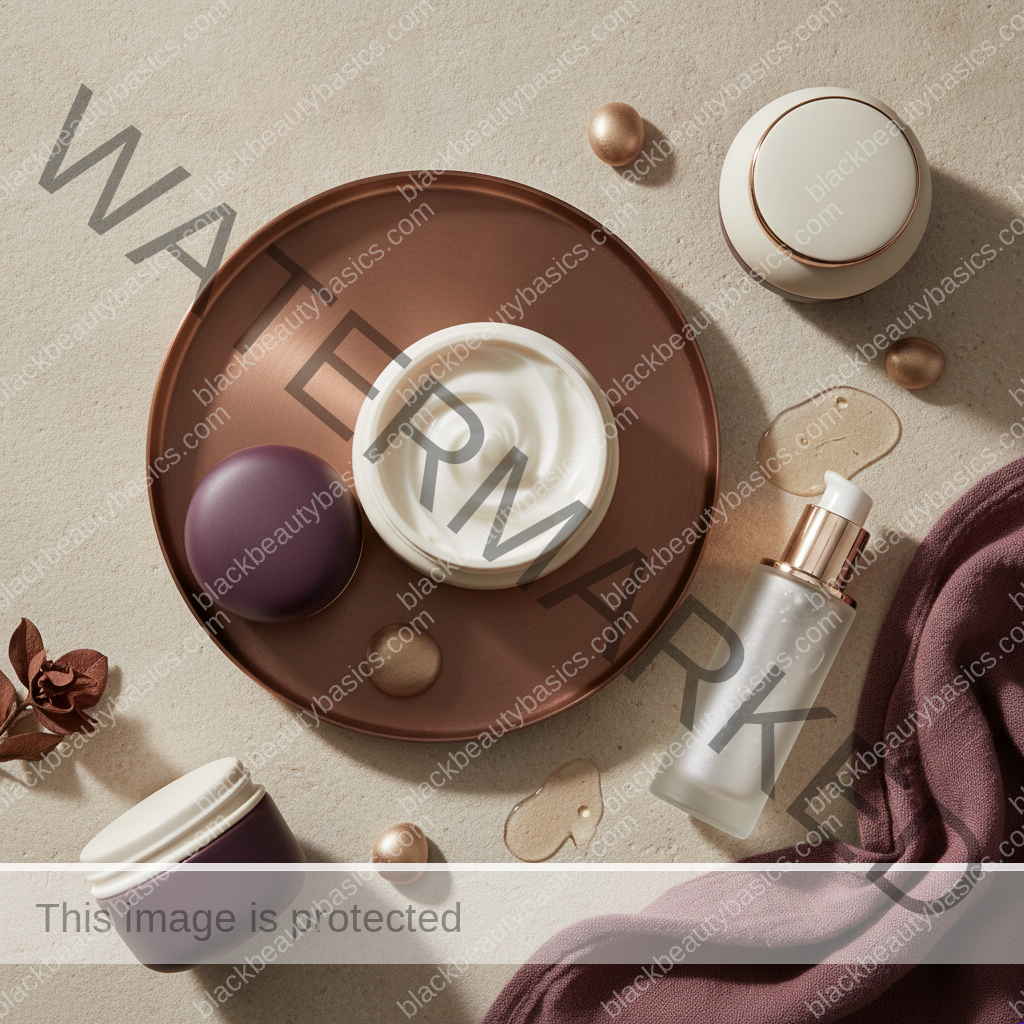
The same routine can be applied differently from one zone to another. This is especially useful when your skin changes with seasons, menstrual cycles, indoor heating, travel, stress, or different makeup habits. Instead of buying a new product for every shift, adjust placement and amount first.
When cheeks are dry but the T-zone is oily
Apply a light hydrating layer across your face, then use a lotion or gel-cream over the T-zone. On cheeks, add a cream over that first layer or use a slightly more generous amount of your main moisturizer. At night, spot-seal the driest areas if they remain uncomfortable. Keep the balm away from zones where you personally dislike the finish; there is no requirement to use it on the nose, forehead, or chin.
If your cheeks look ashy or textured beneath complexion products, focus on comfortable hydration before makeup rather than adding more powder or rubbing at the area. Let each skincare layer settle. Then press foundation or skin tint on gently. Dry texture is not a personal failure, and it does not need to be erased through aggressive prep.
When the nose folds and mouth area are dry
These areas can be easy to over-cleanse because they collect makeup, sunscreen, and natural oil. Be deliberate when cleansing, but do not scrub. After your light moisturizer, place a tiny amount of cream or balm precisely in the folds beside the nose and at the corners of the mouth. Avoid dragging product outward repeatedly, which can create more friction.
If these areas burn, crack, or become increasingly uncomfortable, do not keep layering more products in hopes that one will push through the irritation. Simplify instead. A calm baseline can be more helpful than an increasingly elaborate routine.
When the forehead looks shiny but feels tight underneath
A shiny forehead can still feel uncomfortable after cleansing or beneath makeup. Try a thinner hydrating layer followed by a light moisturizer, rather than skipping moisturizer and relying on mattifying products. Use less product near the hairline if hair oils, edge products, or styling products tend to transfer onto the forehead. This is not about blaming your hair care; it is simply useful to notice where products meet.
Blotting during the day is fine if shine bothers you. Repeatedly washing or using alcohol-heavy wipes may leave your skin feeling even less settled. For makeup days, choose a finish you enjoy rather than trying to make your skin look unnaturally dry.
When one patch keeps returning
First, check for a repeat trigger: a new active, fragrance, makeup brush cleaner, shaving method, face covering, pillowcase detergent, toothpaste transfer, or habitual touching. Next, reduce friction and use a simple moisturizer plus a thin protective layer on that spot for several days. Do not introduce a new exfoliant to “smooth” it while you are trying to understand it.
For a more structured approach to moisture comfort and simplifying a stressed routine, visit our barrier repair and moisture balance guide. It can help you think through product roles without assuming every dry patch needs the same solution.
Troubleshoot Without Turning Every Change Into an Emergency
Skin can be inconsistent. A moisturizer that feels right in humid weather may feel too light in winter. A product that usually works may sting after shaving, over-exfoliating, or using a stronger treatment. This does not mean you have to throw everything away. It means the routine may need a temporary reduction in intensity.
If your skin stings when moisturizer touches it
Stop adding layers. Rinse gently if the sensation is strong or persistent, then return to the simplest products you know your skin has tolerated. Avoid acids, retinoids, scrubs, fragranced products, and strong acne treatments until you have more clarity. If almost everything seems to burn, follow the practical steps in our guide to a skincare routine when everything burns.
Do not interpret stinging as proof that a product is “working.” Comfort is valuable information. Mild temporary tingling can have different causes, but burning, worsening sensitivity, swelling, or persistent discomfort deserves caution rather than determination.
If richer layers seem to cause bumps or feel suffocating
Use less, use it only at night, or keep it confined to visibly dry areas. It may also help to simplify the layers beneath it. Sometimes a hydrating serum, cream, facial oil, sunscreen, and makeup primer together create a finish that is simply too much for your preference. A thinner routine with one reliable moisturizer may feel better than several “lightweight” products stacked together.
Give a new approach enough consistency to observe it, but do not force yourself through clear discomfort. Introduce one new product at a time when possible. This makes it easier to spot a mismatch without blaming your skin for being “difficult.”
When to seek professional care
Consider checking in with a board-certified dermatologist or another qualified clinician if you have painful cracking, swelling, oozing, crusting, intense itch, a spreading rash, signs of infection, or a patch that does not improve with a gentle simplified routine. Seek timely medical care for rapid swelling, hives, trouble breathing, or a severe reaction. A professional can evaluate concerns that cannot be responsibly sorted through with general skincare advice.
Persistent changes in texture or tone can feel emotionally heavy, particularly when they stand out on richly melanated skin. You deserve care that takes your concern seriously. Bring your products or a list of ingredients to the appointment if you can, and mention when symptoms started, what makes them worse, and what you have already paused.
What to Do Next
For the next seven days, make your routine easy to read. Cleanse gently, apply one comfortable moisturizer across your face, and reserve a richer layer for the dry patches only. Keep exfoliants and new launches out of the experiment unless they are part of a treatment plan from a clinician. Notice how your cheeks, mouth area, and T-zone feel after cleansing, after moisturizing, and by the end of the day.
Write down only three things: where you felt tightness, where you felt excess heaviness, and whether anything stung. That is enough information to guide your next adjustment. If dry patches improve but your T-zone feels coated, use less or a lighter texture in the center. If your cheeks still feel exposed, add a little more cream there before reaching for a full-face balm.
If your entire face is feeling reactive, take the pressure off and use this two-week skincare reset for irritated skin as a slower, more protective framework. The aim is not a perfect finish. It is a routine that lets your skin feel supported without asking you to manage every zone with fear.
Frequently Asked Questions
Can I use two different moisturizers on different parts of my face?
Yes. Using a lighter moisturizer on oilier areas and a richer cream on dry patches is a practical way to tailor your routine. You can also use one moisturizer all over and add a second layer only to the areas that feel tight. Apply the lighter texture first, then press the richer product onto your drier zones. Keep the approach simple at first so you can tell whether the difference comes from product placement, amount, or the product itself.
Should I moisturize an oily T-zone if my cheeks are dry?
Usually, yes. Oil production and comfort are not the same thing, and an oily zone may still feel tight after cleansing or under sunscreen. Start with a very small amount of a lightweight moisturizer in the T-zone rather than skipping it entirely. If it feels too shiny by midday, reduce the amount, choose a lighter texture, or avoid adding a sealing balm there. The goal is comfortable skin, not a completely oil-free forehead or nose.
Is it better to use a serum before moisturizer for dry patches?
A hydrating serum can be helpful, but it is optional. If your moisturizer already leaves dry areas comfortable, you do not need another step. If you use a serum, apply a thin layer to damp skin and follow with moisturizer so the routine does not feel incomplete or overly slippery. Choose a simple formula when your skin is sensitive, and avoid introducing multiple new treatments at once. A serum should support your moisturizer, not make your routine harder to manage.
Can I put a balm over moisturizer every night?
You can, but you may not need to use it across your entire face. A balm is often most useful as a targeted final layer over dry cheeks, mouth corners, or other patches that need extra protection. If your T-zone feels heavy, oily, or uncomfortable under a balm, keep it off that area. Use a small amount and monitor how your skin feels. More occlusion is not automatically better, especially when your skin prefers lighter textures.
Why do my dry patches look worse under makeup?
Makeup can catch on uneven surface texture, especially when skin is dry, irritated, or rubbed during application. Try simplifying your prep: use a comfortable moisturizer, let it settle, then apply complexion products by pressing rather than dragging. Avoid scrubbing flakes immediately before makeup, since that can create more irritation. A thinner layer of foundation may also sit better than trying to cover texture with multiple layers. Texture is normal skin variation, not something you must erase to look polished.
How long should I wait between moisturizer layers?
You do not need a long pause between layers. Give a watery serum or light lotion a moment to spread and settle, then apply your moisturizer while the skin still feels comfortable. Wait a little longer before sunscreen or makeup if products tend to pill on you. Pilling can happen when there is too much product, too much rubbing, or formulas that do not layer well together. Reducing the amount often helps more than extending wait time.
What if my moisturizer suddenly starts burning?
Stop using it if the burning is strong, persistent, or followed by swelling, rash, or worsening discomfort. Skin can become more reactive after over-cleansing, exfoliating, shaving, or using strong treatments, even with a product you previously tolerated. Return to a simple routine with gentle cleansing and familiar basics, and pause potential irritants. If burning continues, symptoms are severe, or you notice oozing, crusting, painful cracking, or widespread rash, seek advice from a qualified clinician.
Related next steps
Related posts:
 Dealing with Eczema and Dry Patches – Skincare Products for Women of Color
 Dealing with Eczema and Dry Patches – Skincare Products for Women of Color
 Dealing with Eczema and Dry Patches – Skincare Products for Women of Color
 Morning Skincare Routine for Black Women by Skin Type (Oily, Dry, Combo)
 High-Risk and Lower-Risk Body Zones for Keloids on Dark Skin
 Is My Dark Skin Oily, Dry, or Combination? Understanding Your Melanin-Rich Complexion