
Fragrance-free skincare can sound like one more rule in a routine already crowded with rules. For Black women, femmes, and people with richly melanated skin, that pressure can feel especially tiring when every dry patch, breakout, uneven mark, or moment of sensitivity seems to invite a new product recommendation. You do not need to fear fragrance, blame your skin, or rebuild your whole shelf because someone online said “clean beauty” or “sensitive skin” is the only answer.
Instead, think of fragrance-free as a useful tool. It can be especially worth considering when your skin is reactive, when you are recovering from product overload, or when you want fewer variables while you figure out what is actually working. It is not a moral upgrade, and it is not automatically better for every person. It is one way to make a routine quieter and easier to read.
This guide fits within our broader Skincare for Black Women approach: care that respects the visible and invisible ways skin concerns can show up on deep tones, without pretending all Black skin behaves the same way. Pigmentation, ancestry, skin type, climate, hormones, health history, and product habits all matter. If fragrance has never bothered your skin, there may be no reason to panic. If your face has been stinging, itching, flaking, or leaving behind lingering dark marks after irritation, a fragrance-free reset may give you a more protective place to begin.
Why fragrance-free matters most when your skin needs fewer variables
Fragrance is commonly added to make a product smell floral, fruity, clean, warm, herbal, or “luxurious.” It can come from individual aroma chemicals, fragrance blends, essential oils, botanical extracts, or masking ingredients meant to cover the base smell of a formula. A pleasant scent is not proof that a product is harmful. But fragrance can be a meaningful variable for people whose skin is easily irritated or whose routines already include several potentially challenging steps.
When irritation occurs on richly melanated skin, the concern is not only the immediate discomfort. Inflammation can sometimes be followed by post-inflammatory hyperpigmentation: marks that may look brown, gray-brown, purple-brown, or deeper than the surrounding skin. That does not mean every dark mark is caused by fragrance, and it does not mean melanin-rich skin is inherently fragile. It means a gentle approach can be practical when your goal is to reduce avoidable stress on skin that is already asking for calm.
The research on skin-barrier differences across racial and ethnic groups is not neat enough to support blanket claims about “Black skin barriers.” Studies use different definitions, samples, and methods, and race, ethnicity, pigmentation, and phototype are not interchangeable. What is useful in everyday care is more personal: notice how your skin responds. A formula that feels comfortable on one deep complexion may sting, itch, or leave another person feeling tight.
Fragrance-free becomes most valuable when you need clarity. If you have changed cleanser, serum, moisturizer, sunscreen, makeup, and laundry products within the same month, it can be hard to know what is behind the discomfort. Choosing simpler products for a period can lower the number of possible triggers. It is not a punishment routine. It is an information-gathering routine.
It can also be helpful when your skin is dry, dehydrated, over-exfoliated, freshly shaved, sensitized by weather shifts, or dealing with an unfamiliar reaction. Dryness and dehydration are not identical concerns, and learning the difference can make shopping easier. Our guide to dry versus dehydrated skin on deep tones can help you separate a lack of oil from a temporary lack of water and choose support accordingly.
“Fragrance-free” means no fragrance has been intentionally added to create or mask a scent. It does not always mean a product has no smell at all. Ingredients have their own natural scents, and a fragrance-free moisturizer may smell faintly waxy, creamy, medicinal, or plain. That plainness is not a sign of poor quality. Sometimes it is simply the smell of a formula doing its job without perfume.

What to pause, avoid, or read more carefully
You do not need to throw away every scented product at once. A more measured move is to pause the products that make your skin feel immediately uncomfortable or that are most likely to complicate a sensitive period. Start with leave-on facial products. A fragranced body wash that rinses away may be less relevant than a scented face serum, facial oil, moisturizer, or sunscreen that stays on for hours, although any product can be an issue for an individual.
Pause products that create a clear discomfort pattern
Pay attention to repeatable signals rather than one dramatic assumption. Burning on application, persistent stinging, itchiness, increasing tightness, redness that may look deep brown, purple, gray, or ashy on darker skin, new roughness, or a rash-like texture are all reasons to pause a product and simplify. A product does not need to make your skin visibly peel to be too much for you. “It tingles, so it must be working” is not a useful standard for basic skincare.
Also pause the instinct to correct every concern with another active. When skin is uncomfortable, adding acids, retinoids, scrubs, strong vitamin C products, fragrant masks, or essential-oil blends can make the story harder to read. If exfoliation has become too frequent or too intense, use a calmer baseline first; our article on how to reintroduce exfoliation after overdoing acids offers a slower way back.
Do not let marketing language do the reading for you
“Unscented” and “fragrance-free” are not interchangeable terms. Unscented can mean a fragrance or masking ingredient was used to cover a product’s natural odor. The front label may be helpful, but the ingredient list is where you can check more closely. Terms such as fragrance, parfum, aroma, and perfume can signal added fragrance. Essential oils and aromatic plant extracts may also add scent, even when a product is marketed as natural, clean, botanical, or soothing.
This is not an argument that every essential oil or botanical is automatically bad. It is an argument for honesty about what you are trying to avoid. If your purpose is to reduce scent-related variables during a reactive spell, a formula packed with lavender, citrus peel, peppermint, eucalyptus, rose, ylang-ylang, or other aromatic ingredients may not match that purpose, even if “fragrance” is absent from the label.
Be careful with the phrase “hypoallergenic” too. It can be useful marketing shorthand, but it does not guarantee that a product will agree with your skin. “Dermatologist tested,” “for sensitive skin,” and “non-comedogenic” also do not replace your own experience. Those claims may guide your shortlist, not settle the decision.
Avoid turning fragrance-free into a purity contest
Fragrance-free products can still contain ingredients that do not suit you. They can feel too rich, too light, too drying, too occlusive for your preferences, or incompatible with another product in your routine. A fragrance-free cleanser can still cleanse too aggressively. A fragrance-free moisturizer can still pill under sunscreen. A fragrance-free sunscreen can still leave an uncomfortable cast, feel greasy, or sting around the eyes.
Conversely, a scented product that you have used comfortably for years is not automatically urgent to remove. The question is whether it earns its place. Does it feel good on your skin? Does it make your routine easier? Is there a pattern of irritation that follows it? Can you use it without having to constantly compensate with extra products? Discernment is more useful than fear.
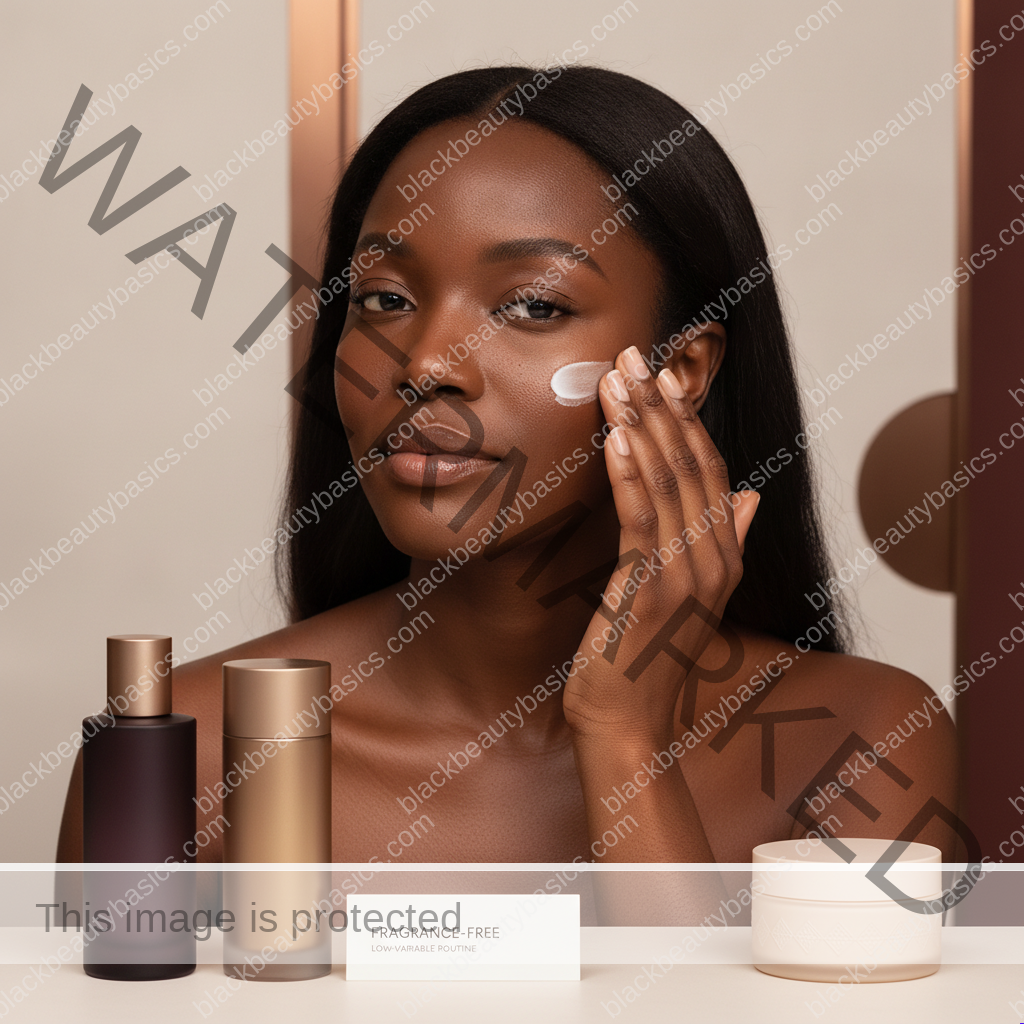
A gentle decision plan for choosing fragrance-free skincare
A useful routine does not need ten products. When you are assessing sensitivity, begin with three core categories: a cleanser, a moisturizer, and daytime sun protection when you will be exposed to daylight. This is not because every person needs the same exact routine. It is because a smaller routine makes it easier to tell whether your skin is becoming more comfortable or more unsettled.
Step one: name the goal before you shop
Write down what you want the product to do in one sentence. Examples: “I need a cleanser that does not leave my cheeks tight,” “I want a moisturizer that reduces the feeling of dryness under makeup,” or “I need a sunscreen I will actually wear consistently.” This prevents you from choosing a product mainly because it has a beautiful scent, a persuasive review, or a long list of trendy ingredients.
If the concern is a recent reaction, your immediate goal is not necessarily glow, exfoliation, or fading every mark. It may simply be comfort and consistency. Our guide on how to simplify a skincare routine after a reaction can help you decide what to keep on the counter and what to set aside for now.
Step two: assess the whole formula, not one headline claim
For a cleanser, look for a formula that removes the day without leaving your face squeaky, stripped, or uncomfortable. Cleansing research supports the idea that cleanser mildness matters, while also reminding us that one detail, including pH alone, cannot tell you everything about how a cleanser will perform. Creamy, lotion-like, gel-cream, or gentle low-foam textures can be good starting points, but the best texture is the one your skin tolerates and you can use consistently.
For a moisturizer, think in functions rather than chasing a single “hero” ingredient. Humectants help attract water, emollients help soften and smooth, and occlusive ingredients help reduce water loss from the skin’s surface. A good moisturizer may combine these roles in a way that feels comfortable for your skin. You do not need a thick balm just because you have dark skin, and you do not need a barely-there gel because someone called it lightweight. Texture preference, climate, oiliness, dryness, and makeup habits all count.
For sunscreen, fragrance-free is one criterion among several. Consider the finish, eye comfort, ease of reapplication, whether it layers with your moisturizer and complexion products, and whether it leaves a visible cast you do not want to manage. A sunscreen that looks or feels unacceptable is less likely to become a regular habit. Protecting skin from further visible unevenness is often part of a thoughtful routine, but no sunscreen needs to be presented as a miracle product.
Step three: introduce one new product at a time
Use one new item consistently before introducing the next, when practical. This does not mean you need to conduct a perfect laboratory experiment in your bathroom. It means avoid debuting a cleanser, toner, moisturizer, facial oil, and sunscreen all on the same Monday. Give yourself enough routine stability to notice whether the new product feels comfortable, causes repeated stinging, affects texture, or simply does not fit your life.
A small-area trial may be useful for a product you are concerned about. Apply a modest amount to a limited area as directed, then observe for a reaction before using it more broadly. This cannot guarantee that your whole face will respond the same way, and it is not a substitute for medical guidance if you have a history of significant reactions. It is simply a lower-stakes way to gather information.
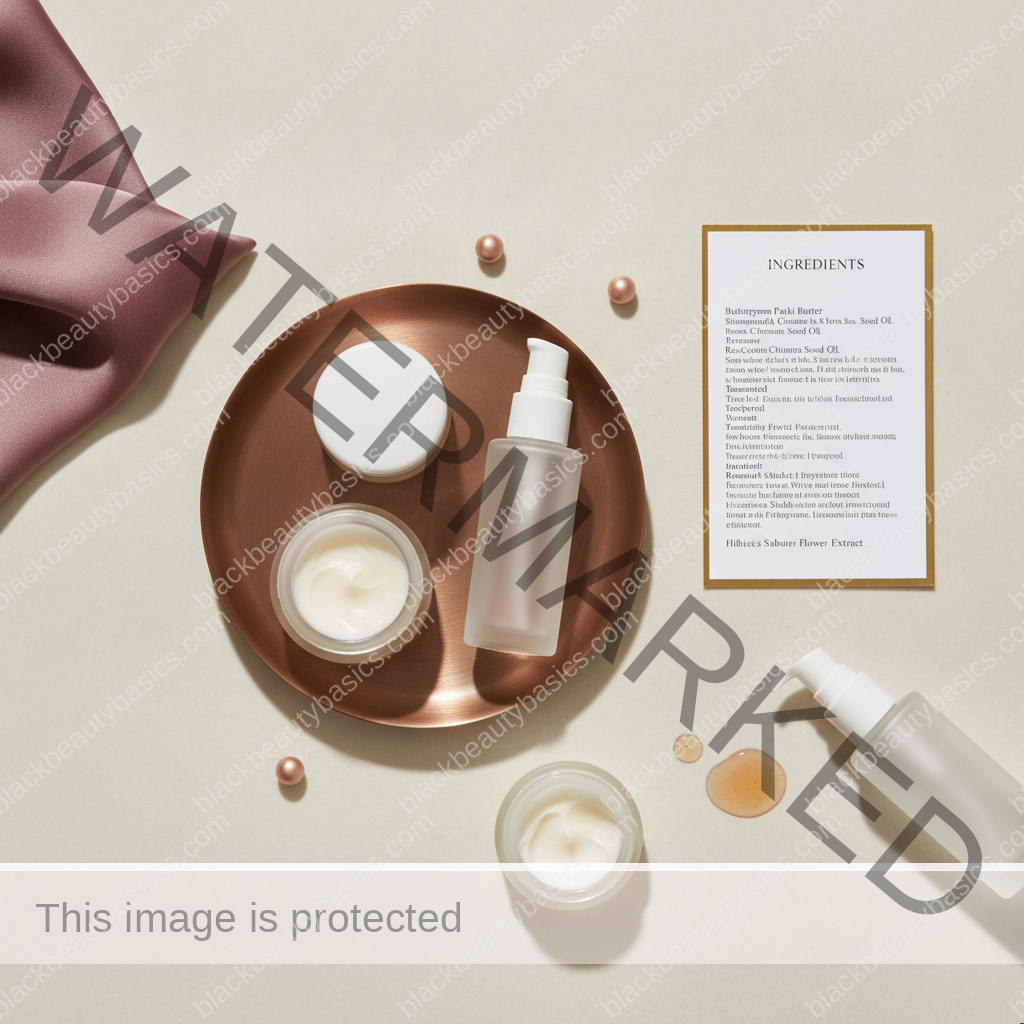
Step four: shop by criteria, not panic
For a fragrance-free facial cleanser, prioritize a formula that feels gentle in use, rinses comfortably, and does not leave you reaching for moisturizer because your skin feels abruptly tight. If you are comparing options, an Amazon search for fragrance-free face cleansers can be a starting point for reviewing ingredient lists and sizes, not a promise that any one option will suit every face.
For a fragrance-free moisturizer, look for a texture that matches your actual routine: lighter lotions or gel-creams may suit humid conditions or daytime layering, while creams or ointment-style products can feel more supportive during dry weather or overnight. Browse an Amazon search for fragrance-free face moisturizers only after deciding what texture, finish, and ingredient profile you need.
For sunscreen, prioritize broad-spectrum protection, a texture you can reapply, and a formula that feels workable on your complexion. If fragrance is a concern, verify the ingredient list rather than relying only on a front-label claim. An Amazon search for fragrance-free face sunscreens can help you compare formats, but read current labels because formulas can change.
Scenario-specific adjustments: make fragrance-free fit real life
Fragrance-free skincare is not one look, one texture, or one budget. It should meet the conditions you are actually living in: a hot commute, a dry office, hard water, makeup days, protective styles, shaving, postpartum changes, medication shifts, or simply a season when your skin has less patience than usual. The goal is not to build the most impressive routine. The goal is to build one with fewer unnecessary points of friction.
If your skin feels dry, tight, or ashy
Keep cleansing brief and avoid very hot water. Apply moisturizer while skin is still slightly damp, then adjust the amount by area. Your cheeks may need more than your T-zone. Your neck may need a different amount than your face. If you wear makeup, use enough moisturizer for comfort without adding so many layers that the base begins to separate.
Hard water can make some people feel as though cleansing is less comfortable, but the evidence does not support a simple promise that a filter or water softener will solve every dry-skin concern. Focus first on a gentle cleanser, less aggressive washing, and a moisturizer you enjoy using. If your skin seems persistently uncomfortable despite these steps, that is useful information to bring to a clinician.
If you are oily, acne-prone, or worried about heaviness
Fragrance-free does not have to mean greasy. A lightweight lotion, gel-cream, or fluid moisturizer may be enough for daytime, while a creamier option can be reserved for dry areas or nighttime. Avoid the trap of skipping moisturizer because your face is shiny. Sometimes a routine built around repeated stripping and skipping moisture can leave skin feeling more unsettled, though oiliness has many possible influences and should not be self-diagnosed from one symptom.
Look for products that are simple and comfortable rather than trying to solve oiliness, texture, dark marks, pores, and sensitivity in one bottle. When a routine is reactive, a lower-drama moisturizer can support consistency while you decide which active steps, if any, belong later.
If you wear makeup, beard products, or protective styles
Fragrance can enter a routine through more than face cream. Primer, foundation, setting spray, makeup remover, edge control, hair oils, beard balms, and pillow products may touch facial skin. If your temples, hairline, jaw, or cheeks are repeatedly irritated, consider the products that transfer there. This is not a reason to abandon self-expression or grooming rituals. It is a reason to notice contact points.
Choose fragrance-free makeup removal when possible if removal is a sensitive step. Then follow with a cleanser that does not require harsh rubbing. For protective styles, try to keep heavily scented styling products from sitting against the forehead or cheeks, especially if you are already dealing with tenderness or bumps. If a product is essential to your routine, changing one variable at a time is more realistic than changing everything at once.

If you are taking a break from actives
A no-actives period can be a thoughtful pause, not a setback. During that time, a fragrance-free cleanser and moisturizer may help make the routine easier to tolerate, while sunscreen supports daily protection. For a practical baseline, see our no-actives skincare routine for melanin-rich sensitive skin. You can return to more targeted products later if they make sense for you.
Do not confuse simplicity with doing nothing. Gentle cleansing, moisturizing, and sun protection are still care. A routine does not become more serious because it burns, smells expensive, or takes thirty minutes. If your skin becomes calmer with fewer products, that is valuable information, not proof that you failed to maintain a complicated regimen.
Troubleshooting discomfort and knowing when to seek care
When a product seems to be causing trouble, stop using it and return to the most basic products you already know your skin tolerates, if you have them. Avoid scrubbing, picking, stacking actives, or trying to “push through” pronounced discomfort. Take note of what you used, where you applied it, and how the reaction appeared. A quick phone note can be more useful than trying to reconstruct the routine from memory later.
Look for patterns, not perfection
Ask a few grounded questions. Did discomfort start after a new product, a new combination of products, a change in frequency, a facial treatment, or a weather shift? Is it limited to the eye area, lips, hairline, neck, or wherever a product is likely to migrate? Does it happen immediately, or only after repeated use? Is the product scented, or does it contain aromatic oils or extracts despite a fragrance-free-looking label?
These questions can narrow possibilities, but they cannot diagnose the cause. Skin reactions can have many contributors, including dermatitis, acne-related inflammation, infection, shaving or hair removal, medication effects, and conditions that deserve professional assessment. Do not pressure yourself to become your own dermatologist through ingredient-list detective work alone.
Seek timely medical advice for stronger or persistent symptoms
Contact a dermatologist or other qualified clinician promptly if you have swelling of the face, lips, tongue, or eyes; trouble breathing; widespread hives; blistering; significant pain; oozing or crusting; rapidly spreading changes; signs of infection; or a severe reaction after using a product. Seek professional guidance as well if itching, burning, rash-like changes, recurring bumps, discoloration after inflammation, or peeling continues despite stopping suspected products and simplifying your routine.
For Black patients, it can help to document changes with well-lit photos because redness may not always appear bright pink or red on deep skin. It may appear as a shift toward deeper brown, purple, gray, warmth, swelling, or uneven texture. Bring your product list, including hair and makeup products, to an appointment. You deserve care that takes your description seriously, even when a concern is not obvious to someone else at first glance.
If you are rebuilding after a difficult reaction, our barrier repair and moisture balance guide can help you think through a calmer routine without making unsupported promises about instant repair. Comfort, consistency, and a clear record of what your skin tolerates are worthwhile goals.
What to Do Next
Tonight, choose one small action rather than conducting a full bathroom purge. Read the ingredient list of the leave-on face product you use most often. If fragrance, parfum, or several aromatic oils are present and you have been experiencing discomfort, place that product aside for now. Replace it only if you need to, and choose a fragrance-free option based on the texture and function you actually need.
For the next stretch of your routine, keep the baseline steady: cleanse gently, moisturize in a texture you will use, and wear sunscreen when appropriate for your daytime exposure. Resist the urge to add a new exfoliant or spot treatment just because the routine feels “too simple.” Give your skin and your own observations room to speak.
Then decide whether fragrance-free needs to be a temporary reset, a permanent preference for leave-on facial products, or simply one criterion you use when shopping. There is no prize for the most restrictive shelf. The best routine is one that feels manageable, respects your skin’s signals, and leaves you with more confidence than confusion.
Frequently Asked Questions
Is fragrance-free skincare necessary for all Black women?
No. Black women are not a single skin type, and richly melanated skin does not automatically require fragrance-free products. Some people use scented skincare comfortably for years. Fragrance-free matters most when you have a known sensitivity, a pattern of irritation, a compromised-feeling routine, or a desire to reduce variables while troubleshooting. It can also be a sensible preference for leave-on products that stay on the face for hours. Choose it because it serves your skin and routine, not because you have been told that your complexion makes fragrance inherently unsafe.
What is the difference between fragrance-free and unscented?
Fragrance-free generally means fragrance was not intentionally added to scent the product or mask its base odor. Unscented can be less clear: a product may have no noticeable smell while still containing a masking fragrance ingredient. If avoiding fragrance is important to you, check the ingredient list in addition to the front label. Look for terms such as fragrance, parfum, aroma, or perfume, and be aware that essential oils and aromatic botanical extracts can also contribute scent. A faint natural ingredient smell does not automatically mean a formula contains added fragrance.
Can essential oils be a problem if a product says natural?
They can be a concern for some people, particularly when skin is already irritated or when the product is meant to stay on the face. “Natural” describes an origin story more than it predicts how your skin will respond. Essential oils and fragrant plant extracts can make a formula smell appealing, but they are still additional ingredients to consider when you are trying to simplify. You do not need to fear every botanical ingredient. If you are avoiding fragrance because of discomfort, though, a plainly formulated fragrance-free product may make your routine easier to evaluate.
Can fragrance-free products still irritate my skin?
Yes. Fragrance-free removes one possible source of irritation, but it does not guarantee universal compatibility. A product may still feel drying, sting because of another ingredient, conflict with an active treatment, or simply be too rich or too light for your preferences. Cleansers, moisturizers, and sunscreens should be judged by your repeated experience, not the label alone. Introduce products thoughtfully, especially after a reaction, and avoid adding several new items at once. If you develop a substantial or persistent reaction, stop the product and seek professional advice rather than trying to solve it through more experimentation.
Should I choose fragrance-free cleanser, moisturizer, or sunscreen first?
Start with the product most likely to be connected to your discomfort or the product you use most consistently. For many people, a fragrance-free moisturizer is an easy first switch because it remains on the skin for a long time. If cleansing leaves your face tight or stinging, prioritize the cleanser instead. If sunscreen causes eye discomfort or makes daily wear difficult, look there. During a sensitive period, choosing fragrance-free options across the cleanser-moisturizer-sunscreen baseline can reduce variables, but you do not have to replace everything in one purchase.
Does a fragrance-free routine help with dark marks?
Fragrance-free skincare is not a direct dark-mark treatment. Its value is more indirect: if fragrance or a fragranced formula is contributing to irritation for you, removing that trigger may help you avoid adding more inflammation to the picture. Dark marks on deeper skin can have many causes, including acne, irritation, injury, and other skin conditions. A gentle routine and consistent sun protection can be supportive parts of care, but persistent, changing, or concerning discoloration deserves evaluation from a qualified clinician, especially when you are unsure of the cause.
How long should I keep my routine fragrance-free after irritation?
There is no universal schedule. Keep the routine simple until your skin feels comfortably stable and you have a clear sense of what you are using. Avoid rushing to reintroduce scented products, strong actives, or multiple new formulas because your skin looks better for a day or two. If you later choose to bring back a product, do so one at a time and pay attention to repeated patterns. If symptoms continue, recur often, or become more intense, professional guidance is more useful than endlessly extending a self-directed reset.
Related next steps
Related posts:
 Choosing Fragrance-Free Skincare Products for Sensitive Skin in Black Women
 Choosing Fragrance-Free Skincare Products for Sensitive Skin in Black Women
 Drugstore vs Prestige Skincare for Melanin-Rich Skin: What Actually Matters
 As I Am Born Curly Aloe Shampoo & Wash – 8 ounce – Tear Free – Cruelty-Free & Vegan Review
 Sunscreen for Dark Skin in Winter: What Still Matters
 Chest Acne on Dark Skin: Sweat, Fabric, and Fragrance