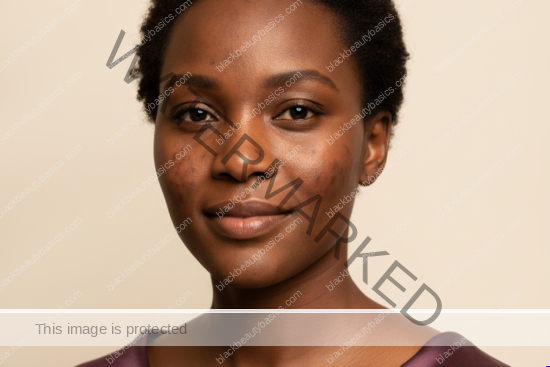
Post-inflammatory hyperpigmentation, often called PIH, can make an already frustrating breakout, ingrown hair, rash, cut, or skin reaction feel like it has overstayed its welcome. The bump may flatten. The itch may stop. The irritation may be long gone. Yet a brown, gray-brown, purple-brown, or deeper-toned mark remains—and on deep skin, it can look especially noticeable against the surrounding complexion.
If you are watching a spot closely and wondering why it is still there, you are not being vain or impatient. Dark marks can affect how comfortable you feel bare-faced, in photos, at work, or in spaces where colorism already teaches Black women to scrutinize skin that is not even-toned. But a darker mark is not a personal failure, a hygiene issue, or proof that you “ruined” your skin. It is often the visible aftermath of inflammation.
There is also no single post-inflammatory hyperpigmentation timeline for all Black women or all melanin-rich skin. Black skin is not biologically identical from person to person, and the cause of the mark, its depth, ongoing irritation, sun exposure, hormones, medications, skin-care practices, and access to timely care can all shape what happens next. A spot that began after one pimple may behave differently from marks after eczema, waxing, acne, folliculitis, a peel, or a healing injury.
This guide offers a calmer way to think about the timeline: what may be happening, what can keep marks looking active, how to support your skin without escalating irritation, and when it makes sense to get professional guidance. For a wider foundation, visit our hyperpigmentation and dark spots guide. The goal is not lighter skin. The goal is informed, gentle care for skin that deserves patience rather than panic.
Understanding PIH Before You Start Counting Weeks
Post-inflammatory hyperpigmentation is discoloration that develops after inflammation or injury to the skin. The inflammation can be obvious, such as a pimple, burn, scratch, insect bite, or rash. It can also be quieter: repeated friction, over-exfoliation, an irritating product, hair removal, or persistent rubbing can create enough stress to leave color behind.
Melanin is the pigment that contributes to skin color. When skin becomes inflamed, pigment activity can become more noticeable in the healing process. That is why the visible mark may be darker than your usual skin tone even after the original issue has settled. In deeper complexions, PIH can appear brown, dark brown, charcoal, gray-brown, blue-gray, purple-brown, or nearly black depending on the person, the lighting, and the nature of the mark.
PIH is not the same thing as an active acne lesion, although both can be present at once. A flat mark that does not hurt, itch, or swell may be leftover discoloration. A tender bump, a pustule, drainage, spreading redness, or repeated inflammation suggests that the triggering issue may still need attention. Treating every dark mark as though it is active acne can lead to unnecessary exfoliation and more irritation.
It is also worth separating PIH from other forms of uneven pigmentation. Melasma often appears in broader, more symmetrical patches and may be influenced by several factors. A dark or velvety area on the neck can have different possible causes and should be assessed rather than diagnosed from appearance. Our guide on dark neck changes, friction, and when to seek help explains why a careful assessment matters.
The Skin of Color Society notes that PIH can follow inflammation or injury, and dermatology reviews emphasize that management in skin of color needs to account for the risk that irritation or procedures may worsen discoloration. That is why “stronger” is not automatically better. Your skin does not need to be punished into looking more even.

A Realistic PIH Timeline on Deep Skin
A timeline guide should make room for uncertainty. It is understandable to want an exact answer—two weeks, six weeks, three months—but skin does not follow a universal calendar. The most honest answer is that some marks begin to look less noticeable over time while others linger for many months, particularly when the original inflammation was significant, recurrent, or still happening. Deeper marks can appear slow to shift, and that does not mean you have done something wrong.
The first days to a few weeks: The original inflammation may still be active or just resolving. A pimple can flatten while leaving a fresh dark mark. A healing scratch may look darker before it looks more even. This is often the stage when people become tempted to scrub, pick, or layer multiple “spot correctors.” But the barrier may still be recovering. Keeping the area calm can be more useful than aggressively chasing immediate fading.
The next several weeks: The mark may remain similar in color, soften at the edges, or look different in different light. This is not always a reliable moment to judge whether every product is “working.” If new breakouts, ingrowns, or irritation continue beside the original mark, the skin is dealing with fresh inflammation as well as old discoloration. The visible overall pattern can therefore look unchanged even when one individual mark is slowly settling.
Over the following months: Some PIH gradually becomes less distinct. Others remain stubborn, especially on areas that receive repeated friction, hair removal, acne activity, sun exposure, or product irritation. A mark may also seem to fade unevenly: less visible in daylight, more visible after a shower, or more noticeable when the skin is dry. This variation is normal enough that photos taken in consistent lighting can be more useful than daily mirror checks.
When the timeline keeps restarting: The issue may not be that an old mark is refusing to fade. It may be that new inflammation keeps forming in the same area. This commonly happens along the jawline after hair removal, around the mouth after irritation, on the cheeks with acne, or on the body where clothing rubs. In that situation, preventing the next trigger is usually as important as addressing the existing discoloration.
Try not to make your peace depend on a deadline. A reasonable care plan is about reducing avoidable irritation, supporting daily protection, and checking whether the pattern is improving over a meaningful stretch of time. It is not about achieving a perfectly uniform complexion. Human skin has tonal variation, and Black beauty does not require erasing every trace of healing.
What Can Delay the Appearance of Fading
PIH is not a moral scorecard. Still, certain patterns can keep skin inflamed or make discoloration look more persistent. Identifying them is not about blame; it is about giving yourself fewer obstacles.
Picking, squeezing, and repeated touching can prolong inflammation. It is hard to leave a bump alone, especially when it is sore or when you feel pressure to have “clear” skin quickly. But picking can create a new wound and extend the cycle from active blemish to darker mark. If this is a recurring struggle, make the behavior less convenient: keep nails short, use a gentle pimple patch if appropriate for you, and move magnifying mirrors out of your most vulnerable space. For more support, read our article about dark spots after picking pimples on melanin-rich skin.
Overdoing exfoliation is another common problem. Stinging, tightness, peeling, burning, or a suddenly rough texture can be signs that your routine is too harsh for your skin at that moment. A product can be popular, expensive, or marketed for “brightening” and still be too irritating when combined with other actives, frequent scrubbing, rough washcloths, or aggressive cleansing.
Unprotected exposure to daylight can complicate dark-spot care. The American Academy of Dermatology recommends selecting a broad-spectrum sunscreen with SPF 30 or higher and considering water resistance when relevant to your day. A sunscreen only helps if you can use it comfortably and consistently, so texture, cast, finish, and how it works under makeup are practical considerations—not superficial ones.
Repeated hair-removal irritation can keep a lower-face or neck pattern going. Tweezing, shaving, waxing, and ingrown hairs can all be relevant depending on your skin and hair growth pattern. There is no shame in facial hair, and removal is a personal preference, not a requirement. If you choose to remove it, our guide to dark spots after tweezing facial hair can help you think through the irritation cycle.
Trying too many changes at once makes troubleshooting harder. When a routine includes a new cleanser, scrub, acid, retinoid, mask, spot gel, and fragrance-heavy moisturizer, you may not know what is helping or harming. A simplified routine can feel less exciting, but it gives your skin a chance to communicate clearly.
A Gentle, Steady Plan for Supporting Deep Skin
The most useful PIH plan is usually boring in the best way: consistent, tolerable, and built around reducing fresh inflammation. It does not require you to buy a shelf full of products or compare your face to edited images. Start with what helps your skin stay comfortable.
Step one: keep cleansing gentle. Use a cleanser that removes the day without leaving your skin feeling stripped, squeaky, burning, or tight. Use lukewarm rather than very hot water when possible. Avoid scrubbing a dark mark as if friction can lift it away; PIH is not surface dirt.
Step two: moisturize for barrier comfort. A moisturizer can support a routine by reducing dryness and helping the skin tolerate other products more comfortably. Choose based on your skin’s needs and preferences: a lotion, cream, gel-cream, or richer balm may all be reasonable formats. If a product stings persistently, causes a rash-like reaction, or makes your skin feel worse, pause the new product and seek medical advice if symptoms are significant or do not settle.
Step three: use daily sun protection you will actually wear. Broad-spectrum SPF 30 or higher is a practical baseline recommended by the AAD. If you are outdoors, water-resistant options may be useful. Shade, hats, and protective clothing can also be part of a sun-protection plan. No sunscreen needs to be perfect to be worthwhile; the right choice is one that fits your complexion, comfort, budget, and daily life well enough to become routine.
Step four: introduce pigment-focused ingredients thoughtfully. Some people use ingredients such as niacinamide or azelaic acid as part of a dark-spot routine. They are not instant fixes, and they can still irritate some skin. Introduce one new leave-on product at a time, follow its directions, and do not assume that more frequent use will produce better results. Our practical guide on how to layer niacinamide, azelaic acid, and sunscreen for dark spots offers a measured way to think about order and tolerance.
Step five: address the trigger where possible. If acne is active, an acne plan may matter more than adding another brightening serum. If ingrown hairs are recurring, focus on the hair-removal pattern. If a product seems to cause burning or bumps, simplify. If you suspect eczema, contact dermatitis, or another ongoing skin condition, a clinician can help identify an appropriate approach.
Prescription options and in-office treatments may be appropriate for some people, but they deserve individualized guidance. Respect the instructions from the clinician who prescribed your treatment; do not independently stop, restart, or change a prescription because a social-media routine says to. Procedures and peels can carry a risk of worsening PIH, particularly when skin is irritated or treatment is not well matched to darker skin tones. For melasma or post-peel changes, avoid DIY treatment or procedure instructions and seek a clinician experienced with darker skin tones.

Why Two Similar Marks Can Behave So Differently
It can be confusing when one dark spot softens relatively quickly and another seems determined to stay. The difference is not always visible from the surface. Several real-life factors can shape the pace and appearance of PIH.
The source of inflammation matters. A small, untouched pimple may leave a different kind of mark than a deep, painful breakout that lasted for weeks. A brief irritation from a new product may resolve differently from chronic rubbing beneath a mask, bra strap, waistband, or head covering. Marks after waxing, tweezing, or ingrowns may recur because the trigger repeats on a schedule.
Body location matters. The face, jawline, underarms, chest, back, legs, and bikini area have different routines, friction patterns, and exposure levels. A mark on the leg may be rubbed by clothing. A mark on the face may be exposed to daily light and makeup removal. A patch on the neck may be affected by fragrance, jewelry, collars, hair products, or friction. The practical response should fit the location rather than forcing one universal regimen everywhere.
Current skin health matters. Skin that is dry, inflamed, sensitized, or breaking out repeatedly is not in the same position as skin that is calm. This is why an aggressive “correction” phase can backfire. If your face is burning, peeling, or breaking out more after a routine change, it may be wiser to stabilize before adding more actives.
Life and access matter. Stress, shifts in schedule, inconsistent sleep, weather, caregiving, work, finances, and limited access to dermatology can all affect how easy it is to keep a routine simple and steady. It is not realistic or fair to pretend everyone can follow an elaborate protocol. A basic routine you can sustain is more valuable than a complicated one that leaves you overwhelmed or irritated.
Perception matters too. Dark marks often look different under bathroom lighting, phone flash, office fluorescents, and outdoor daylight. Color contrast can make a mark feel more dramatic on some days. If tracking helps you, take a photo every few weeks in the same location, at a similar time of day, without filters. If tracking makes you obsessive or discouraged, skip it. Your emotional comfort belongs in the plan.
Troubleshooting When Your PIH Feels Stuck
“Stuck” can mean many things. Before buying another product, name the pattern as clearly as you can. Are marks truly unchanged, or are new ones replacing older ones? Did the area become more irritated after a routine change? Is the discoloration flat, or is there also texture, tenderness, scaling, itching, or recurring bumps? The answers can guide your next step.
If you are getting new marks every week: Put your energy toward the active trigger. Dark-spot products may have limited impact if acne, ingrowns, dermatitis, or irritation continues unchecked. A dermatologist or other qualified clinician can help if acne is painful, widespread, leaving scars, or not responding to a simple over-the-counter routine.
If your routine burns or peels: Do not push through just because a product is described as potent. Simplify to gentle cleansing, moisturizing, and sun protection while you assess what changed. Severe burning, swelling, blistering, hives, or a spreading rash warrants prompt medical advice. “No pain, no gain” is not a sound principle for pigment-prone skin.
If you are tempted by a peel, laser, or strong at-home treatment: Slow down. Dermatology evidence recognizes that procedures may exacerbate PIH, and risk assessment matters in skin of color. A procedure is not automatically wrong, but it should be discussed with a qualified clinician who has experience treating darker skin tones. This is especially important if you have a history of marks after irritation, have active inflammation, or are dealing with melasma or recent post-peel discoloration.
If the area is dark and velvety, especially on the neck: Do not rely on online photos to tell you what it is. A dark or velvety patch can have different causes and should be assessed by a clinician. Avoid harsh DIY “lightening” methods, scrubbing, or home peels while you wait for guidance.
If a mark is changing in an unexpected way: Seek medical evaluation for a spot that is rapidly changing, bleeding, persistently painful, ulcerated, or otherwise concerning to you. A timeline guide cannot identify every cause of skin discoloration, and it is appropriate to ask for an in-person assessment when something does not fit your usual pattern.
For a broader overview of topical care, procedures, routines, and lifestyle support, see our guide to hyperpigmentation treatment methods and routine support. Use it as a discussion tool, not a pressure list.

What to Do Next When You Want Less Panic and More Clarity
Start by giving the mark a name: Is it likely a flat leftover spot after a known pimple, ingrown, or irritation? Or is the original problem still active? This small distinction can prevent a lot of wasted effort.
Then choose one realistic goal for the next few weeks. Your goal might be to stop picking, wear sunscreen more consistently, reduce a harsh exfoliating step, simplify your routine, or book an appointment for recurring acne or a dark neck patch. You do not need to fix every possible factor at once.
Keep your core routine calm: gentle cleanse, moisturize, and use broad-spectrum sun protection. If you want to add a pigment-supportive ingredient, introduce one option at a time and judge it by comfort as well as appearance. A product that gives you burning, peeling, or new bumps may not be a good trade, even if it is marketed as a dark-spot solution.
Give yourself a more compassionate measurement system. Look for reduced irritation, fewer new marks, and gradual changes over time rather than inspecting one spot several times a day. If you take photos, use consistent lighting. If you find yourself spiraling over every shadow, step back from close-up checks. Your worth and beauty are not waiting on a pigment timeline.
Finally, get support when the pattern is persistent, painful, distressing, or unclear. You deserve care from professionals who listen, take darker skin seriously, and do not treat melanin-rich skin as an afterthought. Bring a short history of what started the marks, what you have tried, and any photos that show changes over time. That information can make the conversation more productive.
Frequently Asked Questions
How long does post-inflammatory hyperpigmentation take to fade on deep skin?
There is no dependable single timeline. Some PIH marks begin to look less noticeable over several weeks, while others can remain visible for months or longer. The cause of the inflammation, how deep or prolonged it was, whether new irritation continues, and your individual skin all matter. A deep, painful acne lesion or repeatedly inflamed ingrown hair may leave a more persistent mark than a small, untouched blemish. Rather than judging progress day by day, look for patterns over time: fewer new marks, calmer skin, and gradual softening. If the mark is changing unexpectedly or you are unsure it is PIH, seek an in-person assessment.
Why do my dark spots look darker after the pimple is gone?
The pimple and the leftover mark are related but not identical. The active bump may flatten or heal before the pigment changes from inflammation become less noticeable. On melanin-rich skin, this can make it feel as though the spot got worse after the acne improved. Lighting, dryness, and surrounding skin tone can also change how obvious a mark appears from day to day. Try not to respond by scrubbing or applying multiple strong treatments at once. Focus on reducing future breakouts and keeping the healing area comfortable. If there is still pain, swelling, drainage, or a recurring bump, the inflammation may not be fully resolved.
Can sunscreen help if I am mostly indoors?
Daily broad-spectrum sunscreen can be a useful part of a PIH routine, including for people whose days include daylight through windows, errands, commuting, or time outdoors. The American Academy of Dermatology recommends broad-spectrum SPF 30 or higher and notes that water resistance can matter for activities involving sweat or water. Your routine should be practical rather than perfectionistic. Choose a sunscreen that works with your complexion and daily habits, whether you prefer a sheer, tinted, moisturizing, or lightweight finish. Sunscreen is not a cure for PIH, but protecting skin from further exposure is one way to support a broader dark-spot plan.
Should I exfoliate dark spots until they disappear?
No. PIH is not dirt or a layer that can safely be scrubbed off. Over-exfoliating can cause stinging, peeling, dryness, and additional inflammation, all of which may make discoloration harder to manage. Physical scrubs, rough cloths, frequent acids, and stacked active products can be especially problematic when your skin already feels sensitive. If you use an exfoliating product, follow its instructions and avoid introducing several potentially irritating steps at once. When your skin is burning or peeling, simplifying your routine is often more sensible than adding intensity. A clinician can help if you are unsure which options fit your skin concerns.
Are dark spots after tweezing or shaving still PIH?
They can be, particularly when hair removal causes inflammation, ingrown hairs, or repeated friction. But it is not possible to confirm the cause of every dark mark without considering the full pattern and, when needed, an examination. The most helpful approach is usually to reduce the cycle that produces the irritation rather than focusing only on fading the existing spot. Consider whether bumps form after removal, whether you are shaving or tweezing over already irritated skin, and whether products used afterward sting. Facial hair is normal, and hair removal is optional. If you choose it, gentler methods and individualized professional guidance may be helpful.
Can a chemical peel remove PIH faster on Black skin?
A peel is not a universally safe shortcut, and it should not be approached as a DIY solution for PIH on deep skin. Procedures may exacerbate post-inflammatory hyperpigmentation, particularly when skin is already irritated or treatment is not appropriately selected and monitored. That does not mean no Black woman can ever have a procedure; it means the decision deserves care. If you are considering a peel, laser, or other treatment, consult a clinician experienced with darker skin tones and discuss your history of irritation, prior discoloration, active acne, melasma, and current products. Follow professional instructions closely and do not make independent prescription changes.
When should I see a dermatologist about a dark spot?
Consider professional care when marks are accompanied by ongoing acne, painful bumps, itching, scaling, recurrent ingrowns, or a reaction to products. Seek assessment for a dark or velvety neck patch because different causes are possible and appearance alone cannot diagnose it. It is also wise to get evaluated if a spot is rapidly changing, bleeding, ulcerated, persistently painful, or simply does not resemble your usual PIH pattern. A dermatologist or qualified clinician can help distinguish ongoing inflammation from leftover discoloration and discuss options appropriate for your skin. You do not have to wait until your concern feels “serious enough” to deserve a respectful conversation.
Related next steps
Related posts:
 Post‑Inflammatory Hyperpigmentation in Melanin-Rich Skin: Timeline and Treatment
 Acne Marks and Post-Inflammatory Hyperpigmentation on Dark Facial Skin
 Understanding and Treating Post-Inflammatory Hyperpigmentation on the Body
 Combatting Post-Inflammatory Hyperpigmentation Through Routine Design
 Choosing Skincare Products with Anti-Inflammatory Properties for Black Women
 Choosing Skincare Products with Anti-Inflammatory Properties for Black Women