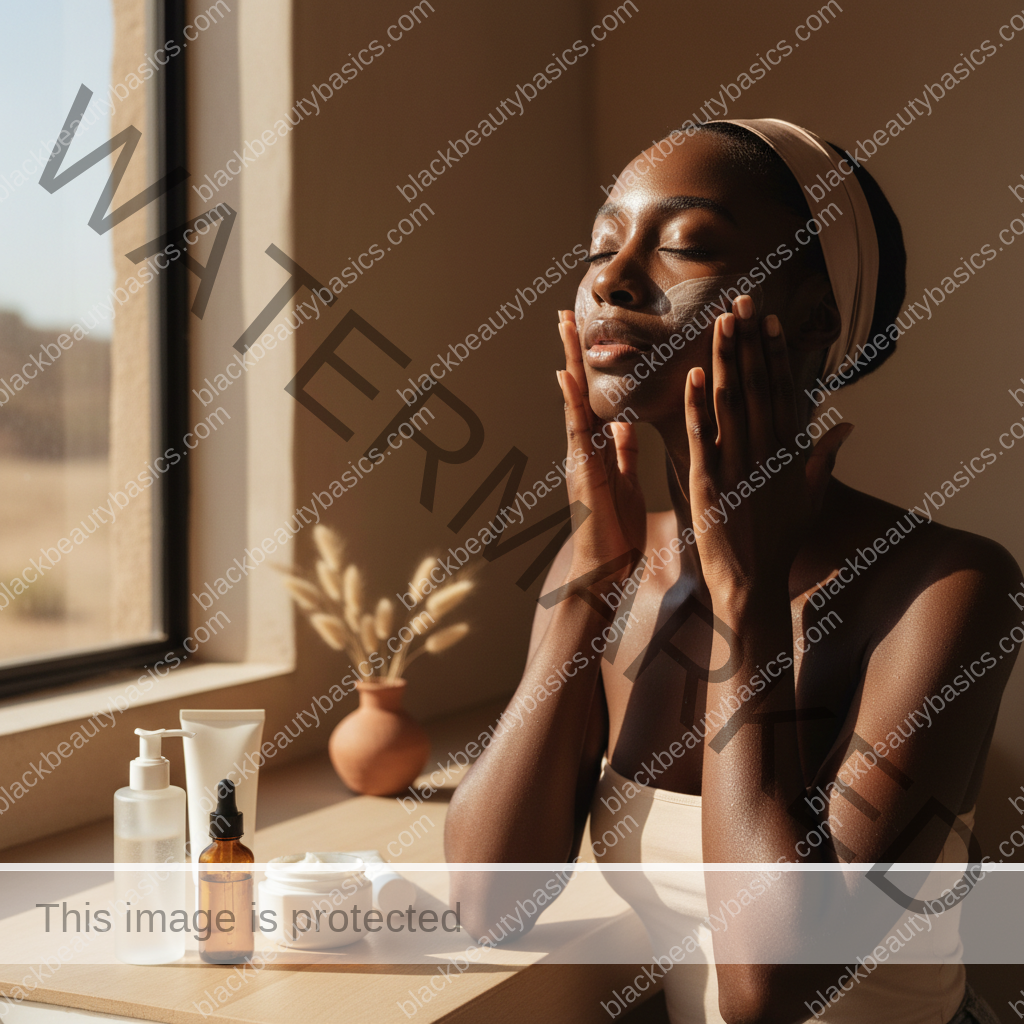
Dry air can make your skin feel like it is asking for help before the day even begins. You wash your face, and your cheeks feel tight. You apply moisturizer, and ten minutes later it feels like nothing happened. Makeup catches around your mouth or forehead. Sunscreen looks patchy, or suddenly your skin has that dull, gray cast that makes you feel less like yourself.
For Black women and people with richly melanated skin, dry climates can be especially frustrating because dryness does not always look simple. It may show up as ashiness, rough texture, flakes, a tight-but-shiny finish, or makeup that refuses to sit smoothly. And when dryness leads to irritation, the aftermath can include dark marks that linger longer than the original problem. This routine is here to help you build a morning plan that layers water, comfort, and protection without making your face feel heavy.
If you are still mapping your full routine, start with BBB’s skincare routine design guide. Then use this dry-climate guide to adjust your morning steps for winter air, desert air, indoor heating, air conditioning, or any environment that pulls softness from the skin. The goal is not to coat your face until it cannot breathe. The goal is flexible, protected skin that still feels like yours.
Why Dry Climates Hit Melanin-Rich Skin Differently
Dry climates make water loss more noticeable. Your skin is always losing some water into the air, but when humidity is low, that loss can happen faster. Add indoor heating, wind, hot showers, long commutes, or air-conditioned rooms, and the skin may start the day already behind. That is why a moisturizer that worked in a milder climate may suddenly feel too light. It is not that your skin became difficult overnight. It is responding to a drier environment.
Melanin-rich skin can show dryness in ways that feel emotionally loaded because ashiness is so visible on deeper skin. A little surface dehydration can make the face look dull, gray, or uneven, even when nothing is medically wrong. This is where beauty advice can get careless. The answer is not to treat deeper skin like it needs to be brightened into another shade. The answer is to restore comfort, support the barrier, and protect the skin from irritation. Your complexion does not need correcting. Your skin may simply need better moisture strategy.
Dryness can also blur the line between oiliness and dehydration. Some people in dry climates feel tight on the cheeks but shiny through the T-zone. Others get rough patches around the mouth while the forehead still looks oily. That combination can make you reach for harsh cleanser in one area and heavy cream in another. A better approach is to understand what each zone is asking for. Tightness often points to water loss or barrier stress. Shine may be oil, but it can also be the skin compensating after being stripped.
For Black women who are managing dark marks, dry-climate irritation deserves extra respect. A cracked patch, an over-exfoliated area, or a breakout caused by a product that is too heavy can all leave discoloration behind. That does not mean you should be afraid of skincare. It means the routine needs to reduce unnecessary inflammation. In dry weather, the best routine is usually gentle, layered, and steady: a soft cleanse, water-binding hydration, a moisturizer that actually lasts, and sunscreen that does not emphasize flakes.
Dry climates also change how makeup and sunscreen behave. Base makeup can cling to texture that was barely visible before. Powder can look chalky. Sunscreen can settle unevenly if the skin underneath is too dry, or it can pill if heavy moisturizer sits on top instead of settling in. A morning routine for dry weather has to think beyond the sink. It has to set up your face for the rest of your day, including SPF, makeup, wind, office air, and the small moments when you touch your face because it feels tight.
What to Stop Doing When the Air Is Dry
The first thing to stop is washing your face like you are trying to remove every trace of oil. Hot water, harsh foam, rough cloths, and that squeaky-clean finish can all make dry-climate skin feel worse. Clean skin should not feel punished. If your face feels tight within minutes of cleansing, your routine is already starting from a place of stress. That tightness is not a sign that the cleanser worked beautifully. It is information that your skin needs a softer approach.
Do not exfoliate every flake just because you can see texture. Flaking can be dead skin, but it can also be barrier irritation. If you scrub or acid-exfoliate every time you see dryness, you may create more sensitivity and more uneven tone. This matters for melanin-rich skin because inflammation can leave marks that outlast the dryness. Gentle exfoliation may have a place, but it should not be your first response to a face that feels tight, stings after washing, or burns when moisturizer goes on.
Stop relying on facial oil as your whole moisture plan. Oils can soften the feel of skin and help seal other layers, but oil alone does not replace water. If your skin is thirsty, applying oil to dry skin may make the surface shiny while the tightness underneath stays. In a dry climate, you usually need hydration first, then moisturizer, and then a small amount of oil or balm only if your skin likes that finish. Think water first, comfort second, seal only where needed.
Another mistake is skipping sunscreen because your skin already feels dry or because deeper skin is less likely to burn visibly. Sunscreen still matters. UV exposure can deepen existing discoloration and make dark marks harder to manage. The trick is choosing and layering SPF in a way that does not make dryness look worse. If your sunscreen turns gray, catches on flakes, or pills over moisturizer, the answer is not to abandon protection. It is to adjust the base underneath or find a formula that respects your skin tone and texture.
Try not to change every product at once. Dryness can make you want an immediate fix, and that is when a routine becomes crowded. A new cleanser, new toner, new serum, new cream, new oil, and new sunscreen all introduced together can create confusion. If your skin reacts, you will not know what caused it. A calmer approach is to improve one step at a time. Start with cleanser comfort. Then look at hydration. Then moisturizer staying power. Then sunscreen finish. Slow is not lazy. Slow is how you learn what your skin is actually telling you.
Finally, stop treating ashiness as a beauty failure. Ashiness is visible dryness, not a moral issue. It does not mean you are neglectful, dirty, or less polished. It means the skin needs support. The language matters because shame often pushes people toward harsh fixes. BBB’s position is simple: your skin deserves care, not punishment.
What to Try Instead: A Dry-Climate Morning Plan
Begin with the gentlest cleanse that still makes sense for your morning. If you wake up balanced and your nighttime routine was not heavy, a rinse with lukewarm water may be enough. If you need cleanser, choose a creamy, milky, low-foam, or soft gel texture that leaves your skin comfortable. The cleanser should remove overnight sweat, residue, and oil without making your cheeks feel tight. If your cleanser leaves you shiny and stretched, revisit BBB’s guide to signs your cleanser is too harsh for dark skin.
When comparing options, think category first. A hydrating cream cleanser can be a useful search category if your current cleanser is too stripping, but the goal is not to buy the richest thing on the shelf. The goal is comfort after rinsing. A cleanser that leaves film may not suit you either, especially if you wear sunscreen or makeup. Your face should feel clean, soft, and ready for moisture.
Next, apply hydration while the skin is slightly damp. This is where dry-climate routines often improve quickly. Humectants such as glycerin, panthenol, aloe, hyaluronic acid, beta-glucan, and similar water-binding ingredients can help the skin feel more flexible before you apply moisturizer. This step can be a hydrating toner, essence, serum, or very lightweight gel. It should not sting. It should not leave your face sticky in a way that makes sunscreen roll. A good hydrating layer gives your moisturizer something to seal in.
Then choose moisturizer by staying power, not just richness. A thick cream that sits on top may look promising but fail by midday. A lighter lotion with ceramides, squalane, glycerin, or other barrier-supporting ingredients may work better because it actually settles. Some skin needs a cream all over. Some needs a lotion all over and a little more richness around the mouth, cheeks, or temples. Some acne-prone dry skin needs a gel-cream plus a small amount of cream only on dry zones. If your skin is both breakout-prone and dehydrated, the moisturizer guide for acne-prone, dehydrated skin can help you choose without panic.
If you want a product category to compare, ceramide face moisturizer is a reasonable place to look. Ceramides are often discussed because they support the skin barrier, but the whole formula still matters. A moisturizer can have a beautiful ingredient list and still feel wrong on your face. Pay attention to whether your skin stays comfortable, whether sunscreen layers over it, and whether makeup clings less.
Sunscreen comes next, and it is not optional just because the air is dry or the sun feels softer. Dry climates can include strong UV exposure, especially in high-altitude, desert, or winter-bright environments. Choose broad-spectrum SPF 30 or higher, then judge it by finish, comfort, and consistency. A sunscreen that makes you look gray will be harder to use. A sunscreen that grabs flakes may need a better moisture base underneath. A sunscreen that pills may need fewer layers before it. If you are comparing formulas, broad spectrum sunscreen for dark skin is a useful search category because finish matters deeply on melanated skin.
If you wear makeup, give your skincare more time than you think. Dry-climate makeup problems often start before foundation. Let moisturizer settle. Apply sunscreen evenly. Wait a few minutes if your morning allows it. Use less powder on dry zones and more targeted powder where you actually get shine. If foundation catches around your mouth or nose, do not immediately exfoliate harder. Try improving hydration and moisturizer placement first.
For a simple dry-climate morning, use this order: rinse or gentle cleanse, hydrating layer, moisturizer, sunscreen. For very dry mornings, add a small amount of richer cream or balm only where you get tight or flaky. For acne-prone dry skin, keep the base lightweight and add richness only to dry zones. For rushed mornings, skip the treatment serum before you skip moisturizer or sunscreen. The essentials are comfort and protection.
If your products pill, use BBB’s serum, moisturizer, and SPF layering guide. Pilling is often a layering problem, not a sign that your whole routine is wrong. Use thinner layers, let each step settle, and avoid rubbing hard over products that have not dried down.
Troubleshooting When Your Skin Still Feels Dry
If your skin feels dry by midday, do not assume you need a much heavier morning cream right away. First ask where the dryness is happening. If it is around the mouth, cheeks, or under the eyes, you may need more targeted richness in those areas. If the whole face feels tight, your cleanser may be too stripping or your hydrating layer may be missing. If your skin feels dry only after sunscreen, the SPF formula may be too drying or the base underneath may not be enough.
A facial mist can feel comforting, but mist alone can disappear quickly in dry air. If you mist, press a small amount of moisturizer over dry areas afterward when possible. Otherwise, you may enjoy the moment and still feel tight again. In the morning routine itself, try applying hydration to slightly damp skin, then sealing it with moisturizer before the skin fully dries down. That small timing shift can help.
If makeup keeps clinging, pause aggressive exfoliation and review the moisture base. Foundation often exaggerates dryness that skincare did not fully address. A smoother result may come from a gentler cleanse, better hydration, and waiting before makeup. If you are using a matte foundation or heavy powder in dry weather, you may need to adjust the makeup finish too. Skincare can help, but makeup texture still matters.
If breakouts appear after switching to richer products, do not decide that your skin hates moisture. It may hate that particular texture, amount, or placement. Try lighter moisturizer all over and richer product only on dry zones. Avoid heavy layers near areas where you already clog, such as the hairline, chin, or sides of the nose. If the routine becomes confusing because you have tried too many things, use BBB’s routine reset guide to calm the process down.
If your skin burns, cracks, bleeds, swells, or develops a rash that does not improve, stop treating it like ordinary dryness. A home routine cannot diagnose eczema, dermatitis, allergic reactions, or other medical issues. A dermatologist, especially one familiar with skin of color, can help you protect your barrier and reduce the chance of lingering discoloration. Getting help is not overreacting. It is a way to care for your skin before the problem becomes harder to unwind.
Frequently Asked Questions
Can I use facial oil instead of moisturizer?
Usually, facial oil works better as a support step than as your only moisturizer. Oil can soften the feel of skin and help seal other layers, but it does not replace water-binding hydration or a complete moisturizer for most people. In dry climates, apply a hydrating layer first, then moisturizer, then a tiny amount of oil only if your skin likes it. If oil alone leaves you shiny but still tight, your routine needs more hydration underneath.
Should I exfoliate flaky skin more often?
Not automatically. Flakes can mean dead skin buildup, but they can also mean your barrier is irritated or dehydrated. If you exfoliate too often, you may create more tightness, stinging, and discoloration risk. Start by improving cleanser comfort, hydration, and moisturizer staying power. If the skin feels calm but rough, gentle exfoliation may help once or twice a week, depending on tolerance. If it burns or peels, pause.
Why does my skin look ashy even after moisturizer?
Ashiness after moisturizing often means the skin needed more water before the cream, the moisturizer is not sealing well enough, or the product is sitting on top instead of settling. Try applying a hydrating layer to slightly damp skin, then moisturizer. Also check whether your cleanser is stripping you before the routine even begins. On deeper skin, dryness can look gray quickly, so the fix is usually better hydration and barrier support, not lightening.
Do I still need sunscreen in a dry climate?
Yes. Sunscreen is still important for melanin-rich skin, even if you do not burn easily or the weather feels cold. UV exposure can deepen uneven tone and make dark marks harder to manage. In dry climates, the challenge is finding a sunscreen that does not emphasize flakes, leave a gray cast, or feel uncomfortable over moisturizer. Adjust the layers underneath and choose a finish you can wear consistently.
What if my moisturizer feels heavy but my skin still feels dry?
That usually means the product is adding weight without solving the real moisture gap. You may need more hydration underneath, a different texture, or a formula that supports the barrier better. Heavy does not always mean effective. Try a hydrating toner or serum before moisturizer, then use a cream that settles instead of sitting on top. If you are acne-prone, apply richer product only where you are truly dry.
How should I prep dry skin before makeup?
Prep starts with gentle cleansing and a moisture base that has time to settle. Apply hydration, moisturizer, and sunscreen in thin, even layers. Wait a few minutes if you can before foundation. Avoid over-powdering dry zones, and do not exfoliate aggressively right before makeup just because texture is visible. If makeup keeps catching, your skincare base may need more water-binding hydration or a moisturizer with better staying power.
When should I see a dermatologist for dry skin?
Consider professional help if dryness is painful, cracking, bleeding, spreading, intensely itchy, or not improving with a gentle routine. Also seek care if you suspect eczema, dermatitis, an allergic reaction, or acne that is leaving frequent dark marks. A dermatologist can help you separate routine issues from medical concerns. That support can be especially valuable for melanated skin, where inflammation may leave long-lasting discoloration.
What to Do Next
Start with one calm change. If your skin feels tight after washing, soften the cleanse. If moisturizer disappears too quickly, add hydration before it. If sunscreen looks patchy, improve the moisture base and give each layer time. If makeup clings, resist the urge to scrub and look at the routine underneath. Dry-climate skincare gets better when you treat the skin as responsive, not stubborn.
If your weather changes, compare this guide with BBB’s morning skincare routine for humid climates. If you are managing that oily-but-tight feeling, read the oily and ashy skin routine. If budget is the main concern, go next to a simple skincare routine on a budget.
Your face does not have to feel tight for your routine to be serious. Your glow does not have to come from discomfort. In a dry climate, the win is skin that feels cushioned, protected, and steady enough to move through the day with you. That is the BBB standard: practical care, no shame, and advice that understands the beauty of melanin-rich skin without turning it into a problem to solve.
Related next steps
Related posts:
 Morning Skincare Routine for Black Women in Humid Climates: A Lightweight, Resilient Glow Guide
 Morning Skincare Routine for Black Women by Skin Type (Oily, Dry, Combo)
 Moisturizers for Black Women: Barrier Repair vs Lightweight Hydration
 Skincare for Hot, Dry Climates on Dark Skin
 Morning to Evening – A Skincare Routine for Black Women
 Morning and Night Skincare Routine for African American Women