When your skin feels tight after cleansing, looks ashier than usual, stings when you apply products, or seems to react to every new “glow” formula, the answer is not necessarily more products. Often, the more useful question is whether your routine is helping your skin hold on to water and tolerate everyday stress.
That is where barrier-focused ingredients come in. Ceramides, glycerin, and petrolatum are often discussed as if they do the same job. They do not. One helps support the skin’s lipid structure. One helps attract and hold water. One helps slow water loss from the surface. Used thoughtfully, they can make a routine feel calmer, simpler, and more comfortable.
For Black women and people with melanin-rich skin, barrier care can matter for comfort and for the appearance of the skin over time. Irritation does not always look bright red on deeper skin tones. It may show up as burning, itching, dullness, grayness, rough texture, tenderness, deepening tone, or post-inflammatory hyperpigmentation after the irritation settles. Still, Black skin is not one biological category, and no ingredient performs exactly the same way for every person. Oiliness, acne tendency, eczema history, climate, medication use, fragrance sensitivity, and product texture preferences all matter.
This is not a guide to “perfect” skin. Ashiness, flaking, sensitivity, and uneven-looking texture are not signs that you have failed at skincare. They are skin concerns, not character flaws. You do not need to scrub harder, buy the most expensive cream, or chase every ingredient trend. The goal is to understand what ceramides, glycerin, and petrolatum actually do, then build a routine that feels realistic for your budget, your climate, and your skin.
For a broader starting point, visit our Skincare for Black Women guide. Here, we are keeping the focus on barrier ingredients made plain: what they do, what they do not do, and how to use them without turning a simple routine into a stressful project.
Barrier Ingredients Made Plain: What Each One Does
Your skin barrier is the outermost working layer of skin. It helps limit water loss and helps protect skin from everyday environmental stress, friction, cleansers, and potential irritants. It is not a sealed wall, and it does not need to be “detoxed.” It is a living system that responds to weather, cleansing habits, hormones, treatments, and the products you use.
A common explanation compares the barrier to bricks and mortar. The skin cells are the bricks. The lipid mixture around them, which includes ceramides, cholesterol, and fatty acids, works somewhat like mortar. The comparison is not perfect, but it helps explain why skin can feel rough, dry, sensitive, or tight when its outer layer is under stress.
Research on race, pigmentation, and skin-barrier function has important limits. Studies do not always define race, ethnicity, ancestry, skin tone, pigmentation level, and phototype in the same way. Findings are not consistent enough to claim that all Black skin has one universal barrier pattern. What is useful in everyday skincare is recognizing that inflammation can leave lingering discoloration on melanin-rich skin. That makes a lower-irritation routine especially worth prioritizing when your skin feels unsettled.
Ceramides are lipid molecules naturally found in the outer layer of the skin. In skincare products, ceramides are commonly included in moisturizers, lotions, creams, and some serums. They are not exfoliants. They are not bleaching ingredients. They are not instant repair tools. They are one part of a formula designed to support the skin’s outer lipid environment.
Ceramides are often most useful in moisturizers that also contain other supportive ingredients. A ceramide cream may include glycerin, fatty acids, cholesterol, silicones, emollients, or occlusive ingredients. You do not need to memorize a special ratio or search for a luxury formula. A moisturizer that feels comfortable, does not sting, and is affordable enough to use consistently can be more helpful than a complicated product that sits unused on your shelf.
Glycerin is a humectant. Humectants help attract and hold water in the outer layer of the skin. Glycerin is found in many cleansers, serums, lotions, creams, and body moisturizers because it is flexible, reliable, and generally easy to layer. It does not need to be heavily marketed to be useful. Sometimes it appears near the top of an ingredient list in a very plain moisturizer.
Glycerin can help skin feel more supple and less tight. But glycerin alone is not always enough for skin that is very dry or exposed to dry air. If you apply a glycerin serum and your skin still feels uncomfortable, you may need a cream or lotion afterward. Humectants often work best alongside ingredients that soften the skin’s surface and help reduce water loss.
Petrolatum is an occlusive ingredient. It forms a protective layer over the skin that can reduce transepidermal water loss. In everyday language, it helps slow the escape of water from the skin. Petrolatum is commonly found in ointments, lip products, healing balms, and richer skincare products.
Petrolatum does not create water in dry skin. It works best when used over damp skin or over a moisturizer that already contains humectants and emollients. It is particularly practical for lips, hands, elbows, heels, dry patches, and areas around the nostrils that become rough in cold or dry weather.
Petrolatum also has a reputation problem. Some people hear “occlusive” and assume it is automatically dirty, pore-clogging, or unsuitable for Black skin. That is not a useful way to think about it. Texture preferences and acne concerns are real, but shame-based skincare advice is not. Some people love petrolatum on dry facial areas. Others find it too heavy for their whole face, especially in humidity or when wearing makeup. Both experiences are valid. You can use it selectively instead of treating it as an all-or-nothing product.
In short, ceramides help support the skin’s lipid structure, glycerin helps bind water in the outer skin, and petrolatum helps slow water loss. A routine can include one, two, or all three. You do not need every category in separate products to have a sensible moisturizer routine.
When you read a product label, ask what role the product is playing. Is it a lightweight glycerin-rich hydrator? Is it a ceramide-containing cream that feels comfortable under sunscreen? Is it an ointment for sealing in moisture on dry spots? Terms like “barrier rescue,” “skin food,” and “repair complex” may sound impressive, but the ingredient list, texture, and your own experience will tell you more.
It can also help to separate dry skin from dehydrated-feeling skin without becoming overly technical. Dry skin may benefit from richer emollient and lipid support. Dehydrated-feeling skin may feel tight or look dull because the outer layer needs more water and better water retention. The two can overlap. You do not need to diagnose the difference perfectly. Start with gentle cleansing, moisturizer on slightly damp skin, and an optional richer layer where needed.
What to Avoid When Your Barrier Feels Stressed
When skin is uncomfortable, it is tempting to add every soothing, exfoliating, brightening, and “repairing” product at once. That can create a cycle where the routine itself becomes another source of irritation. Barrier care is not only about what you add. It is also about what you pause, reduce, or stop layering.
Start by being cautious with frequent exfoliation. Chemical exfoliants, facial scrubs, exfoliating pads, peeling masks, cleansing brushes, rough washcloths, and abrasive gloves can all add friction or irritation. This matters because people with melanin-rich skin are often encouraged to exfoliate aggressively for dark marks, dullness, and texture. But irritation can worsen the very uneven tone you are trying to address.
If a product burns, leaves your skin feeling raw, or causes persistent tightness, that is useful information. It is not proof that the product is “working.” A tingle is not a requirement for effectiveness. You do not need to push through discomfort in the name of glow.
Be cautious about stacking several active products in one routine. A strong cleanser, exfoliating toner, retinoid, acne treatment, vitamin C serum, fragranced moisturizer, and spot treatment may each be manageable by themselves. Together, they may be too much. If you use a prescription treatment, follow your prescriber’s instructions. Do not stop, reduce, or change a prescription independently because a skincare article suggests simplifying your routine. Instead, ask the prescribing clinician or pharmacist how to pair a bland moisturizer with your treatment if dryness becomes difficult.
Fragrance is another practical consideration. Fragrance is not automatically harmful, and many people use fragranced products without trouble. But when your skin is stinging, itchy, or reactive, fragrance-free products can remove one possible source of irritation. The same caution can apply to essential oils, heavily scented body butters, and products designed to create a cooling or tingling sensation.
Do not assume that a low-pH cleanser is automatically gentle. Cleanser mildness depends on the entire formula, how long it stays on the skin, how frequently you use it, your water temperature, and the products that follow. A cleanser can have a skin-friendly pH and still feel too stripping for your skin if it contains other harsh surfactants or if you wash repeatedly.
Squeaky-clean skin is not the goal. Comfortable, clean skin is the goal. If your face feels tight before you apply moisturizer, your cleanser may be too aggressive, you may be cleansing too often, or your water may be too hot.
Avoid treating ashiness as a cosmetic emergency that must be scrubbed away. Ashiness often happens when dry surface skin scatters light differently, making deeper skin tones appear gray, muted, or dusty. Scrubbing may remove some loose flakes temporarily, but it can also increase friction and irritation. A better first step is regular moisturizing, applied to damp skin, with a richer texture on areas that stay dry.
Be wary of social-media advice that presents petrolatum as a mandatory full-face mask or says every good moisturizer must contain ceramides. Petrolatum can be useful, but a thick layer may be uncomfortable under sunscreen, makeup, or humid conditions. Ceramides are valuable ingredients, but not every effective moisturizer will advertise them. The best routine is not the one with the most trending ingredients. It is the one your skin tolerates and you can maintain.
Finally, avoid blaming yourself for a rough skin week. Seasonal changes, travel, stress, air conditioning, indoor heating, frequent handwashing, illness, hard water, friction from masks, and changes in medication can all affect how skin feels. You are allowed to respond with a simpler routine. You do not need to earn gentleness by having “perfect” skin habits first.
A Gentle Plan for Morning, Night, and Body Care
A practical barrier routine can be built with a few categories: a gentle cleanser, a moisturizer, sunscreen for daytime facial care, and an optional occlusive product for dry areas. The products can vary, but the structure can remain uncomplicated.
In the morning, cleanse only as much as your skin needs. If you wake up oily, sweaty, or use a treatment that requires cleansing, use a gentle cleanser and lukewarm water. If your skin is dry or easily irritated, you may prefer a water rinse or a very mild cleanse in the morning. There is no prize for washing your face more often than your skin tolerates.
After cleansing, apply moisturizer while skin is still slightly damp. A lightweight lotion may suit oily skin, humid climates, or people who dislike a coated feeling. A cream may feel better for dry, normal, sensitive, or tight skin. Look for glycerin if you enjoy a hydrated finish. Consider ceramides if you want a moisturizer designed with barrier-supportive lipids in mind.
Then apply broad-spectrum sunscreen that you can wear comfortably. Sunscreen is not a barrier ingredient in the same category as glycerin, ceramides, or petrolatum, but it can be an important part of reducing the factors that contribute to visible uneven tone after irritation. Choose a formula that you can use consistently rather than one that leaves a cast, pills, stings, or makes you avoid reapplication.
At night, remove sunscreen, makeup, sweat, and daily buildup without over-cleansing. If you wear water-resistant sunscreen or makeup, you may prefer a cleansing balm, cleansing oil, micellar water, or a second gentle cleanse. The right choice is the one that removes what you wear without leaving your skin stripped.
Follow with moisturizer. If certain areas still feel dry, add a very thin layer of petrolatum over the moisturizer. Common targeted areas include lips, dry cheeks, corners of the nose, knuckles, and small rough patches. Some people use petrolatum around the eyes, but use caution with any product near the eye area and avoid getting it into the eyes.
If you are shopping for a ceramide moisturizer, focus on formula fit rather than marketing language. A fragrance-free lotion or cream that feels comfortable under sunscreen, does not sting, and comes in a size you can afford to repurchase is a strong place to begin. You can browse ceramide face moisturizers as an optional product category after comparing texture, fragrance, packaging, and ingredient lists. A simple moisturizer can be enough.
For body care, timing can make a meaningful difference. Apply lotion or cream within a few minutes of bathing, while your skin is still slightly damp. This can be especially helpful on shins, knees, elbows, hands, feet, and areas that tend to look ashy first.
- Use warm rather than very hot water when possible.
- Choose a gentle body cleanser for areas that need cleansing.
- Pat skin dry instead of rubbing aggressively with a towel.
- Apply a glycerin-containing lotion or richer cream to damp skin.
- Use petrolatum or a balm on stubbornly dry areas such as heels, elbows, knuckles, and lips.
Plain petrolatum skin protectant can be a practical option when you want an uncomplicated, fragrance-free ointment texture for targeted dry areas. If that format suits your routine, browse plain petrolatum skin protectants. Start with a small amount. More product is not automatically more comfortable, especially on the face.
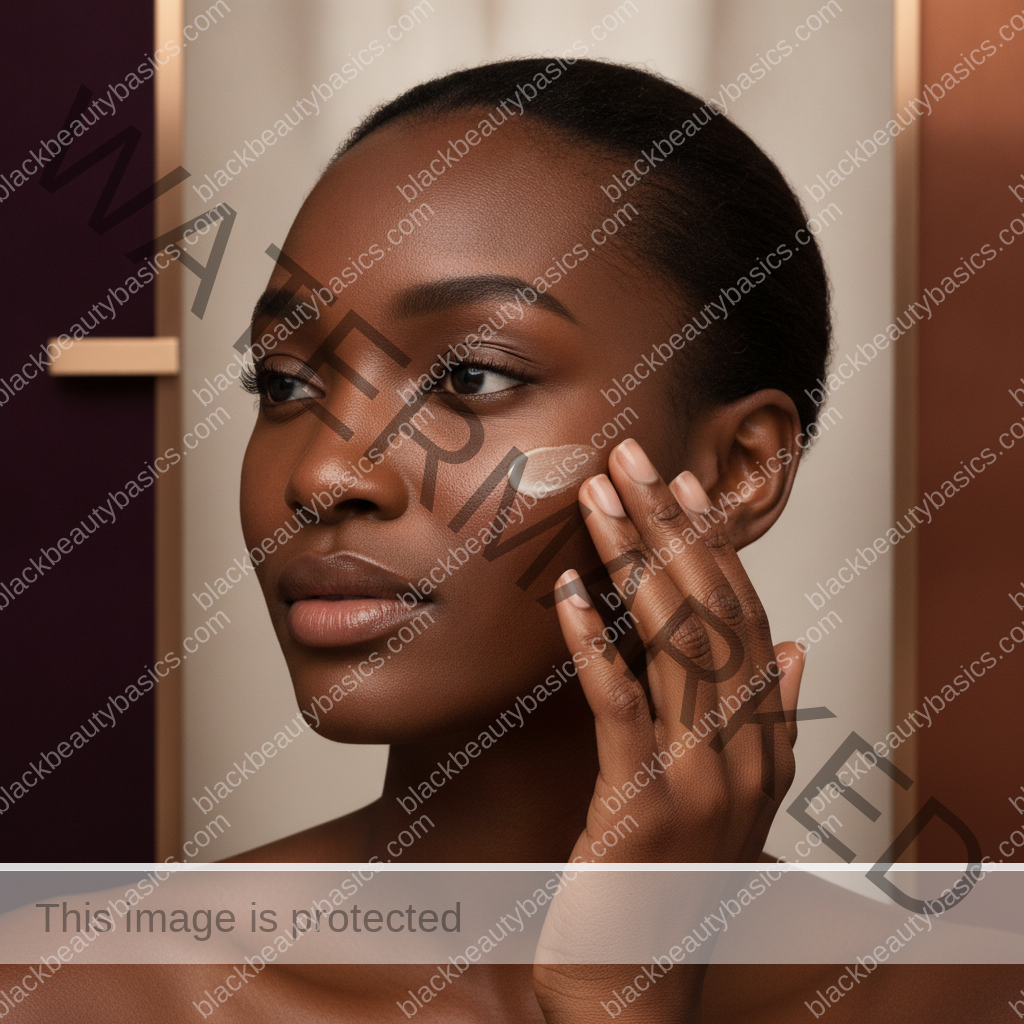
Introduce one new leave-on product at a time when possible. This does not mean every product needs a dramatic adjustment period. It means that adding five products at once makes it hard to identify what your skin likes or dislikes. Consider trying a new product on a small area first, particularly if you have known sensitivities or have reacted to fragranced products in the past.
Stop using a new cosmetic product if it causes significant burning, swelling, hives, or a rash. Seek medical guidance promptly for severe symptoms, facial swelling, trouble breathing, or a concerning reaction.
If you are balancing barrier care with acne treatments, you do not have to choose between a bare face and a heavy ointment mask. Use a light moisturizer in acne-prone areas, reserve a richer cream for dry zones, and use petrolatum only where it makes sense for you. A zone-based routine is often more realistic than forcing one texture over the entire face.
For a simple approach that keeps cost in mind, read our low-budget barrier repair routine. Price does not determine whether a moisturizer can support your skin. Tolerability, consistency, and having enough product to use regularly usually matter more than a luxury label.
Real-Life Variations: Climate, Oiliness, Makeup, and Dryness
The best barrier routine changes with real life. A cream that feels perfect in winter may feel suffocating in summer. A lotion that works beautifully on your forehead may not be enough for your cheeks. Skin can also shift with menstruation, pregnancy, postpartum changes, travel, stress, medication, work conditions, and time spent in air-conditioned or heated spaces.
If your skin is oily but feels tight: do not assume you need to strip away more oil. Oiliness and dehydration can overlap. Try a gentle cleanser, a lightweight glycerin-containing moisturizer, and sunscreen. If your cheeks or mouth area remain dry, use a richer cream only there. A full-face petrolatum layer may not suit you, and that is completely fine.
If your skin is dry or visibly ashy: prioritize a creamier moisturizer and apply it on damp skin. A formula with glycerin can support water content, while ceramides and other emollients can make the skin feel smoother. Petrolatum can be useful at night or on dry body areas if lotion alone is not enough. Reapplying moisturizer during the day is also allowed. Skincare does not have to happen only in the morning and at bedtime.
If you wear makeup: texture and layering become especially important. A thick cream or ointment may cause foundation to slide, separate, or look uneven. Choose a moisturizer that settles comfortably before makeup, and save petrolatum for lips, dry patches, or nighttime use. If your products pill, the issue may be formula conflict, using too much product, rubbing layers together, or not allowing skincare to settle. Our guide to avoiding pilling between serum, moisturizer, and SPF can help you troubleshoot your layering order.
If you live in a humid climate: lighter layers may feel better. A glycerin-based lotion or gel-cream may be enough during the day, while a richer cream can be reserved for nighttime or air-conditioned spaces. Humidity can change how products sit on the skin, but it does not mean skin cannot still feel dry or sensitive.
If you live in a cold or dry climate: you may need richer textures and more frequent application. Wind, indoor heating, and low humidity can make hands, lips, shins, and cheeks feel persistently uncomfortable. A cream followed by a small amount of petrolatum on exposed or rough areas can be practical. Gloves, scarves, and lip protection are ordinary barrier care, not unnecessary fuss.
If your water leaves your skin feeling tight: hard water may be worth considering, but it is not the only explanation. Evidence linking water hardness and barrier concerns is limited, and much of the research focuses on childhood eczema. Water softeners have not consistently improved established eczema severity in trials. You do not need expensive equipment based on a suspicion alone. Start with shorter lukewarm showers, gentler cleansing, prompt moisturizing, and less aggressive towel drying. Our hard-water dry-skin routine offers practical adjustments without overpromising.
If you are managing dark marks on deeper skin tones: barrier care is not a replacement for individualized hyperpigmentation treatment, but it can help create a less irritating routine. Inflammation can leave visible marks on melanin-rich skin, and harsh products may add to that burden. Choose products that are steady and tolerable rather than chasing an aggressive brightening result. Your natural pigment is not a problem to erase.
If your skin looks dull but feels sensitive: it can be tempting to reach for acids immediately. Consider restoring comfort first. A gentle cleanser, basic moisturizer, and sunscreen can create a more stable starting point before you decide whether exfoliation belongs in your routine. Our dull but sensitive skin routine can help you approach texture and dullness without treating irritation as the price of progress.
Troubleshooting When Barrier Ingredients Do Not Feel Good
Even useful ingredients can feel wrong in the wrong formula, amount, or routine. If a ceramide cream stings, that does not automatically mean ceramides are the problem. The formula may also contain fragrance, botanical extracts, acids, preservatives, or other ingredients that your skin does not tolerate. Your skin may also already be irritated enough that many products sting temporarily.
If a glycerin product feels sticky, that is often a texture preference rather than a sign that it is ineffective. Try using less, applying it to damp skin, or layering a light cream over it. You can also choose a lotion that contains glycerin rather than using a separate hydrating serum. You do not need to force yourself to use a product that feels unpleasant because the ingredient is popular.
If petrolatum feels too heavy, use less and use it selectively. Apply a rice-grain amount to lips or one dry patch instead of coating your whole face. Use it only at night, only in colder weather, or only on your body. Many people prefer ointments on hands and heels but not on facial skin. Product placement is part of good skincare.
If you notice more breakouts after changing your routine, pause and assess rather than assuming the product is “purging.” Purging is not a catch-all explanation for new acne. A product may be too rich for one area, may not layer well with what you already use, or may simply not suit your skin. Return to a simple routine you know your skin tolerates, then reintroduce products one at a time.
If acne is painful, widespread, scarring, or emotionally distressing, a dermatologist can offer individualized treatment. You deserve support that takes both skin health and quality of life seriously.
If your skin still feels dry despite using moisturizer, revisit the basics. Are you applying moisturizer after bathing? Is your cleanser leaving skin tight? Are your showers very hot or very long? Is your moisturizer too light for the season? Are you using exfoliants or acne treatments more often than your skin can tolerate? These questions are often more useful than immediately buying another serum.
Persistent itch, cracking, oozing, swelling, pain, widespread rash, or skin that repeatedly burns with bland products deserves professional attention. These symptoms can have many causes, and an article cannot diagnose them. A board-certified dermatologist or another qualified healthcare professional can help assess whether eczema, contact dermatitis, infection, medication irritation, or another condition may be involved.

If you use a prescribed treatment, contact the prescriber before making changes to how often you use it, stopping it, or layering it differently. A clinician may be able to suggest a compatible moisturizer, a different application schedule, or another adjustment based on your specific treatment plan.
Barrier care should feel supportive, not punishing. If your routine requires you to ignore burning, hide discomfort, or spend beyond your means, it needs adjusting. There is no moral value in having a ten-step routine. There is no shame in using one plain moisturizer. And there is no single “Black skin routine” that every Black woman must follow.
What to Do Next: Build a Routine You Can Keep
Start with one practical goal. It might be less tightness after cleansing, fewer ashy areas on your body, a moisturizer that sits well under sunscreen, or a more comfortable nighttime routine. A focused goal makes product decisions easier and keeps you from buying several items that do the same job.
For the next several days or product uses, keep your steps consistent. Cleanse gently, moisturize on slightly damp skin, and use an occlusive layer only where you need one. Avoid introducing multiple exfoliants, new serums, or active treatments at the same time. The point is not to wait for perfect skin. It is to give your skin a quieter environment while you learn what it prefers.
Consider keeping a simple note on your phone: what product you used, where you used it, whether your skin felt comfortable, and whether you noticed stinging, itching, tightness, or congestion. You do not need to track every pore. A few clear observations can make future skincare choices less overwhelming and less expensive.
If your current barrier routine is already comfortable, protect that simplicity. You do not need to replace a moisturizer that works just because a new ingredient trend is popular. If you want a broader guide to moisture balance and routine building, read our barrier repair and moisture balance guide.
Most importantly, let your routine serve your life. Your skin does not need punishment for being dry, oily, textured, sensitive, acne-prone, deep-toned, or visibly affected by a stressful season. Ceramides, glycerin, and petrolatum are useful tools. They are not tests you can fail.
Frequently Asked Questions
Do Black women need ceramides more than everyone else?
Not necessarily. Black women and people with melanin-rich skin are not one biological group with one universal barrier need. Research on racial and ethnic differences in skin-barrier function has important limitations because studies use different definitions, populations, and measurements. Ceramides can be useful for anyone whose skin feels dry, rough, tight, or easily irritated, regardless of race. The better question is whether a ceramide-containing moisturizer feels comfortable, fits your budget, and works with the rest of your routine. If it stings or feels too heavy, another simple moisturizer may be a better choice.
Can glycerin make my skin darker?
Glycerin is not known as a skin-darkening ingredient. It is commonly used as a humectant to help the outer layer of skin hold water. If you notice darker-looking areas after starting a product, consider the complete formula and what else may be happening in your routine. Irritation, rubbing, acne, eczema, fragrance sensitivity, and overuse of active ingredients can all contribute to post-inflammatory hyperpigmentation on melanin-rich skin. Stop using a product that causes burning or rash, and seek professional guidance for persistent or worsening discoloration.
Is petrolatum safe to use on the face?
Many people use petrolatum on facial skin, particularly on dry patches, lips, and areas that need extra protection from water loss. However, safe does not mean ideal for every face or every routine. Its heavy texture may feel uncomfortable if you are oily, live in a humid climate, wear makeup, or notice congestion when you use thick layers. Try a small amount over moisturizer on a limited area first. Avoid applying it over products that are actively irritating your skin, and follow prescriber instructions if you use prescription acne or dermatitis treatments.
Should I use glycerin before or after moisturizer?
If you use a separate glycerin serum or hydrating product, apply it before moisturizer, ideally while skin is slightly damp. Follow with a lotion or cream to add emollient support and help reduce water loss. If glycerin is already inside your moisturizer, you do not need a separate glycerin step. Many effective moisturizers combine humectants, emollients, and occlusive ingredients in one formula. Keep the routine simple unless your skin clearly benefits from an additional hydrating layer.
Can I use ceramides, glycerin, and petrolatum in the same routine?
Yes. These ingredients can work well in the same routine because they serve different functions. A ceramide cream may already contain glycerin, and a small amount of petrolatum can be applied over that cream on dry areas. You do not need separate products for every ingredient, though. One moisturizer may cover most of your needs. Add petrolatum only if you want more protection from water loss on areas that remain dry. If your skin becomes uncomfortable or congested, simplify and adjust the amount or placement.
Why does my skin still look ashy after I moisturize?
Ashiness can persist when a moisturizer is too light for your skin, when it is applied to fully dry skin, when dry surface buildup is present, or when the environment is especially dry. Try applying a richer cream right after bathing, then use a small amount of ointment on stubborn areas such as shins, knees, elbows, and feet. Avoid harsh scrubbing in an effort to remove ashiness, because friction can increase irritation. If scaling, itch, cracking, or discomfort continues, a qualified healthcare professional can help identify possible causes.
When should I see a dermatologist for a damaged skin barrier?
Consider professional care if you have persistent itching, cracking, pain, swelling, oozing, a widespread rash, recurring burning with gentle products, or skin changes that do not improve with a simplified routine. These symptoms can be associated with several concerns, and they should not be self-diagnosed as a damaged barrier. A dermatologist can assess whether eczema, contact dermatitis, acne treatment irritation, infection, or another condition may be involved. If you are using prescription skincare, contact the prescriber before changing how often you use it or stopping it.
Related next steps
Related posts:
 How Often Should Black Women Exfoliate? Physical vs Chemical Safely Explained
 Non-Toxic & “Clean” Black-Owned Beauty Brands Explained: Navigating Claims with Clarity and Confidence
 A Beginner’s Guide to Acids – AHAs, BHAs, and PHAs Explained Simply
 Hair Porosity Explained – How to Test Yours and Choose the Right Products
 How to create a low-budget barrier repair routine
 How to Rebuild a Damaged Skin Barrier on Melanin-Rich Skin