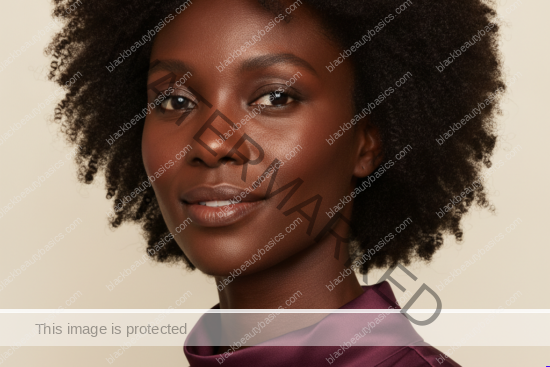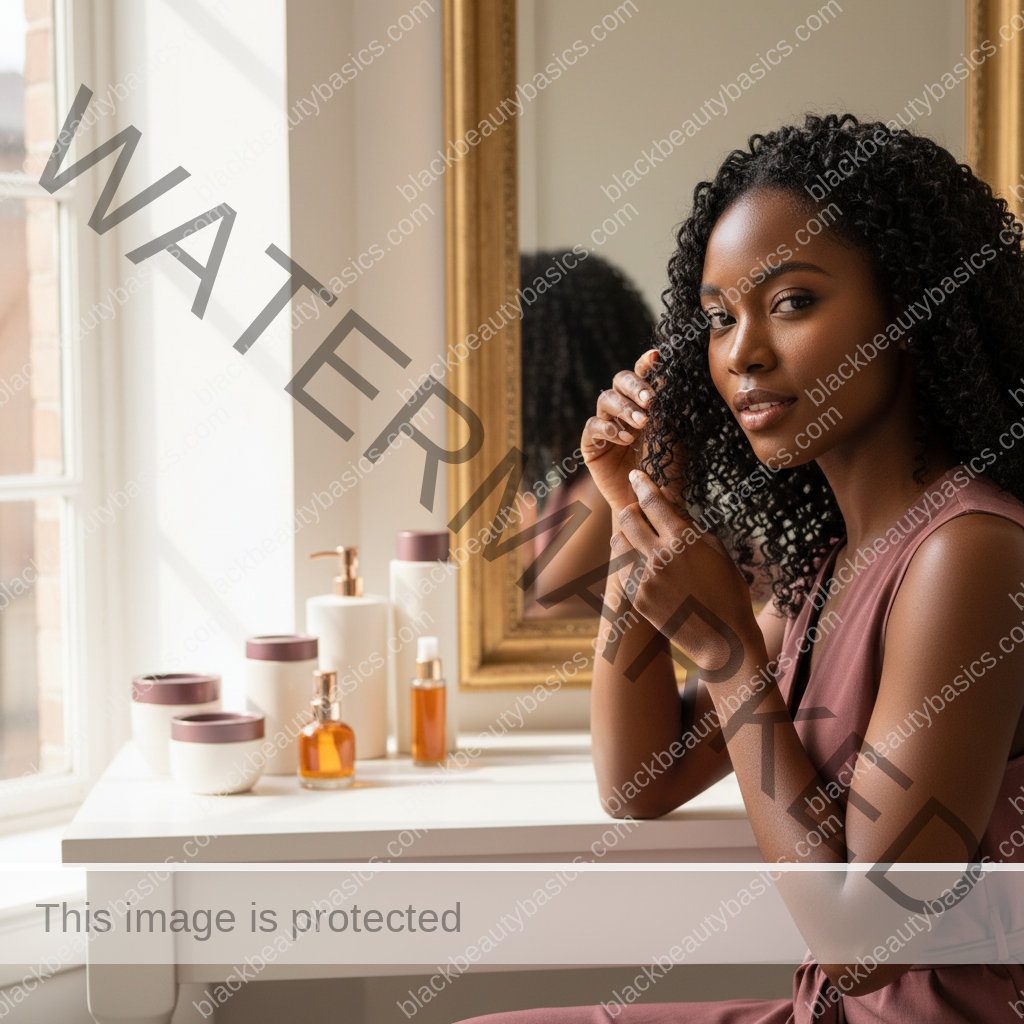
The twist-out, a crown of beautifully defined curls and coils, is a testament to the versatility and inherent splendor of our natural hair. It’s a style that speaks volumes, exuding confidence and grace with every bounce. Yet, for many of us, the joy of a freshly unveiled twist-out can be fleeting, as the quest for lasting moisture often feels like an uphill battle against the elements and our hair’s unique porosity. We understand this delicate dance, this yearning for that initial, luscious hydration to endure, allowing your twist-out to shine brilliantly day after day. Start with the related BBB natural-hair cluster guide if you want the broader map.
At Black Beauty Basics, we believe your natural hair journey should be one of empowerment and ease, not constant struggle. This comprehensive guide is crafted to unlock the secrets to enduring moisture, transforming your twist-out from a temporary triumph into a long-lasting celebration of your magnificent texture. Prepare to embrace a regimen that keeps your curls plump, soft, and radiantly moisturized, ensuring your twist-out remains a testament to your beauty, from day one to day seven and beyond.
The Foundation of Lasting Moisture: Understanding Your Hair’s Needs
Before we dive into specific techniques, it’s crucial to understand the fundamental principles that govern moisture retention in our hair. Our unique curl patterns, ranging from loose waves to tightly coiled textures, often mean that natural oils struggle to travel down the hair shaft, leaving ends particularly vulnerable to dryness. This inherent characteristic, combined with environmental factors and product choices, dictates how well our hair holds onto hydration.
Understanding your hair’s porosity is the first step toward a truly effective moisturizing routine. Porosity refers to your hair’s ability to absorb and retain moisture. Low porosity hair, with its tightly bound cuticles, struggles to let moisture in but once hydrated, holds onto it well. High porosity hair, with raised cuticles, readily absorbs moisture but loses it just as quickly. Medium porosity hair is generally the easiest to manage, striking a balance between absorption and retention.
Knowing your porosity helps you select the right products and application methods, ensuring moisture penetrates and stays locked in. A simple porosity test involves placing a clean strand of hair in a glass of water. If it floats, you likely have low porosity. If it sinks immediately, it’s high porosity. If it floats then slowly sinks, you have medium porosity. This foundational knowledge is your secret weapon in the fight against dryness.
The Pre-Twist-Out Prep: Setting the Stage for Success
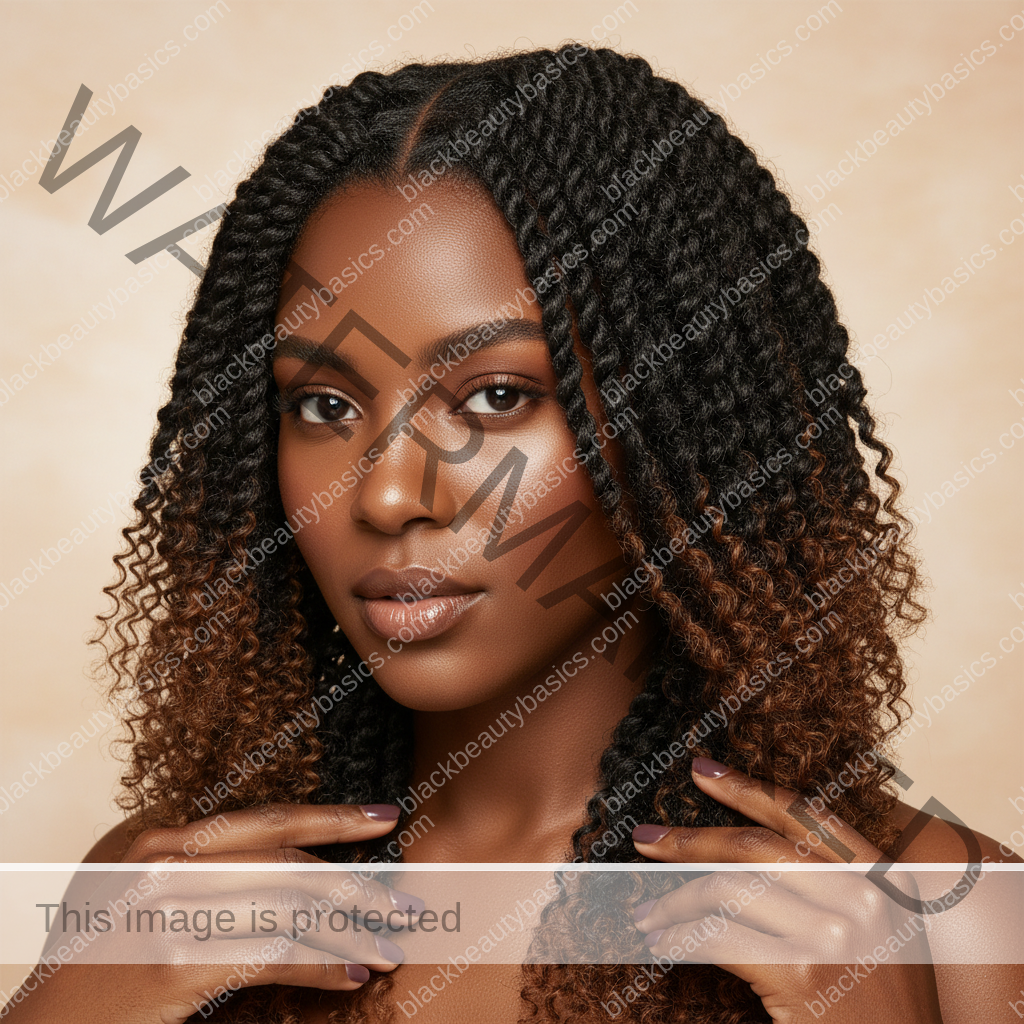
The longevity of your twist-out’s moisture begins long before you even start twisting. A well-prepared canvas is paramount. Think of it as preparing the soil before planting a beautiful garden – the richer the soil, the more vibrant the bloom. This pre-styling phase is where you infuse your hair with deep hydration, creating a moisture reservoir that will serve your twist-out well.
1. Clarify and Cleanse Gently
Product buildup is a silent enemy of moisture. It can create a barrier, preventing subsequent moisturizing products from penetrating the hair shaft. Start your routine with a gentle, sulfate-free clarifying shampoo or a cleansing conditioner. This removes old product, dirt, and oils without stripping your hair of its natural moisture. Aim for a clarifying wash every 2-4 weeks, depending on your product usage.
Shop Sulfate-Free Clarifying Shampoos on Amazon
2. Deep Condition Religiously
Deep conditioning is non-negotiable for lasting moisture. A good deep conditioner penetrates the hair shaft, providing intense hydration and strengthening the hair from within. Look for ingredients like shea butter, argan oil, jojoba oil, honey, and hydrolyzed proteins. Apply generously to damp, detangled hair, cover with a plastic cap, and allow it to penetrate for at least 20-30 minutes, or even longer with heat (a hooded dryer or steamer works wonders). This step alone can dramatically improve your hair’s ability to retain moisture.
Shop Deep Conditioners on Amazon
3. The Leave-In Is Your Best Friend
After rinsing your deep conditioner, a high-quality leave-in conditioner is your next crucial layer of hydration. Leave-ins provide a baseline of moisture and act as a primer for subsequent styling products. Choose one that is lightweight but effective, designed to soften and detangle, preparing your strands for manipulation. Apply while your hair is still quite damp, ensuring even distribution.
Shop Leave-In Conditioners on Amazon
The Art of the Twist-Out: Product Selection and Application
The products you choose and how you apply them during the actual twisting process are critical for defining your curls and, more importantly, sealing in moisture. This is where the magic happens, transforming hydrated strands into beautifully sculpted, long-lasting coils.
The LOC/LCO Method: Your Moisture-Sealing Strategy
The LOC (Liquid, Oil, Cream) or LCO (Liquid, Cream, Oil) method is a widely celebrated technique for sealing moisture into natural hair. The order matters, especially for different porosity types.
- L (Liquid): This is your water-based product – your leave-in conditioner, or even just plain water. It provides the initial hydration.
- O (Oil): A lightweight oil (like jojoba, argan, or grapeseed) or a heavier oil (like castor or olive) helps to seal in the liquid and add shine.
- C (Cream): A styling cream, butter, or moisturizer provides additional moisture, definition, and hold.
For low porosity hair, the LCO method is often preferred, as the cream can help the oil penetrate better. For high porosity hair, LOC works well to seal the cuticle with oil after the cream. Experiment to see what works best for your unique strands.
Shop Natural Hair Oils on Amazon
Shop Natural Hair Styling Creams on Amazon
Choosing the Right Styling Products for Your Twist-Out
The products you use to twist your hair play a dual role: providing definition and locking in moisture. Look for products specifically formulated for twist-outs or styling, often labeled as “styling creams,” “custards,” or “butters.”
- For Soft, Bouncy Twists: Opt for lighter styling creams or lotions that offer moisture without heavy hold. These are great for achieving a fluffy, voluminous look.
- For Defined, Long-Lasting Twists: Choose thicker creams, butters, or even light gels that provide more hold and definition. Be mindful not to use too much, as this can lead to product buildup and stiffness.
Ingredients to look for include shea butter, mango butter, avocado oil, coconut oil, aloe vera, and humectants like glycerin (use sparingly in very dry or very humid climates). Avoid products with heavy silicones or mineral oil if you find they cause buildup or block moisture absorption over time.
Shop Twist-Out Styling Creams on Amazon
Application Techniques for Maximum Moisture
- Work on Damp, Not Soaking Wet Hair: While your hair should be moisturized, it shouldn’t be dripping wet when you apply your styling products. Excess water can dilute your products and prolong drying time, potentially leading to frizz.
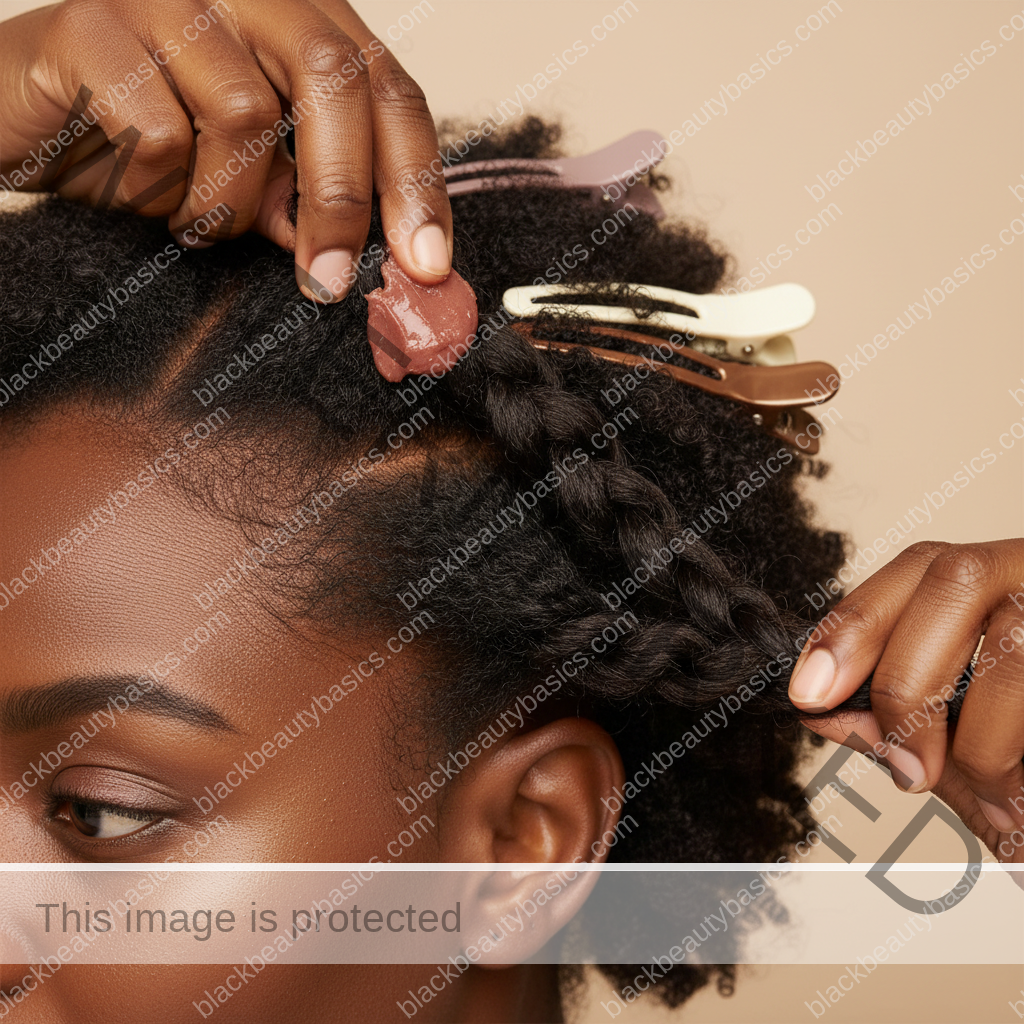
- Section Hair Thoroughly: Work in small, manageable sections. This ensures every strand receives adequate product and allows for proper definition.
- Emulsify Products: Warm up your styling cream or butter in your palms before applying. This makes it easier to distribute evenly and helps it melt into your strands.
- Smooth Down the Hair Shaft: As you apply products to each section, smooth them down the hair shaft from root to tip. This helps to close the cuticles and seal in moisture.
- Twist Firmly, But Not Too Tightly: Your twists should be firm enough to create definition but not so tight that they cause tension or breakage.
Drying and Unraveling: The Delicate Dance
The drying process is just as critical as the application. Rushing this stage can lead to frizz, undefined curls, and a compromised twist-out. Patience is truly a virtue here.
Allow for Complete Drying
This is perhaps the most overlooked step. Your twists must be 100% dry before unraveling. Unraveling wet or even slightly damp twists is a recipe for frizz and a quickly deflating style. Depending on your hair’s thickness and the size of your twists, this can take anywhere from 8 to 24 hours. Air drying is ideal, but a hooded dryer on a low-heat setting can speed up the process. Avoid blow-drying with direct heat, as this can strip moisture and cause frizz.
Shop Hooded Hair Dryers on Amazon
Unravel with Care
Once completely dry, apply a light oil (like argan or jojoba) to your fingertips before unraveling each twist. This minimizes friction and frizz, ensuring your curls separate cleanly and beautifully. Gently untwist in the opposite direction you twisted, separating each section into 2-3 smaller curls for volume. Avoid excessive pulling or raking through your hair.
Shop Lightweight Hair Oils on Amazon
Maintaining Moisture Day-to-Day: The Longevity Plan
Now that your twist-out is perfectly defined and moisturized, the goal is to preserve that hydration for as long as possible. This requires a consistent, gentle approach to daily and nightly care.
Nightly Protection: Preserve Your Crown
Never go to sleep without protecting your twist-out. This is non-negotiable for preserving moisture and definition. Cotton pillowcases absorb moisture from your hair and create friction, leading to dryness, frizz, and breakage.
- Pineapple Method: Gather your hair into a loose, high ponytail or bun on top of your head. This keeps your curls from being flattened.
- Satin or Silk Scarf/Bonnet: Cover your hair with a satin or silk scarf or bonnet. These materials reduce friction and help retain moisture.
- Satin Pillowcase: As an extra layer of protection, or if you find bonnets uncomfortable, a satin pillowcase is an excellent investment.
Shop Satin Bonnets on Amazon
Shop Satin Pillowcases on Amazon
Daily Refreshing: A Gentle Touch
As the days pass, your twist-out may start to lose some moisture and definition. Resist the urge to drench your hair in water or heavy products, which can lead to frizz and product buildup. Instead, opt for a light, targeted approach.
- Misting with a Hydrating Spray: Use a spray bottle filled with water mixed with a little leave-in conditioner or a dedicated moisturizing mist. Lightly mist your hair, focusing on drier areas.
- Light Oil or Serum: Follow with a few drops of a lightweight oil or serum to seal in the moisture from the mist. Emulsify in your hands and gently scrunch onto your curls or smooth over sections.
- Re-twisting (Optional): If your twists are losing significant definition, you can re-twist a few sections (especially around your hairline or crown) at night using a small amount of styling cream. This helps to refresh the style without redoing your entire head.
Shop Hair Misting Bottles on Amazon
Shop Moisturizing Hair Mists on Amazon
Avoid Over-Manipulation
The more you touch, separate, or comb your twist-out, the more likely it is to frizz and lose moisture. Embrace the natural evolution of the style. As it gets older, you can embrace the volume and fluffiness that comes with it, or transition it into an updo.
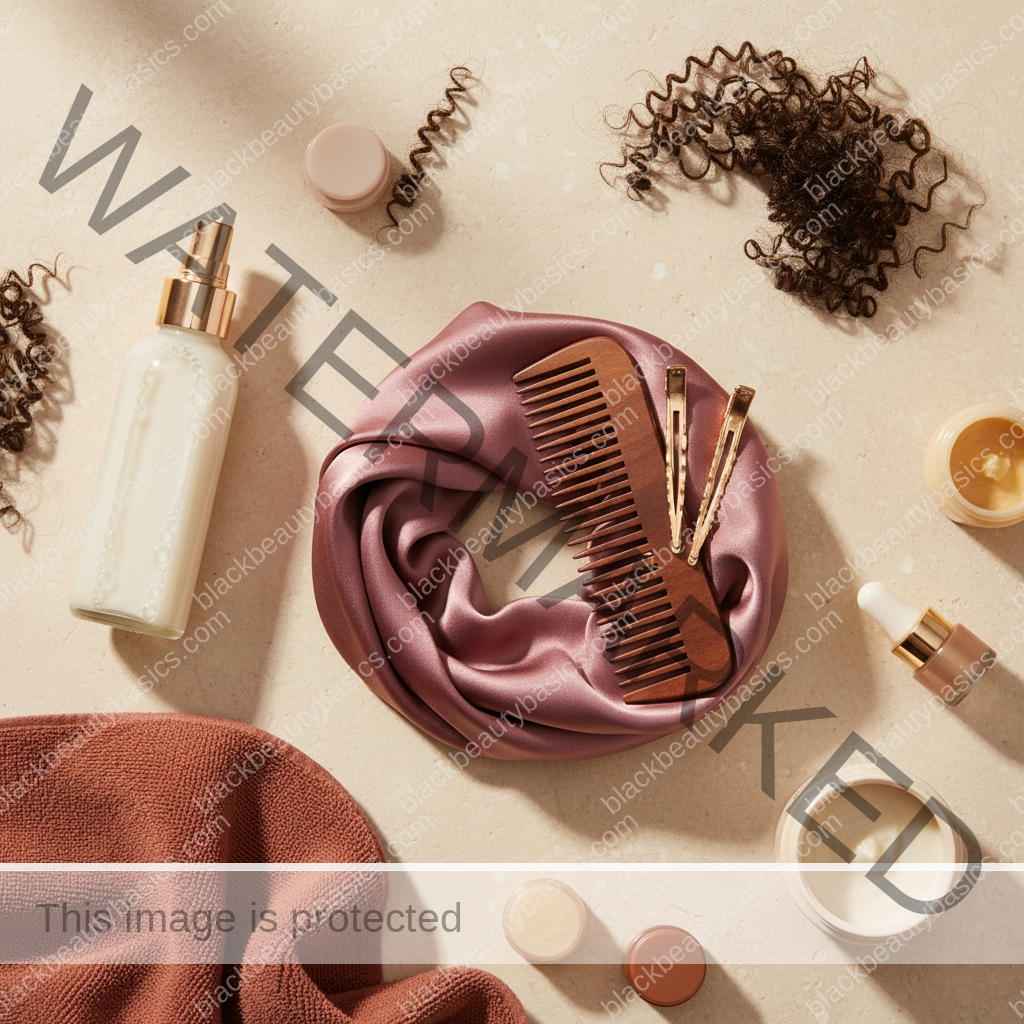
Common Moisture-Zapping Mistakes and How to Avoid Them
Even with the best intentions, certain habits can inadvertently sabotage your twist-out’s moisture. Identifying and correcting these can make a significant difference in the longevity of your style.
Mistake 1: Not Deep Conditioning Regularly
Solution: Make deep conditioning a non-negotiable part of your wash day routine, at least once a week or every two weeks. Your hair needs that intense hydration to thrive.
Mistake 2: Using Products with Drying Alcohols
Solution: Check ingredient lists. Avoid products where “alcohol denat,” “ethanol,” “SD alcohol 40,” or “isopropyl alcohol” are high on the list. Fatty alcohols (like cetyl, stearyl, or cetearyl alcohol) are beneficial and moisturizing.
Mistake 3: Not Sealing in Moisture
Solution: Always follow your water-based products (leave-in) with an oil and/or a cream to seal the cuticle and lock in hydration. The LOC/LCO method is your guide.
Mistake 4: Unraveling Twists Before They are Completely Dry
Solution: Patience! Allow your twists to air dry completely, or use a hooded dryer on a low setting. A slightly damp twist-out will inevitably lead to frizz and a quickly fading style.
Mistake 5: Sleeping Without Hair Protection
Solution: Invest in a satin or silk bonnet, scarf, or pillowcase. This simple step dramatically reduces friction, prevents moisture loss, and preserves your style overnight.
Mistake 6: Over-Manipulating Your Hair
Solution: Once your twist-out is set, try to touch it as little as possible. Resist the urge to constantly separate or fluff. The less you manipulate, the longer the definition and moisture will last.
Product Selection Guide: What to Look For (and Avoid)
Navigating the vast world of natural hair products can be overwhelming. Here’s a quick guide to help you make informed choices for maximum moisture retention:
Ingredients to Embrace:
- Humectants: Glycerin, honey, aloe vera (draw moisture from the air, but use with caution in extremely dry or humid climates).
- Emollients: Shea butter, mango butter, cocoa butter (soften and smooth the hair).
- Occlusives: Jojoba oil, argan oil, olive oil, castor oil, grapeseed oil (create a barrier to prevent moisture loss).
- Hydrolyzed Proteins: Wheat protein, silk protein (strengthen hair and reduce breakage, which can lead to moisture loss).
- Botanical Extracts: Rosemary, peppermint, green tea (can stimulate scalp and provide antioxidants).
Ingredients to Approach with Caution or Avoid:
- Sulfates: Sodium lauryl sulfate, sodium laureth sulfate (can be overly stripping and drying).
- Drying Alcohols: Ethanol, isopropyl alcohol, alcohol denat (can evaporate moisture from hair).
- Heavy Silicones: Cyclopentasiloxane, dimethicone (can cause buildup over time, blocking moisture absorption, if not properly clarified). Water-soluble silicones are generally fine.
- Mineral Oil/Petroleum: While they can seal, they don’t provide moisture and can cause buildup, potentially preventing beneficial ingredients from penetrating.
Comparison Table: Low Porosity vs. High Porosity Moisture Strategies
Tailoring your approach to your hair’s porosity is key for optimal moisture.
| Feature | Low Porosity Hair | High Porosity Hair |
|---|---|---|
| Cuticle Structure | Tightly bound, closed | Raised, open, damaged |
| Moisture Absorption | Difficult to absorb | Absorbs easily, loses quickly |
| Preferred LOC/LCO Method | LCO (Liquid, Cream, Oil) – cream helps oil penetrate | LOC (Liquid, Oil, Cream) – oil seals cuticle first |
| Deep Conditioning | With heat (steamer, hooded dryer) to open cuticles | Protein-rich deep conditioners to strengthen cuticle |
| Product Texture | Lighter lotions, milks, thinner oils | Thicker creams, butters, heavier oils |
| Refreshing | Light misting, focus on ends | More frequent misting, heavier oil/cream to seal |
| Key Strategy | Focus on opening cuticles to let moisture in | Focus on sealing cuticles to keep moisture in |
Tip List: Quick Fixes for a Fading Twist-Out
Even with the best care, a twist-out can start to lose its luster. Here are some quick fixes to revive your style and boost moisture:
- The “Pineapple & Steam” Refresh: Lightly pineapple your hair, then stand in a steamy shower for 5-10 minutes (without getting your hair wet). The steam will re-hydrate your curls without drenching them. Follow with a light oil to seal.
- Targeted Re-Twisting: Identify the most frizzy or undefined sections (usually around the perimeter or crown). Lightly mist with water/leave-in, apply a tiny bit of styling cream, and re-twist those specific sections before bed. Unravel in the morning.
- Fluff with Oil: If your twist-out is looking a bit flat and dry, apply a few drops of a lightweight oil to your fingertips and gently fluff at the roots. Avoid raking through the ends.
- Hair Milk or Lotion Application: Instead of a heavy cream, use a lightweight hair milk or lotion to gently smooth over frizzy areas. This adds moisture without weighing down your curls.
- Braid-Out for Definition: If your twist-out has completely lost its definition, consider transforming it into a braid-out. This can give you a fresh, new look with renewed definition and moisture.
- Accessorize: When all else fails, embrace headwraps, scarves, or headbands. They are stylish ways to extend the life of your twist-out while looking effortlessly chic.
FAQ: Your Most Pressing Twist-Out Moisture Questions Answered
Q1: How often should I re-moisturize my twist-out?
A: This depends on your hair’s porosity, the climate, and the products you used. Generally, a light refresh every 2-3 days is sufficient. Listen to your hair – if it feels dry or looks dull, it’s time for a light mist and seal. Avoid daily heavy re-moisturizing, as this can lead to product buildup and weigh down your curls.
Q2: Can I use water to refresh my twist-out, or will it cause frizz?
A: Yes, water is excellent for refreshing, but it’s all about application. Use a fine-mist spray bottle and lightly mist your hair, rather than drenching it. Follow immediately with a lightweight oil or leave-in to seal that moisture in. Drenching your hair with water without sealing will likely lead to frizz as the water evaporates.
Q3: My twist-out always shrinks. How can I minimize shrinkage while keeping it moisturized?
A: Shrinkage is a natural characteristic of textured hair and a sign of healthy elasticity! To minimize it while maintaining moisture, ensure your hair is stretched somewhat during the twisting process (e.g., by twisting on slightly damp, not soaking wet, hair). Using styling products with some hold can also help. After unraveling, gently stretch your roots with a pick or your fingers, but avoid over-stretching the ends, which can disrupt definition. The goal is to embrace some shrinkage while maximizing length retention with proper moisture.
Q4: What’s the best way to prevent product buildup when constantly moisturizing?
A: The key is using lightweight products for daily refreshing and clarifying regularly. For daily use, opt for water-based mists and very light oils or serums. Avoid heavy butters or creams for daily touch-ups. Incorporate a gentle clarifying shampoo or apple cider vinegar rinse into your wash day routine every 2-4 weeks to remove accumulated product residue without stripping your hair.
Q5: My ends always seem to be the driest part. What can I do?
A: The ends are the oldest and most fragile part of your hair, naturally prone to dryness. Pay extra attention to them during your moisturizing routine. When applying leave-in, oil, and cream, ensure your ends are thoroughly coated. For daily refreshing, lightly mist your ends and seal with a heavier oil or a small dab of hair butter. Regular trims (every 3-4 months) also help remove split ends, which can prevent moisture from properly penetrating.
Q6: Should I use heat to dry my twists for better moisture retention?
A: Indirect heat, like a hooded dryer on a low-to-medium setting, can be beneficial as it helps to set the style and ensures complete drying, which in turn helps with definition and moisture retention. However, direct high heat from a blow dryer can be very drying and lead to frizz and damage. If using a hooded dryer, always apply a heat protectant. Air drying is always the gentlest option if you have the time.
Shop Heat Protectants on Amazon
Q7: How do I know if my hair is moisturized enough or if I’m over-moisturizing?
A: Properly moisturized hair feels soft, pliable, and has a healthy sheen. It should bounce back when gently stretched. Over-moisturized hair (hygral fatigue) can feel mushy, overly soft, and might lack elasticity. It can also appear dull, limp, and might break easily. If you notice these signs, reduce the frequency of moisturizing and consider a protein treatment to rebalance your hair’s moisture-protein balance.
Q8: Are there any specific ingredients I should look for in products to boost moisture?
A: Yes! Look for humectants like glycerin, honey, and aloe vera, which draw moisture from the air. Emollients like shea butter, mango butter, and various natural oils (jojoba, argan, olive, avocado) are excellent for softening and providing a protective barrier. Fatty alcohols (cetyl, stearyl, cetearyl) are also beneficial as they help condition and moisturize. Hyaluronic acid is also emerging as a powerful humectant in hair care.
Embracing Your Moisturized Twist-Out
The journey to a consistently moisturized, long-lasting twist-out is an evolving one, deeply personal to your unique strands. It’s about understanding your hair’s voice, responding to its needs with intention, and celebrating its magnificent texture. By embracing these techniques – from meticulous preparation and thoughtful product selection to diligent nightly protection and gentle daily refreshing – you’re not just maintaining a style; you’re nurturing your crown with the reverence it deserves. Let your twist-out be a testament to your informed care, radiating health, definition, and an enduring, beautiful moisture that truly lasts. Your magnificent hair, brilliantly moisturized, is a powerful statement of self-love and elegance.
Make a twist-out routine fit your week
For Black women with textured hair, hair-care choices can feel emotional because they sit at the intersection of identity, time, styling expectations, budget, and all the advice we have been given about what our hair “should” do. This guide focuses on setting up twist-outs with enough moisture, hold, sectioning, drying time, nighttime protection, and refresh strategy, while keeping the related BBB natural-hair cluster as the home base. The goal is not to force every curl, coil, kink, or section into the same behavior. The goal is to build a routine that protects the hair you actually have.
Think about how long you realistically need the twist-out to last and when you have time to let it dry. A style set late at night may still be damp when you unravel it in the morning, even if the product felt right going on. Notice which sections lose softness first: the ends, crown, nape, or hairline. Those observations help you adjust section size, drying time, and nighttime care without rebuilding the entire routine.
The best twist-out is one you can maintain without daily pulling and re-twisting. Start on hair that has been cleansed and conditioned in a way your scalp tolerates, distribute styling product evenly, and give the twists time to set. Protect the style at night with a method that does not flatten your roots or strain your edges. Moisture, hold, and ease of maintenance should work together.
What to notice gently
- Where your hair tangles first: ends, nape, crown, edges, or interior sections.
- How your hair responds to water, conditioner, gels, creams, oils, and drying time.
- Which steps leave your hair softer, rougher, stretched, shrunken, defined, or weighed down.
- How much manipulation your schedule and strands can realistically handle.
- What improves the style without making wash day feel impossible.
What shortens a twist-out’s comfortable life
A common mistake is assuming more cream will rescue a twist-out that never dried fully. Piling product onto a damp set can leave the hair coated while the shape still collapses. Before buying another styler, change one variable: make smaller sections, allow more drying time, or use less product in each section. Compare the result after the hair is completely dry.
Another mistake is handling the hair repeatedly because the definition looks imperfect on day two. Separating every twist again can create frizz and make ends harder to manage. A light refresh where the hair actually needs it is more useful than wetting and reworking the whole head every morning. Leave the sections that still look and feel good alone.
Do not let the photograph of a perfect day-one style set the standard for the entire week. A twist-out can soften and expand while still looking intentional. If the roots need a different shape, choose a gentle pin-up or another low-handling variation instead of forcing the original definition back with more product and tension.
What to do next

At the next set, note the products used, section size, drying time, and how the hair felt on day three. Keep the one step that helped most and adjust only the step that did not. The related guides below offer options for moisture balance and low-manipulation styling when a twist-out is not the easiest choice for this week.
- Natural Hair Care & Protective Styles
- The related natural-hair cluster guide
- everyday low-manipulation styling
- mixed-texture natural hair routine
- moisture or protein balance
- low-manipulation workweek hairstyles
Related next steps
Related posts:
 Why Dark Spots Last Longer on Deep Skin
 Fancy Hair Full Lace Short Passion Twist Wig with Baby Hair – Elevate Your Style Effortlessly!
 How to Keep Your Scalp Clean in Protective Styles
 How Do You Keep Your Scalp Healthy For African American Hair?
 How Do Black Women Keep Their Hair From Drying Out?
 How Do Black Girls Keep Their Hair Healthy?