The radiant glow of melanin-rich skin is a masterpiece, a testament to resilience and beauty. Yet, even the most luminous complexions require diligent protection, especially when dryness threatens to dim that natural brilliance. For our sisters navigating the delicate balance of dry skin and the imperative of sun safety, the quest for the perfect sunscreen isn’t just about SPF; it’s about finding a texture that nurtures, hydrates, and seamlessly integrates into our cherished skincare rituals without compromise.
Embracing the Sun: Why Sunscreen is Non-Negotiable for Melanin-Rich Skin
There’s a persistent myth that melanin-rich skin doesn’t need sunscreen. Let us unequivocally debunk this misconception. While our beautiful complexions do offer a natural SPF equivalent to roughly 13 (depending on skin tone), this is simply not enough to provide comprehensive protection against the sun’s harmful ultraviolet (UV) rays. Both UVA and UVB rays penetrate the skin, regardless of tone, leading to a myriad of concerns that disproportionately affect Black skin.
The Silent Threat: UV Damage and Hyperpigmentation
For Black women, UV exposure is a primary trigger for post-inflammatory hyperpigmentation (PIH), those stubborn dark spots that linger long after a breakout or irritation has healed. Sun exposure can also exacerbate existing hyperpigmentation, making it darker and more challenging to fade. Beyond aesthetics, UV rays contribute to premature aging, breaking down collagen and elastin, leading to fine lines, wrinkles, and a loss of firmness. While these signs may appear later in life for darker skin tones, they are not immune. Most critically, UV radiation is a known carcinogen, increasing the risk of skin cancer, including melanoma. Though less common in Black individuals, melanoma often presents later and in more advanced stages, making early and consistent protection paramount.
Beyond Protection: The Added Benefits of Modern Sunscreens
Today’s sunscreens are far more sophisticated than the chalky, white formulas of yesteryear. Many are infused with skin-loving ingredients that offer additional benefits, transforming them from a mere protective barrier into an integral part of a holistic skincare regimen. For dry skin, this means formulations that go beyond blocking UV rays to actively hydrate, soothe, and nourish, improving overall skin health and radiance. The right sunscreen can be a multi-tasking marvel, enhancing your skin’s natural beauty while safeguarding its future.
Understanding Your Skin: The Nuances of Dry, Dark Skin
Before we delve into textures, let’s intimately understand the unique characteristics of dry, dark skin. This understanding is key to selecting products that truly serve your complexion.
What Defines Dry Skin?
Dry skin, medically known as xerosis, is characterized by a lack of natural oils (sebum) and an impaired skin barrier. This leads to several tell-tale signs:
- Tightness: Especially after cleansing.
- Flakiness or Scaliness: Visible patches of dry skin.
- Rough Texture: Skin may feel coarse to the touch.
- Dullness: Lack of natural luminosity due to poor light reflection.
- Itchiness: A common complaint, sometimes leading to irritation.
- Fine Lines: More pronounced due to dehydration.
For melanin-rich skin, dryness can sometimes manifest as an ashy appearance, where the skin takes on a grayish or dull tone. This is often a sign that the skin barrier is compromised and struggling to retain moisture.
Why Dark Skin Can Be Prone to Dryness
While dry skin can affect anyone, there are certain physiological nuances in melanin-rich skin that can contribute to increased susceptibility to dryness:
- Ceramide Levels: Some studies suggest that darker skin tones may have lower levels of ceramides, which are essential lipids that form a protective barrier and help retain moisture.
- Transepidermal Water Loss (TEWL): There’s evidence indicating that darker skin may experience higher rates of TEWL, meaning water evaporates from the skin’s surface more readily, leading to dehydration.
- Environmental Factors: Living in dry climates, exposure to harsh soaps, hot showers, and certain medical conditions can exacerbate dryness in all skin types, including dark skin.
Understanding these factors underscores the importance of choosing sunscreens that not only protect but also actively nourish and replenish the skin’s moisture barrier.
The Texture Revolution: Finding Your Perfect Sunscreen Match
The days of one-size-fits-all, greasy, white-cast-leaving sunscreens are thankfully behind us. Today, the market offers an exquisite array of textures designed to cater to every skin type and preference. For dry, dark skin, the goal is a formula that delivers robust protection without stripping moisture, feeling heavy, or leaving an undesirable residue.
Hydrating Creams and Lotions: The Everyday Essential
These are the workhorses for dry skin. Cream and lotion sunscreens are typically richer and more emollient, providing a significant boost of hydration alongside sun protection. They absorb well, leaving a soft, supple finish without feeling greasy. Look for ingredients like hyaluronic acid, glycerin, ceramides, and shea butter within these formulations.
- Pros: Excellent hydration, comfortable feel, often contain beneficial skincare ingredients.
- Cons: Can sometimes feel a bit heavy if over-applied; some older formulas might still leave a slight cast.
Shop Hydrating Cream Sunscreens on Amazon
Nourishing Oils and Serums: The Luxurious Veil
For those who crave a truly luxurious experience, sunscreen oils and serums are a divine choice. These often feature a blend of protective filters with nourishing botanical oils (like jojoba, squalane, or argan oil) that deeply condition the skin. They impart a beautiful, dewy glow without feeling heavy or sticky. Serums, in particular, can be lightweight yet potent, often layered under a moisturizer.
- Pros: Deeply nourishing, leaves a radiant, dewy finish, often antioxidant-rich.
- Cons: May not be preferred by those who dislike an oily feel; some may find them too rich for humid climates.
Shop Sunscreen Serums on Amazon
Tinted Sunscreens: The Flawless Finish
A true game-changer for melanin-rich skin, tinted sunscreens offer the best of both worlds: robust UV protection and a subtle, skin-evening tint. These formulations are particularly beneficial for addressing concerns about white cast, as the tint helps to neutralize any potential chalkiness. Many tinted sunscreens come in hydrating cream or lotion textures, making them ideal for dry skin. Look for a wide range of shades to ensure a seamless match.
- Pros: Eliminates white cast, evens skin tone, often provides light coverage, streamlines your routine.
- Cons: Finding the perfect shade match can sometimes be a challenge; limited shade ranges in some brands.
Shop Tinted Sunscreens on Amazon
Balms and Sticks: Targeted Protection and On-the-Go Hydration
While not typically used for full-face application, sunscreen balms and sticks are invaluable for targeted protection and touch-ups, especially for areas prone to dryness like the lips, around the eyes, or on specific dry patches. Their solid, emollient texture provides concentrated hydration and a protective barrier. They are incredibly convenient for reapplication throughout the day without disturbing makeup.
- Pros: Portable, mess-free, excellent for targeted areas and reapplication, very moisturizing.
- Cons: Not ideal for full-face coverage; can sometimes feel heavier than liquid formulations.
Shop Sunscreen Balms on Amazon
Shop Sunscreen Sticks on Amazon
Mineral vs. Chemical: Decoding the Sunscreen Debate for Dry, Dark Skin
The choice between mineral and chemical sunscreens is a personal one, but understanding their differences is crucial, especially for dry, dark skin.
Mineral Sunscreens (Physical Blockers)
Mineral sunscreens use zinc oxide and/or titanium dioxide to create a physical barrier on the skin’s surface that reflects UV rays. They are often recommended for sensitive skin due to their gentle nature.
- Pros: Broad-spectrum protection, gentle, less likely to irritate, good for sensitive skin.
- Cons: Historically known for leaving a white cast on darker skin tones (though micronized and tinted formulas have significantly improved this), can sometimes feel thicker or less spreadable.
For dry, dark skin, look for mineral sunscreens that are specifically formulated with hydrating ingredients and micronized zinc oxide (which reduces the white cast) or tinted versions. Many brands now offer mineral sunscreens that blend beautifully into darker complexions.
Shop Mineral Sunscreens on Amazon
Chemical Sunscreens (Organic Filters)
Chemical sunscreens absorb UV rays and convert them into heat, which is then released from the skin. Common active ingredients include oxybenzone, avobenzone, octinoxate, and octisalate.
- Pros: Tend to be lighter in texture, absorb easily, no white cast, often more cosmetically elegant.
- Cons: Some individuals may experience sensitivity or irritation to certain chemical filters; some filters have raised environmental concerns.
For dry, dark skin, chemical sunscreens often offer a more seamless finish and a lighter feel, which can be appealing. However, if you have very sensitive skin or are concerned about certain chemical filters, mineral options are an excellent alternative.
Shop Chemical Sunscreens on Amazon
Hybrid Sunscreens
A growing category, hybrid sunscreens combine both mineral and chemical filters. These formulations aim to leverage the benefits of both types, often resulting in a broad-spectrum product that is cosmetically elegant and offers robust protection with minimal white cast.
Shop Hybrid Sunscreens on Amazon
Key Ingredients to Seek Out for Dry, Dark Skin Sunscreens
Beyond the texture, the ingredient list is your roadmap to a truly nourishing and protective sunscreen. For dry, dark skin, prioritize ingredients that hydrate, soothe, and support the skin barrier.
Hydrators and Humectants
- Hyaluronic Acid: A powerful humectant that draws moisture from the air into the skin, plumping and hydrating.
- Glycerin: Another excellent humectant that helps the skin retain moisture.
- Squalane: A lightweight, non-comedogenic oil that mimics the skin’s natural sebum, providing deep hydration.
- Ceramides: Essential lipids that help repair and strengthen the skin barrier, preventing moisture loss.
Emollients and Occlusives
- Shea Butter: Rich in fatty acids and vitamins, it deeply moisturizes and forms a protective barrier.
- Jojoba Oil: Mimics the skin’s natural sebum, providing balanced hydration without clogging pores.
- Dimethicone: A silicone-based ingredient that creates a smooth, silky feel and helps seal in moisture.
- Petrolatum (in small amounts): A highly effective occlusive that prevents water loss, ideal for very dry skin.
Soothing and Antioxidant Ingredients
- Niacinamide (Vitamin B3): Improves skin barrier function, reduces inflammation, and helps with hyperpigmentation.
- Vitamin E: A potent antioxidant that protects against free radical damage and moisturizes.
- Green Tea Extract: Offers antioxidant and anti-inflammatory benefits.
- Aloe Vera: Soothes and hydrates irritated skin.
Comparison Table: Sunscreen Textures for Dry, Dark Skin
To help you navigate the options, here’s a quick comparison of the most suitable sunscreen textures for dry, dark skin:
| Texture Type | Best For | Key Benefits for Dry, Dark Skin | Considerations | Recommended For |
|---|---|---|---|---|
| Hydrating Cream / Lotion | Daily use, moderate to very dry skin | Deep hydration, comfortable feel, often contains barrier-supporting ingredients. | Can be slightly thicker; ensure it blends well. | Everyday protection, year-round. |
| Nourishing Oil / Serum | Added glow, very dry skin, luxurious feel | Intense moisture, dewy finish, often antioxidant-rich. | May feel too rich for some; can be pricier. | Those who love a radiant finish and extra nourishment. |
| Tinted Sunscreen | Minimizing white cast, light coverage, evening skin tone | No white cast, natural finish, multi-tasking. | Shade matching is crucial; limited shade ranges in some brands. | Anyone wanting to avoid white cast and get light coverage. |
| Balm / Stick | Targeted areas, reapplication, intense hydration | Portable, mess-free, excellent for lips/eyes/dry patches. | Not for full-face application; can feel heavy in large areas. | On-the-go touch-ups, specific dry areas. |
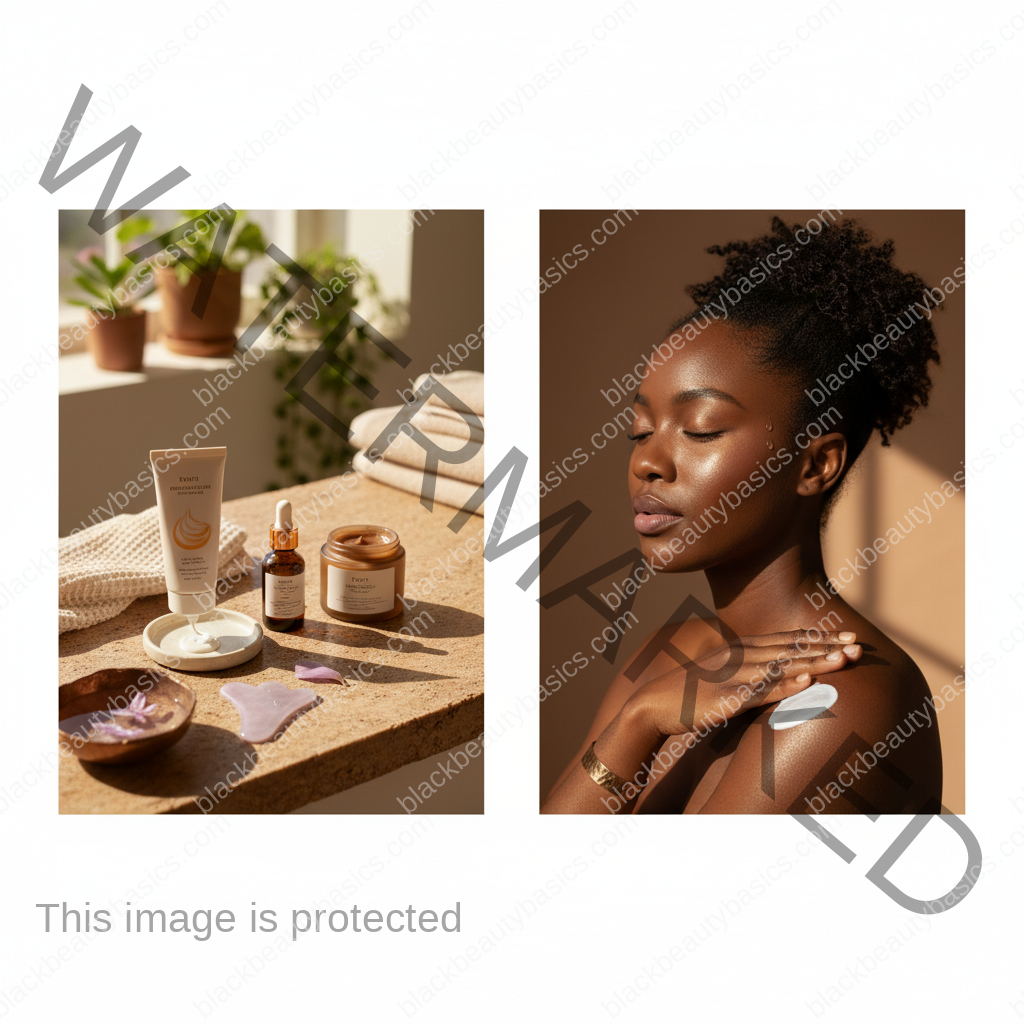
Application Techniques for a Flawless Finish
Even the best sunscreen won’t perform optimally without proper application. For dry, dark skin, technique can make all the difference in achieving a hydrated, radiant, and protected complexion.
The Golden Rules of Sunscreen Application
- Apply as the Last Step: Sunscreen should always be the final step in your morning skincare routine, after your serums and moisturizer, but before makeup. This ensures it forms the outermost protective layer.
- The Two-Finger Rule: For adequate protection, apply a generous amount – roughly the length of two fingers – for your face and neck. Don’t skimp!
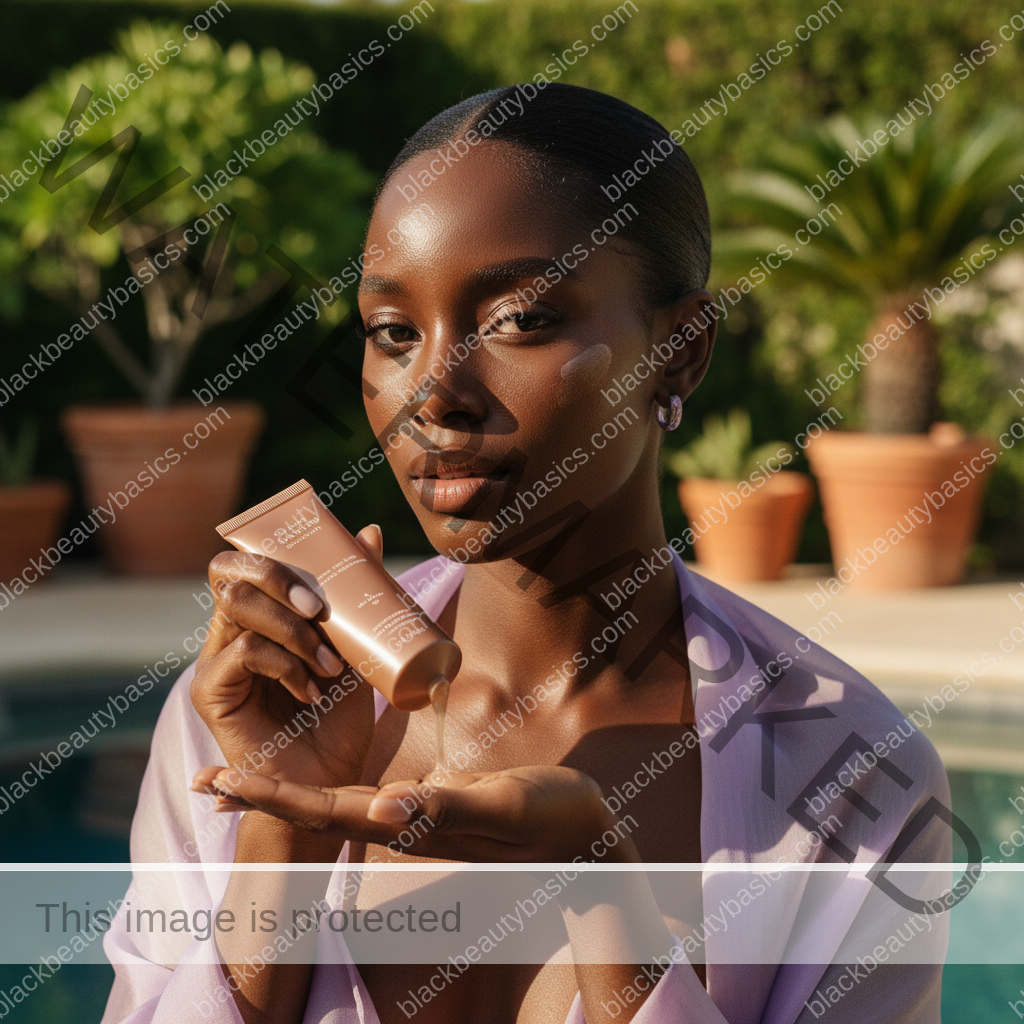
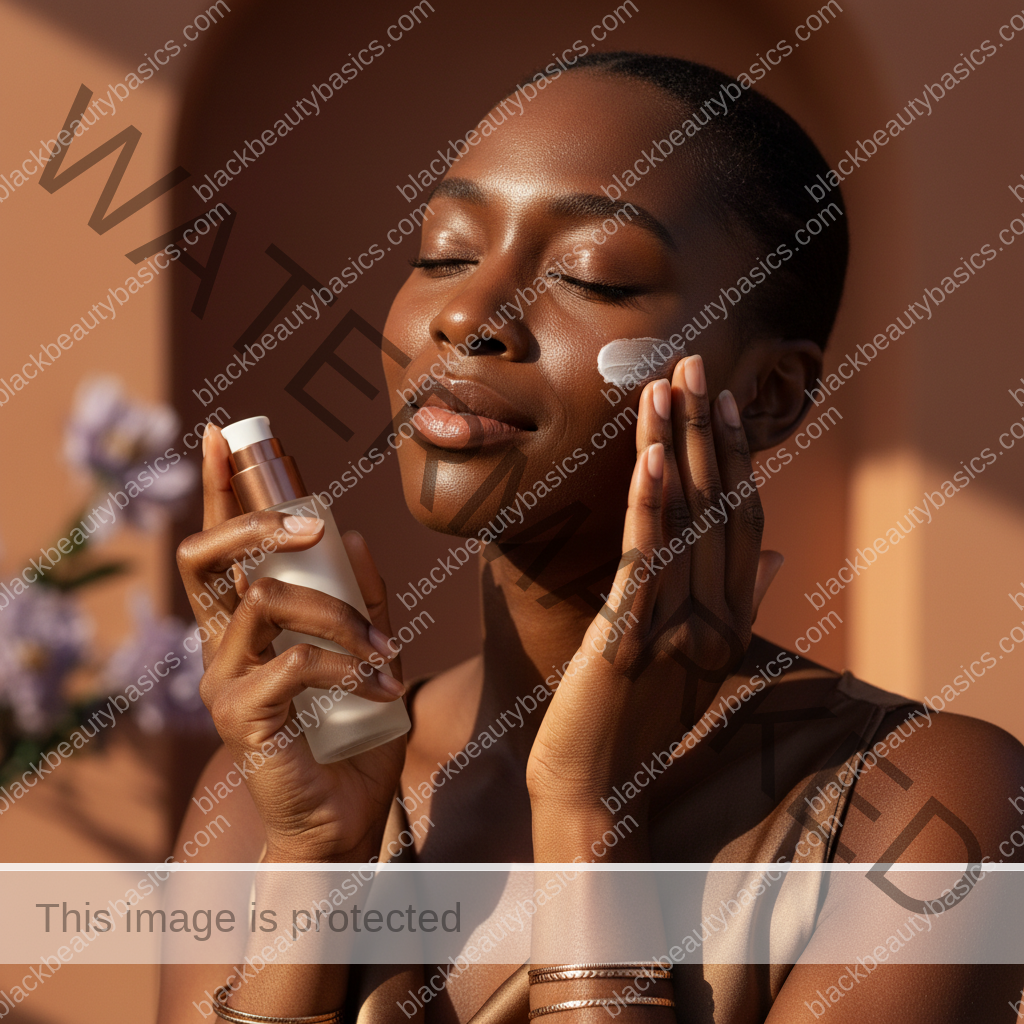
- Warm and Spread: Dispense the sunscreen onto your fingertips, gently rub them together to warm the product slightly, then dot it across your face and neck.
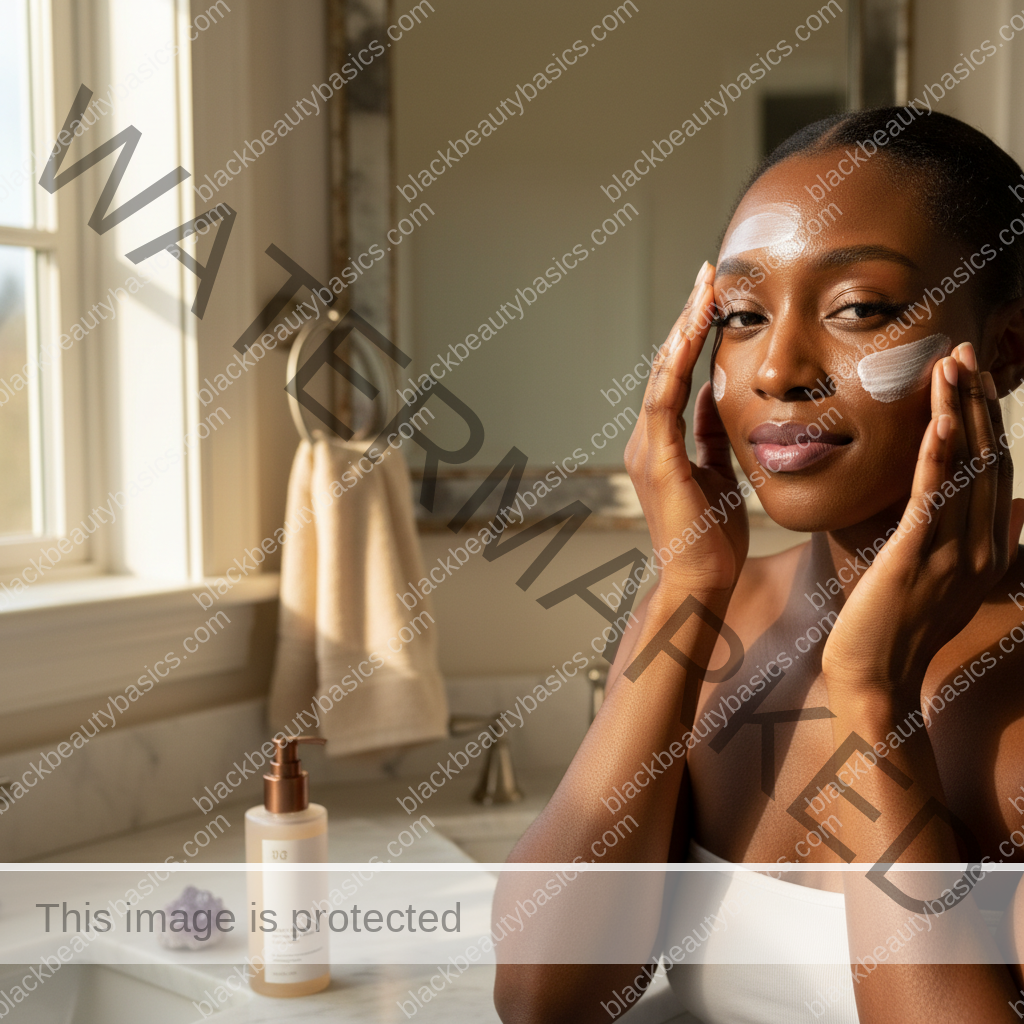
- Pat and Blend: Instead of harsh rubbing, gently pat and blend the sunscreen into your skin using upward and outward motions. This helps with absorption and minimizes streaking, especially with thicker formulas.
- Don’t Forget the Edges: Extend your application to your hairline, ears, and décolletage. These areas are often overlooked but are highly susceptible to sun damage.
- Allow to Absorb: Give your sunscreen a few minutes to fully absorb and settle before applying any makeup. This prevents pilling and ensures an even base.
- Reapply Diligently: Sunscreen isn’t a one-and-done product. Reapply every two hours, or immediately after swimming or excessive sweating.
Tips for Seamless Integration with Makeup
- Choose a Hydrating Primer: If you wear makeup, a hydrating primer can create a smooth canvas over your sunscreen, helping makeup glide on effortlessly and preventing a patchy look.
- Layer Lightly: If your sunscreen is already rich, opt for lighter foundation formulas or tinted moisturizers to avoid a heavy feel.
- Use a Beauty Sponge: A damp beauty sponge can help press makeup into the skin over sunscreen, creating a more natural, blended finish.
- Powder for Shine Control (If Needed): If your dewy sunscreen leaves you a bit too radiant, a light dusting of translucent setting powder in your T-zone can help without dulling your overall glow.
- Sunscreen Sprays/Mists for Reapplication: For reapplication over makeup, a hydrating sunscreen mist or spray can be a lifesaver. Hold it at arm’s length and mist evenly, then gently pat with a clean beauty sponge if needed.
Shop Sunscreen Mists on Amazon
Black Beauty Basics’ Top Tips for Sunscreen Success on Dry, Dark Skin
Elevate your sun protection game with these editorial insights tailored for your magnificent complexion:
- Prioritize “Broad Spectrum” & SPF 30+: Always ensure your sunscreen offers “broad spectrum” protection against both UVA and UVB rays, with an SPF of 30 or higher. For extended outdoor activity, SPF 50+ is ideal.
- Patch Test New Products: Before committing to a new sunscreen, especially if you have sensitive skin, perform a patch test on a small, inconspicuous area (like behind the ear or on your inner arm) for a few days to check for any irritation or breakouts.
- Read Reviews from Women of Color: When searching for new sunscreens, pay close attention to reviews from other Black women. Their experiences with white cast, texture, and finish will be most relevant to you.
- Don’t Fear the Dew: For dry skin, a slightly dewy finish from your sunscreen is a blessing, not a curse. It signifies hydration and a healthy glow. Embrace it!
- Consider Indoor Protection: UVA rays can penetrate windows, so even if you’re indoors all day, especially near a window, applying sunscreen is a wise choice.
- Hydrate from Within: Complement your topical hydration with plenty of water intake throughout the day to support overall skin health and combat dryness from the inside out.
- Exfoliate Gently: Regular, gentle exfoliation (1-2 times a week) helps remove dry, flaky skin cells, allowing your hydrating sunscreens and other skincare products to penetrate more effectively.
- Consistency is Key: The best sunscreen is the one you will use consistently, every single day, rain or shine. Find a formula you love, and make it a non-negotiable step in your routine.
Dry Skin Needs a Cushion Under Sunscreen
If sunscreen always looks patchy on you, the formula may not be the only problem. Dry skin can make SPF cling around texture, emphasize flakes, or turn a slight cast into a full gray film. Before you give up on sunscreen, look at the layers underneath. A hydrating serum or moisturizer can give sunscreen a smoother surface to sit on.
The goal is not to make the routine heavy. It is to build enough comfort that your skin does not feel tight once the sunscreen dries. Cream formulas, moisturizing chemical sunscreens, and hydrating hybrids may feel better than powdery matte formulas. On deep skin, test the finish after it settles, because some formulas look fine at first and turn ashy as they dry.
Dry-skin SPF checks
- Cleanse gently: do not start the routine stripped.
- Moisturize first: give dry areas a cushion before SPF.
- Use enough sunscreen: too little product gives uneven protection.
- Watch for flaking: if SPF catches, increase moisture or change texture.
What to do next
Keep this SPF step connected to the rest of the Sunscreen for Dark Skin series. The goal is not a perfect routine that only works on quiet days. The goal is a sunscreen habit that still works with makeup, sweat, body care, texture preferences, and real Black women’s lives.
- best sunscreen textures for sensitive skin
- matte versus dewy sunscreen on deep skin
- how much sunscreen to use
Frequently Asked Questions About Sunscreen for Dry, Dark Skin
Q1: Will sunscreen make my dry skin feel even drier or clog my pores?
A1: Not if you choose the right formula! Modern sunscreens, especially those designed for dry skin, are often infused with hydrating and nourishing ingredients like hyaluronic acid, glycerin, ceramides, and non-comedogenic oils. Look for terms like “hydrating,” “moisturizing,” or “emollient” on the label. These formulations are specifically designed to prevent dryness and support the skin barrier, rather than exacerbating it. Opt for non-comedogenic formulas if you’re concerned about clogged pores.
Q2: How much sunscreen should I apply to ensure adequate protection?
A2: For your face and neck, the general recommendation is about a quarter teaspoon, or what’s known as the “two-finger rule” – a line of sunscreen squeezed onto your index and middle fingers. It might seem like a lot, but this is the amount necessary to achieve the SPF stated on the bottle. Don’t forget to extend it to your ears and décolletage as well.
Q3: Do I still need to wear sunscreen if my foundation or moisturizer has SPF?
A3: While it’s a good bonus, relying solely on the SPF in your makeup or moisturizer is generally not enough. To achieve the stated SPF, you would need to apply a very generous amount of foundation or moisturizer, which most people don’t do. It’s best to use a dedicated sunscreen with at least SPF 30 as your primary protection, then layer SPF-containing makeup or moisturizer on top for added benefit.
Q4: How often should I reapply sunscreen, especially with dry skin?
A4: Sunscreen should be reapplied every two hours, regardless of your skin type, especially if you’re outdoors. If you’re swimming, sweating heavily, or towel-drying, reapply immediately after. For dry skin, this is also an opportunity to re-introduce a boost of moisture. Consider a hydrating sunscreen mist or a balm for easy reapplication over makeup throughout the day.
Q5: Can sunscreen help with hyperpigmentation on dark skin?
A5: Absolutely, sunscreen is one of the most critical tools in managing and preventing hyperpigmentation. UV exposure is a major trigger for dark spots and can make existing ones darker and more persistent. By consistently using broad-spectrum sunscreen, you protect your skin from the UV radiation that stimulates melanin production, thereby preventing new dark spots and allowing existing ones to fade more effectively with other treatments.
Q6: Are there specific sunscreen ingredients I should avoid if I have dry, dark skin?
A6: For dry skin, it’s generally best to avoid sunscreens that contain high concentrations of alcohol (often listed as alcohol denat or ethanol), as these can be drying and irritating. Fragrance can also be an irritant for some, so fragrance-free options are often a safer bet, especially if your skin is sensitive. If you’re prone to white cast, be wary of older or very thick mineral formulations that aren’t specifically labeled as “sheer” or “tinted” for darker skin tones.
Q7: What’s the difference between SPF and PA ratings, and which is more important for dark skin?
A7: SPF (Sun Protection Factor) measures protection against UVB rays, which primarily cause sunburn. The PA rating (Protection Grade of UVA) measures protection against UVA rays, which contribute to premature aging, hyperpigmentation, and skin cancer. For dark skin, both are crucial. While sunburn (UVB) may be less apparent, UVA rays are significant triggers for hyperpigmentation and collagen breakdown. Look for “Broad Spectrum” on your sunscreen, which indicates protection against both UVA and UVB. A PA+++ or PA++++ rating is excellent for robust UVA protection.
Your melanin-rich skin is a crown, a legacy, and a source of profound beauty that deserves the utmost care and protection. By understanding its unique needs and embracing the luxurious textures of modern sunscreens, you’re not just safeguarding your skin; you’re investing in its enduring radiance, preserving its health, and honoring its inherent splendor. Let your sun-kissed glow be a testament to intentional self-care, a luminous beacon of protected beauty that shines brightly for years to come.
Related next steps
Related posts:
 Best Sunscreen Textures for Oily Dark Skin
 Best Sunscreen Textures for Sensitive Melanin-Rich Skin
 Finding Non-Ashy Sunscreen Textures for Melanin-Rich Skin
 Tinted Sunscreen vs Clear Sunscreen on Dark Skin
 SPF for Dry or Dehydrated Dark Skin: Comfort, Flaking, and Glow
 Beginner’s Guide to Natural Hair for Kids with Coily/Curly Textures: Cultivating Confidence and Care