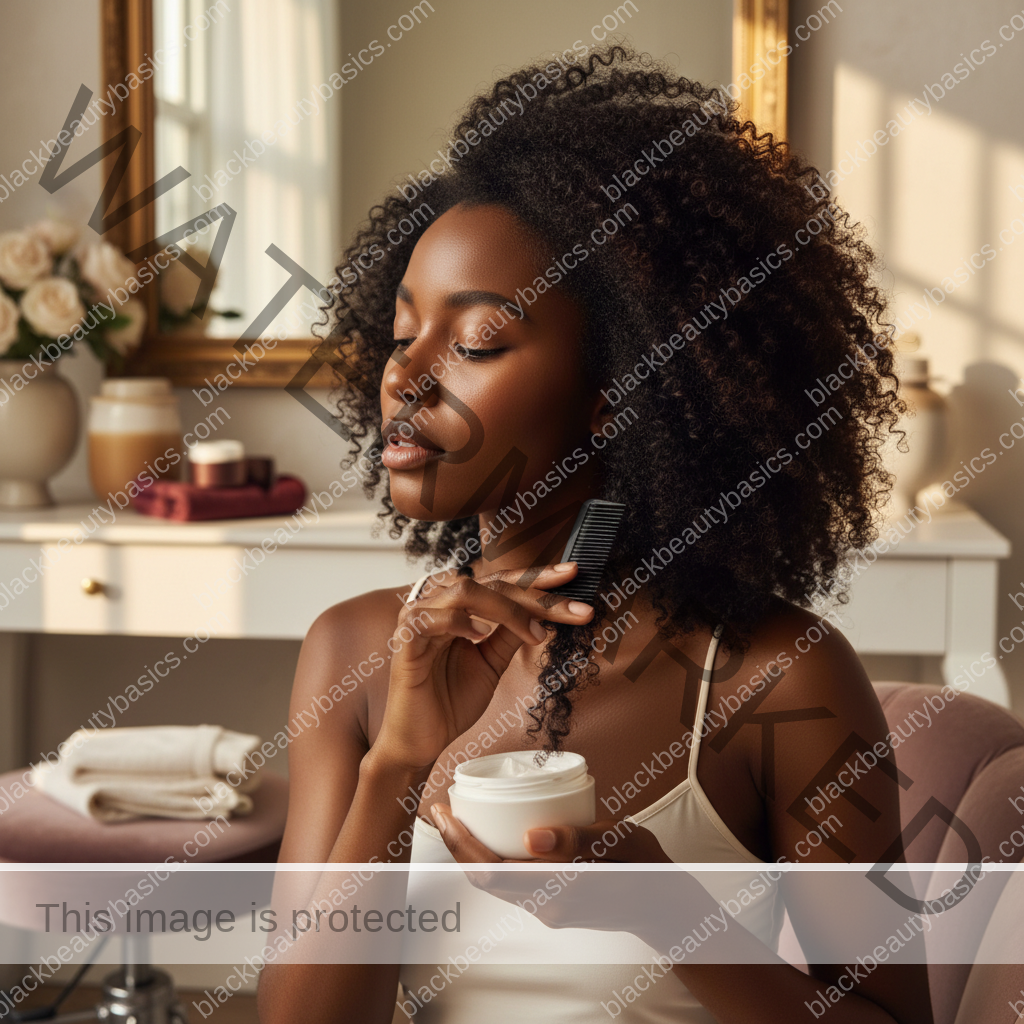
After a long day of conquering the world, the last thing on your mind might be an elaborate hair care regimen. We understand. The demands of life, career, and family can leave you utterly depleted, but your crown, your glorious natural hair, still deserves attention. This isn’t about adding another chore to your already overflowing plate; it’s about reclaiming a moment of self-care, even when exhaustion threatens to steal your glow. Start with the related BBB natural-hair cluster guide if you want the broader map.
At Black Beauty Basics, we believe that nurturing your natural hair should always feel like an act of love, never a burden. Especially on those days when your energy reserves are running on fumes, a streamlined, effective night routine can be the difference between waking up with a tangled mess and greeting the morning with soft, defined coils. Let’s explore how to protect your precious strands with minimal effort, ensuring your beauty ritual remains a source of rejuvenation, not stress.
The Unspoken Truth: Why Night Care for Natural Hair is Non-Negotiable (Even When You’re Drained)
You’ve powered through meetings, navigated errands, perhaps even chased after little ones. By the time your head hits the pillow, the thought of sectioning, twisting, or braiding can feel monumental. Yet, skipping your night routine, even for one night, can have a domino effect on your natural hair’s health and appearance. It’s not just about aesthetics; it’s about preservation.
Natural hair, with its unique curl patterns and texture, is inherently prone to dryness and tangles. During sleep, friction against cotton pillowcases can strip moisture, create frizz, and lead to breakage. Furthermore, neglecting to properly secure your hair can undo all the styling efforts of the day, leaving you with a matted, undefined mane that requires even more time and effort to revive in the morning. This cycle of damage and repair is precisely what we aim to break.
A consistent, albeit simplified, night routine acts as a protective shield. It locks in moisture, minimizes friction, preserves your style, and ultimately saves you precious time and frustration come morning. Think of it as an investment in your hair’s long-term health and your morning sanity. We’re not advocating for a 10-step process when you’re half-asleep; rather, we’re empowering you with intelligent shortcuts that yield maximum benefits with minimal exertion.
Understanding the “Exhaustion Factor”: Tailoring Your Routine
The key to a successful night routine when you’re exhausted is flexibility and efficiency. It’s about having a tiered approach, recognizing that some nights you might have a few more minutes than others, but every night you can do something beneficial. We’ll categorize routines by their time commitment, allowing you to choose what suits your energy levels.
The “Bare Minimum” Routine (5-10 Minutes): For When You Can Barely Keep Your Eyes Open
This is for those nights when the idea of standing for another second feels impossible. The goal here is pure damage control and moisture retention.
- Moisturize (Lightly): If your hair feels dry, a quick spritz of a leave-in conditioner or a light hair milk can make a world of difference. Focus on the ends, which are the oldest and most fragile parts of your hair. Don’t overdo it; a little goes a long way.
Shop Leave-In Conditioners on Amazon - Pineapple or Loose Bun: Gather your hair into a high, loose ponytail or bun at the very top of your head. This “pineapple” method lifts your hair off your neck and shoulders, preventing crushing and frizz. Use a soft, satin scrunchie to avoid tension and breakage. If your hair is too short for a pineapple, a loose, high bun works just as well.
Shop Satin Scrunchies on Amazon - Satin/Silk Protection: This is non-negotiable. Slip on a satin or silk bonnet, or sleep on a satin or silk pillowcase. This creates a friction-free environment, protecting your hair from tangles, frizz, and moisture loss. If you can only manage one thing, make it this.
Shop Satin Bonnets on Amazon | Shop Silk Pillowcases on Amazon
Bare Minimum Night Routine Checklist
| Step | Product/Tool | Benefit |
|---|---|---|
| Quick Moisture | Light leave-in conditioner or hair milk | Prevents dryness, adds softness |
| Hair Gathering | Satin scrunchie | Minimizes tangles, preserves curl pattern |
| Protection | Satin bonnet or silk pillowcase | Reduces friction, retains moisture, prevents frizz |
The “Mid-Tier” Routine (10-20 Minutes): When You Have a Little More Gas in the Tank
If you have a bit more energy, this routine builds on the bare minimum, offering enhanced protection and style preservation.
- Section and Moisturize: Divide your hair into 4-6 manageable sections. In each section, lightly mist with water or a hydrating leave-in conditioner. Follow with a small amount of a nourishing oil or cream to seal in the moisture. This method, often called the LOC (Liquid, Oil, Cream) or LCO (Liquid, Cream, Oil) method, is highly effective for natural hair.
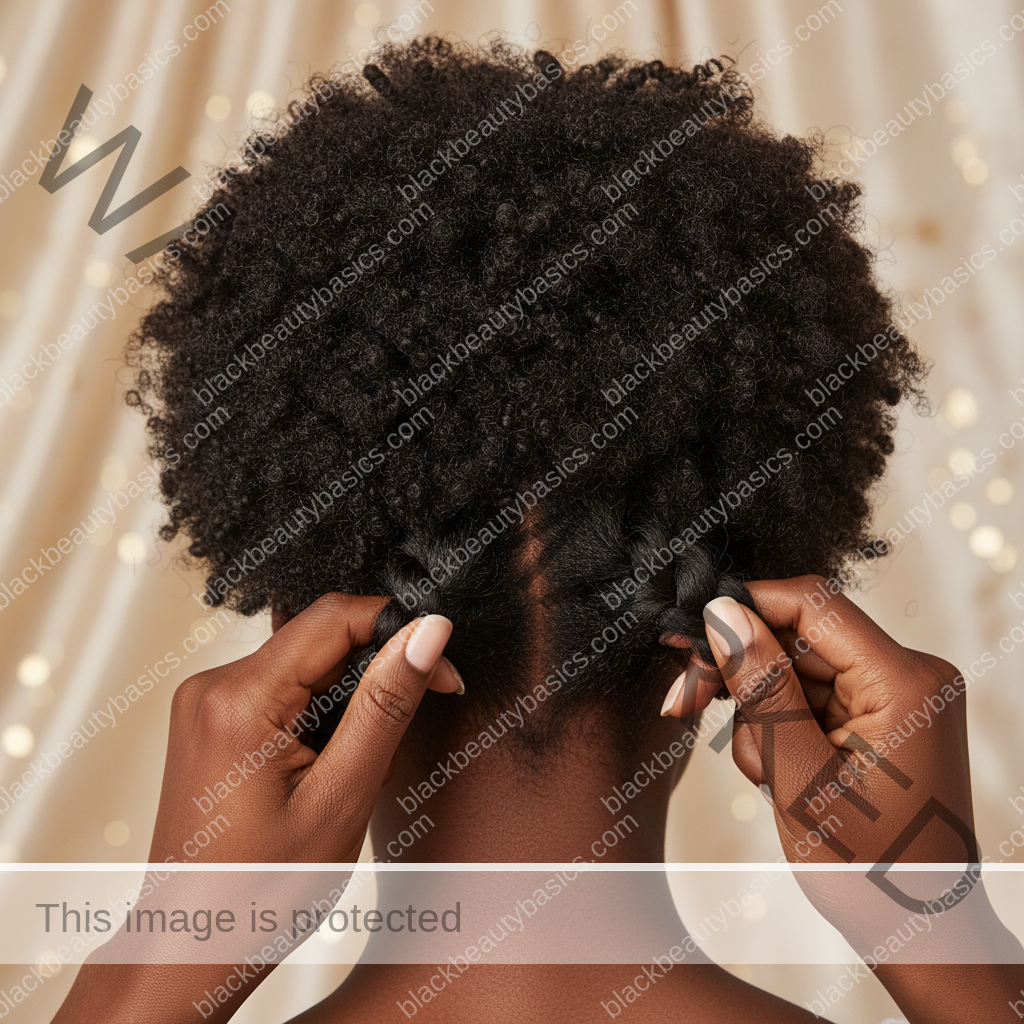
Shop Hydrating Leave-In Conditioners on Amazon | Shop Natural Hair Oils on Amazon | Shop Hair Creams for Natural Hair on Amazon - Loose Twists or Braids: In each section, create a loose two-strand twist or a simple braid. The goal isn’t definition, but rather to keep your hair stretched and organized. This prevents tangling and helps maintain your curl pattern without creating too much tension. For very short hair, simply sectioning and securing with small satin scrunchies might suffice.
Shop Hair Clips for Natural Hair on Amazon - Secure and Protect: Once all sections are twisted or braided, gather them loosely into a single pineapple or bun at the top of your head. Then, don your satin bonnet or sleep on your silk pillowcase.
Mid-Tier Night Routine Checklist
| Step | Product/Tool | Benefit |
|---|---|---|
| Sectioning & Moisture | Water, leave-in, oil/cream | Deep hydration, seals moisture |
| Styling | Hair clips, satin scrunchies | Prevents tangles, preserves curl pattern |
| Protection | Satin bonnet or silk pillowcase | Reduces friction, retains moisture, prevents frizz |
The “Pre-Poo” or “Deep Treatment” Routine (30+ Minutes): For When You’re Preparing for Wash Day
While not a daily routine, incorporating a pre-poo or deep conditioning treatment the night before wash day can be a game-changer, especially when you’re exhausted and want to streamline your wash day itself. This is an occasional routine, perhaps once a week or every two weeks.
- Apply Treatment: On dry or slightly damp hair, apply your favorite pre-poo oil blend or a rich deep conditioner. Focus on saturation, ensuring all strands are coated.
Shop Pre-Poo Oils on Amazon | Shop Deep Conditioners on Amazon - Section and Secure: Divide your hair into 4-8 sections and loosely twist or braid each section. This helps distribute the product evenly and prevents tangling.
- Cover and Sleep: Cover your hair with a plastic cap or a shower cap, then place your satin bonnet over it. The plastic cap creates a warm environment, allowing the treatment to penetrate deeply overnight. In the morning, you can rinse and proceed with your wash day, knowing your hair has received an intensive moisture boost.
Shop Plastic Shower Caps on Amazon
Essential Tools and Products for Your Exhaustion-Proof Night Routine
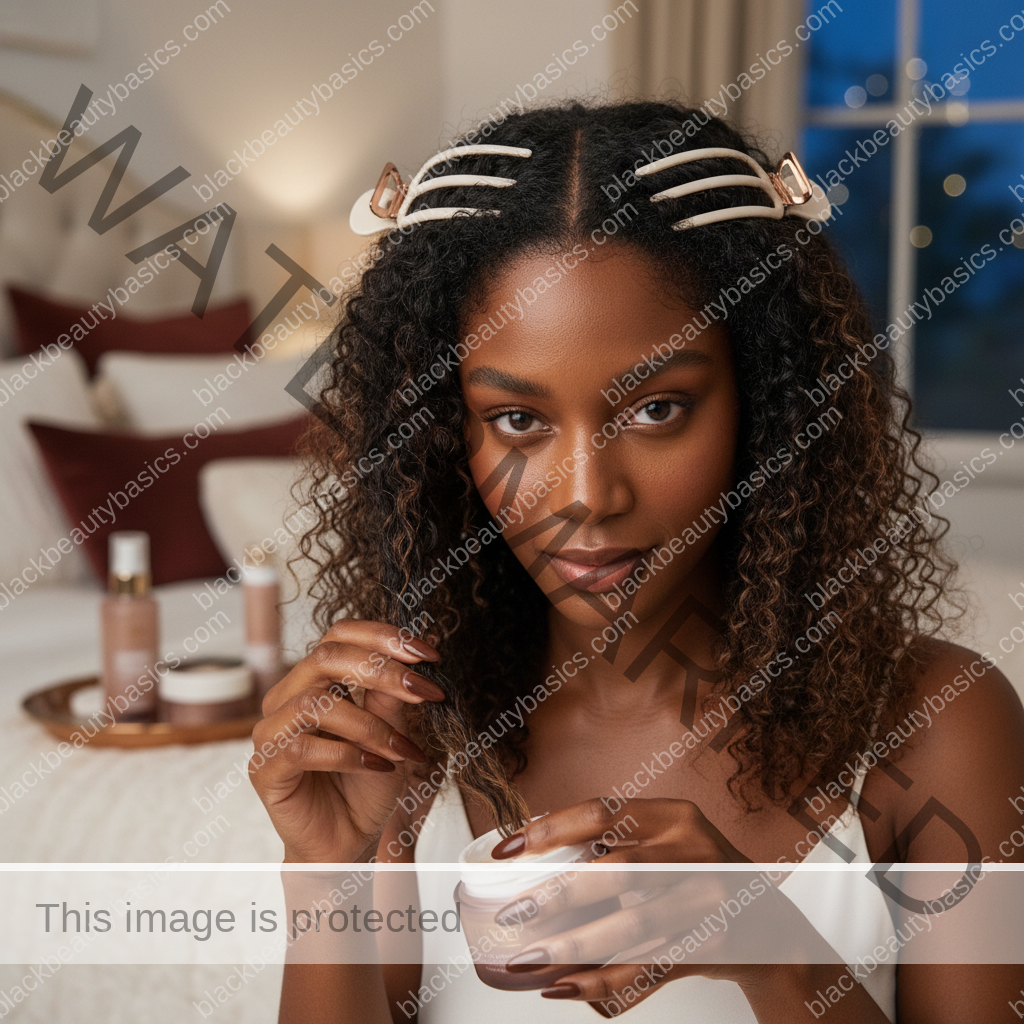
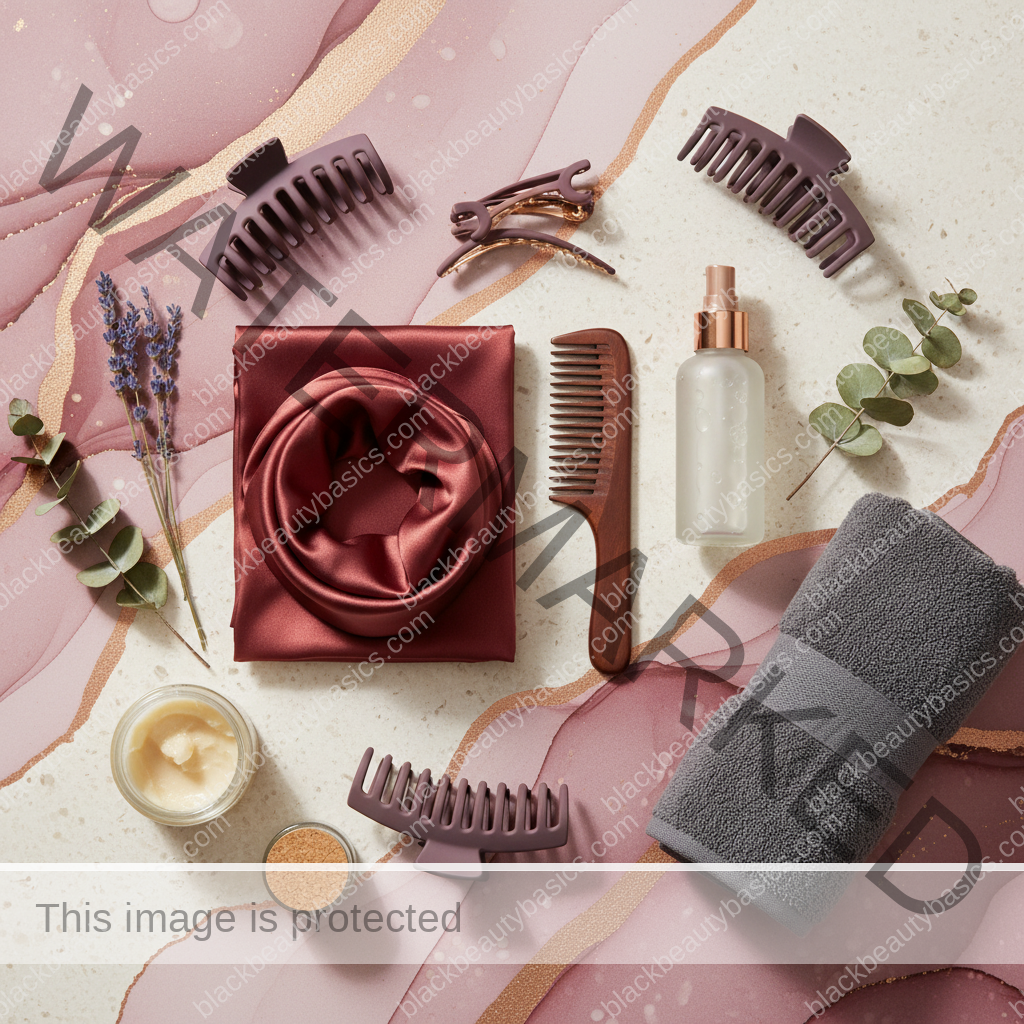
Having the right tools and products readily accessible can significantly cut down on your night routine time and effort. Invest in quality items that will serve your hair well.
The Non-Negotiables: Your Core Arsenal
- Satin/Silk Bonnet or Pillowcase: We cannot stress this enough. This is the ultimate protector against friction, frizz, and moisture loss. Choose a bonnet that isn’t too tight around your edges.
Shop Satin Bonnets on Amazon | Shop Silk Pillowcases on Amazon - Satin Scrunchies: Ditch the elastic bands! Satin scrunchies prevent snagging, pulling, and breakage, especially when creating pineapples or loose buns.
Shop Satin Scrunchies on Amazon - Water Bottle/Mister: A fine mist spray bottle is perfect for lightly dampening your hair before applying products, reactivating curls, or simply adding a touch of hydration.
Shop Fine Mist Spray Bottles on Amazon
The Hydration Heroes: Products to Keep Handy
- Light Leave-In Conditioner: A good leave-in provides a foundational layer of moisture without weighing your hair down. Look for ingredients like aloe vera, glycerin, and botanical extracts.
Shop Light Leave-In Conditioners on Amazon - Hair Milk/Cream: These offer a slightly richer moisture boost and can help define curls. Choose one that absorbs well and doesn’t leave a greasy residue.
Shop Hair Milks on Amazon | Shop Hair Creams for Natural Hair on Amazon - Lightweight Sealing Oil: A few drops of a non-comedogenic oil (like jojoba, argan, or grapeseed) can seal in moisture without feeling heavy. This is crucial for preventing dryness.
Shop Lightweight Sealing Oils on Amazon
Troubleshooting Common Nighttime Hair Woes
Even with the best intentions, natural hair can present unique challenges. Here’s how to tackle common issues with minimal fuss.
Frizz and Flyaways
Frizz is often a sign of dryness or friction. Ensure your hair is adequately moisturized before bed, and always use a satin bonnet or pillowcase. If you wake up with minor frizz, a dab of lightweight oil smoothed over the affected areas can help. For persistent frizz, consider adding a humectant-rich leave-in to your routine.
Tangles and Knots
Tangles are the arch-nemesis of natural hair. The best defense is a good offense: always secure your hair in twists, braids, or a pineapple. If you wake up with tangles, resist the urge to yank. Lightly mist the tangled section with water and a detangling spray, then gently work through with your fingers or a wide-tooth comb, starting from the ends and working your way up.
Shop Detangling Sprays on Amazon | Shop Wide-Tooth Combs on Amazon
Flattened or Crushed Curls
This often happens when hair is not properly lifted off the neck and shoulders. The pineapple method is excellent for preserving curl volume. If your curls are flattened, a quick spritz of water or a curl refreshing spray in the morning, followed by gentle scrunching, can revive them. Avoid over-manipulation.
Shop Curl Refreshing Sprays on Amazon
Dryness
If your hair consistently feels dry in the morning, it’s a clear sign you need more moisture. Re-evaluate your product choices: are your leave-ins hydrating enough? Are you sealing with an oil or cream? Consider incorporating a deeper moisturizing step, even if it’s just a quick application of a rich cream to your ends before bed.
The Long-Term Benefits of a Consistent (Even Minimalist) Night Routine
While the immediate gratification of waking up with beautiful, manageable hair is undeniable, the true power of a consistent night routine lies in its long-term benefits for your natural hair health.
- Reduced Breakage and Shedding: By minimizing friction and tangles, you significantly reduce the physical stress on your strands, leading to less breakage and healthier hair growth.
- Improved Moisture Retention: Regular nightly moisturizing and sealing, combined with protective coverings, ensures your hair stays hydrated, preventing chronic dryness and brittleness.
- Enhanced Curl Definition: Protecting your curl pattern overnight means less manipulation in the morning, allowing your natural texture to flourish and maintain its shape.
- Time Savings in the Morning: Waking up to hair that’s already largely detangled and defined means less time spent on styling, freeing up precious minutes for your morning ritual.
- Overall Hair Health: A well-cared-for crown is a healthy crown. Consistency in your night routine contributes to stronger, softer, and more vibrant natural hair over time.
Empowerment Through Simplicity: Making Your Night Routine a Ritual, Not a Chore
The beauty of natural hair care, especially when you’re exhausted, is in its adaptability. This isn’t about rigid rules; it’s about understanding your hair’s needs and responding with mindful, efficient steps. Transform your night routine from a dreaded task into a cherished ritual of self-care. Prepare your tools and products in advance, perhaps even keep them on your nightstand. Light a candle, play some soothing music, and allow these few moments to be a quiet communion with your beautiful self.
Remember, every little bit counts. Even on your most depleted nights, a simple pineapple and a satin bonnet are acts of profound self-love and hair preservation. Your natural hair is a testament to your strength and beauty; let’s ensure it’s always celebrated, even in your sleep.
How to make the routine fit your real hair and real life
For Black women with textured hair, hair-care choices can feel emotional because they sit at the intersection of identity, time, styling expectations, budget, and all the advice we have been given about what our hair “should” do. This guide focuses on creating a tired-night routine with minimum handling, satin protection, loose sectioning, moisture triage, and morning recovery options, while keeping the related BBB natural-hair cluster as the home base. The goal is not to force every curl, coil, kink, or section into the same behavior. The goal is to build a routine that protects the hair you actually have.
Start with your real constraints. How much time do you have? How much energy do you usually have on wash day? Does your hair dry quickly, stay wet for hours, tangle at the ends, frizz at the crown, shrink tightly, or lose moisture by day two? These details are not excuses. They are design information for a routine that can last longer than one motivated weekend.
The strongest routine is usually the one that keeps handling gentle, makes detangling easier, protects the ends, and respects your lifestyle. A routine can be beautiful and still simple. It can be polished and still low manipulation. It can include products without making products the whole personality of the plan.
What to notice gently
- Where your hair tangles first: ends, nape, crown, edges, or interior sections.
- How your hair responds to water, conditioner, gels, creams, oils, and drying time.
- Which steps leave your hair softer, rougher, stretched, shrunken, defined, or weighed down.
- How much manipulation your schedule and strands can realistically handle.
- What improves the style without making wash day feel impossible.
What usually makes natural-hair routines harder than they need to be
The first challenge is trying to copy a routine that was built for a different head of hair. Even within the same family, one person may need more water, another may need lighter layers, and another may need more stretch before styling. Texture charts can give language, but your own hair gives better instructions.
The second challenge is doing too many corrective steps at once. A new shampoo, deep conditioner, protein treatment, gel, oil, brush, and drying method can make it impossible to tell what actually helped. For textured hair, small changes are often easier to read and easier to repeat.
The third challenge is letting frustration set the pace. When hair feels dry, undefined, tangled, or unpredictable, it is tempting to keep adding product or handling it more. Often the better move is to slow down, add water where appropriate, work in sections, protect the ends, and choose a style that meets the week you are actually in.
What to do next
Keep this article connected to the Natural Hair Care & Protective Styles system. Use the related guides below to decide whether your next step is a better wash day, a moisture/protein reset, a lower-manipulation style, or a gentler approach to stretching and definition.
- Natural Hair Care & Protective Styles
- The related natural-hair cluster guide
- everyday low-manipulation styling
- workweek low-manipulation hairstyles
- keeping twist-outs moisturized
- low-energy 4C wash day
How to keep the routine gentle enough to repeat
A good routine should not require you to be a different person every week. If your schedule is full, choose fewer sections, a simpler style, or a wash day split across two smaller windows. If your hands get tired, detangle more slowly, use clips, and stop before frustration turns into rough handling. Your hair does not benefit from being rushed through pain.
Photos and notes can help, but they should support you rather than make you obsess. Track how your hair feels after wash day, how long the style lasts, which areas dry first, and what makes detangling easier. Over time, those small observations are more useful than chasing every trend.
If a product burns, causes persistent itching, makes shedding feel sudden, or leaves your scalp uncomfortable, pause it. If breakage, pain, bald patches, or scalp symptoms continue, get professional care. Natural hair care can be home-centered and still know when to ask for support.
Most importantly, do not let shame run the routine. Black hair does not need to be looser, shinier, or easier to be worthy of care. The best plan is the one that helps your hair feel respected in the life you are actually living.
Frequently Asked Questions About Night Routines for Natural Hair When Exhausted
Q1: How often should I moisturize my natural hair at night?
A1: The frequency of moisturizing depends on your hair’s porosity, texture, and the climate you live in. Generally, if your hair feels dry, a light moisturizer every night or every other night can be beneficial. For oilier scalps or hair that retains moisture well, 2-3 times a week might suffice. Listen to your hair; it will tell you what it needs. Always follow with a sealing oil or cream to lock in that moisture.
Q2: Can I just sleep with my hair loose if I have a silk pillowcase?
A2: While a silk pillowcase is far superior to cotton for reducing friction and retaining moisture, sleeping with your hair completely loose can still lead to tangles, matting, and flattened curls, especially for longer or denser natural hair. For optimal protection and style preservation, it’s always recommended to at least pineapple your hair or put it in a loose bun, even when using a silk pillowcase. The combination offers the best defense.
Q3: What’s the best way to protect my edges overnight?
A3: Protecting your delicate edges is crucial. When wearing a satin bonnet, ensure it’s not too tight around your hairline. Many bonnets come with adjustable bands or elastic that can be too snug. Alternatively, you can use a separate satin or silk scarf tied loosely around your edges underneath your bonnet, or simply rely on a silk pillowcase if your bonnet is causing tension. Avoid applying heavy gels or edge controls overnight, as they can dry out and break your edges.
Q4: My hair is too short for a pineapple. What should I do?
A4: If your hair is too short for a traditional pineapple, you still have options! You can do a “mini-pineapple” by gathering the top section of your hair into a very loose, small bun or ponytail. For very short hair, simply dividing your hair into 4-6 loose sections and securing each with a small satin scrunchie can prevent tangling. The most important step is always to cover your hair with a satin bonnet or sleep on a silk pillowcase to minimize friction.
Q5: Is it okay to go to bed with damp hair?
A5: It’s generally not recommended to go to bed with soaking wet hair, as it can lead to mildew growth on your scalp and hair, and can also make your hair more prone to tangling and breakage when wet. However, slightly damp hair (from a light misting or leave-in application) is usually fine, especially if you’re putting it into loose twists or braids and covering it with a bonnet. Ensure your hair is at least 80% dry before laying down to prevent issues.
Q6: How can I prevent my bonnet from slipping off during the night?
A6: Bonnets slipping off are a common frustration! Look for bonnets with a wide, comfortable elastic band that isn’t too tight but provides a good grip. Some bonnets also feature adjustable drawstrings. Alternatively, you can try wearing a satin scarf tied securely (but not too tightly) underneath your bonnet for extra security. If all else fails, a silk pillowcase is your ultimate backup, ensuring your hair still gets some protection even if the bonnet makes an escape.
Q7: Can I use the same products for my night routine as I do for styling?
A7: Yes, often you can! Many leave-in conditioners, hair milks, and lightweight oils that you use for daily styling are perfectly suitable for your night routine. The key is to use them in smaller quantities at night, focusing on moisture and protection rather than heavy styling or hold. Avoid heavy gels or mousses at night, as they can cause stiffness and flaking. Simplicity is key when you’re exhausted.
As the day gracefully bows out and the quiet of the night descends, remember that your natural hair, in all its magnificent glory, deserves a moment of gentle care. Let this simplified night routine be a tender embrace for your coils, a promise of beauty and health that requires minimal effort but yields boundless rewards. Rest easy, knowing your crown is protected, cherished, and ready to shine anew with the morning sun. Your journey of self-love, even in exhaustion, continues to inspire.
Related next steps
Related posts:
 Night Skincare Routine for Melanin-Rich Skin When You Are Too Tired for a Full Routine
 Morning and Night Skincare Routine for African American Women
 Night-Out Makeup for Deep Skin That Still Feels Wearable
 Skincare for Night Shift Workers with Dark Skin
 Unveiling Radiance: The CLARIMOND ORALCARE Retinal Night Cream for Melanin-Rich Skin
 Retinal vs. Retinol: Which Night Cream Is Best for Anti‑Aging? (2026 Guide)